

 Account


The moisturizer I’d used for 15 years started breaking me out at 46. Not dramatically. Just enough redness along my jawline to make me think I was doing something wrong. I switched to a different brand (one that called itself “natural” in big green letters on the bottle). It burned. Not a tingle. A burn.
I spent six months cycling through products, reading ingredient lists I didn’t fully understand, and Googling phrases like “best natural and organic skincare for mature skin.” Most of what I found was written for women in their 30s. The recommendations were generic. The science was shallow or missing entirely. And nearly every “clean beauty” guide was quietly selling me something.
Here is what I’ve learned since then.
Your skin after 45 is not damaged. It is biologically different. Estrogen decline thins your dermis, slows cell turnover, and disrupts the lipid barrier that used to protect you without any help. The products that worked in your 30s were designed for skin that no longer exists.
Most “natural” skincare advice ignores this. It treats 45+ skin the same as 25-year-old skin, with more expensive serums. That is a fundamental mistake.
This article covers what “natural” and “organic” actually mean on a label (the answer will frustrate you), which specific ingredients have clinical evidence for post-menopausal skin, and how to build a routine that works with your skin’s new biology instead of against it.
Before you choose a single product, you need to understand what changed in your skin, and why.
Why Your Skin Changed After 45: The Biology No One Talks About
But collagen loss is only one piece.
Estrogen decline triggers a cascade that affects nearly every layer of your skin. Sebum production drops, which means your skin produces less of its own natural oil. Hyaluronic acid synthesis slows, reducing your skin’s ability to hold moisture from within. The dermis itself gets thinner. Your skin becomes drier, more reactive, and slower to recover from irritation.
Cell turnover tells a similar story. In your 20s, your skin renewed itself roughly every 28 days. By your mid-40s to 50s, that cycle stretches to 45 to 60 days. Dead skin cells linger longer on the surface. Products absorb differently. Texture changes even when nothing else in your routine has shifted.
Two lesser-known changes matter enormously for product selection.
First, GLA (gamma-linolenic acid) declines with age. Your body produces less of the enzyme delta-6-desaturase, which converts dietary omega-6 into GLA. GLA is critical for maintaining the lipid barrier. Without enough of it, your skin becomes dry, flaky, and prone to irritation no matter how much moisturizer you apply. This is not a cosmetic issue. It is a biochemical bottleneck.
Second, omega-7 (palmitoleic acid) also declines. Omega-7 is essential for epithelial repair, the rebuilding of the outermost layers of your skin. As levels drop, your skin’s ability to heal micro-damage from sun exposure, wind, and environmental stress slows significantly.
These changes create vulnerability. But they also create an advantage that most skincare advice overlooks.
Thinner skin with a compromised lipid barrier absorbs topical ingredients more readily. Post-menopausal skin benefits more from lipid-rich emollients than from water-based humectants alone, because those lipids can integrate into the barrier structure your skin is struggling to maintain on its own.
Your skin has entered a phase where it responds better to concentrated botanical lipids than to the water-heavy synthetic formulas that dominate drugstore shelves. The right ingredients, at the right concentration, in the right delivery vehicle, can do more for your skin now than they could have done 15 years ago.
That is the reframe. Your skin is not breaking down. It has shifted into a new biological state, one that favours potent, lipid-rich, plant-based natural and organic skincare over the diluted formulas most brands sell.
What ‘Natural’ and ‘Organic’ Actually Mean on a Skincare Label
The word “natural” on a skincare label is completely unregulated. In the US, the EU, and most global markets, any brand can print “natural” on any product without meeting a single standard. A product can be 1% botanical extract and 99% petrochemical base and still legally say “plant-powered” on the front. There is no governing body checking. There is no penalty for misleading claims.
This is where most consumers get lost, and where the industry profits most.
The gap between “natural” as a marketing word and “organic” as a certified standard is enormous. Understanding this difference is the single most important step you can take before buying another natural and organic skincare product.
Here is how the major certifications break down.
NATRUE uses a two-tier system. The Natural tier requires natural-origin ingredients but no organic farming. The Organic tier requires 95% or more of natural ingredients to be organically grown. If you see a NATRUE seal, check which tier it represents.
USDA Organic applied to cosmetics requires 95% or more organic ingredients. However, it only evaluates agricultural ingredients, not preservatives or processing aids. It is a strong standard but not designed specifically for skincare.
One more label trick worth knowing: INCI (International Nomenclature of Cosmetic Ingredients) rules require that any ingredient present above 1% concentration must be listed in descending order by volume. Ingredients below 1% can appear in any order the manufacturer chooses. This means a brand can list a trendy botanical near the middle of the ingredient list even if it is present at trace amounts, barely enough to detect.
And “clean beauty”? It is an unregulated marketing term. There is no legal definition, no third-party verification, and no standard a brand must meet to use it.
The decision rule is simple. Look for COSMOS ORGANIC, NATRUE Organic tier, or USDA Organic. If a product carries none of these certifications, treat every claim on the label as marketing until you verify the ingredient list yourself.
Ingredient Quality Tiers: Why Not All ‘Natural’ Is Equal
Two bottles of rosehip oil can sit side by side on a shelf, both labelled “organic,” both cold-pressed, and deliver completely different results. The reason has nothing to do with the extraction method. It has everything to do with where the plant grew.
Plants that grow in extreme environments produce significantly higher concentrations of protective compounds. This is called stress adaptation. When a plant faces intense UV radiation, freezing temperatures, short growing seasons, or nutrient-poor soil, it synthesizes more antioxidants, more essential fatty acids, and more bioactive molecules to survive. Those compounds are exactly what your skin needs.
This creates a quality hierarchy that the natural and organic skincare industry rarely discusses.
Tier 1: Wild-harvested Arctic and sub-Arctic botanicals. These plants grow in some of the harshest conditions on Earth. They are exposed to extreme cold, months of continuous summer UV, and thin, mineral-dense soils. The result is exceptionally high concentrations of omega fatty acids, vitamins C and E, flavonoids, and carotenoids. They cannot be mass-farmed. Supply is limited, which keeps prices higher but quality consistent.
Tier 2: Certified organic botanicals from temperate climates. These plants are grown without synthetic pesticides or fertilisers, which matters for both skin safety and environmental impact. They grow in milder conditions, so their baseline concentration of protective compounds is lower than their Arctic counterparts.
Tier 3: Conventional, non-organic botanicals. These may still be “natural” in origin, but they are often grown with synthetic inputs, harvested from depleted soils, and processed in ways that reduce bioactive content. A rosehip oil from this tier might look identical to a Tier 1 oil on the label but deliver a fraction of the beneficial compounds.
Why does this matter specifically for women over 45?
Your skin’s barrier is thinner. Transdermal absorption is higher. What you apply does not sit on the surface. Molecules with a molecular weight under 500 daltons (which includes most botanical actives) penetrate readily into the dermis. When your barrier is compromised, that penetration increases further.
The concentration of active compounds in your skincare products matters more now than it did when your barrier was robust. A low-potency botanical oil on 30-year-old skin might still deliver adequate benefit. On 50-year-old skin, the difference between a Tier 1 and Tier 3 ingredient can be the difference between visible results and expensive disappointment.
The next question becomes: which specific ingredients have evidence for 45+ skin?
Proven Natural Ingredients for Skin After 45
Most “best ingredients for mature skin” lists are generic. They recommend the same compounds for a 32-year-old with fine lines as for a 55-year-old navigating post-menopausal skin changes. The biology is not the same. The ingredients should not be either.
Here is a shortlist filtered specifically for the physiological changes that happen after 45.
Rosehip seed oil. This is the plant-based vitamin A story most natural skincare guides underplay. Rosa Canina contains natural trans-retinoic acid alongside linoleic acid and a full essential fatty acid profile. Because it is oil-based, it penetrates through lipid pathways in the skin, something water-soluble vitamin A serums cannot do as efficiently. For 45+ skin losing its lipid structure, rosehip does two jobs at once: it delivers vitamin A activity and reinforces the barrier. That is what separates an oil-based vitamin A from isolated retinol serums. Not just gentler, but structurally better suited to how mature skin absorbs actives.
Arnica and calendula (marigold). These are Frøya’s botanical answer to the barrier-strengthening and tone-evening work that isolated actives like niacinamide are often credited with. Arnica (Arnica montana) reduces inflammation at the barrier level, calming the reactive baseline that makes 45+ skin so prone to redness. Calendula (Calendula officinalis) supports tissue repair and is one of the most consistently well-tolerated botanicals for sensitive, thinning skin. Neither will cause the purging or sensitivity that can come with isolated vitamin B3 at higher concentrations.
Botanical hyaluronic acid alternatives. Traditional HA serums are water-based and evaporate quickly, sometimes pulling moisture from deeper skin layers in dry environments. In waterless formulas, plant-derived polysaccharides (from tremella mushroom, marshmallow root, or aloe vera concentrate) provide moisture-binding without the drawbacks of water-based HA.
These ingredients form the baseline for effective natural skincare after 45. They address specific, documented deficiencies. They work with your skin’s changed biology, not against it.
There is a tier above these. Nordic botanicals push into territory that most skincare guides never cover.
Nordic and Arctic Botanicals: The Potency Advantage Competitors Miss
Search for “best natural ingredients for mature skin” and you will find the same list repeated across every top-ranking article: retinol, hyaluronic acid, vitamin C, niacinamide, peptides. Solid ingredients. None of them are Arctic botanicals. None of them leverage the stress-adaptation compounds that grow at the edge of the habitable world.
This is a blind spot in the industry, and it is starting to close.
Sea buckthorn is the only known plant source of omega-7 (palmitoleic acid), a fatty acid that declines with age and is critical for epithelial tissue repair. Those are not marketing claims. Those are peer-reviewed clinical outcomes.
Sea buckthorn also contains omega-3, omega-6, omega-7, and omega-9 fatty acids, plus vitamins A, C, and E. In post-menopausal skin, the phytoestrogens present in sea buckthorn may provide localised estrogen-like signalling effects through estrogen receptors in skin fibroblasts. This does not replace hormone therapy. But it offers a botanical mechanism that directly addresses the root hormonal cause of skin changes after 45.
Arnica and rosehip round out Frøya’s Nordic botanical story alongside sea buckthorn. Rosehip (Rosa Canina) supplies the vitamin A and linoleic acid discussed in Section 4. Arnica (Arnica montana) brings anti-inflammatory action that counters the “inflammaging” baseline - the chronic low-grade inflammation that accelerates after estrogen decline. Together, these three make a coherent formulation logic: sea buckthorn addresses lipid and collagen deficits, rosehip delivers vitamin A and essential fatty acids, arnica calms the inflammatory environment that would otherwise undermine both.
It is worth noting that the Nordic category is wider than what any single brand uses. Cloudberry and Arctic lingonberry are botanicals in this same stress-adaptation family, with interesting omega and antioxidant profiles. Frøya’s current formulas do not use them. The principle behind them - extreme climate forces extreme bioactive density - is the same principle behind every ingredient Frøya does use.
Each of these natural and organic skincare botanicals targets a documented post-menopausal deficiency. Sea buckthorn addresses omega-7 and collagen decline. Rosehip restores vitamin A and barrier lipids. Arnica calms the inflammation that undermines both.
Potency depends on more than the ingredient itself. A sea buckthorn extract diluted into a water-heavy formula delivers a fraction of what it could in a concentrated, anhydrous base. The formula surrounding the botanical matters as much as the botanical itself.
Waterless Skincare: Why Anhydrous Formulas Deliver More to 45+ Skin
Flip over your moisturiser and read the ingredient list. If the first word is “aqua” or “water,” then 70 to 80% of what you paid for is water. The active ingredients you actually care about are diluted into whatever is left.
This is standard practice. It has been the norm for decades. That does not make it optimal.
Consider vitamin C as a case study. In a waterless formula, vitamin C (as L-ascorbic acid or a lipid-soluble derivative) can remain at 10 to 20% concentration and stay stable for months. In a water-based serum, vitamin C begins oxidising on contact with water and air. Within weeks, concentrations can degrade from a labelled 15% down to 2 to 5% of actual active content. You are applying a fraction of what you think you are applying.
Water in formulas also creates a microbial growth risk. Bacteria and fungi thrive in aqueous environments. To prevent contamination, manufacturers must add synthetic preservatives, some of which (like certain parabens or formaldehyde releasers) are on the growing list of ingredients women over 45 are actively trying to avoid. Remove the water, and you remove the primary reason those preservatives exist.
For 45+ skin specifically, there is another advantage. Fat-soluble actives (retinol, vitamin E, beta-carotene, and the omega fatty acids discussed earlier) penetrate skin most effectively through lipid-based vehicles. Your skin’s barrier is a lipid structure. Oil-based formulas speak its language. Water-based formulas have to fight through it.
Transdermal absorption research confirms this. Molecules under 500 daltons in molecular weight penetrate the dermis more readily, and lipid-soluble ingredients are absorbed particularly well through oil-based delivery systems. For a woman whose barrier is already thinner and more permeable due to estrogen decline, a concentrated oil-based natural and organic skincare formula delivers more active compounds deeper into the skin than the same ingredients suspended in water.
Waterless does not mean dry. It does not mean greasy either. A well-formulated anhydrous balm or oil uses a small amount because the concentration is high. A few drops replace a full pump of lotion.
The best formula in the world means nothing if the product is greenwashed. You need to know how to read labels critically.
How to Read Skincare Labels and Spot Greenwashing
You do not need a chemistry degree to evaluate a skincare product. You need four rules and about 60 seconds.
Rule 1: Check the INCI order. Ingredients above 1% concentration are listed in descending order by volume. If a brand markets its “powerful sea buckthorn formula” but sea buckthorn oil appears eighth or ninth on the list (after water, glycerin, cetearyl alcohol, and several synthetic emulsifiers), the actual sea buckthorn content is likely minimal. Look for your key botanicals in the top five to seven positions.
Rule 2: Look for certification seals, not words. The words “natural,” “clean,” “pure,” and “plant-based” are unregulated. A COSMOS ORGANIC seal, a NATRUE Organic seal, or a USDA Organic seal means a third party has verified the formulation against a published standard. No seal? Treat the front label as advertising.
Rule 3: Watch for red flags. Four specific ones matter most for women over 45.
- “Aqua” as the first ingredient in a product marketed as “concentrated” or “potent.” If it is mostly water, it is not concentrated.
- “Fragrance” or “parfum” listed without further specification. This is a legal loophole. A single “fragrance” listing can contain dozens of undisclosed synthetic chemicals, including potential endocrine disruptors. If a product does not specify “natural fragrance from essential oils” or list the specific scent sources, assume synthetic.
- PFAS (per- and polyfluoroalkyl substances) are appearing in cosmetics with increasing frequency. Research published in Environmental Health Perspectives found that cosmetics can account for up to 40% of total PFAS intake in natural and organic skincare products. These are persistent chemicals that accumulate in the body.
- Long ingredient lists with more synthetics than botanicals. Count them. If the synthetic emulsifiers, stabilisers, and preservatives outnumber the plant-based actives, the “natural” positioning is cosmetic, not compositional.
Rule 4: Do the “flip test.” Before buying, flip the product over and spend 30 seconds with the INCI list. If the first three ingredients are water, a synthetic humectant, and a silicone, put it back on the shelf. If the first three ingredients are cold-pressed oils or botanical extracts, you are starting in the right place.
Ask brands directly: What percentage of your formula is active ingredients? What certification does this product hold? Where are your botanicals sourced? Brands that cannot answer clearly are telling you something by their silence. For reference, Frøya publishes a full breakdown on our ingredients page.
With these tools, you can evaluate any product in under a minute.
What to Avoid: Ingredients and Practices That Harm 45+ Skin
Some ingredients are debatable for younger skin. For skin after 45, the debate narrows. Certain compounds and practices become actively counterproductive when your barrier is thinner, your cell turnover is slower, and your recovery time is longer.
Sodium lauryl sulfate (SLS) and sodium laureth sulfate (SLES). These are the foaming agents in most gel and foam cleansers. They strip lipids from the skin’s surface, the same lipids your body is already struggling to produce in sufficient quantity after estrogen decline. Every foaming wash removes what your skin spent hours rebuilding. For 45+ skin, this creates a cycle of depletion that no moisturiser can fully compensate for.
Alcohol denat (denatured alcohol). Found in toners, lightweight serums, and mattifying products. It evaporates quickly (which creates a pleasant “absorbing” feeling) but disrupts the barrier on contact. On 30-year-old skin, recovery happens in hours. On 50-year-old skin, recovery can take days. The temporary cosmetic benefit is not worth the structural cost.
Synthetic fragrances. The “fragrance” loophole allows brands to use this single word to cover dozens of undisclosed compounds. For women over 45, this matters doubly. Increased transdermal absorption means more of those compounds enter your bloodstream. Synthetic fragrances are among the most common triggers for contact dermatitis, a condition that becomes more prevalent as the skin barrier weakens with age.
PFAS. These “forever chemicals” accumulate in the body and do not break down. Cosmetics can account for up to 40% of total PFAS intake. Check for ingredients containing “fluoro” in the name. They have no cosmetic benefit that justifies their biological cost.
A note on high-concentration synthetic retinoids: tretinoin and retinol are effective, but they carry a real trade-off for 45+ skin. Barrier disruption, peeling, and photosensitivity are harder to manage when recovery is slower. Rosehip seed oil offers vitamin A activity through natural trans-retinoic acid, alongside the essential fatty acids that simultaneously support the barrier rather than stressing it. For women who want retinoid-level results without the collateral damage, that is the plant-based case to make first.
Knowing what to eliminate clears the path. Here is how to build a routine that puts all of this together.
A Simple Plant-Based Skincare Routine for Women Over 45
After 45, your routine should get simpler. Not more steps. Not more serums. Fewer products, each one more concentrated and more intentional.
Here is a complete routine using six to seven products total.
Morning (3 Steps)
Step 1: Cleanse gently. Use an oil-based cleanser or, on many mornings, lukewarm water alone. Your skin did not get dirty overnight. It produced what little sebum it could. Do not strip it away. Save the cleanser for evenings when you are removing SPF and environmental residue.
Step 2: Botanical antioxidant serum or oil. A concentrated vitamin C derivative in an oil base, or a sea buckthorn/rosehip blend rich in carotenoids and vitamin E. This is your daytime defence layer. Antioxidants neutralise free radicals from UV and pollution before they damage collagen.
Step 3: Mineral SPF layered over a nourishing oil. Apply your facial oil first, let it absorb for two to three minutes, then layer mineral sunscreen (zinc oxide or titanium dioxide) on top. The oil creates a lipid base that prevents the SPF from feeling dry or chalky. Non-negotiable step. UV damage accelerates every aspect of skin ageing that estrogen decline already initiated.
Evening (3 to 4 Steps)
Step 1: Double cleanse (if wearing SPF). First pass with an oil cleanser to dissolve sunscreen and makeup. Second pass with a gentle cream or balm cleanser. If you did not wear SPF or makeup, a single oil cleanse is sufficient.
Step 2: Active treatment. This is where rosehip oil, a concentrated botanical serum, or a targeted treatment oil goes. Apply to clean, slightly damp skin. Evening is when cell repair peaks, so your most active ingredients belong here. Rosehip delivers vitamin A activity while the linoleic acid supports barrier repair simultaneously.
Step 3: Essential fatty acid oil. Borage oil or sea buckthorn oil applied as a dedicated layer. This directly supplies the GLA and omega-7 your skin is not producing enough of. Think of this as nutritional support for your barrier, not cosmetic coverage. Evening primrose is another GLA source in this category if borage is hard to source.
Step 4: Concentrated balm or facial oil for barrier seal. A rich, anhydrous balm or a heavier botanical oil blend to lock everything in. This final layer prevents trans-epidermal water loss overnight and gives your barrier the lipid structure it needs to rebuild while you sleep.
Weekly
Gentle enzyme exfoliation, once or twice maximum. Papaya enzyme, pineapple bromelain, or a mild fruit acid peel at low concentration. Let the enzymes dissolve dead cells without mechanical abrasion. Your skin at this turnover rate cannot afford rough treatment.
What to Drop
- Toner (most are alcohol-based or unnecessary water with marketing)
- Multiple layered serums (more products does not mean more results; it means more potential irritants and ingredient conflicts)
- Physical scrubs (micro-tears on thinning skin are damage, not exfoliation)
- Sheet masks (mostly water with trace actives; fun but not functional for 45+ skin)
Quality over quantity. Every product in this natural and organic skincare routine has a specific biological purpose.
Knowing what to expect keeps you from abandoning a good routine too early.
What Results to Expect and When: A Realistic Timeline
Natural skincare will not transform your skin in seven days. Synthetic skincare will not either, but it creates a faster illusion. Silicones fill in fine lines temporarily. Dimethicone creates a smooth surface on contact. These are optical effects, not biological changes.
Real change follows your skin’s biological clock.
Weeks 1 to 2: Adjustment. Your skin is recalibrating. If you are transitioning from synthetic products, you may notice a brief period of increased oiliness or small breakouts as your skin adjusts to processing botanical oils instead of silicone-based coatings. This is normal. It is not a reaction to the new products. It is your skin re-learning to regulate itself.
Weeks 3 to 6: Barrier improvement. This is when most women notice the first tangible shifts. Less tightness after cleansing. Reduced dryness throughout the day. Skin that feels more comfortable, less reactive. The essential fatty acids are integrating into your barrier, and your skin’s lipid structure is beginning to recover. If you were using harsh cleansers before, the difference will feel significant.
Weeks 6 to 12: Visible texture changes. You are now approaching one full cell turnover cycle at 45+ speeds. New skin cells that formed since you started your routine are reaching the surface. Texture becomes smoother. Fine lines may soften (not vanish, soften). Tone becomes more even.
The 12-week sea buckthorn clinical trial showed measurable improvements in hydration, collagen density, and texture within this window. Twelve weeks is the minimum timeline for evaluating whether a natural and organic skincare routine is working.
Months 3 to 6: Cumulative, compounding results. Collagen density improvements continue to build. Hyperpigmentation begins to fade as fresh skin cells replace damaged ones over multiple turnover cycles. Skin looks fuller, not from filler, but from restored hydration and lipid integrity. This is also when other people start noticing. The compliments tend to be vague (“You look rested” or “Your skin is glowing”) because the change is not dramatic. It is structural.
The goal is not to look 30. It never was.
The goal is strong, healthy, comfortable skin. Skin that does not sting when you apply products. Skin that does not flake in winter or flush from a glass of wine. Skin that feels like yours again.
Strengthen what you have. That has always been enough.
Real Concerns About Switching to Natural Skincare After 45
If you are sceptical about natural skincare, good. Scepticism is the right starting point. The industry has earned it, with decades of vague claims, greenwashed labels, and “natural” products that are natural in name only.
Here are the most common concerns, answered honestly.
“Natural doesn’t mean effective.” Correct. An unregulated “natural” product with trace botanical content and a petrochemical base is not effective. But a COSMOS ORGANIC-certified, waterless formula with 60 to 90% active botanical concentration is a different category entirely. The word “natural” is the problem. The certified, concentrated, evidence-backed formulations are not.
“It’s too expensive.” Waterless formulas are more concentrated, so you use less product per application. A 30 mL bottle of concentrated facial oil lasts as long as a 50 mL bottle of water-based serum, sometimes longer. Calculate cost per use, not cost per bottle. In many cases, the numbers are comparable to mid-range conventional products.
“Shelf life is shorter.” True. And that is a quality signal. Products without synthetic preservatives have shorter shelf lives because they contain no synthetic preservatives. Buy smaller sizes. Store them in cool, dark places. Use them within the recommended timeframe. A product that cannot spoil is a product full of chemicals designed to prevent spoiling. Your skin does not need those chemicals.
“I need retinol or prescription actives.” This is not an either/or decision. Rosehip seed oil delivers vitamin A activity through natural trans-retinoic acid, alongside the essential fatty acids that support your barrier rather than stressing it. If your dermatologist has prescribed tretinoin, you can use it as your active treatment step while rosehip, sea buckthorn, and borage handle barrier support and nourishment around it. The active treatment and the barrier support can come from different philosophies. They are compatible.
“My dermatologist says natural skincare is a myth.” Some dermatologists are rightly sceptical. They have seen patients harmed by unregulated products making false claims. That scepticism protects you. Combine it with certified, transparent natural products that meet a verifiable standard. Bring your products to your dermatologist. Show them the INCI list. If the ingredients and concentrations are sound, most dermatologists will support the choice. Our guide to dermatologist-recommended natural skincare covers how to navigate both approaches together.
The best approach to natural and organic skincare after 45 is informed, not ideological. Use what works. Verify the evidence. Ignore the marketing.
How to Transition from Conventional to Natural Skincare After 45
Do not throw out your bathroom cabinet tomorrow. The biggest mistake women make when switching to natural skincare is changing everything at once. If your skin reacts, you have no idea which product caused it. If your skin improves, you do not know which product deserves the credit.
One swap at a time. Two weeks minimum between changes. Here is the sequence.
Phase 1 (Weeks 1 to 2): Swap your cleanser first. This is the lowest-risk, highest-impact change. Replace foaming or gel cleansers (which contain sulfates that strip your barrier daily) with an oil-based or cream cleanser. You will likely notice reduced tightness and less redness within days. Your skin keeps more of its natural oils. Everything you apply afterward works better because the barrier is intact.
Phase 2 (Weeks 3 to 4): Add an evening facial oil. Do not replace your existing moisturiser yet. Layer a botanical oil (borage, sea buckthorn, or rosehip) over your current evening product. This introduces essential fatty acids without removing anything your skin is accustomed to. Watch for how your skin feels in the morning. Plumper? Less dry? That is the fatty acids integrating.
Phase 3 (Weeks 5 to 8): Replace your moisturiser. Swap your conventional moisturiser for a botanical balm or concentrated oil blend. By now, your skin has been receiving supplemental lipids for a month. It is better prepared to rely on a plant-based formula as its primary moisture source.
Phase 4 (Weeks 9 to 12): Replace synthetic serums. One swap per two weeks. If you use a vitamin C serum, switch to a lipid-soluble botanical vitamin C in an oil base. If you use a retinol serum, transition to rosehip seed oil as your vitamin A source. Space these changes so you can isolate the effects of each.
The patch test rule. Before introducing any new product to your face, apply a small amount behind your ear or on your inner wrist. Wait 48 hours. For 45+ skin, this is non-negotiable. Your barrier is more permeable, your immune response is different, and reactions can be more pronounced than they were at 30. Do not skip this step to save time.
In 12 weeks, you will have completed a full transition without shocking your skin. Each change was isolated, so you know exactly what works, what does not, and what your skin needs going forward.
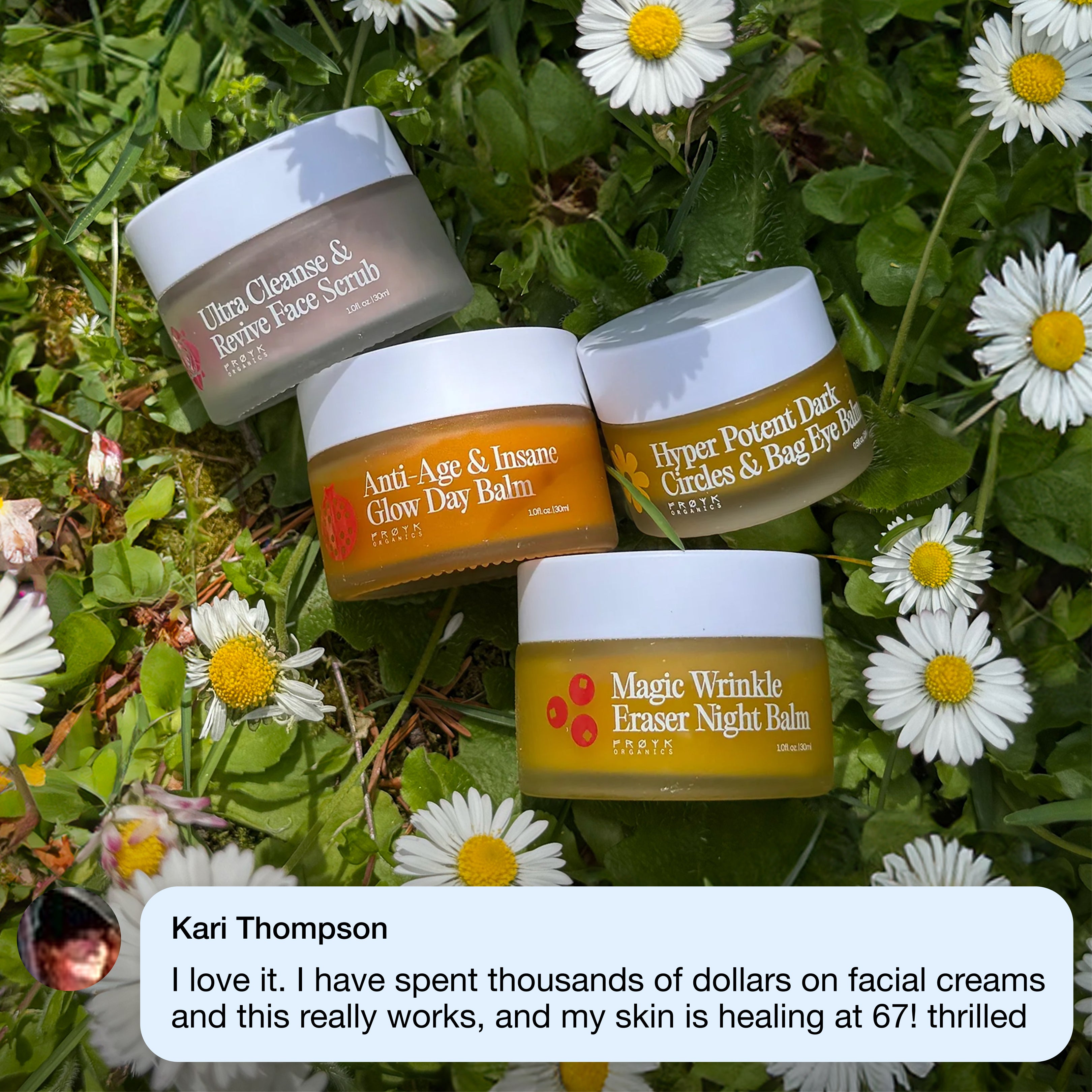
100% botanical actives. Sea buckthorn as the foundation. Zero water, zero synthetic preservatives. Rated 4.66/5 from 3,152+ reviews. 60-day money-back guarantee.
Shop the System - $119


