

 Account



Sea buckthorn oil for skin is one of the most compound-dense botanical oils in clean beauty. Sea buckthorn berry oil is cold-pressed for maximum potency, which preserves the abundance of plant compounds packed into each pure orange fruit. The oil is extracted from both fruit and seeds, and it is a source of vitamin C and vitamin E.
Hippophae rhamnoides thrives in Arctic conditions where UV exposure, cold, and poor soil force the plant to concentrate protective compounds. Those same compounds help defend skin against oxidative stress, barrier breakdown, and inflammatory damage.
We're Frøya Organics, and sea buckthorn is the hero ingredient in our water-free balm. We reviewed the clinical evidence, including topical trials on barrier function, and found an ingredient that earned its place through data. Here are nine mechanisms you can verify.
1. Omega-7 Mimics Your Skin's Own Moisture System
Most plant oils moisturize from the outside. Sea buckthorn's omega-7 works differently, because your skin already makes it.
Palmitoleic acid (omega-7) is a natural component of human sebum. Your skin produces it as part of its own lipid barrier. Starting around age 30, sebum production begins declining, and by 40 and beyond the drop accelerates noticeably.
Sea buckthorn oil replenishes what your biology is losing, and a published fatty acid composition analysis of sea buckthorn confirms palmitoleic acid is the signature fatty acid of its fruit oil, concentrated far higher there than in most plant oils.
This is why sea buckthorn feels different from coconut or olive oil on your skin: it integrates rather than coating. As Skin Savvy Dermatology notes, "Omega-7 penetrates deeply to moisturize without clogging your pores." The comedogenic rating sits at 2 on a 0-to-5 scale, a low clogging risk even for combination skin.
Where heavier oils tend to sit on top, sea buckthorn is light and absorbs quickly. It’s rich in omega-7, a fatty acid your skin’s own oils contain, so it feels at home rather than greasy, which is why Arctic sea buckthorn anchors our organic skincare products.
2. Deep Hydration Through GLA's Prostaglandin Pathway
You moisturize every morning, yet your skin feels tight by midday. The issue isn't how much you apply: it's how deep it reaches.
Gamma-linolenic acid (GLA), one of the essential fatty acids in sea buckthorn seed oil, converts to prostaglandins inside your skin cells. Prostaglandins are signaling molecules that regulate inflammation, cell membrane integrity, and barrier repair at the cellular level. They instruct cells to strengthen their membranes and seal the intercellular lipid matrix.
Khan and Akhtar's 2014 study on topical sea buckthorn oil emulsion confirmed measurable barrier function improvement in human subjects. The hydration didn't just sit on top. It restructured how the skin held onto water, with lasting improvements to transepidermal water loss measurements.
Best for: Persistently dehydrated skin that doesn't respond to layering serums. If your skin drinks up every product you apply and still feels tight by afternoon, GLA's prostaglandin pathway addresses the structural deficit. If you only need lightweight surface moisture, omega-7 (section 1) handles that beautifully on its own.
3. Three Collagen Pathways Working Simultaneously
Building new collagen is only half the job. If you're not also blocking the enzymes that break collagen down, you're filling a bucket with a hole in it. Sea buckthorn works both sides at once, through three separate pathways.
Pathway 1: Vitamin C as synthesis cofactor. Vitamin C is required for the hydroxylation of proline and lysine, the biochemical steps that crosslink collagen fibers into stable structures. A peer-reviewed analysis found vitamin C is the sea buckthorn berries' primary vitamin, at 400 mg per 100g in the variety analyzed, with other varieties measuring higher. That's well above the roughly 53 mg in a comparable serving of orange.
Pathway 2: Beta-sitosterol stimulates fibroblasts. This plant sterol directly activates the cells that produce collagen and elastin in your dermis. Fibroblasts are your collagen factories, and beta-sitosterol keeps them productive.
Pathway 3: Polyphenols inhibit MMP enzymes. Matrix metalloproteinases actively break down existing collagen and elastin, and sea buckthorn's polyphenols block them. Omega-7 adds a fourth layer, activating the SIRT1 longevity pathway to promote collagen synthesis while suppressing the NF-kB inflammatory signaling that speeds collagen breakdown.
Few single ingredients address all three collagen mechanisms at once, which is what separates sea buckthorn from single-pathway actives.
4. Strengthens Your Skin Barrier with a Full Omega Spectrum
If your skin reacts to everything, stinging from products that used to be fine, redness that won't calm, tightness no moisturizer resolves, your barrier is likely compromised. Sea buckthorn is one of the few botanicals that feeds all four lipid families your barrier depends on.
Each omega plays a specific role. Omega-6 strengthens the intercellular lipid matrix. Omega-3 calms the inflammatory signaling that weakens barrier junctions. Omega-7 integrates into the sebum layer, and omega-9 maintains membrane fluidity so your barrier stays flexible rather than brittle.
Khan and Akhtar's 2014 research confirmed measurable barrier improvement from topical sea buckthorn application. For a compromised barrier, look for formulas with both seed and fruit oil to capture the full spectrum. That combination is the basis of the Frøya Organics barrier repair collection, formulated for skin that reacts easily.
5. Fights Visible Aging with Clinically Measured Results
Every oil claims to support skin longevity. Sea buckthorn is one of the few with a randomized controlled trial measuring exactly what changed, and after how long.
At the biomarker level, participants showed increased catalase (an antioxidant enzyme that neutralizes hydrogen peroxide in your cells) and decreased TNF-alpha (a pro-inflammatory cytokine directly linked to accelerated skin aging and collagen breakdown). These two shifts mean sea buckthorn works on both offense and defense: boosting protective enzymes while suppressing inflammatory damage.
Sea buckthorn is rare among botanical oils in having clinical documentation at all. For topical use specifically, Khan and Akhtar's 2014 research on a sea buckthorn oil emulsion confirmed measurable barrier improvement in human subjects. If you want the bigger picture on why skin ages the way it does, see our guide to why mature skin loses its glow.
Best for: Women who want measurable skin changes, not just a nice texture. Commit to three months of consistent use before evaluating results: that's the clinical benchmark.
6. Brightens Age Spots and Evens Skin Tone
Age spots and uneven tone add years to your appearance faster than fine lines do. Most brightening actives, from hydroquinone to high-concentration vitamin C serums, come with irritation trade-offs that sensitive mature skin can't tolerate.
The approach is gradual but persistent, and over time it shows up as more even tone, restored radiance, and a healthier glow. That gradual-glow approach is exactly what our Anti-Age & Insane Glow Day Balm is built around, formulated with sea buckthorn and pomegranate for daytime wear.
7. Calms Inflammation and Redness at the Source
Surface calmers like aloe and chamomile soothe temporarily but never break the underlying inflammation cycle. Sea buckthorn works upstream, on the signaling that triggers redness in the first place.
Omega-7 activates SIRT1, a protein that suppresses NF-kB signaling, one of the body's master switches for inflammation. There is good reason botanical anti-inflammatories are gaining ground: a 2025 review in Frontiers in Pharmacology mapped how sea buckthorn suppresses the NF-kB and MAPK pathways and lowers mediators like TNF-alpha across skin models. Chan et al.'s 2024 trial adds a human data point: decreased TNF-alpha after 12 weeks.
Omega-3 from the seed oil helps too, competing with arachidonic acid to cut pro-inflammatory prostaglandins. This matters most for post-menopausal skin, where falling estrogen raises baseline inflammation, the low-grade activity known as "inflammaging." Larmo et al.'s 2014 study of 116 postmenopausal women found sea buckthorn oil supported mucosal health.
For reactive skin, consistent nightly use beats occasional heavy application. These pathways need steady activation to reset your skin's baseline.
8. Supports Wound Healing and Skin Renewal
Healers in Mongolia and Tibet used sea buckthorn for wound care for over a thousand years. Modern research shows which compounds drive that repair.
The GLA-to-prostaglandin pathway from section 2 runs healing too, managing the inflammatory phase then switching tissue into repair. Vitamin E, including the well-absorbed tocotrienols in sea buckthorn, shields fragile new cells, while beta-sitosterol wakes up the fibroblasts that rebuild collagen.
This isn't just for real wounds. Recovery from micro-needling, peels, lasers, or daily damage leans on the same pathways, so steady nourishment between treatments protects your results.
That renewal focus is what our Magic Revive & Glow Day Balm is built around. It also shows how oils differ: rosehip wins on vitamin A for turnover and scar fading, sea buckthorn on omega-7 and the ability to feed several repair pathways at once. They complement rather than compete.
9. Protects Against UV Damage and Environmental Stress
Arctic berries carry some of the densest carotenoid concentrations in the plant kingdom.
Beta-carotene, lycopene, and zeaxanthin absorb across UV wavelengths for broad antioxidant coverage. Sea buckthorn oil can combat environmental damage caused by pollution and UV rays, neutralizing the free radicals behind those damaging effects from external stressors. A 2018 study in the journal Antioxidants found sea buckthorn seed oil curbed UV-induced oxidative stress in lab-grown skin cells, partly by activating the cells' own Nrf2 antioxidant defenses.
This is supplemental antioxidant support, never a sunscreen replacement. Frøya's own stance is that moderate sun is fine and the goal is simply to avoid burning. Shade and light clothing handle most of it, with a mineral sunscreen for long stretches outdoors. That daily antioxidant defense is the thread running through Frøya's glowing skin products, a collection built on botanicals that help skin hold its radiance against everyday environmental stress.
A Note on Scope
Sea buckthorn is also studied for broader human health, with some research exploring links to cholesterol and cancer prevention, and the same oil appears in body and hair care. This article stays on external use, where the skin evidence is strongest.
Disclaimer: Sea buckthorn oil is a cosmetic ingredient, not a remedy for any health condition. It is not intended to treat, cure, or prevent any disease.
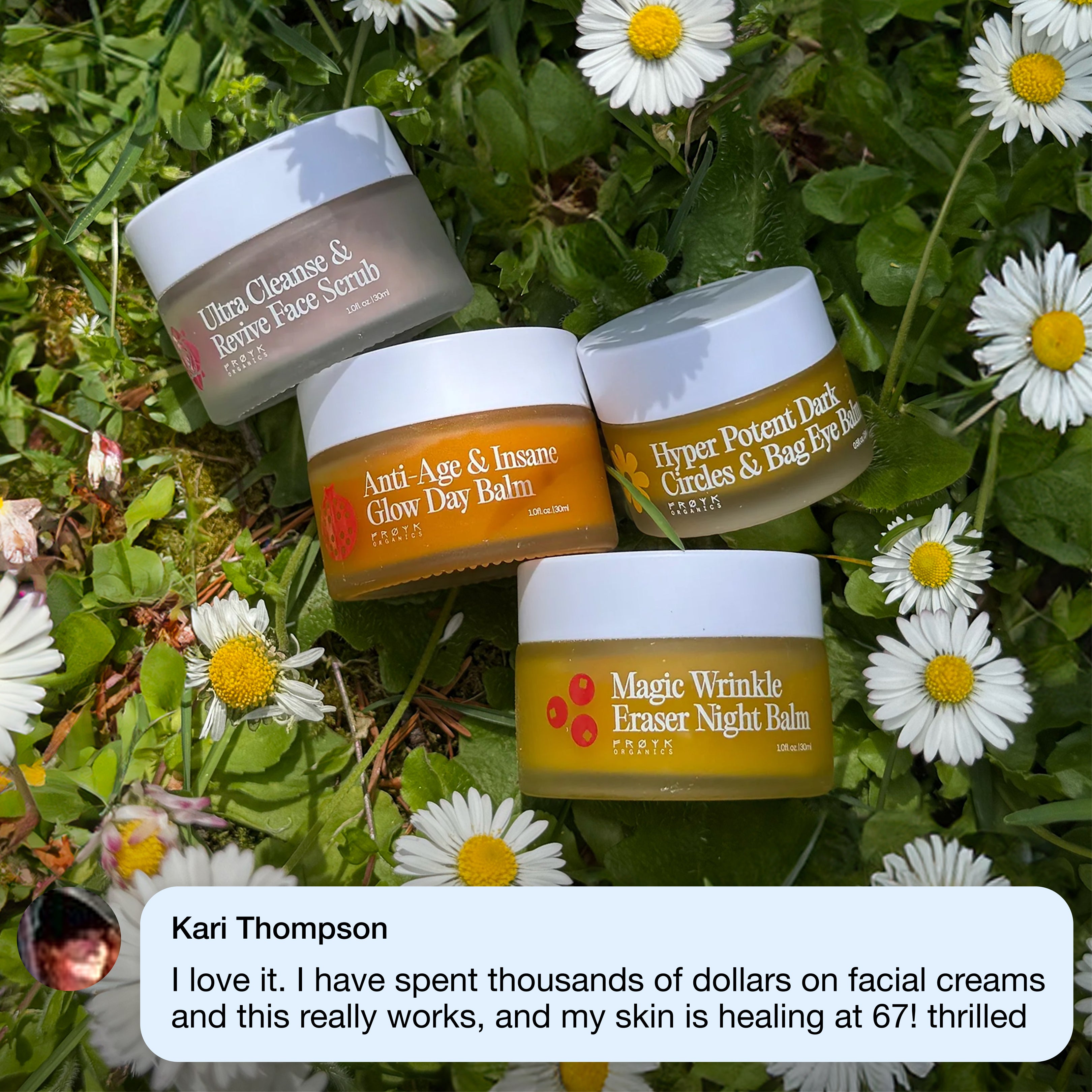
100% botanical actives. Sea buckthorn as the foundation. Zero water, zero synthetic preservatives. Rated 4.66/5 from 3,152+ reviews. 60-day money-back guarantee.
Shop the System - $119Frequently Asked Questions
Is sea buckthorn oil safe for sensitive skin?+
Does sea buckthorn oil stain your skin orange?+
What’s the difference between sea buckthorn seed oil and fruit oil?+
How does sea buckthorn compare to rosehip and argan for mature skin?+
Can sea buckthorn oil clog pores?+
How long before you see results from sea buckthorn oil?+


