

 Account


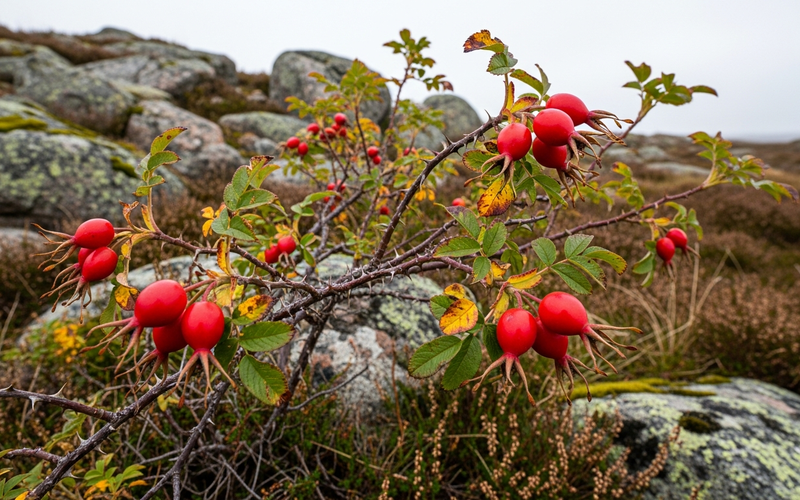
Rosehip oil for face care is cold-pressed from the fruit seeds of Rosa canina, the wild dog rose. Unlike many botanical oils, cold-pressed organic rosehip seed oil has been studied in peer-reviewed clinical trials, not only in traditional use. Its profile includes two essential fatty acids the skin cannot make on its own, a natural form of vitamin A, and a measurable antioxidant load.
Most guides oversell rosehip or reduce it to vague claims. The real evidence sits in clinical data most articles skip.
In a 2025 topical rosehip oil pilot study, 27 volunteers applied three drops to the face daily for five weeks, and those with deeper wrinkles showed the clearest reduction. It suits most skin types and supports a natural glow. Here is what research shows about the benefits of rosehip for mature skin.
1. Reduces Fine Lines and Wrinkles: Clinical Evidence
Rosehip oil helps minimize the appearance of fine lines, and there are numbers behind that. It works two ways at once: trans-retinoic acid (natural vitamin A) activates fibroblasts, the cells that build collagen and elastin, while rosehip also inhibits MMP-1, the enzyme that breaks existing collagen down.
The 2025 pilot tracked 27 people using rosehip oil daily for five weeks. Older users showed the strongest wrinkle reduction, the opposite of what a mild moisturizer would do.
A separate 2015 randomized trial in 34 adults aged 35 to 65 found significant crow's-feet reduction, though that one used oral rosehip powder rather than topical oil. Expect smoother skin in five to eight weeks of steady use, not overnight.
2. Supports Collagen Production When Skin Needs It Most
Generic moisturizers hydrate the surface but cannot address what is happening deeper. This is where rosehip oil benefits for aging skin become more than a buzzword.
Trans-retinoic acid, a natural form of vitamin A present in rosehip oil, activates fibroblasts, the same cells a dermatologist targets with prescription retinoids.
Building new collagen matters less if existing collagen is breaking down just as fast. Rosehip oil inhibits MMP-1, the primary enzyme responsible for collagen degradation. This dual action is especially critical for skin over 40, where degradation outpaces production every year.
Potency is sensitive to storage. Cold-pressed rosehip oil can lose a significant portion of its carotenoid content if stored improperly, so keep it in a dark amber bottle away from heat and sunlight, and use it within the stated shelf life.
Best for: Women in perimenopause or menopause experiencing visible skin thinning or loss of firmness. For firmer skin, Frøya Organics collagen-boosting balms for mature skin build on the same idea.
3. Fades Hyperpigmentation and Uneven Skin Tone
Most articles say rosehip helps with dark spots without explaining why. Dark spots and an uneven skin tone come from one thing: too much melanin, the brown pigment your skin makes. Rosehip oil works on that overproduction two different ways at once.
Pathway one, fixing the cause. Your skin needs enough linoleic acid, an omega-6 fatty acid, to stay balanced. When it runs low, the skin tends to make extra melanin, and that surplus settles into dark patches.
Rosehip seed oil is rich in linoleic acid, so applying it tops up what the skin is short on. That calms the overproduction at its source, rather than just bleaching the spot you can already see.
Pathway two, slowing the pigment factory. Melanin is built by an enzyme called tyrosinase. The natural retinoids in rosehip oil slow that enzyme down, so less new pigment gets made in the first place. Its lycopene and beta-carotene brighten on top of that through a separate route.
Results are not uniform. In the 2025 facial pilot, brown spots faded but UV spots rose slightly, so pigment response differs from person to person.
Give it about eight weeks of nightly use, and keep the area from burning during long spells outdoors, since sun exposure triggers the same melanin your skin is trying to settle.
4. Delivers Deep Hydration and Repairs Your Skin Barrier
If moisturizer alone stopped cutting it around your 40th birthday, there is a biological reason. Declining estrogen reduces how well skin holds moisture at the structural level, so the barrier itself needs rebuilding, not just topping up.
Rosehip oil is rich in linoleic acid (omega-6), alpha-linolenic acid (omega-3), and oleic acid (omega-9), more than 90% unsaturated fats. These are the same fatty acids your skin uses to build its own moisture barrier, the layer that keeps water in and irritants out.
Reviews of plant oils group rosehip with the fatty-acid-rich oils studied for barrier support, alongside its known antioxidant and anti-inflammatory activity. Regular use can improve hydration on tight, flaky dry skin.
It rates near 0 to 1 for pore-clogging and absorbs as a dry oil, with no greasy feeling, leaving skin light and soft.
Because rosehip works through its fatty acids, the way it is delivered matters. A waterless balm carries those fatty acids at full strength, with no water or fillers thinning them out, which is how Frøya formulates for mature skin that needs the barrier rebuilt.
Press it onto slightly damp skin for deeper hydration, and see our barrier repair balms for sensitive skin for a fuller routine.
5. A Gentler Alternative to Retinol for Sensitive Skin
"Nature's retinol" is rosehip oil's most popular nickname, and its most misleading one. Knowing why helps you set the right expectations.
Here is why that gap matters less than it sounds. For women with rosacea, eczema-prone skin, or a history of retinol sensitivity, rosehip oil offers directionally similar benefits at a pace skin can actually handle. Gentle cell turnover, collagen support, and softer texture, with no peeling and no purging.
Its antioxidants, essential fatty acids, and vitamins nourish and protect the skin while supporting hydration, softening texture, and strengthening the barrier. That combination is why it suits reactive skin that stronger actives tend to irritate.
One more point for women in perimenopause: unlike retinol, which is not recommended during pregnancy, rosehip oil is generally considered safe then, making it one of the few vitamin A sources available at that time. Call it retinol's gentler cousin, not its replacement.
6. Calms Inflammation and Soothes Reactive Skin Conditions
Skin that never used to react now flares at the smallest thing. If that sounds familiar, the hormonal shifts after 40 tend to turn up your skin's inflammatory response, and harsh anti-aging actives only push it higher.
Rosehip oil settles that reaction through three calming compounds working together, not just one.
This is why reactive conditions tend to respond. Rosacea, eczema, and general sensitivity all tend to flare around menopause, and multi-compound support helps settle them.
The effect also reaches deeper than surface relief. Research on rosehip suggests it helps macrophages, your skin's first-responder immune cells, shift from inflammation mode into repair mode sooner after damage. That shift is why rosehip tends to calm an active flare rather than just mask the redness for a few hours.
It absorbs fast without clogging pores, so even reactive skin that cannot tolerate heavier, occlusive products usually handles it well. Nightly use works better than occasional heavy layering.
7. Repairs Scars and Supports Skin Recovery
Rosehip oil does more than soften the look of a scar. It appears to influence how your skin's immune cells respond to damage, nudging them from inflammation toward active repair.
Here is what is happening underneath. When skin is injured, immune cells called macrophages rush in in attack mode to fight infection, which is normal and necessary. If they stay in that mode too long, the body lays down too much scar tissue.
Research on rosehip suggests it helps those cells switch into repair mode sooner, so less excess scar forms while healthy skin rebuilds. That is the difference between calming a scar and just covering it.
Set realistic expectations. Scar color and surface inflammation respond well to rosehip. Deep, pitted scarring, like some acne scars, may still need professional treatment alongside topical care.
Apply two to three drops directly to the scar twice daily for at least 12 weeks. Press it in rather than rub, so it absorbs without dragging on healing skin. During the day, keep a new scar from burning in strong sun, since UV can darken it while it heals.
For acne scars in particular, botanical balms built for acne-prone skin help soften their appearance over time without harsh actives.
8. Provides Antioxidant Protection Against Sun Damage
Every decade of sun exposure adds up. Rosehip oil cannot undo 40 years of UV damage overnight, but its antioxidants can interrupt the photoaging cycle while repairing what they can.
Arctic-grown Rosa canina produces measurably higher lycopene and carotenoid levels, because cold-climate stress pushes the plant to make more of them.
In the 2025 facial pilot, five weeks of daily rosehip oil left users with brighter, more even-toned skin and a healthy glow, which the researchers linked to its high vitamin A and carotenoid content. More broadly, those same carotenoids and antioxidants are what support cell turnover and help defend skin against the daily oxidative stress that ages it.
One honest note: rosehip carries natural vitamin A precursors at far lower concentrations than prescription retinoids, so it is generally well tolerated even on sensitive skin. Still, enjoy the sun in moderation rather than letting skin burn. Rosehip supports your skin's own defenses, but it is not sun protection on its own.
9. Addresses All Four Menopausal Skin Concerns in One Oil
Menopause does not change your skin one way. It changes it four ways at once, and most products target one concern at a time, which is why the shelf keeps growing while the results stay modest.
Here is how one ingredient covers all four. For collagen, its vitamin A supports production while it slows MMP-1, the enzyme that breaks collagen down. For pigment, its retinoids and lycopene slow melanin production while linoleic acid corrects the imbalance that drives it.
For dryness, its fatty acids rebuild the moisture barrier. For sun damage, its vitamins A and E work together against photoaging.
When the changes are this connected, chasing them one product at a time turns into a ten-step routine, where each step risks irritating skin that is already reactive. One multi-active step keeps it simple and works on the causes rather than the symptoms.
The easiest way to use rosehip is in a balm, where it sits alongside other botanicals in a form that is simple to apply and hard to overdo. A little pressed onto slightly damp skin, morning or evening, is all it takes, and it absorbs without leaving skin greasy.
In Frøya's line, wild Arctic rosehip is part of the Anti-Age & Insane Glow Day Balm, paired with beeswax and other Arctic botanicals.
Best for: Women in perimenopause or menopause who want a simpler routine without giving up results.
Skip if: you have active cystic acne, treat that first.
How to Choose Rosehip Oil for Your Face
Not every rosehip oil for your face is made the same. Look for certified organic rosehip oil that is cold-pressed and single-origin. Certified organic sourcing means the fruit grows without synthetic fertilizers or harsh chemicals.
- Scan the ingredient list for one oil with no added fragrance and no other ingredients, since a light, earthy scent is normal.
- For quality assurance, look for USDA Organic certification.
- Non-GMO labels help confirm purity.
Much commercial rosehip grows in the Andes Mountains, while wild Arctic sources are prized for their cold-climate antioxidants. Choosing organic rosehip oil that is also cruelty-free rounds out a clean pick.
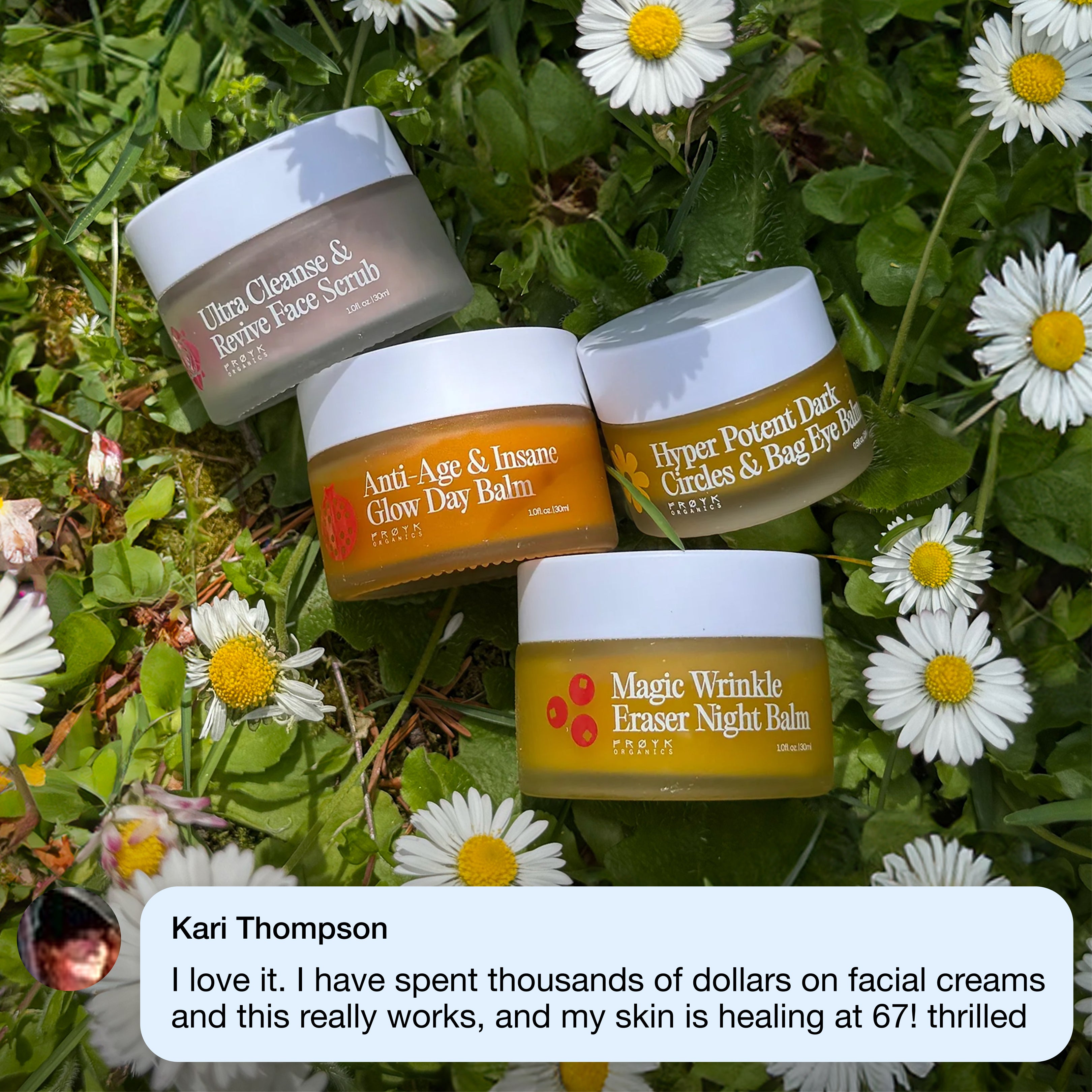
100% botanical actives. Sea buckthorn as the foundation. Zero water, zero synthetic preservatives. 60-day money-back guarantee.
Shop the System - $119Frequently Asked Questions
Is rosehip oil a true retinol replacement?+
Does rosehip oil contain vitamin C?+
How long before I see results from rosehip oil?+
What should I not mix with rosehip oil?+
How do I store rosehip oil so it doesn’t go rancid?+
Will rosehip oil clog my pores?+


