

 Account


You bought the retinol everyone said you needed. Two weeks in, you’re staring at flaking around your nose, a new patch of redness on one cheek, and a few weird bumps along your jaw. So you Google “is retinol ruining my skin” at 11 p.m. and fall into a TikTok rabbit hole of horror stories.
I want to take you out of that spiral without pretending it’s all fine. Most retinol side effects on the face are predictable adjustment, not damage. A few specific signs do mean you need to stop. After 40, every reaction hits harder because your estrogen has dropped and your skin barrier is thinner than it was at 32.
In this guide, you’ll learn how to tell purging from a true reaction, what the research really says about retinol and cancer, what four-year studies show about long-term use, exactly how to recover if you’ve already overdone it, and when bakuchiol is the smarter choice for menopausal skin. I’m calibrating here, not catastrophizing.
Why Retinol Side Effects Hit Harder After 40 and During Menopause
“I used this in my thirties with no issues, why is my face on fire now?” I get this question more than any other, and the answer is biology, not bad luck.
Estrogen does quiet work in your skin, and one of its most important jobs is regulating an enzyme called serine palmitoyltransferase (SPT). SPT is the rate-limiting step in your skin’s production of ceramides, the lipids that hold your barrier together. When estrogen falls in perimenopause and menopause, SPT activity drops with it. Fewer ceramides means a thinner, leakier barrier.
A thinner barrier changes everything about how retinol behaves on your face. The same molecule penetrates faster and deeper than it did a decade ago. Your slower-healing barrier can’t bounce back overnight. So the same product, at the same dose, produces a much bigger reaction.
Here’s the good news folded inside the bad news. The retinization period, the adjustment window where dryness and flaking happen, normally runs two to six weeks in younger adults. In perimenopausal skin, expect the longer end of that range and sometimes more.
But retinol still works in mature skin. Varani’s 2000 research, including a study with subjects averaging 76 years old using 0.4% retinol, found measurable collagen synthesis improvements. You haven’t aged out of the benefits. You’ve aged into needing a gentler entry point.
So when something flares up on your face, the real question becomes which kind of reaction you’re actually having.
Common Retinol Side Effects: What Is Normal Adjustment and What Is Not
Most retinol side effects fall into a short, predictable list, and most of them resolve. Here’s the honest breakdown of what’s expected and what isn’t.
Normal adjustment, usually weeks one to four:
- Dryness and flaking, typically peaking around week two
- Light peeling in fine sheets, not raw or weeping skin
- Transient redness right after application that fades within an hour or two
- Mild stinging or tingling the first one or two times you apply
- Sun sensitivity, which is real and lasts as long as you’re using retinol
- Initial breakouts in your usual breakout zones (more on this in the next section)
That list is the cost of admission. It’s uncomfortable, it’s annoying, and on mature skin it can take longer to settle than the bottle suggests. But it’s not damage.
The “not normal” shortlist. If you see these, something has gone wrong:
- Sandpaper texture across your cheeks or along the jaw
- Burning or stinging that lingers more than 10 minutes after application
- Redness that doesn’t fade by morning
- Swelling, itching, or a rash spreading beyond where you applied the product
- Cracked, weeping, or shiny-tight skin that feels too small for your face
Dermatologists like Dr. Charlotte Woodward and Dr. Victoria Manning describe the second list as irritant retinoid dermatitis, and after 40 it’s more common than most women are warned about. One detail matters specifically for mature skin: you may not see classic visible peeling at all. Instead, you’ll feel sandpaper texture under your fingers when you touch your cheek or jaw. That’s still a barrier problem, even without flakes.
If you’re reading the first list and nodding, keep going with adjustments. If you’re reading the second list and recognizing yourself, the question shifts from “should I push through” to “is this a purge or a reaction.” That distinction is what we’re going to settle next.
Retinol Purging vs. a True Reaction: How to Tell the Difference
Getting this wrong in either direction costs you. Push through a true reaction and you can wreck your barrier for months. Stop a purge too early and you abandon a treatment four weeks before it would have started working. Here’s how to tell them apart.
| Signal | Purging | Irritant Retinoid Dermatitis | Allergic Contact Dermatitis |
|---|---|---|---|
| What you see | Small whiteheads or papules in usual breakout zones (chin, nose, jawline) | Sandpaper texture, follicular bumps, diffuse redness | Itching, swelling, rash spreading beyond application zone |
| When it starts | Weeks one to three | Anytime, often early | Hours to days after application |
| With continued use | Resolves within four to eight weeks | Gets worse, not better | Worsens even when you reduce amount |
| Skin between spots | Looks normal | Looks irritated and tight | Itches and may spread |
After 40, the thinner barrier amplifies irritant reactions, which means you’re more likely to misread a reaction as a purge and tell yourself to “just keep going.” That’s the trap.
Three rules to make the call simple:
- If it itches or spreads beyond where you applied, stop. That’s an allergy until proven otherwise.
- If it burns more than 10 minutes after application, or worsens week over week, stop. That’s irritation, not adjustment.
- If it’s small bumps in your usual breakout zones and the rest of your skin looks normal, give it four more weeks at lower frequency. That’s almost certainly a purge.
One more honest note. Purging tends to surface congestion that was already forming under the surface, which is why it shows up in zones where you’ve always broken out. A new pattern of breakouts in places that have never broken out, especially the cheeks, is more likely irritation in disguise.
And if you’ve already pushed through too long, recovery is straightforward.
Retinol Ruined My Skin: How to Recover from Over-Retinolization
A beauty editor at HuffPost wrote about pushing her retinol use too hard for too long and dealing with persistent barrier damage that lingered even after she stopped. A 50+ woman on Quora described “red, itchy, dry peeling patches around my nose and mouth” that her old routine couldn’t fix. If you recognize yourself in either of those, you’re not broken and you’re not alone. You’re over-retinolized, and your barrier needs a reset.
Over-retinolization is sustained barrier disruption from too much retinol, too often, on skin that was already more vulnerable than the packaging accounted for. After 40, it happens at lower doses and shorter durations than the bottle implies, because the math of barrier permeability has changed. The signs are recognizable once you know what to look for: persistent redness that doesn’t fade overnight, tight shiny skin, water that stings, and a new sensitivity to products that used to feel fine.
Here’s the protocol that works:
- 1 Stop all retinol immediately. Not “taper down.” Stop.
- 2 Pause every active for two to four weeks. No acids, no vitamin C, no exfoliating cleansers, no scrubs.
- 3 Simplify to three products: a bland, non-foaming cleanser, a ceramide-rich moisturizer, and SPF.
- 4 For severe inflammation, OTC 1% hydrocortisone used per the label for no more than seven days can calm things significantly.
- 5 Wear SPF daily, no exceptions. Recovering skin sunburns faster than healthy skin.
- 6 Expect two to six weeks of healing for mild damage. Mature skin can take 8 to 12 weeks for full barrier rebuild.
See a dermatologist if you have weeping, cracking, signs of secondary infection, or no improvement after four weeks of consistent barrier repair. That’s not failure on your part, that’s a sign you need clinical support.
Most over-retinolization heals fully. Your skin is more resilient than this episode is telling you. Once you’re past it, you’ll likely want to know whether the deeper worry, the cancer one, has any teeth.
Are Retinol Side Effects Linked to Cancer? What the Research Actually Shows
Topical retinol used as directed is not linked to cancer in humans. Let me show you where the worry came from and what the actual evidence shows, because this question deserves a straight answer.
The worry traces back to a National Toxicology Program study that applied retinyl palmitate to hairless, melanin-free mice and exposed them to UV radiation. The mice developed tumors. Headlines did what headlines do.
What the headlines left out is that hairless melanin-free mice have no human equivalent skin, the study wasn’t designed to be predictive of cosmetic human use, and it has not been replicated in human studies. Regulators looked at the same data and the broader evidence base. The EU Scientific Committee on Consumer Safety reviewed retinyl palmitate in 2016 and again in 2022, and both times concluded it is safe at cosmetic concentrations. Topical retinoids have actually been shown to reduce precancerous actinic keratoses, which is the opposite direction from a carcinogenic signal.
One more distinction worth keeping straight. Oral retinoids like isotretinoin and acitretin are systemic prescription drugs with their own risk profile, including pregnancy risks that are very serious. Do not conflate them with OTC topical retinol. They are different molecules, different doses, and different rules.
Wear SPF every morning. Use OTC topical retinol as directed. The cancer concern isn’t yours to carry. Long-term safety is the next question, and the evidence there is also better than the internet suggests.
Long-Term Side Effects of Retinol: What 4-Year Studies Actually Show
The most stubborn myth about retinol is that long-term use thins your skin. Long-term data shows the opposite, when you’re using it correctly.
Here’s what the research actually documents:
- Bhawan’s 1996 four-year tretinoin study found no harmful long-term effects and continued improvement in photoaged skin.
- Ellis 1990 and Olsen’s 48-month studies showed sustained improvement, no atrophy, no thinning.
- A Johnson & Johnson two-year study of 204 subjects documented continued benefit and no adverse findings over time.
- Histology consistently shows that tretinoin thickens the collagen band in the dermis. It does not thin skin. It thins the corneocyte layer (the dead-cell roof), which is part of the cosmetic effect, while building structural collagen underneath.
- Varani and colleagues, in 2000, demonstrated that even subjects over 80 years old showed measurable collagen synthesis increases with retinoid use.
That’s a solid four-decade evidence base saying retinol, used correctly, is one of the few topicals with proven long-term structural benefit. The skin-thinning fear is largely a misread of what tretinoin does to the very top dead-cell layer.
The actual long-term risk is different, and it’s worth naming clearly. Dr. Jessica Wu has pointed out that persistent low-grade inflammation from chronic overuse can break down collagen over time. That isn’t retinol being harmful. That’s chronic inflammation being harmful, and chronic inflammation is what happens when you ignore irritation signals month after month, year after year.
This is why “start lower, go slower” after 40 isn’t just advice for week one. It’s advice for year ten. The right cadence at the right concentration is what makes retinol a long-game ally instead of a slow-burn problem.
So how do you actually get that right?
How to Reduce Retinol Side Effects: Concentration Ladder, Sandwich Method, and Application Protocol
You control three things, and getting them right turns retinol from a problem into a tool.
Lever 1: The concentration ladder
Not every starting point is right for every face. After 40, your rung is almost certainly lower than the influencer routines suggest.
- 0.025 to 0.05%: menopausal, sensitive, or barrier-compromised start
- 0.1%: standard sensitive start for most 40+ women new to retinol
- 0.3%: Dr. Justine Kluk’s recommended sweet spot once tolerated
- 0.5 to 1%: advanced OTC concentration, only after months of confirmed tolerance
Stay on each rung for at least 8 to 12 weeks before stepping up. Most over-retinolization happens when women skip rungs because they don’t feel “results” in three weeks.
Lever 2: The sandwich method
- Open sandwich: moisturizer first on damp skin, retinol on top once skin is dry, optional moisturizer after. Preserves retinol bioactivity while buffering the barrier. Use this day to day.
- Full sandwich: moisturizer before and a second layer after, with retinol buried between them. Reduces retinol bioactivity roughly threefold. Reserve it for sensitive flare-up nights.
Lever 3: Frequency and application
- Start at twice a week. Increase only after two to four weeks with no irritation.
- A pea-sized amount covers the entire face. One small dot, distributed in five spots, blended out.
- Apply to fully dry skin. Damp skin penetrates faster, and after 40 “faster” means “more irritating.”
- Avoid the eye area, the corners of the nose, and the lip line for the first month.
- SPF every morning. Non-negotiable.
One last rule does most of the work. The “pause and reset” rule: if you see persistent redness, sandpaper texture, or burning that doesn’t resolve, drop one rung in frequency for two weeks. The retinol routines that last 10 years are the ones that step backward when the skin says so.
If your skin still rejects retinol, the most-studied natural alternative was built for skin like yours.
When Retinol Is Not Right for You: Bakuchiol as a Gentler Alternative for Mature Skin
For some women in their forties, fifties, and beyond, retinol is the wrong tool even at the lowest dose. Bakuchiol is the closest evidence-backed alternative, and the research is stronger than most people realize.
The landmark study is Dhaliwal 2019, published in the British Journal of Dermatology. It was a 12-week randomized controlled trial of 44 patients comparing 0.5% bakuchiol twice daily against 0.5% retinol once daily. At the 12-week endpoint, the two arms showed comparable wrinkle and hyperpigmentation reduction. On hyperpigmentation specifically, bakuchiol actually outperformed retinol. On tolerability, it wasn’t close: retinol users reported significantly more scaling and stinging at every checkpoint.
Why does this matter so much for menopausal skin specifically? Because the lower-estrogen, lower-ceramide barrier reacts to retinol harder than younger skin does, and bakuchiol activates similar gene pathways (the ones tied to collagen synthesis and cellular turnover) without triggering the same irritation cascade. It’s also photostable, so the UV sensitivity concern is gentler. And because it doesn’t carry the same photo-instability or retinization curve, you can use it twice daily, morning and night.
You should consider bakuchiol over retinol if:
- You’ve tried retinol more than once and the irritation kept coming back
- You have rosacea, eczema-prone skin, or a visibly compromised barrier right now
- You’re pregnant, breastfeeding, or trying to conceive (retinoids are off the table)
- You want a morning-and-night active without the SPF non-negotiable taking up so much mental load
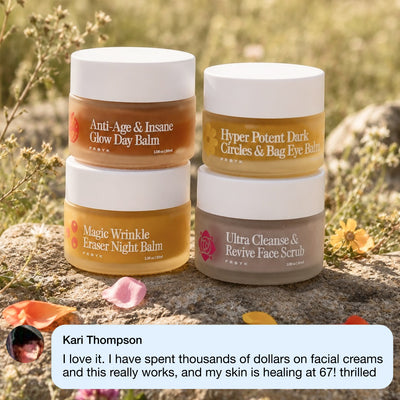
This is the territory Frøya Organics’ Complete System was built to address. A bakuchiol-based routine designed specifically for the post-40 barrier, made from Arctic plants that work with menopausal skin rather than around it. If retinol hasn’t worked for your skin, this is the routine our customers move to.
Shop the Complete SystemA few specific questions come up almost every time we talk about retinol side effects after 40, and the answers are short.


