

 Account


Nobody warns you that one morning you will lean into the mirror and spot a little brown mark on your cheek that was not there before.
Then you notice a few more on the backs of your hands. You start wondering if you did something wrong, or if your skin is suddenly turning on you.
Here is what is actually going on. Dark spots after 50 are flat patches of extra pigment, and most of them come from one simple thing: the sun you soaked up over the years.
The relief in all this? They are almost always harmless. The honest part is they are stubborn, so let's talk about what truly helps.
Key Takeaways
- Most dark spots after 50 are age spots, also called liver spots or solar lentigines, caused by years of sun exposure.
- They are usually harmless, but any new or changing spot should be checked by a dermatologist to rule out skin cancer.
- True age spots are mostly permanent, so the realistic goal is to fade their look and prevent new ones.
- A gentle, botanical routine plus smart sun protection supports a more even tone over time.
What Are Dark Spots?
Dark spots after 50 are flat areas of extra pigment that form on skin exposed to the sun over many years. You will hear them called age spots, sun spots, liver spots, or the medical name, solar lentigines.
They are usually tan to dark brown, flat, and range from freckle size to about half an inch. They show up where the sun hits most: the face, hands, shoulders, arms, and the tops of your feet.
Despite the "liver spot" nickname, they have nothing to do with your liver. They are simply a record of lifetime UV exposure, which is why the Mayo Clinic notes age spots appear on sun exposed skin.
What Causes Dark Spots on Mature Skin?

Dark spots form when ultraviolet light speeds up melanin production in your skin. Melanin is the pigment that gives skin its color. After years of repeated sun exposure, that pigment clumps and shows up as dark patches.
Tanning beds do the same thing, so they count as sun damage too. If you want the deeper story on how years of UV light change the skin, this guide on how to repair sun damaged skin breaks it down.
Mostly harmless, but watch for changes.
True age spots are harmless and usually do not need treatment. They can look like skin cancer, though, so any spot that darkens or changes should be seen by a dermatologist. (Cleveland Clinic, "Liver Spots")
The Menopause Connection
Here is the part most articles skip. After 50, falling estrogen can nudge your skin to make more pigment, which is why more women develop age spots around this time.
Your skin also renews itself more slowly now, so spots linger longer once they appear. That mix is why many women see spots arrive alongside other skin changes after 50.
Age Spots vs. Melasma vs. Dark Marks
Not every dark spot is the same, and the difference matters for how you handle it.
- Age spots (solar lentigines): flat brown spots from the sun.
- Melasma: larger patches tied to hormones, common around menopause.
- Post-inflammatory marks: hyperpigmentation left behind after a blemish or irritation heals.
Your skin tone plays a role too. Some skin types hold onto these marks longer than others, which is why the same spot can fade fast on one person and stick around on another. Figuring out which one you are looking at saves you from throwing the wrong fix at it.
How Dark Spots Behave on Darker Skin
On darker skin, these marks often look deeper and linger longer, because the skin makes more melanin in response to sun and irritation. That is also why harsh actives can backfire on deeper tones, the irritation can leave a mark that outlasts the original spot. The gentler your approach, the less you risk trading one spot for another.
When Dark Spots Could Signal Skin Cancer
Most age spots are harmless and do not require treatment, but some skin cancers can look just like them. That is the one reason not to play doctor with your own skin.
See a dermatologist for any spot that grows fast, bleeds, itches, or just looks different from the rest. Snap a photo of anything that is changing so you can compare its appearance month to month, which makes an early diagnosis much easier.
The ABCDE check for suspicious spots.
Check new or changing spots against the ABCDEs: Asymmetry, irregular Borders, uneven Color, a Diameter greater than about 6 millimeters (a pencil eraser), or any spot that is Evolving. When in doubt, get it looked at. (American Academy of Dermatology, "What to look for: ABCDEs of melanoma")
Can You Get Rid of Dark Spots?
Let's be straight about this. True age spots are usually permanent and rarely fade on their own. You cannot scrub away decades of sun in a weekend.
So the smart goal is not to erase them. It is to soften their look, support a more even tone, and stop new ones from forming.
Even professional treatments take months to show results, and spots often come back without sun protection. That is exactly why prevention and consistency beat chasing the desired results overnight. (Cleveland Clinic, "Liver Spots")
That reality is freeing, not discouraging. A steady, gentle routine often does more for your skin than any single aggressive fix.
Treatments to Fade Age Spots, From Clinical to Natural
If spots really bother you, there is a full menu, and it runs from gentle to intense.
At the strong end sit clinic options like laser treatments, laser resurfacing, freezing (cryotherapy), chemical peels, and dermabrasion, each done by a dermatologist. These can lighten dark spots, but they are costly, can irritate, and need a dermatologist.
Then there are the at-home routes people try:
- Over-the-counter treatments and medicated creams: Vitamin C, retinoids, and acids can lighten age spots, but they often bring flaking, redness, and more sun sensitivity, which hits harder after 50.
- Home remedies: Apple cider vinegar, lemon juice (citric acid), and aloe vera get passed around a lot, yet the evidence is weak and some can irritate or increase sun sensitivity.
None of these are wrong. They just ask a lot of thinner, drier mature skin. That is why many women want a calmer path that works with the skin, not against it.
A Natural Approach to Even Skin Tone After 50

So what actually helps? Since dark spots come from years of sun and slower cell turnover, the goal is not a miracle fix. It is a simple routine that does three quiet jobs well.
Clear the dull surface layer so spots look less obvious. Feed the skin antioxidant-rich botanicals that support a more even tone. And support the barrier so skin looks fresh instead of tired.
This is where a botanical routine earns its place. Plants that survive the Arctic grow dense with antioxidants, and Frøya Organics builds its whole range around them. The formulas are waterless with no fillers, so a tiny amount does focused work.
That thinking shapes the Complete System for Mature Women's Skin, a waterless, botanical routine made for skin over 50. No fillers, no harsh acids, just a few Arctic plants each doing one job.
Ultra Cleanse & Revive Face Scrub

This waterless scrub lifts away the dull, flaky top layer that makes dark spots look deeper than they are. After 50, your skin sheds old cells more slowly, so they sit on the surface and mute your glow.
A gentle scrub two or three times a week keeps skin looking fresh without roughing it up. Our gentle face scrub starts as a powder, so add a little to a dry palm, mix in some water, and massage it over your face. Rinse, then keep the jar dry between uses so it lasts.
Anti-Age & Insane Glow Day Balm

Rosehip is the heart of this balm, and rosehip is naturally rich in vitamins A and C, the nutrients that help dull skin look brighter and more even over time. Sea buckthorn piles on antioxidants for a healthy glow, and organic beeswax seals it all in so moisture stays put.
It sinks in without feeling heavy, which is why it works so well as your morning step. Smooth a thin, fingertip layer of the anti-aging day balm over clean skin each morning. A little is plenty, and if your skin looks orange, you used too much, so wipe some off and go lighter next time.
Curious why one plant does so much for mature skin? Here is a closer look at rosehip oil for skin.
Wrinkle Smoothing Night Balm

Your skin does most of its repair while you sleep, so night is when rosehip and Arctic botanicals can support a smoother, more even surface. This balm leans right into that window.
The wrinkle night balm is richer than the day balm, made to sit and work overnight while you are not touching your face. Rinse your skin, then press a thin layer over your face and neck before bed. A small amount goes a long way, so resist the urge to pile it on.
How to Prevent Age Spots
Here is the honest truth. Preventing new spots is easier and more reliable than fading old ones, and it all comes down to the sun.
You do not need to fear daylight. The goal is simple: enjoy the sun in moderation and never let yourself burn.
- Limit midday sun, when rays are strongest.
- Seek shade and wear a wide-brimmed hat.
- Choose clothing with a UPF of 40 to 50 for strong cover.
- Skip tanning beds completely.
- Support your overall health with good sleep and regular exercise, which help skin stay resilient.
- For long stretches outdoors, dermatologists suggest a broad-spectrum mineral sunscreen.
Pair those habits with a steady routine, and you give new spots far fewer chances to form. For more on building that habit, see this guide to the best skincare over 50.
So, What Should You Actually Do?

Here is the part most skincare ads skip. Dark spots after 50 are not a flaw. They are the mark of a life spent outside, in the sun, actually living, and that is nothing to erase in a panic.
So take the pressure off. You cannot undo decades of sun in a week, and any product that promises you can is lying to you. What you can do is soften how those spots look, support a more even tone, and protect the skin you have right now.
That is the whole game: gentle, steady care and smart sun habits, repeated. Not a harsh fix that leaves your skin raw, but a few good botanicals doing quiet work while you get on with your life.
Your skin spent 50-plus years earning its character. It deserves a routine that respects it, not one that fights it.
Want to see what this looks like on real faces? Take a look at these real customer before afters from women using a natural routine on mature skin.
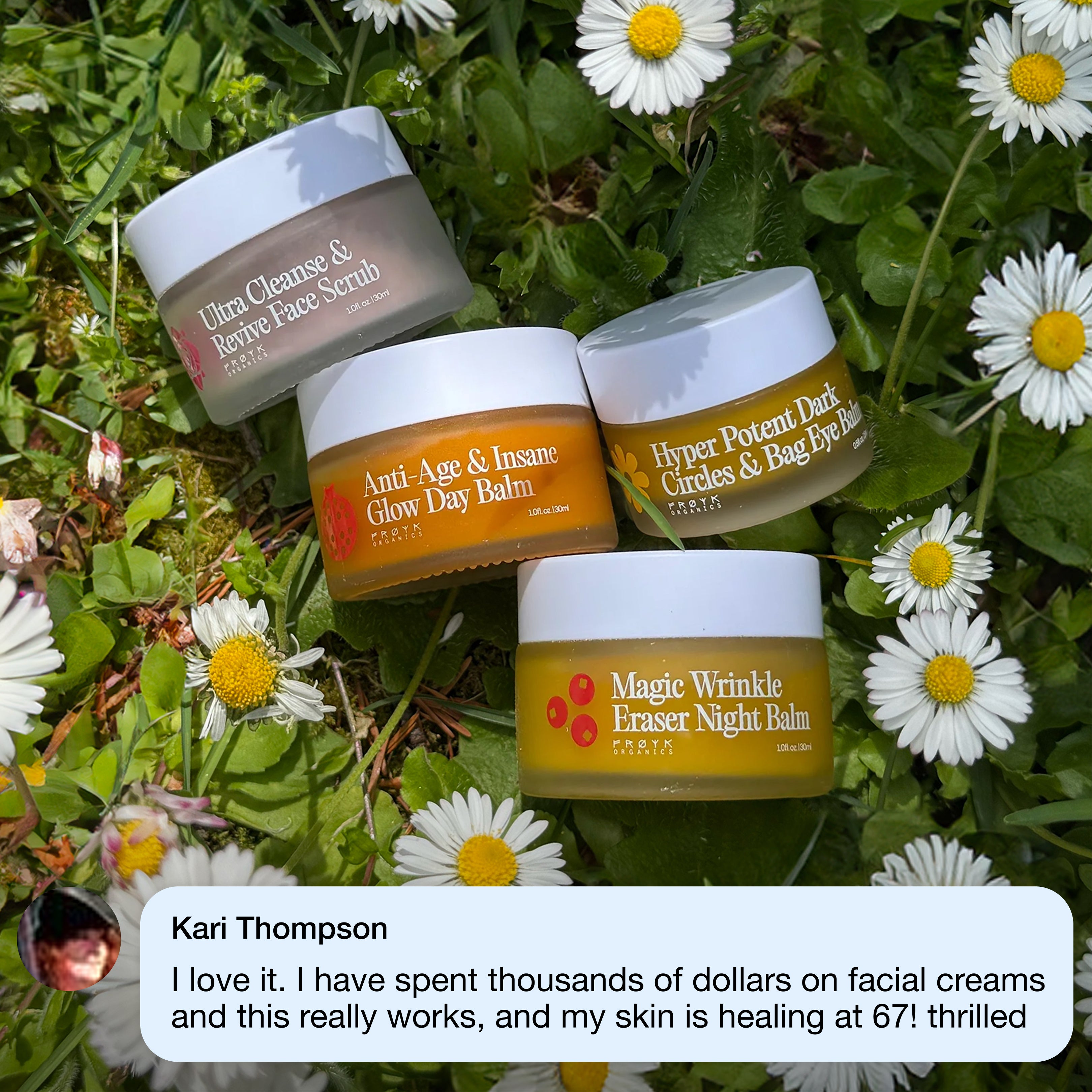
Four waterless Arctic balms that support a more even, radiant tone while caring for the skin barrier, backed by a 60-day money-back guarantee.
Shop the System TodayDisclaimer: This article is for general information only and is not medical advice. Frøya Organics products are cosmetic and are not intended to diagnose, treat, or prevent any skin condition, including skin cancer. Always see a qualified dermatologist for any new, changing, or concerning spot on your skin.
Frequently Asked Questions
Is there a difference between dark spots and age spots?+
Do old age spots go away?+
Do chemical peels work for age spots after 50?+
Do over the counter treatments work for age spots?+
What deficiency causes dark spots on skin?+
How to get rid of menopause dark spots naturally?+
What vitamin helps get rid of dark age spots?+
What is the best dark spot remover for older skin?+


