

 Account


You catch your reflection in the car mirror and see them. The brown spots on your cheeks. The fine lines that seem deeper than last year. The rough patch on your jaw that no amount of moisturizer smooths.
Here is the truth most brands will not tell you: you cannot erase every trace of sun damage. But you can visibly repair a lot of it, even after 50. The right approach can fade spots, soften lines, and rebuild what decades of sun exposure wore down.
It takes the right steps in the right order, not a random cream you grabbed off a shelf. Below, you will learn what sun damage actually does, why it hits harder after menopause, and how to reverse the signs one layer at a time.
Key Takeaways
- Most facial aging is sun damage, not age, so much of what you see in the mirror can actually be improved.
- Sun damage cannot be fully erased, but it can be visibly repaired, even after 50, with consistent daily care.
- Menopause speeds up the damage because falling estrogen means less collagen, a weaker barrier, and slower repair.
- Four steps do the work: stop new damage, feed skin antioxidants, support cell turnover, and rebuild the barrier.
- Gentle botanicals suit mature skin better than harsh retinol or acids, which often sting and irritate a thinner barrier.
What Sun Damage Does to Mature Skin
Sun damage is premature skin aging caused by years of UV radiation, and it looks different from natural aging. The signs of sun damage show up as dark spots, deeper wrinkles, uneven skin texture, and sagging skin that has lost its bounce.
Up to 90% of visible skin aging comes from the sun, not from getting older. So most of what you see is earned from sun exposure, which means much of it can be improved.
UV radiation causes direct DNA injury in your skin cells, and UVB rays are the ones that mainly cause sunburn. Your melanin steps in to shield you, which is why extra pigment clusters into sun spots and uneven skin tone.
At the same time, UV rays break down collagen production and weaken skin elasticity. If blotchy color is your main worry, targeted even skin tone products can help fade those areas over time.
Why Sun Damage Hits Harder After 50
Sun damage lands harder on mature skin because your skin has less power to repair itself. After menopause, that repair slows to a crawl.
The reason is estrogen. When estrogen drops, your skin makes less collagen and holds less moisture. Research in Clinical and Experimental Dermatology shows women lose up to 30% of their skin collagen in the first five years after menopause.
This is why the same sun habits show up so much faster now. Your barrier is weaker, so skin damage sticks. Many of these shifts overlap with other menopause skin changes you may already notice, like dryness and loss of firmness.
The good news is real. Slower repair does not mean no repair, and the right care speeds things back up.
How Do I Repair My Skin From Sun Damage?
You repair sun-damaged skin with a combination approach, not one magic product. Full reversal is hard, but real, visible improvement is very possible.
Four things do the heavy lifting:
- Stop new damage so your skin can catch up on repair
- Feed it antioxidants to fight the free radicals that break down collagen
- Support cell turnover to smooth uneven skin texture and fade spots
- Rebuild the barrier so skin holds moisture and heals faster
Dermatologists agree that photodamage cannot be fully erased, but combining these steps produces clear results. Each one is simpler than it sounds. Let's walk through them.
Stop New Sun Damage First
Before you repair anything, you have to stop adding to the pile. The damage that shows up later comes from burning and long, unprotected hours in strong sun.
Here is where the usual advice gets it wrong. You do not need to coat your skin in sunscreen every single day. Short, moderate sun is good for you, and treating daylight like the enemy is not the goal.
What matters is not burning. Save sunscreen for the days you will be out for a long stretch, and reach for a mineral, natural formula rather than a chemical one.
For extended time outside, protect mature skin like this:
- Enjoy the sun in shorter doses rather than long, unprotected stretches
- Seek shade between 10 AM and 4 PM, when harmful UV rays peak
- Try wearing protective clothing like a wide-brim hat and light long sleeves
- Use a mineral, water-resistant sunscreen with a sun protection factor of 30 or higher when you will be out for hours
- Skip tanning beds completely, since they deliver concentrated UV light
This keeps sun damage from getting worse while your skin does its repair work underneath.
The Skincare That Repairs Sun-Damaged Skin
Topical treatments do three jobs on sun-damaged skin: they defend, they renew, and they rebuild. Here is how each one works, and what to actually put on your face.
Antioxidants That Fight UV Damage
Antioxidants are your daytime defense, and they matter most for sun repair. UV light creates unstable molecules called free radicals that chew through your collagen. Antioxidants neutralize them before they do damage.
Vitamin C is one of the best-studied for antioxidant protection. It supports collagen and fades UV-driven dark spots over time. You do not need a lab-made serum to get it, though, since botanicals like sea buckthorn and rosehip are naturally rich in the same antioxidants.
Rosehip is a standout here. A 2025 study in the journal Cosmetics found that facial wrinkle depth and skin texture improved after just five weeks of daily topical rosehip oil. Its natural vitamin A and carotenoids make rosehip oil for mature skin a gentle way to fade sun damage without the sting of retinol.
Support Skin Cell Turnover and Collagen
Sun damage leaves skin rough and dull because old, damaged cells pile up on the outermost layer. Speeding up skin regeneration clears them and brings fresher skin to the surface. The trick is doing it gently, since mature skin does not take well to force.
That is where most routines go wrong. Retinol boosts turnover, but it comes at a cost after 40. On thinner, lower-estrogen skin, it often brings flaking, stinging, and weeks of irritation.
The harsher options are not much kinder. Alpha hydroxy acids and other chemical exfoliants sting and dry out sensitive skin, and niacinamide or azelaic acid, while helpful for uneven tone, are still lab actives your barrier may reject.
This is where rosehip earns its place. It naturally holds a mild form of vitamin A, giving you the same turnover support without the burn. A soft scrub handles the rest, smoothing rough texture while leaving your barrier intact.
Rebuild the Skin Barrier
Your barrier is the layer that locks in moisture and keeps skin calm. Sun damage and menopause both weaken it, which is why aging skin feels dry and tight.
You will hear a lot about ceramides and hyaluronic acid for barrier repair. Those work, but they are not the only path. Rich botanical oils and beeswax rebuild the barrier in their own way.
Ingredients like beeswax, squalane, and thistle seal in moisture and strengthen your skin from the outside. If your barrier feels compromised, this guide on how to repair a damaged skin barrier breaks down the natural approach. Once you understand these three jobs, a real routine is easy to picture.
A Complete Routine to Repair Sun-Damaged Mature Skin

By now the pattern is clear: sun repair works best when defense, renewal, and barrier support happen together. Most people try to piece it together from four unrelated products that were never meant to work as a team.
That is the thinking behind the Complete System for Mature Skin, which pairs these steps into one routine. Here is what each step does and the botanicals behind it.
|
Step |
Product |
How It Repairs Sun Damage |
Why It Works |
|
Cleanse |
Buffs away rough, dull, sun-worn texture and lifts old cells |
Gentle physical exfoliation from rice flour and apricot, no harsh acids |
|
|
Day |
Defends against UV free radicals and helps fade dark spots |
Sea buckthorn, pomegranate, rosehip, and vitamin E, all natural antioxidants |
|
|
Night |
Repairs overnight and softens wrinkle depth |
Rosehip, arnica, and antioxidant extracts work while skin regenerates |
|
|
Eyes |
Restores the thin, sun-worn under-eye area |
Arctic arnica, squalane, and rosehip for crepiness and puffiness |
The daytime step earns the most attention for sun repair. The Anti-Age & Insane Glow Day Balm pairs sea buckthorn and pomegranate, two botanicals studied for UV defense, with rosehip for stimulating collagen production and fading spots.
Every product is waterless and made from wild Arctic plants. A little goes a long way, so the science does the work, not the marketing.
When to See a Dermatologist for Sun Damage
Daily skincare handles the everyday signs, but deeper concerns call for a clinic. For severe or deep damage, professional treatments often produce greater improvements than topical products alone. A dermatologist can walk you through cosmetic treatment options and match them to your skin type.
Common in-office treatments include:
- Laser therapies like laser skin resurfacing, which can target melanin to remove sun spots and calm redness
- Collagen induction therapy (microneedling) to firm loose skin and improve texture
- Chemical peels, a chemical solution that lifts pigment and smooths uneven skin tone
- Cryosurgery, which freezes off specific sun spots
- Injectable treatments and medical-grade skincare for deeper wrinkles and volume loss
See a dermatologist right away for any spot that changes, a sore that will not heal, or scaly patches that keep returning. Repeated sunburn raises the risk of melanoma, and most skin cancers are highly treatable when caught early.
How to Keep Sun-Damaged Skin From Getting Worse
Repair only holds if you keep it up. The women who see lasting results stay consistent, rather than chasing quick fixes.
Protect your progress with a few habits:
- Stick with your daily routine, morning and night
- Support skin health from the inside, since hydration and a healthy diet help your skin repair itself
- Book a yearly skin check to catch changes early
Simple daily care beats occasional intensive effort. A steady rhythm of gentle mature skin balms keeps your barrier strong and your tone even for the long haul.
The Difference a Routine Makes

Repairing sun-damaged skin is not about chasing a filtered, flawless face. It is about seeing your own skin look clearer, calmer, and more like itself again.
The women who commit to a real routine notice it: sun spots that soften, skin that feels less tight, and a radiant complexion returning. Change happens gradually, then all at once.
Their skin had years of sun behind it, the same as yours. With steady care, it kept more repair in reserve than the mirror ever showed.
Disclaimer: This article is for general information only and is not medical advice. Sun-damaged skin can sometimes signal serious conditions, including skin cancer, so please see a board-certified dermatologist for any changing spots, sores that will not heal, or concerns about your skin. Individual results vary.
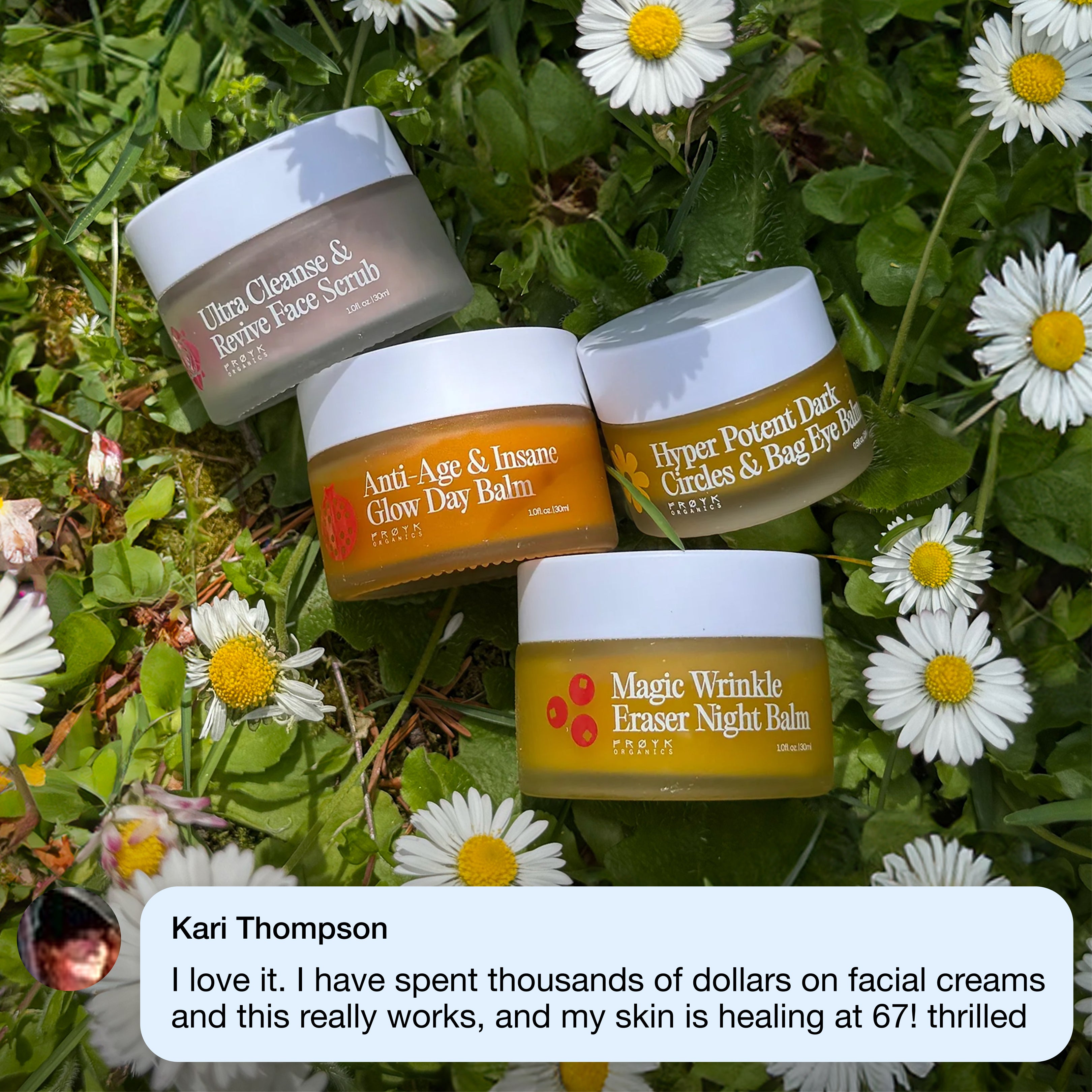
Wild Arctic botanicals and organic beeswax. Zero water, zero synthetic fragrance. Four balms in one routine that feeds the barrier lipids a lasting glow depends on, backed by a 60-day money-back guarantee.
Shop the System - $11Frequently Asked Questions
Can sun-damaged skin be reversed?+
Is it too late to fix sun-damaged skin?+
Does sun damage go away on its own?+
How long does it take to repair sun-damaged skin?+
Can you repair sun damage naturally?+


