

 Cuenta


Aquí está la parte que la mayoría de personas interpreta al revés. Lo que estás viendo no es en su mayoría edad. Los estudios en mujeres caucásicas sitúan la exposición solar detrás del hasta 80% del envejecimiento facial visible, lo que significa que gran parte de ello puede seguir cambiando.
La respuesta corta: el daño solar en tu rostro es parcialmente reversible. La pigmentación y la textura de la piel responden bien a un cuidado consistente. Las arrugas profundas y los vasos sanguíneos rotos no.
Esta brecha es por qué Frøya Organics construye sus bálsamos alrededor de plantas árticas silvestres como el escaramujo y la árnica, que apoyan a tu piel en hacer su propio trabajo de reparación en lugar de forzarla.
A continuación, aprenderás a leer tu propio rostro, cuáles de los signos de daño solar realmente se desvanecen, cuáles necesitan un dermatólogo, y qué cuidado diario realmente apoya la reparación después de los 50.
Puntos Clave
- La exposición solar impulsa la mayoría del envejecimiento facial visible, así que gran parte de lo que ves puede mejorar.
- Los rayos UV cambian permanentemente el ADN en tus células de piel, pero cómo se ve tu piel es una pregunta separada.
- Las manchas solares, la pigmentación desigual y la textura áspera de la piel son los signos más receptivos.
- Los capilares rotos y las arrugas profundas necesitan tratamiento clínico, no cuidado de la piel.
- Todavía estás acumulando exposición UV en este momento, así que proteger tu piel hoy sigue siendo rentable.
Qué es Realmente el Daño Solar en Tu Rostro
El daño solar, o fotoenvejecimiento, es el envejecimiento prematuro causado por radiación ultravioleta en lugar del envejecimiento natural. Es un proceso separado con su propia apariencia, y los dermatólogos pueden distinguir los dos.
La luz UV viene en dos formas que importan aquí. Los rayos UVB golpean la superficie y causan quemaduras solares. Los rayos UVA penetran más profundo, llegando a la capa donde vive tu colágeno, y pasan directamente a través del vidrio de las ventanas.
Esa última parte sorprende a la gente. Tu desplazamiento, tu asiento junto a la ventana de la cocina, la luz de la tarde en tu escritorio. Todo cuenta como exposición solar, que es por qué el daño solar crónico se acumula tan silenciosamente durante décadas.
Debajo, los rayos UV hacen dos cosas a la vez. Activan enzimas que descomponen el colágeno existente y ralentizan la producción de colágeno nuevo. Tu piel termina perdiendo estructura más rápido de lo que puede reconstruirla.
Los Signos de Daño Solar en la Piel Madura

La mayoría de signos de daño solar aparecen en las áreas que reciben más luz: tu rostro, cuello, pecho y el dorso de tus manos. Aquí hay lo que debes buscar.
- Manchas solares y manchas de la edad. Manchas marrones planas con bordes limpios, causadas por los rayos UV que empujan tus células de piel a producir pigmento extra en un lugar.
- Pigmentación desigual. Un aspecto manchado y parcelado en las mejillas y la frente en lugar de un tono uniforme.
- Textura áspera de la piel. Células viejas y dañadas acumulándose en la capa externa, dejando una piel que se siente como papel de lija bajo tus dedos.
- Líneas finas y arrugas. Especialmente alrededor de los ojos y la boca, donde la piel es más delgada.
- Vasos sanguíneos visibles. Líneas rojas finas en la nariz y las mejillas, llamadas telangiectasia.
- Opacidad. Un cutis cansado y plano que el maquillaje se sienta sobre en lugar de hundirse.
Una nota sobre el color de la piel. La piel más oscura se quema menos fácilmente porque más melanina absorbe algo de los rayos UV, pero cada tipo de piel sigue desarrollando daño solar. Los cambios de pigmentación suelen ser el primer signo, y pueden ser más tercos de desvanecerse.
Por Qué el Daño Solar Golpea Más Fuerte Después de los 50
Tu piel siempre ha estado reparándose a sí misma en el fondo. Después de la menopausia, ese equipo de reparación se hace más pequeño.
Cuando los estrógenos bajan, tu piel produce menos colágeno y retiene menos humedad. El daño que solía desvanecerse en semanas ahora persiste, y tu barrera es más delgada mientras espera. Estos cambios se superponen con otros cambios de piel por menopausia después de los 50 que probablemente ya has notado.
Ahora la parte que casi nadie te dice.
Lee eso de nuevo, porque cambia toda la imagen. La exposición solar temprana sigue contando, y la exposición posterior se acumula sobre ella. La mayoría de tu exposición a rayos UV de toda la vida ha llegado durante la edad adulta, lo que significa que lo que hagas ahora realmente cuenta.
Cuáles Signos de Daño Solar Pueden Ser Reversibles
Aquí está la división honesta. Una vez que los rayos UV alteran el ADN dentro de tus células de piel, ese daño no puede ser deshecho. Cómo se ve tu piel es una pregunta diferente, y la apariencia responde al cuidado consistente.
Dos cosas mejoran más confiablemente.
Pigmentación. Las manchas solares y las manchas marrones se desvanecen gradualmente con cuidado diario constante. Rara vez desaparecen, pero se suavizan lo suficiente para cambiar cómo se ve tu rostro a la luz del día.
Textura de la piel. Los parches ásperos se suavizan conforme las células de la superficie vieja se aclaran y sale piel nueva. Este suele ser el primer cambio que las mujeres notan.
Tu piel ya está intentando repararse a sí misma. Los investigadores han medido qué tan rápido.
Sin producto involucrado. Eso es tu piel haciendo su propio trabajo.
El problema después de los 50 no es que la reparación se detuvo. Corre más lentamente, y la exposición solar fresca sigue interrumpiéndola antes de que termine. Dale menos interrupciones y apoyo constante, y la reparación empieza a mostrarse.
Cuáles Signos de Daño Solar No Pueden Ser Reversibles
Esta es la sección que la mayoría de marcas omite. Importa, porque saber dónde está la línea te ahorra dinero y decepción.
- Capilares rotos. No hay evidencia de que ningún producto tópico elimine un vaso sanguíneo dilatado una vez que se ha formado. Los ingredientes pueden calmar el enrojecimiento circundante para que el área se vea menos inflamada, pero el vaso en sí permanece. El láser es el tratamiento estándar.
- Arrugas profundas y elastosis. Años de rayos UV causan que tu piel sobreproduzca una versión defectuosa de elastina mientras destruye el andamiaje que la organiza. El resultado es una piel engrosada y correosa que las cremas no pueden reconstruir. Alguna mejora es posible ahora, pero a través de procedimientos clínicos en lugar de cuidado de la piel.
- Piel floja. Vale la pena corregir un mito común aquí. Cuando los investigadores compararon mujeres que buscan el sol con mujeres que evitan el sol, la pigmentación se correlacionó fuertemente con la exposición a rayos UV, mientras que la piel floja se correlacionó con la edad cronológica y no mostró ninguna diferencia real entre los grupos.
Así que si la firmeza es tu principal preocupación, la flacidez es principalmente una historia de envejecimiento natural, no una historia solar. Tratarla como daño solar no te llevará lejos.
Cuidado Diario que Apoya la Propia Reparación de Tu Piel
Las fuentes de dermatología nombran consistentemente dos categorías que ayudan al daño solar establecido: antioxidantes, que neutralizan los radicales libres que los rayos UV crean, y apoyo de barrera, que ayuda a la piel a retener humedad mientras se repara.
Frøya Organics trabaja dentro de ambas, usando plantas árticas silvestres en lugar de activos de laboratorio. Las plantas son naturalmente ricas en los mismos compuestos antioxidantes, y el aceite de vitamina E después de los 45 es uno que reconocerás en la etiqueta como tocoferol.
Dos bálsamos se adaptan particularmente bien a la piel dañada por el sol, uno para la reparación nocturna y otro para la piel más delgada de tu rostro.
El Bálsamo de Noche que Funciona Mientras Duermes

Tu piel se repara a sí misma durante la noche, lo que hace que el paso nocturno valga la pena hacerlo bien.
El Bálsamo de Noche Alisador de Arrugas encabeza con escaramujo ártico, listado dos veces tanto como aceite de fruta como extracto. La árnica, el aceite de semilla de arándano, la caléndula y la vitamina E natural la completan.
El escaramujo es por qué este se adapta a la piel madura. Es naturalmente rico en carotenoides y ácidos grasos, así que obtienes apoyo de renovación sin el descamado e irritación que traen los activos más fuertes.
Cómo usarlo: enjuaga con agua, luego extiende una capa delgada sobre rostro y cuello antes de dormir. Una pequeña cantidad de la punta del dedo es suficiente.
El Bálsamo de Ojos para la Piel que lo Muestra Primero

La piel alrededor de tus ojos es la más delgada de tu rostro, así que el daño solar surge allí antes que en cualquier otro lugar.
El Bálsamo Revitalizante de Ojos está construido con ACEITE DE SEMILLA DE CÁRTAMO y árnica ártica, con escaramujo y granada cada uno apareciendo dos veces, más escualano, caléndula y manzanilla. Todo ya está en la fórmula, así que no hay nada que mezclar o medir por tu cuenta.
Cómo usarlo: golpea suavemente una pequeña cantidad de la punta del dedo alrededor del área de los ojos, mañana o noche. Ve con suavidad. Esta área necesita menos de lo que piensas.
Cómo Prevenir Daño Solar Adicional

La prevención no se trata de esconderse de la luz del día. El sol moderado es bueno para tu piel. Lo que quieres evitar son las quemaduras y los períodos largos sin protección.
Frøya Organics toma una línea simple sobre esto: sal a menudo, quédate poco tiempo, y deja que la sombra y la ropa hagan el trabajo.
- Mantén tus exposiciones cortas y frecuentes en lugar de raras y largas.
- Busca sombra entre las 10 a.m. y las 4 p.m., cuando los rayos UV alcanzan su pico.
- Usa ropa protectora, empezando con un sombrero de ala ancha y mangas largas ligeras.
- Verifica la ropa para una etiqueta de factor de protección ultravioleta antes de un día completo al aire libre.
- Consulta el índice UV por la mañana si estarás fuera un tiempo.
- Evita las camas de bronceado, que entregan rayos UV mucho más concentrados que la luz del día.
La dermatología convencional recomienda protector solar diario. Si estás al aire libre durante horas y quieres protección más allá de ropa y sombra, elige un protector solar mineral con ingredientes naturales, idealmente óxido de zinc, con un factor de protección solar de 30 o superior.
Luego mantén tu piel hidratada y tu barrera estable. Los bálsamos botánicos consistentes y suaves para piel madura hacen más por la salud de la piel a largo plazo que el esfuerzo intensivo ocasional.
Opciones de Tratamiento Cosmético para Daño Solar Crónico
Cuando el daño se encuentra más profundo de lo que el cuidado de la piel alcanza, existen opciones clínicas. Un dermatólogo hace coincidir el tratamiento con qué tan lejos han llegado las cosas.
- Resurfacización láser de la piel. Elimina las capas de la superficie dañada y puede estimular la producción de colágeno. Se usa para pigmentación desigual, textura y líneas finas.
- Tratamientos láser para enrojecimiento. Los láseres de colorante pulsado se dirigen a los vasos sanguíneos visibles, que el cuidado tópico no puede alcanzar.
- Peelings químicos. Una solución química levanta la capa externa para que sale piel más nueva, mejorando el tono y los parches ásperos.
- Retinoides de prescripción. Bien estudiados para el fotodaño, con una compensación real adjunta.
Esa compensación merece una mención, porque los retinoides se recomiendan constantemente a mujeres mayores de 50. En piel más delgada y con menos estrógenos, a menudo traen semanas de descamación, irritación y enrojecimiento, y muchas mujeres renuncian antes de ver beneficios. Si esa ha sido tu experiencia, este vistazo a una alternativa natural de retinol explica la ruta más suave.
El fotodaño leve a moderado generalmente responde bien al cuidado diario suave. El daño avanzado y correoso generalmente necesita una clínica. Ser honesta contigo misma sobre cuál tienes te ahorra mucho esfuerzo desperdiciado.
Cuándo el Daño Solar Se Convierte en una Preocupación Médica
Algunas marcas en áreas expuestas al sol no son una pregunta de cuidado de la piel en absoluto.
Las queratosis actínicas son parches ásperos y escamosos causados por exposición solar crónica. Son precancerosas, y son el precáncer más común que existe, afectando a más de 58 millones de estadounidenses según la Fundación del Cáncer de Piel.
Reserva una cita si notas:
- Una mancha que cambia de forma, tamaño o color
- Una úlcera que no sanará, o una que sangra por sí sola
- Un parche escamoso que sigue regresando después de que parece aclararse
- Cualquier crecimiento de piel nuevo que se vea diferente del resto
Una mancha de sol inofensiva es de color uniforme con bordes regulares. Cualquier cosa manchada, irregular o que crece lentamente necesita una mirada profesional, no un producto iluminador.
Qué Se Ve Como 60 Días de Cuidado Constante

El daño solar tardó décadas en acumularse. No se deshará en una quincena, pero se suaviza una vez que dejas de interrumpir la reparación.
La textura cambia primero. La pigmentación tarda más, y parte de ella se queda. Saber eso de antemano es lo que te mantiene yendo el tiempo suficiente para ver la parte que cambia.
Esos son resultados reportados por clientes durante sesenta días, no mediciones clínicas. No hay dos rostros que se muevan en el mismo horario. Hay más en la galería de resultados de clientes.
Si tomas algo de esto, toma el orden. Empieza con sombra y un sombrero, porque la prevención no te cuesta nada y funciona inmediatamente. Luego dale a tu piel una rutina lo suficientemente simple para que la sigas haciendo en el mes tres.
Y observa qué cambia. Una mancha que cambia de forma, tamaño o color es una llamada al dermatólogo, no a una de cuidado de la piel.
Tu piel ha estado reparándose a sí misma todo este tiempo. Dale menos interrupciones, y se pone a trabajar.
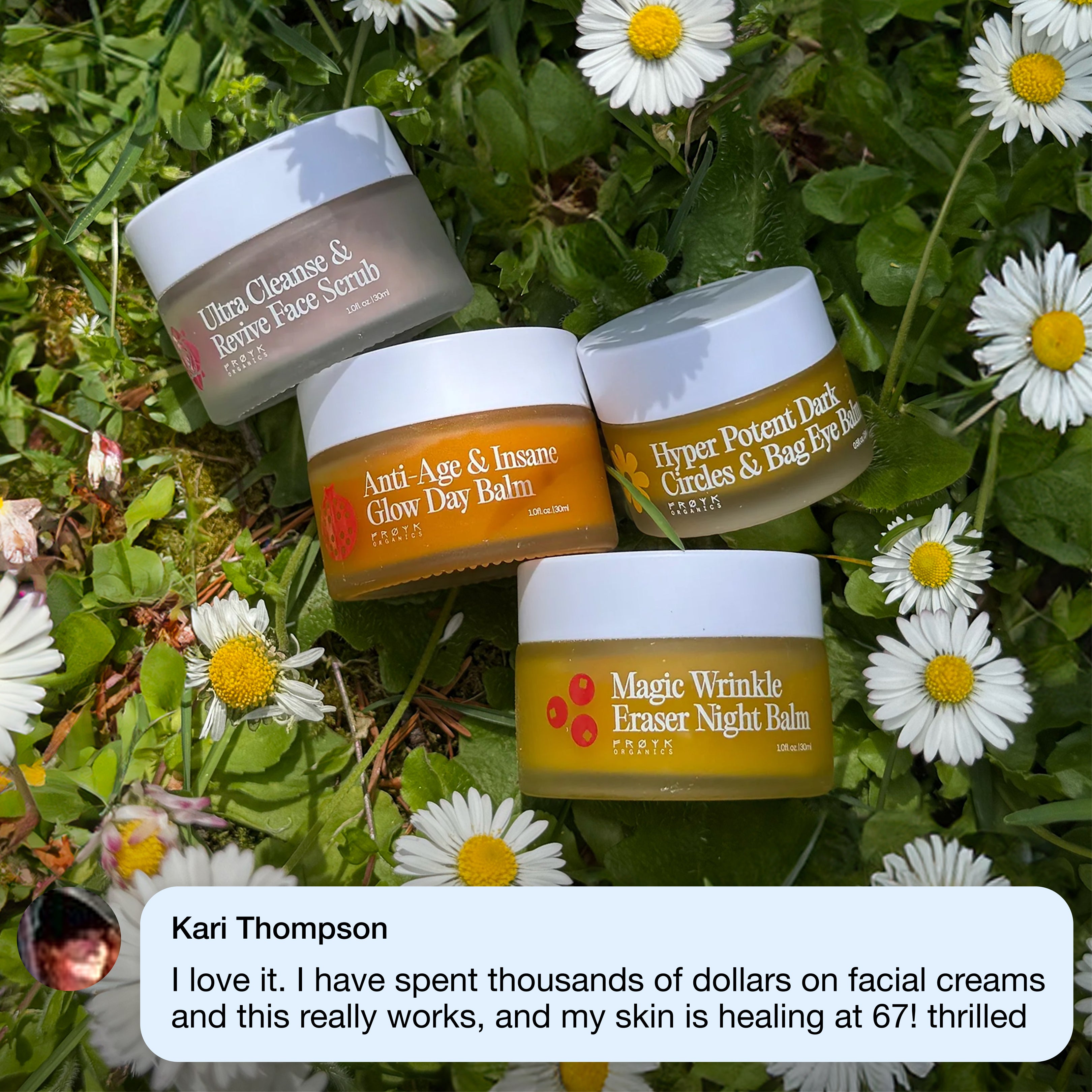
Plantas árticas silvestres y cera de abeja orgánica. Cero agua, cero fragancia sintética. Cuatro bálsamos que apoyan la reparación propia de tu piel con antioxidantes y cuidado de barrera, respaldados por una garantía de devolución de dinero de 60 días.
Shop the System TODAYPreguntas Frecuentes
¿Cómo se repara el daño solar en el rostro?+
¿Desaparece el daño solar en el rostro?+
¿Puede la vitamina C revertir el daño solar?+
¿Es demasiado tarde para reparar la piel dañada por el sol?+


