

 Account


You tried retinol because everyone said to. Instead of smoother skin, you got redness, peeling, and a face that felt tight and raw.
If you have experienced irritation like that, you are not stuck with it. There is a gentler path to the same anti aging results, and it starts with plants that survive one of the harshest places on earth.
This guide covers what a natural retinol alternative actually is, which botanicals have real science behind them, and how to use them on mature skin.
Key Takeaways
- A natural retinol alternative smooths skin texture and evens skin tone without the redness or peeling.
- Rosehip, sea buckthorn, and pomegranate carry natural vitamin A compounds and antioxidants that support collagen.
- Bakuchiol is the most studied plant based alternative, matching retinol's results with far less irritation.
- These botanicals are far gentler on skin than retinol, without the redness and peeling
- Natural alternatives work gradually, so staying consistent for four to twelve weeks matters most.
Why Retinol Lets so Many Women Down
Retinol works, but it asks a lot of mature skin. The most common reason women quit is simple: it hurts.
Traditional retinol can cause redness, peeling, and dryness, especially in the first few weeks. You can read more about these retinol side effects on skin and why they hit harder later in life.
The problem grows with age. Skin thins over time, so it reacts faster to strong actives, and many people simply cannot tolerate retinol well.
Retinol also demands careful sun habits while your skin adjusts. Add pregnancy, breastfeeding, and a preference for plant based skincare, and the search for another option makes sense.
What Is a Natural Retinol Alternative?
A natural retinol alternative is a plant derived ingredient that gives you retinol-like results without the sting. Think smoother texture, fewer visible signs of aging, and a gentler feel on the skin.
These ingredients work through a few paths. Some carry natural vitamin A, while others support collagen or calm the skin as antioxidants do their job.
Some shoppers also look for a vegan retinol alternative that fits cruelty-free values. Just remember that "natural" does not always mean gentle, so the evidence behind each ingredient is what counts.
How Natural Retinol Alternatives Work on Mature Skin
Natural alternatives improve skin aging by supporting collagen, encouraging gentle cell turnover, and shielding skin from daily stress. They do this without thinning your skin or triggering the peeling that pushes people away from retinol.
The most studied option in this category is topical bakuchiol, a plant compound from the Psoralea corylifolia plant. In a 2019 trial published in the British Journal of Dermatology, bakuchiol matched retinol on facial photoageing, with both reducing wrinkles and pigmentation over 12 weeks. The retinol group reported more scaling and stinging.
Bakuchiol activates collagen production pathways similar to retinol, which is why it delivers such similar benefits without the harsh reaction. Frøya reaches for a different set of Arctic botanicals that work along the same gentle lines, which you will meet next.
One honest note: compared to retinol, natural alternatives have less clinical evidence overall. That does not make them weak, but it does make consistency and smart ingredient choices matter more.
What about Peptides, Ceramides, and Vitamin C?
You will see these three actives everywhere, and they do help, but each has limits worth knowing.
Peptides are short chains of amino acids, the building blocks your skin uses to make the proteins that keep it firm. They support collagen and elastin, though results are slow and they do not resurface skin the way retinol does.
Ceramides make up roughly 50% of the skin barrier, and their levels drop sharply during and after menopause. Restoring ceramides reduces signs of barrier dysfunction and helps skin retain moisture against environmental stressors, but they only support the barrier, not renewal.
Vitamin C is a strong antioxidant for skin protection, and it can inhibit melanin to target hyperpigmentation. It works best in the morning, and a stable form is gentler than pure L-ascorbic acid, though plain vitamin C can still sting sensitive skin.
The gentler route skips these harsher actives. Instead, botanical oils and beeswax support the barrier and renewal together, which is exactly what the next ingredients do.
11 Arctic Botanicals That Deliver Retinol-Like Results
Frøya Organics builds its balms around wild Arctic plants, and many of them are the natural alternatives research points to. The first four are the standouts with the strongest studies behind them. The rest work quietly alongside them, and here is what each one brings.
Rosehip: A Natural Source of Retinoic Acid
Rosehip is the classic natural retinol, and the reason is real chemistry. It contains small amounts of trans-retinoic acid, the active form of vitamin A your skin actually uses, the same molecule prescription retinoids convert into.
The difference is the dose. Rosehip's retinoic acid is trace-level, so it supports gentle renewal instead of the harsh reaction stronger retinoids cause. It also carries beta-carotene, another vitamin A precursor, plus essential fatty acids like linoleic acid that feed the skin barrier.
Those fatty acids are why rosehip helps skin hold moisture and look smoother. Research also links it to a reduced look of hyperpigmentation and scarring. Learn more about rosehip oil benefits for mature skin here.
Sea Buckthorn: Carotenoids and Collagen Support
Sea buckthorn is one of the most nutrient-dense oils in skincare, which is what makes it a strong retinol alternative. It is loaded with vitamins A, C, and E, plus rare omega fatty acids including omega-7.
That vitamin A content gives it natural retinol-style support for renewal. Its antioxidant properties help protect against the UVA and UVB sun damage that speeds up aging. It also contains 15 times more vitamin C than oranges, which matters because vitamin C is a building block your skin needs to make collagen.
Research backs this up. A study on skin fibroblasts found sea buckthorn compounds boosted type I collagen while reducing the enzymes that break it down. These sea buckthorn skin benefits are why it earns a spot in daytime care.
Pomegranate: Protecting the Collagen You Have
Pomegranate takes a different route to the same goal as retinol. Instead of only building new collagen, it helps you keep the collagen you already have.
The active behind this is ellagic acid, a polyphenol pomegranate is rich in. It works by lowering MMP-1, an enzyme that breaks collagen down, and this enzyme ramps up with age and sun exposure, which is a major reason skin loses firmness. A study on skin fibroblasts found ellagic acid reduced that collagen-damaging enzyme while raising new collagen production.
That two-way action, protecting and rebuilding, is what makes it valuable for mature skin. The result is better skin firmness with real staying power.
Arnica: Calm for Reactive Skin
Arnica is the soothing anchor of the group, and calm skin is where anti-aging actually starts. Inflammation quietly speeds up collagen loss, so easing it protects your skin over time.
Arnica is known for reducing the look of redness, puffiness, and swelling. When skin is calmer, fine lines and shadows look softer, which is why it is the headline botanical for smoother-looking wrinkles. Its de-inflammatory action also helps under-eye puffiness settle.
For skin that reacted badly to retinol, this gentle support is a genuine advantage. It lets the stronger botanicals work without triggering irritation.
Marigold and Calendula: Redness Relief
Marigold and calendula give you comfort while the other botanicals do the heavy lifting. Both are long-studied for soothing irritated, reactive skin.
Their calming reputation holds up under research. A 2021 study in Cosmetics confirmed calendula flower extract's anti-inflammatory activity, tracing it to compounds like triterpenoids and flavonoids. That soothing action helps ease redness and support the skin barrier, the outer layer that keeps moisture in and stress out.
A stronger barrier is what lets mature skin renew without flaring up. Calendula is also known for keeping skin calm and comfortable. That barrier support matters more with age, since older skin is thinner and reacts faster, so these two keep the whole routine gentle and steady.
Thistle: Deep Moisture Lock
Thistle is a rich, protective oil that helps your skin hold onto water. This matters because dehydrated skin makes fine lines look deeper and more obvious.
By sealing in moisture, thistle keeps skin soft, plump, and comfortable through the day. That hydration is its own form of anti-aging, since well-hydrated skin reflects light better and looks smoother. It also strengthens the barrier so the skin loses less water over time.
A stronger, better-hydrated barrier helps every other botanical absorb and work better. That makes thistle a quiet but real part of the lineup.
Squalane: Lightweight Hydration
Squalane hydrates without feeling heavy, which suits mature skin that still wants a natural, non-greasy finish. It mirrors an oil your own skin makes, so it absorbs easily and feels weightless.
This is the opposite of the tight, dry feeling retinol often leaves behind. Squalane keeps skin supple and helps smooth the look of rough, crepey texture. It also acts as a cushion that reduces moisture loss.
Well-cushioned skin looks plumper and more even almost right away. That instant softness makes it a favorite step in any routine.
Rosemary Extract: The Studied Retinol Alternative
Rosemary extract is the one with the freshest science, and it is not marketing spin. A 2026 study compared it directly to retinol in skin cells and framed it as a natural alternative for skin aging.
Its power comes from carnosic and rosmarinic acids, two potent antioxidants. The study found rosemary extract supported collagen while calming the inflammation that drives aging, and it did this without retinol's harshness. That is why it calms reactive skin that struggles with strong actives.
That mix of antioxidant defense and firmness support is close to what people want from retinol. You get those benefits with a much friendlier feel.
Vitamin E: Antioxidant Shield
Vitamin E is the built-in protector of the group, and its role is well established in skin science. This antioxidant shields your skin's lipid barrier from daily oxidative stress.
Free radicals from sun and pollution break down collagen and speed up visible aging. Vitamin E helps neutralize that damage, which protects firmness over time. It also works alongside vitamin C, a pairing known to strengthen antioxidant defense.
On top of that, vitamin E helps keep the botanical oils around it fresh and stable. So it protects both your skin and the formula.
Argan: Nourishment for Dry, Mature Skin
Argan is deeply nourishing, which matters most as skin gets drier with age. It is rich in vitamin E and essential fatty acids that feed thirsty, mature skin.
Those fatty acids help restore suppleness and support a healthy barrier. Retinol tends to dry skin out, so argan offers the comfort that harsh actives cannot. Its antioxidant content also helps defend against environmental stress.
The result is a smoother, healthier-looking surface without any tightness. For dry, mature skin, that comfort makes consistency far easier.
Arctic Cranberry Seed Oil: Nordic Antioxidant Renewal
Arctic cranberry seed oil is the rare Nordic finish to the lineup. This hardy berry survives brutal conditions, and that resilience shows up as a nutrient-dense oil.
It offers a nearly balanced ratio of omega-3 and omega-6 fatty acids, which is unusual and barrier-friendly. That balance helps skin stay strong, hydrated, and better protected against daily damage. Its natural antioxidants, including vitamin E, support renewal and defend against oxidative stress.
A resilient barrier is what keeps mature skin looking calm and even. It is a small addition with a real role in keeping skin healthy.
Frøya's Complete Arctic Botanical Set for Mature Skin

Knowing the botanicals is one thing. Getting them into a simple routine you will actually keep is another.
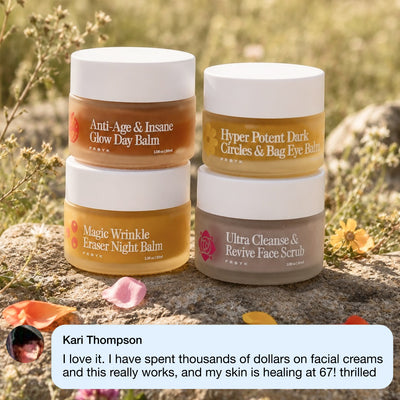
That is the idea behind these waterless balms, part of a full natural anti-aging skincare collection made for skin over 50. Here is how the core set maps to the retinol swap.
|
Product |
Key Arctic Botanicals |
How It Works Like Retinol |
When to Use |
|
Arctic rose, rice flour, apricot |
Lifts dead skin cells for smoother texture |
2 to 3 times a week |
|
|
Sea buckthorn, pomegranate, rosehip, rosemary, argan |
Antioxidant defense and collagen support for a healthy glow |
Morning |
|
|
Rosehip, marigold, arnica, pomegranate, cranberry |
The gentle night swap for softer fine lines |
Night |
|
|
Arnica, rosehip, pomegranate, squalane |
Firms and smooths the delicate eye area |
Morning and night |
How to Use Frøya's Complete Set after 50
The best part of a set is that the order is already worked out for you. No trial and error guessing which balm goes on first, since The Complete System for Mature Women's Skin is built to layer in the right sequence.
Here is the simple routine, morning and night:
- Exfoliate 2 to 3 times a week. Start with the Ultra Cleanse & Revive Face Scrub on dry skin, add a little water, then rinse. This clears dead skin cells so the balms absorb better.
- Apply the day balm each morning. Smooth on the Anti-Age & Insane Glow Day Balm for antioxidant defense and a healthy glow under makeup.
- Use the eye balm morning and night. Gently tap the Hyper Potent Dark Circles & Bag Eye Balm around the eye area to firm and smooth.
- Seal the night with the night balm. Finish with the Magic Wrinkle Eraser Night Balm so your skin renews while you sleep.
A few quick tips to get the most from it:
- Less is more. A small fingertip amount of balm covers the whole face.
- Patch test first. Even gentle oils can surprise skin, so try a small area for a day or two.
- Stay steady. Morning and night use is where real change happens.
One bonus: these botanicals are gentle enough that you skip retinol's adjustment period entirely. Enjoy sun in moderation and avoid burning, and reach for a mineral sunscreen if you will be out for a long stretch.
See the Rejuvenating Results on Real Skin over 50

The best proof is not a study, it is a face. Real women over 50 have swapped harsh actives for these Arctic botanicals and watched their skin turn calmer, smoother, and more even.
Below, you can see real customer before-and-afters from women who made the switch. Their skin tells the story of healthier looking, more youthful skin better than any claim could.
If retinol left you frustrated, this gentler path may be the great alternative that finally sticks. Give your skin botanicals it can handle, stay consistent, and let time do the rest.
Disclaimer: This content is for general information only and is not medical advice. Skincare results vary from person to person, and individual experiences may differ. If you are pregnant, breastfeeding, or have a skin condition, talk to a qualified healthcare provider before changing your routine.
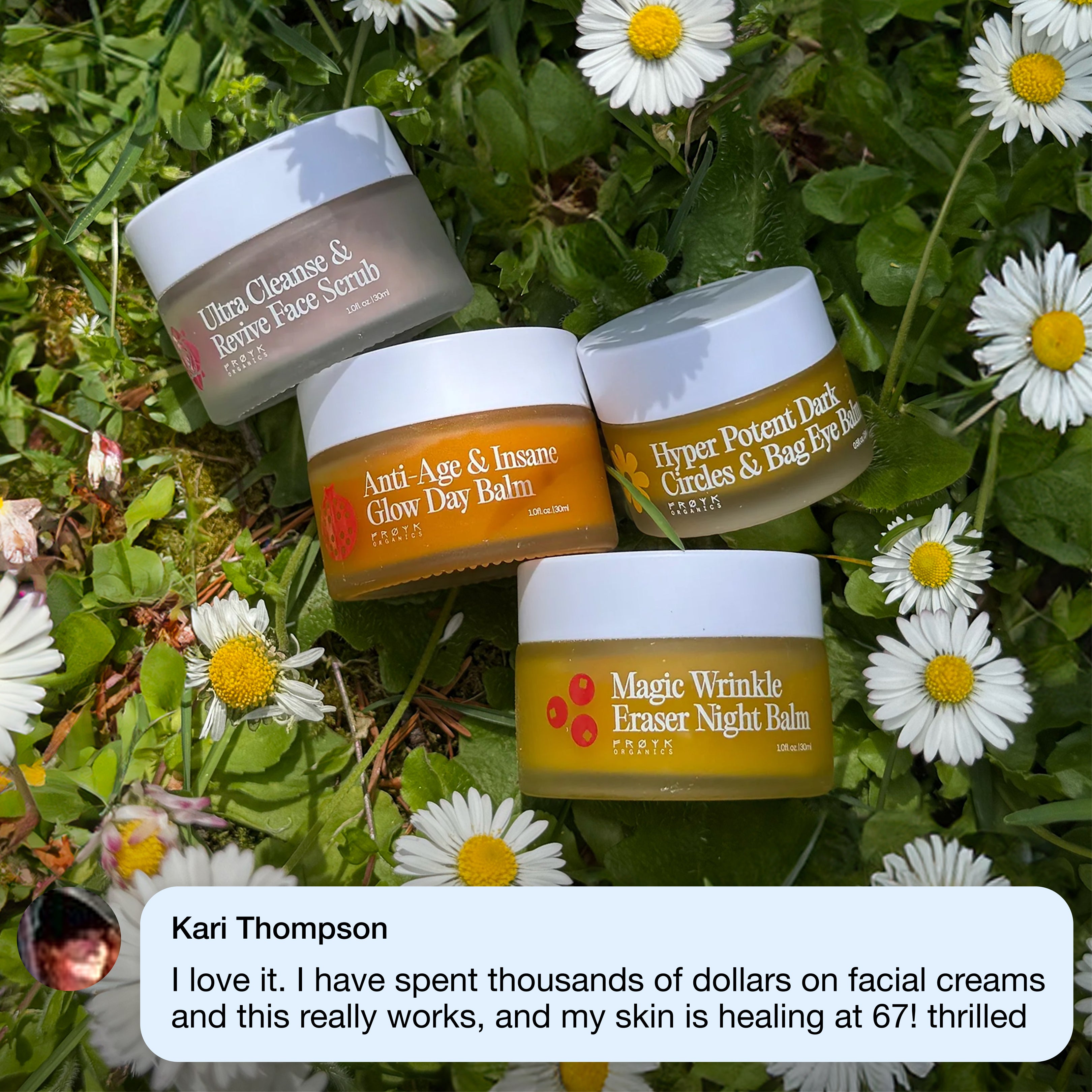
Wild Arctic botanicals and organic beeswax. Zero water, zero synthetic fragrance. Four balms in one routine that deliver retinol-like results without the irritation, backed by a 60-day money-back guarantee.
Shop the System - $119Frequently Asked Questions
Can you use beeswax on your face?+
Is beeswax good for aging skin?+
Which is better, beeswax or shea butter?+
What are the disadvantages of beeswax?+


