

 Cuenta


Una mañana llega, a menudo sin aviso, cuando tu crema hidratante de repente ya no parece suficiente. O una noche cuando el sérum que llevas años usando arde en la piel apenas toca tu mejilla.
Eso me pasó a los 47. El aceite de escualano para la piel es el ingrediente que finalmente me explicó lo que estaba sucediendo debajo de la superficie.
Aquí está lo que casi nadie te dice. El escualeno, el lípido natural que produce tu sebo, alcanza su pico en las mujeres alrededor de los 40, y luego cae drásticamente con la menopausia. A los 50, puedes perder aproximadamente el 60%.
La Dra. Whitney Bowe lo plantea así: las mujeres pierden hasta el 30% del colágeno de su piel en los primeros cinco años después de la menopausia.
Esta no es una historia de envejecimiento. Es una historia de cambios hormonales en los lípidos, y eso cambia qué ingredientes realmente merecen un lugar en tu rutina.
Te guiaré a través de la ortografía que confunde a todos, el caso científico para piel madura respaldado por estudios publicados, el mecanismo de barrera que explica por qué funciona el escualano, la cuestión de elegir oliva o caña de azúcar como fuente, la forma correcta de combinarlo con retinol, y los límites honestos de lo que un aceite ligero puede lograr.
Escualano vs. Escualeno: Una Letra, Dos Moléculas Muy Diferentes
La diferencia entre la "e" y la "a" no es un error tipográfico. Es la diferencia entre un aceite que se enrancia en un baño cálido y uno que dura indefinidamente en tu estantería.
Escualeno (con "e") es el lípido que tu piel ya produce. Representa aproximadamente el 13% de la composición de tu sebo y aparece naturalmente en el aceite de oliva, salvado de arroz, amaranto, e históricamente, controvertidamente, en el hígado de tiburón. Su estructura es C30H50, con seis dobles enlaces insaturados. Esos dobles enlaces son el problema, oxidándose rápidamente cuando se exponen al aire, la luz y los rayos UV.
La oxidación no es solo un problema de estabilidad. El escualeno oxidado, llamado SQOOH en la literatura científica, ha sido vinculado a la formación de arrugas y daño en la piel (PMID 19169201). El escualeno de tu piel se agota solo un 26% bajo 10 MED de exposición a rayos UV, mientras que la vitamina E pierde un 84% en las mismas condiciones. El escualeno es genuinamente muy resistente, pero una vez que se oxida, los subproductos trabajan en tu contra.
Escualano (con "a") es la misma molécula, hidrogenada. C30H62, completamente saturada, sin dobles enlaces que se oxiden. Estable en la estantería durante años, con un índice de comedogenicidad cero, sin olor medible, y una textura que se absorbe en segundos en lugar de quedarse en la superficie.
Estructuralmente, el escualano es idéntico a lo que tu piel ya quiere producir. La Dra. Radhika Shah de Westlake Dermatology lo describe claramente: el escualano "se integra en el estrato córneo, fortalece la matriz lipídica, llena los espacios entre las células de la piel". Esa es la razón práctica por la que funciona sin curva de aprendizaje. Tu piel lo reconoce al instante porque lleva décadas produciéndolo.
El mismo esqueleto de carbono. La misma compatibilidad con la piel. Estabilidad indefinida. Esa identidad estructural importa más después de los 40 que en cualquier otra edad, cuando tanto la producción de sebo como el escualeno que va en él disminuyen drásticamente.
Por Qué la Piel Madura Necesita Específicamente Escualano: La Disminución Hormonal de Sebo que Nadie Comenta
La producción de sebo en los hombres se mantiene notablemente estable hasta los 80 años. En las mujeres alcanza su máximo alrededor de los 40 y cae drásticamente con la menopausia. Esta es la razón más importante por la que tu piel y la de tu esposo envejecen de manera completamente diferente, y es lo que la mayoría de consejos de cuidado de la piel pasan por alto.
Los números son sorprendentes. El escualeno representa aproximadamente el 13% del sebo. Un gran estudio de cohorte chino que rastreó la composición del sebo por edad y sexo encontró que la producción de escualeno femenino alcanza su máximo cerca de los 40, y luego cae drásticamente durante la perimenopausia.
PMID 11834844, publicado en 2002, documentó el mismo patrón: disminución significativa de la tasa de excreción de sebo en la primera década después de la menopausia.
Esa pérdida tiene una sensación. Piel que se tensa 20 minutos después de limpiar, incluso con el mismo limpiador que siempre has usado. La base de maquillaje que de repente se queda en las líneas finas o se resquebraja en los pómulos para el mediodía.
Las cremas hidratantes que solían parecer ricas ahora parecen evaporarse a las 10 a.m. Los activos como el ácido glicólico o el retinol que solían ser perfectamente tolerables ahora arden durante 30 segundos antes de calmarse.
Eso no es tu imaginación. Es tu barrera funcionando con el 40% del escualeno que solía tener.
El escualano tópico es la coincidencia molecular. Tiene el mismo esqueleto de carbono C30 que el escualeno que tu cuerpo está produciendo menos, lo que significa que se ajusta al mismo lugar en tu barrera sin que tu piel tenga que hacer un trabajo de conversión. Estás rellenando un reservorio agotado, no introduciendo un lípido extranjero y esperando que coopere.
La Dra. Jenny Liu ha sido clara al respecto en su canal de dermatología: un enfoque basado en la barrera es la piedra angular del cuidado de la piel menopáusica. No 12 activos, no resurfacing agresivo, lípidos primero.
El error que ve más a menudo en pacientes mayores de 45 es la suposición de que un sérum que arde está "funcionando", cuando la barrera está tan agotada que incluso las fórmulas suaves ahora son demasiado.
El escualano es uno de los pocos reemplazos donde la molécula que entra en tu piel coincide con la que se va. No hay paso intermedio, no hay conversión enzimática, y no hay desajuste de ácidos grasos que manejar. Esto es más que hidratación. El escualano tiene un trabajo específico dentro de la matriz lipídica.
Lo Que el Escualano Realmente Hace en Tu Barrera Cutánea (No Solo "Hidrata")
Imagina tu estrato córneo como un muro de ladrillos. Los corneocitos son los ladrillos. Los lípidos entre ellos son el mortero.
Ese mortero es aproximadamente 50% ceramidas, 25% colesterol, 15% ácidos grasos libres, y una fracción menor de escualeno y otros lípidos. Cuando el estrógeno cae en la perimenopausia y más allá, el mortero se adelgaza.
Los ladrillos se aflojan. El agua se escapa. Los irritantes entran.
Advertencia honesta. El escualano no es un reemplazo de ceramida estructural. Apoya la matriz; las ceramidas la construyen. Los dos son socios, no sustitutos, y cualquier producto que pretenda lo contrario está exagerando.
Lo que eso significa en la práctica es bastante específico. La piel atrapa agua más rápido después de limpiar, la tensión de 20 minutos se alivia, y los activos se colocan mejor porque la barrera está amortiguada, no desnuda. La Dra. Jenny Liu enmarque esto como la base que permite que los retinoides y ácidos funcionen sin irritación colateral, para que permanezcas consistente con el activo el tiempo suficiente para ver cambios reales.
Las propiedades de grado cosmético cooperan. Índice de comedogenicidad de cero (Condro et al., AAD 2023), y una textura ligera que se absorbe limpiamente. Dra. Dray, en su ronda de mejores sérums, clasifica el escualano como un "emoliente ligero", lo que significa que agrega deslizamiento y suavidad sin quedarse pesado en la piel, incluso con 4 gotas encima de un sérum.
Si has usado aceite de jojoba antes y lo encontraste agradable pero poco impresionante, la diferencia es estructural. El aceite de jojoba es un éster de cera, hermosamente estable, pero no coincide con la química del escualeno. (Para más sobre esa comparación, ver aceite de jojoba para la piel.)
Mecanismo sin evidencia es teoría. Aquí está lo que los estudios reales muestran.
La Evidencia Clínica: Lo Que los Estudios Realmente Muestran Sobre el Escualano Tópico
La mayoría del contenido sobre escualano cita "estudios" sin nombrarlos. Aquí hay cuatro piezas de evidencia que genuinamente cambiaron cómo pienso sobre el escualano después de los 40.
Estudio dos, biosíntesis de colágeno. PMID 40363772, publicado en Molecules en abril de 2025, probó escualano al 0.015% en fibroblastos irradiados con UVA. La biosíntesis de colágeno se restauró al 77% del control, en comparación con solo el 54% en células estresadas por UVA sin escualano, y la actividad de la prolidasa (crítica para el reciclaje de colágeno) se recuperó al 98%. Advertencia honesta: esto es in vitro, no un ensayo humano tópico. Aun así, es evidencia mecanística de que el escualano está haciendo más que quedarse en la superficie.
Estudio tres, ensayo controlado aleatorizado. Un ensayo de RCT de 2022 de Cosmoderma (n=50, 28 días) probó una formulación de bakuchiol más escualano. El TEWL disminuyó 3.76 g/h/m² a los 28 días (p < 0.001), la elasticidad de la piel mejoró un 11.9% (p < 0.001), y el 91% de los participantes mostraron tono de piel mejorado a la cuarta semana. Advertencia: esta fue una fórmula combinada, no escualano en aislamiento, pero los números de barrera son inequívocos.
Estudio cuatro, fotoestabilidad. PMID 19169201, Molecules, 2009, examinó el comportamiento del escualeno bajo estrés. Revirtió el TEWL elevado en piel estresada por detergentes y se agotó solo un 26% bajo 10 MED de exposición a rayos UV, en comparación con una pérdida del 84% de vitamina E. El escualeno es uno de los lípidos más fotoestables que tu piel produce, y el escualano (la versión saturada) es aún más estable.
Cuatro estudios, cuatro ángulos: hidratación, colágeno, función de barrera, y fotoestabilidad. Cada uno con honestidad apropriada sobre sus límites, y cada uno apuntando a la misma conclusión desde una dirección diferente.
Lo que la investigación aún no muestra es un ensayo humano a largo plazo de escualano puro en piel específicamente posmenopáusica. Esa es la brecha que me gustaría ver llena, porque la evidencia existente de barrera y colágeno implica beneficio significativo para esa población, pero aún estamos infiriendo en lugar de midiendo directamente.
Esa fotoestabilidad es parte de una historia más grande. El escualano es únicamente estable en comparación con casi todos los demás aceites faciales que podrías colocar junto a él.
Estabilidad de la Oxidación: Por Qué el Escualano Dura Más que Cualquier Otro Aceite Facial en Tu Gabinete
La mayoría de los aceites faciales tienen un problema oculto de expiración. Los aceites poliinsaturados se oxidan con la exposición al aire, la luz y el calor, y el aceite oxidado genera peróxidos lipídicos que empeoran la inflamación.
Eso no es una preocupación teórica cuando tu barrera ya está comprometida por cambio hormonal. Es un amplificador de inflamación sentado en tu estantería del baño.
- Escualano : vida útil indefinida, completamente saturado, cero dobles enlaces que se oxiden
- Aceite de jojoba : 2+ años (estructura de éster de cera, oxidativamente estable pero no imita la química del escualeno)
- Aceite de argán : 1 a 2 años, alto contenido de ácido oleico, relativamente estable para un aceite prensado
- Aceite de rosa mosqueta : 6 a 12 meses, los ácidos grasos poliinsaturados se oxidan rápidamente una vez abiertos
Para piel madura específicamente, esa estabilidad importa de una manera que no lo hace para una mujer de 25 años. Una barrera comprometida más aceite oxidado equivale a más inflamación, no menos. El escualano evita completamente ese riesgo, incluso si olvidas cerrar la tapa, lo dejas en el alféizar de la ventana, o solo usas algunas gotas a la semana.
Los datos de PMID 19169201 merecen ser repetidos en este contexto. El escualeno se agotó solo un 26% a 10 MED de rayos UV, versus una pérdida del 84% de vitamina E. El escualeno funciona como el amortiguador de oxidación de primera línea de tu piel, y SQOOH, la forma oxidada, ha sido vinculada a la formación de arrugas.
La estabilidad del escualano no es una conveniencia de formulación. Es una verdadera ventaja terapéutica, y es la razón por la que una sola botella puede durar un año de uso diario sin perder eficacia.
Aquí es donde el escualano diverge drásticamente de aceites ricos en antioxidantes como el espino amarillo, que entregan carotenoides y tocoferoles pero requieren almacenamiento cuidadoso. (Para la comparación antioxidante, ver beneficios del aceite de espino amarillo para la piel.) Trabajos diferentes, perfiles de estabilidad diferentes, ambos útiles en la ranura correcta.
Escualano de Oliva vs. Caña de Azúcar: Qué Fuente Realmente Deberías Elegir
Tanto el escualano derivado de oliva como el derivado de caña de azúcar son C30H62. Cuando se refinan adecuadamente, ambos cumplen con estándares de pureza de grado cosmético del 99.5% o superior. La molécula en sí es idéntica. Los compromisos están antes.
| Fuente | Procesamiento | Perfil Clave | Mejor Para |
|---|---|---|---|
| Derivado de oliva | Hidrogenación de un solo paso del subproducto del aceite de oliva | No OGM, coproducto agrícola de la UE, 6–18% impurezas traza (fitoesteroles) | Preferencia no OGM, sin preocupación de acné fúngico, origen agrícola |
| Derivado de caña de azúcar | Fermentación de tres pasos vía levadura OGM Yarrowia lipolytica | 62% menor CO2e (EC JRC 2022), pureza molecular máxima, menos residuos de fitoesteroles | Huella de carbono más baja, piel propensa al acné fúngico, pureza máxima |
Regla de decisión rápida. Piel madura, sin acné fúngico, te gusta el abastecimiento de subproductos agrícolas: elige oliva. Piel madura con congestión, brotes que se ven más fúngicos que bacterianos, o preferencia por el perfil de carbono más bajo: elige caña de azúcar.
En sostenibilidad, la caña de azúcar gana en carbono y la oliva gana en uso de tierra. De cualquier forma, la molécula que llega a tu piel es la misma.
Si aún estás indeciso, prueba ambos al olfato. El escualano de oliva ocasionalmente lleva la nota más leve residual grasosa, mientras que la caña de azúcar es esencialmente inodora. Para usuarias de funda de almohada que aplican por la noche, ese detalle puede importar más que los números de ACV. No dejes que la parálisis del análisis te impida comprar cualquiera de los dos.
Cómo Usar Escualano en una Rutina de Piel Madura: Capas, Combinación con Retinol, y Tiempo
El escualano va después de tus productos a base de agua y antes o con tu crema más rica. Piénsalo como la capa lipídica de tu rutina. Agua adentro, aceite para sellar, crema para ocluir.
Rutina AM. Limpiador, luego tónico o esencia (opcional), luego un sérum de vitamina C o péptidos, luego 3 a 4 gotas de escualano golpeadas en piel aún húmeda, luego protección solar encima. El escualano se lleva bien bajo SPF. Amortigua tu piel antes de que se aplique maquillaje, especialmente útil si te despiertas con esa sensación tensa que las mañanas perimenopáusicas pueden traer.
Rutina PM, incluyendo la pregunta del retinol. Aquí es donde la mayoría de las personas obtienen las capas al revés.
Alternativa, y una más fácil. Usa un producto retinol-en-escualano (The Ordinary's Retinol in Squalane es un ejemplo popular), donde el escualano es el vehículo, no una capa separada, así que la decisión de capas desaparece. El Dr. Alok Vij en Cleveland Clinic recomienda retinol-en-escualano para pacientes de piel seca específicamente por esto.
Westlake Dermatology ha sido clara en que el escualano aplicado después de activos mejora la tolerabilidad sin interferir con la efectividad, siempre que no hagas capas excesivas. Menos es más.
Frecuencia y cantidad. 2 a 4 gotas, AM y PM, diariamente. La piel madura generalmente se beneficia del uso dos veces al día. Más gotas no funcionarán más fuerte. Se quedarán en la superficie.
Cronograma de resultados. Día uno: piel notablemente más suave y la sensación tensa aliviándose. Dos a cuatro semanas: mejora medible de TEWL (RCT Cosmoderma). Seis a ocho semanas: suavizado de líneas finas y uso de maquillaje mejorado. Enmarque honesto: el escualano es un ingrediente de barrera, no un borrador de arrugas por sí solo.
Para un emparejamiento firme complementario, el incienso y el escualano funcionan especialmente bien juntos para piel madura (más en aceite de incienso para la piel).
Dónde el Escualano Se Queda Corto: Las Limitaciones Honestas de un Emoliente Ligero
El escualano no es suficientemente oclusivo para rescatar piel severamente comprometida. Si tu barrera está en angustia activa, el escualano solo es un actor de apoyo, no el protagonista.
El escualano es semioclusivo, ralentizando la pérdida de agua pero no sellando como lo hacen la vaselina o la manteca de karité. En climas subcongelantes de baja humedad, el escualano solo no aguantará la línea. Necesitas escualano más una oclusiva más rica: un bálsamo o crema con manteca de karité, ceramidas, o una pequeña cantidad de vaselina encima. Las mujeres en climas del norte regularmente reportan (en lugares como r/SkincareAddiction) que el escualano no es suficiente en invierno profundo, y no están equivocadas.
La piel post-procedimiento (post-láser, post-peeling, post-microagujas) necesita reemplazo de ceramida, colesterol, y ácido graso libre en proporciones fisiológicas, típicamente 3:1:1 o 1:1:1. El escualano apoya la recuperación pero no reconstruye. Lo mismo es cierto para eczema activo, dermatitis, o brotes de rosácea. El enmarque de la Dra. Jenny Liu es útil aquí: los hidratantes dominados en ceramidas hacen la reconstrucción estructural, y el escualano llena los espacios una vez que los ladrillos están apilados.
El escualano apoya la biosíntesis de colágeno (Molecules 2025) pero no reemplaza a los retinoides o péptidos para el tratamiento de arrugas. Enmarquémoslo como la base que permite que tus otros activos funcionen más duro sin irritarte hasta que dejes de usarlos.
El reenmarque es simple. El escualano es el lípido fundacional más confiable para piel madura que conozco. No es la rutina completa. Es la base que permite que el resto de tu rutina haga su trabajo, que generalmente es más que suficiente razón para mantener una botella al alcance de la mano.
Cómo Elegir un Producto de Escualano: Lista de Verificación de Etiqueta y Dónde Encaja Frøya
La mayoría de los productos de escualano son buenos. Algunos son excelentes. La diferencia se ve en la etiqueta. Aquí está la lista de verificación de seis puntos que uso.
- 1 Derivado de planta, no de tiburón. Busca "escualano de oliva", "escualano de caña de azúcar", o "fitoescualano" en la etiqueta. Si solo dice "escualano" sin fuente divulgada, pregúntale a la marca. Las marcas reputables te lo dirán.
- 2 Alto en la lista de ingredientes. El escualano debe aparecer en los primeros 5 a 7 ingredientes para estar haciendo trabajo significativo. Si está enterrado debajo de los conservantes, es un ingrediente de marketing, no uno activo.
- 3 Pureza de grado cosmético (≥99.5%). Este es el estándar de la industria para escualano derivado de plantas. Una marca reputables publicará o confirmará esto bajo solicitud.
- 4 Embalaje opaco o ámbar. El escualano en sí es excepcionalmente estable, pero otros ingredientes en la fórmula (vitamina C, retinoides, extractos de plantas) generalmente no lo son. El embalaje transparente en el mostrador del baño es un enemigo silencioso.
- 5 Sin "fragancia" o "parfum" alto en la lista de ingredientes. Las barreras de piel madura son sensibles. La fragancia sintética es el irritante más común en el cuidado de la piel, y un producto que apoya la barrera socavado por fragancia está trabajando en tu contra.
- 6 Combinado con lípidos complementarios. Escualano plus ceramidas plus un aceite antioxidante estabilizado (espino amarillo o rosa mosqueta) es significativamente más fuerte para piel madura que escualano solo. Esto cubre las limitaciones de la sección anterior: llenado de espacios plus reconstrucción estructural plus apoyo antioxidante, en una fórmula. (Para más en la capa antioxidante, beneficios del aceite de espino amarillo para la piel.)
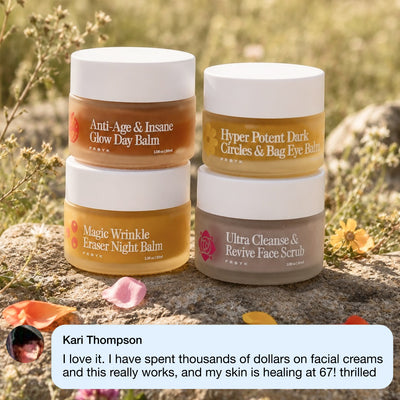
Frøya hizo una opción de formulación específica: extracto de CO2 de incienso, no aceite esencial. Esa es la diferencia entre un producto que puede llevar ácidos boswélicos a tu piel y uno que principalmente lleva su aroma. Base de aceite prensado en frío. Sin agua, sin rellenos, sin fragancia sintética.
Compra el Bálsamo NocturnoNo la única buena respuesta. La que confío más.


