

 Cuenta


Tu crema facial se absorbe densa y tranquilizadora a las 7 am. A las 11 am, tu piel se siente tirante de nuevo. Para el viernes, esa mancha seca en tu línea de mandíbula ha reaparecido.
La rutina que funcionaba a los 38 ha dejado de funcionar a los 48, y "bebe más agua" no es la respuesta.
La biología detrás de ese cambio es específica. El estrógeno cae, y el colágeno dérmico disminuye aproximadamente un 30% en los primeros 5 años posteriores a la menopausia. La producción de ceramidas se ralentiza. La pérdida de agua transepidérmica aumenta.
El pH de la piel se desplaza hacia alcalino. Esto no es sequedad superficial. Es un fracaso en la retención de humedad integrado en la piel misma.
Aquí es donde la miel para la piel merece una segunda mirada seria. La miel es un humectante. Sus azúcares (aproximadamente 38% fructosa, 31% glucosa) son higroscópicos, atrayendo agua hacia la piel y reteniéndola allí.
Sus aminoácidos se superponen con el Factor Humectante Natural (NMF) que tu piel produce menos después de los 45. Su pH de 3,9 a 4,5 actúa como un amortiguador acidificante para la piel que se desplaza en la dirección equivocada.
A continuación: el mecanismo, las diferencias entre Manuka, cruda, acacia y trigo sarraceno, qué significan realmente UMF y MGO, qué respalda la evidencia clínica (y qué no), cómo usar miel en piel madura, y la línea de tiempo realista. La Dra. Andrea Suarez (Dra. Dray) llama a la miel "riesgo bajo, recompensa potencialmente alta". Ese marco se ajusta a lo que muestran los datos.
Por qué la miel funciona como humectante para piel madura
¿Por qué hidrata la miel una piel que no permanece hidratada de ninguna otra manera? La respuesta comienza con un problema de categoría. La mayoría de los ingredientes de cuidado de la piel caen en uno de tres grupos: los humectantes atraen agua, los emolientes suavizan los espacios entre corneocitos, los oclusivos sellan la superficie.
La mayoría de los lectores los confunden. La piel madura necesita los tres, y la miel está firmemente en el primero.
La miel es una solución de azúcar sobresaturada. Alrededor del 38% fructosa y 31% glucosa, ambas ricas en grupos hidroxilo libres, se enlazan por hidrógeno directamente con moléculas de agua. La fructosa en particular es notoriamente higroscópica, por eso la miel dejada abierta en una cocina húmeda se vuelve líquida en unos pocos días.
En la piel, esa misma propiedad atrae agua de la atmósfera y de capas más profundas hacia el estrato córneo. La Dra. Dray lo dice claramente: la miel es "rica en humectantes que retienen agua en la piel".
El segundo mecanismo es más interesante para la piel después de los 45. La miel contiene aminoácidos que se superponen con el Factor Humectante Natural de la piel, el conjunto de compuestos higroscópicos dentro de los corneocitos que regulan la hidratación. La concentración de NMF cae con la edad y con la pérdida de estrógeno. Como describe la Dra. Dray, los aminoácidos de la miel "se consideran factores humectantes naturales, por lo que reponer eso en la capa más externa de la piel puede ayudar no solo con la retención de humedad sino también ayudar con la integridad de la barrera".
Esto importa más después de los 40 porque la piel deficiente en estrógeno muestra un déficit triple medible: aumento de la pérdida de agua transepidérmica, producción de ceramidas afectada, y NMF agotado. Un humectante que atrae agua adentro y suministra moléculas tipo NMF al mismo tiempo está haciendo dos de los tres trabajos de reparación en una sola capa. Eso es raro para cualquier ingrediente único, natural o sintético.
Un humectante atrae agua adentro. La superficie que recibe esa agua tiene otro problema después de la menopausia, sin embargo. La hidratación pura no puede resolver una barrera que se ha vuelto alcalina.
La ventaja de pH de la miel para piel envejecida
La mayoría de las personas asumen que "equilibrado en pH" significa neutral. La piel saludable es ácida. La piel adulta se sitúa en pH 4,5 a 5,5. La mayoría de los jabones sólidos son pH 9 a 10, el equivalente químico de quitar las puertas de una casa y preguntarse por qué hace frío adentro.
El manto ácido es la película delgada de sebo, sudor, ácidos grasos y ácido láctico que cubre el estrato córneo. Ese ambiente ácido alimenta las enzimas que construyen lípidos de barrera, mantiene los péptidos antimicrobianos en su forma activa, y mantiene los corneocitos pegados juntos en una superficie plana y suave. Cuando el pH sube, el procesamiento de lípidos se ralentiza, las proteínas defensivas tienen un rendimiento inferior, y las células se desprenderse de manera desigual. La barrera se suaviza, y el agua se filtra más rápido de lo que entra.
Lo que cambia en la menopausia es directo. El pH de la piel aumenta hacia 6,0 a 6,5 con la edad avanzada, con una inflexión aguda después de que el estrógeno cae. El manto ácido se debilita exactamente en el momento en que la pérdida de agua transepidérmica y la reactividad inflamatoria están aumentando.
Por eso la "piel sensible" a menudo aparece por primera vez en tus 40 y 50. No es una nueva sensibilidad, es la pérdida de una defensa anterior.
El rango de pH de la miel es 3,2 a 4,5, típicamente 3,9 a 4,5. Aplicada a la piel, actúa como un amortiguador acidificante temporal, empujando la superficie hacia donde funcionan las enzimas. La Dra. Dray plantea el caso práctico bluntamente: "la miel tiene un pH ligeramente ácido y puede ayudar a mantener el pH ácido necesario para mantener buena integridad de la barrera más externa".
La misma química es por qué un lavado con miel limpia sin despojar. El jabón alcalino elimina los aceites naturales e interrumpe las enzimas de barrera. Un limpiador ácido no hace ninguno de los dos.
El mecanismo y el pH son teoría. La siguiente pregunta es cuánto de esto es respaldado por trabajo clínico, y cuánto es mecanismo en búsqueda de evidencia.
Lo que la evidencia clínica realmente muestra
La FDA aprobó la miel como tratamiento de heridas en 2007. Eso es raro para cualquier ingrediente del gabinete de la cocina y le da a la miel una credibilidad que la mayoría de los ingredientes de cuidado de la piel "naturales" no tienen. La división honesta a trazar: los datos de cicatrización de heridas son sólidos y duraderos, mientras que los datos cosméticos anti-envejecimiento son más nuevos, más pequeños y crecientes.
Para resultados cosméticos específicamente, la lectura más limpia reciente proviene de un estudio controlado de 2024 (PMC11677624) de una crema infusionada con miel medida por imágenes biofísicas de piel. Después de 4 semanas, los participantes mostraron hasta un 29,7% de mejora en la hidratación de la piel, 21,3% de mejora en suavidad, y 21,4% de reducción en el área de arrugas.
Estos son resultados concretos, medidos por instrumentos. También son resultados de un solo producto en un solo ensayo. Significativo, no definitivo.
Los datos de heridas y cicatrices están en terreno más firme. Un ensayo clínico aleatorizado en heridas quirúrgicas (PMID 26977860) encontró que las cicatrices tratadas con apósitos de miel median 3,49 mm de ancho a los 6 meses, en comparación con 5,30 mm en controles. Eso es aproximadamente 35% de cicatrización más estrecha. El mecanismo detrás de ese resultado, la modulación de la remodelación de colágeno y el reclutamiento de fibroblastos, es precisamente lo que la piel madura necesita para sanar cualquier cosa, desde una pequeña abrasión hasta el enrojecimiento posterior al procedimiento.
Más allá de heridas, existen ensayos específicos de condición. Una revisión de 2024 titulada "Honey therapies for dermatological disorders" (PMID 38013499) cubre ensayos de miel Manuka en rosácea, eccema, acné, y cicatrización de heridas. La miel Kanuka de Nueva Zelanda tiene su propia evidencia clínica específicamente para rosácea (PMID 29138732). Todo esto es relevante para la piel madura, donde la reactividad inflamatoria tiende a aumentar.
La advertencia honesta: muchos ensayos de uso cosmético están marcados por "calidad insuficiente" en revisiones sistemáticas. La Dra. Dray señala que la miel Manuka para hiperpigmentación, aunque lógica mecanísticamente, "no ha sido sustanciada". La ciencia confiable significa decirlo en voz alta.
La evidencia varía según el tipo de miel. Lo que nos lleva a la siguiente pregunta: ¿de qué tipo de miel estamos hablando?
Comparación de tipos de miel: Manuka, wildflower cruda, acacia, y trigo sarraceno
La versión de atajo, antes de profundizar: la miel más oscura lleva más antioxidantes, Manuka entrega la acción antibacteriana más fuerte, la acacia es la más fácil de formular, y el wildflower cruda es la mejor opción versátil por el precio.
| Tipo de miel | Mejor objetivo de piel | Ventaja clave | Advertencia |
|---|---|---|---|
| Wildflower cruda | Hidratación general, limpieza diaria | Asequible, perfil amplio de enzimas y antioxidantes, antibacteriana H2O2 | Sin clasificación estandarizada, variación de lote |
| Manuka (UMF 10+) | Acné, rosácea, eccema, post-procedimiento | Antibacteriana dual (H2O2 + MGO), certificada UMF, aprobación de heridas FDA | Cara; excesiva para hidratación pura |
| Acacia | Productos de cuidado de la piel formulados | Se mantiene líquida, sin cristalización, bajo riesgo de manchas | Contenido de antioxidantes más bajo vs. mieles más oscuras |
| Trigo sarraceno | Daño solar envejecimiento, reparación antioxidante | Contenido de antioxidantes más alto de variedades comunes (PMC9268472) | Muy oscura, mancha telas, más difícil de conseguir |
Miel wildflower cruda
Asequible, ampliamente disponible, perfil variado de antioxidantes y enzimas dependiendo de la estación y región. Antibacteriana vía el mecanismo de peróxido de hidrógeno que toda la miel real comparte. Humectante excelente. Mejor opción: hidratación diaria general, limpieza suave, y apoyo antioxidante sin pagar una prima Manuka.
La advertencia es variabilidad. No hay una clasificación estandarizada, y la composición cambia de lote en lote. Compra miel cruda local de un apicultor o fuente de confianza, no nada etiquetado como "pura" con un oso de peluche en la botella.
Miel Manuka (UMF 10+ / MGO 263+)
El mecanismo antibacteriano dual distingue a Manuka: peróxido de hidrógeno más metilglioxal (MGO), único de la miel de flores de Leptospermum scoparium. La certificación UMF la autentica. Manuka tiene estado de tratamiento de heridas aprobado por la FDA y ensayos clínicos en rosácea, eccema, y acné.
Mejor opción: problemas inflamatorios o microbianos específicos, recuperación post-procedimiento, espinillas que brotan en piel de otro modo seca. Advertencias: significativamente más cara, y para hidratación pura sin un problema inflamatorio, Manuka es excesiva.
Miel Acacia
La razón más alta de fructosa a glucosa de mieles comunes, lo que la mantiene líquida y estable, sin cristalización. Color claro, olor suave, bajo riesgo de manchas. La Dra. Dray la destaca como la miel más común en formulaciones comerciales de cuidado de la piel precisamente porque se mantiene manejable en un frasco.
Mejor opción: ingrediente dentro de un producto formulado. Advertencia: contenido de antioxidantes más bajo en comparación con variedades más oscuras, por lo que es más acerca de textura y acción humectante que de poder antioxidante.
Miel de trigo sarraceno
Contenido de antioxidantes más alto de tipos de miel comunes, comparable o más alto que Manuka en varios estudios comparativos (PMC9268472). Fuerte acción anti-inflamatoria. Mejor opción: piel dañada por estrés oxidativo, envejecimiento por daño solar, marcas post-inflamatorias en piel madura. Advertencias: muy oscura, manchará una funda de almohada, olor distintivo, y más difícil de conseguir que wildflower.
Manuka ha salido dos veces ahora. UMF 5+, UMF 10+, MGO 100+, MGO 514+. La siguiente sección traduce los números.
Decodificación de clasificaciones Manuka honey UMF y MGO
Trader Joe's supuestamente enfrentó una demanda porque reclamaba que un producto era 100% miel Manuka, y las pruebas dijeron lo contrario. La Dra. Dray usa esa anécdota para hacer un solo punto: si no puedes verificar qué hay en el frasco, no puedes obtener el beneficio por el que estás pagando. La etiqueta importa.
MGO mide metilglioxal, el compuesto antibacteriano único de Manuka. MGO proviene de dihidroxiacetona (DHA), presente naturalmente en el néctar de la flor manuka. Conforme la miel envejece, la DHA se convierte en MGO aproximadamente en una razón de 2:1 (PMC6613335).
La miel Manuka fresca tiene muy poco MGO. Manuka almacenada correctamente desarrolla más con el tiempo. Esta es una razón por la que un frasco sellado de Manuka a menudo tiene mejor rendimiento que un exprimido fresco.
UMF (Unique Manuka Factor) es una certificación de terceros que mide tres cosas a la vez: MGO (potencia antibacteriana actual), DHA (potencial MGO futuro), y leptosperin (una huella dactilar de autenticación que prueba que la miel vino de flores manuka y no de una mezcla genérica). Las clasificaciones solo MGO pueden ser infladas o falsificadas. UMF no puede, porque requiere pruebas de laboratorio certificadas a través de umf.org.nz. Esta es la protección del consumidor central.
| Clasificación UMF | Equivalente MGO | Relevancia de cuidado de la piel |
|---|---|---|
| UMF 5+ | MGO 83+ | Básico; nivel de entrada para uso general |
| UMF 10+ | MGO 263+ | Piso práctico para relevancia clínica de cuidado de la piel |
| UMF 12+ | MGO 356+ | Concentración recomendada por la Dra. Dray; punto dulce para cuidado de la piel |
| UMF 15+ | MGO 514+ | Antibacteriana mejorada; adecuada para condiciones activas |
| UMF 20+ | MGO 829+ | De grado investigación; cara para cuidado de la piel de rutina |
Reglas de compra en lenguaje plano: busca el logo UMF y un número de licencia verificable en el frasco. Las clasificaciones solo MGO sin certificación UMF deben ser tratadas como marketing. UMF 10+ es el mínimo, UMF 12 es el punto dulce práctico. El producto respaldado por la Dra. Dray es First Honey UMF 12, que es de grado médico irradiado para uso seguro en piel rota.
Sabes qué comprar. Ahora qué hacer con ello.
Cómo usar miel en tu cara: limpiador, mascarilla, y tratamiento localizado
Tres protocolos, escalando en intensidad. Lavado diario, mascarilla semanal, localizado dirigido. Cada uno toma menos de 5 minutos.
Limpieza facial con miel
Scoopea aproximadamente media cucharadita de miel cruda o Manuka UMF 10+ en tu palma. Caliéntala entre tus dedos durante 10 a 15 segundos hasta que se extienda fácilmente. Aplica a una cara seca o ligeramente húmeda, evitando el área de los ojos, y masajea suavemente en pequeños círculos durante 60 segundos. Enfócate en mejillas, línea de mandíbula, y frente, las zonas que se ponen tirantez primero.
Si se siente demasiado pegajosa, añade unos pocos gotas de agua tibia y sigue moviendo. Enjuaga completamente con agua tibia, nunca caliente, ya que el agua caliente aumenta la pérdida de agua transepidérmica en piel madura ya delgada. Seca dando golpecitos, luego aplica tu hidratante mientras la piel todavía está húmeda.
La AAD recomienda un limpiador sin despojar para piel menopáusica. Un lavado con miel es precisamente eso.
Mascarilla de hidratación semanal
Limpia primero, con miel o un limpiador suave. Aplica una capa delgada y uniforme de miel cruda o Manuka en toda tu cara. Para control de desorden y ligeramente mejor absorción, coloca una mascarilla de hoja húmeda (no mojada) en la parte superior. Este es un consejo de la Dra. Dray y resuelve el problema del goteo.
Deja durante 15 a 30 minutos. Enjuaga con agua tibia, removiendo todos los residuos, luego inmediatamente sigue con suero e hidratante mientras la piel todavía está húmeda. Una vez a la semana para mantenimiento. Dos veces a la semana si estás activamente recuperándote de sequedad o irritación de bajo grado.
Tratamiento localizado
Para una espinilla activa, aplica Manuka UMF 10+ directamente en el punto. Cubre con un parche hidrocoloide durante la noche para mantenerlo en su lugar y prevenir contacto con la almohada. El MGO en Manuka actúa sobre la bacteria C. acnes mientras la acción humectante suaviza la sequedad circundante que el peróxido de benzoílo y los retinoides tienden a crear.
La mascarilla se enjuaga y el parche de punto se quita con la ducha de la mañana. ¿Qué hay de dejar miel durante toda la noche? Esa respuesta es más matizada de lo que internet lo hace parecer.
Miel para dejar puesta y durante la noche: cuándo es seguro y qué productos hacen que funcione
Una lectora en Reddit curó su dermatitis seborreica durmiendo en miel cruda. Un artículo de Healthline advierte "nunca dejes miel durante la noche". Ambos pueden ser parcialmente correctos, dependiendo de qué significas.
Miel cruda durante toda la noche tiene problemas reales. Es pegajosa, migra a las fundas de almohadas, y atrae polvo e hilos. El problema más grande es la trampa del humectante.
Un humectante atrae agua de dondequiera que el agua esté disponible. En una habitación de baja humedad (piensa en calor invernal a 25% humedad), hay más agua en tu piel que en el aire. La miel puede tirar agua de la piel hacia la atmósfera, lo opuesto a lo que querías. Este problema de ósmosis inversa está bien documentado para cualquier humectante dejado expuesto en ambientes secos.
Miel cruda diluida, a corto plazo, es una conversación diferente. El protocolo de dermatitis seborreica que sigue apareciendo en línea (PMC3504486) es específico: 90% miel cruda más 10% agua tibia, aplicada a áreas afectadas, dejada durante 3 horas, luego enjuagada suavemente. Los protocolos de 3 horas están respaldados por evidencia. 8 horas, cruda, sin diluir, en una almohada seca no lo está.
Los productos para dejar puestos correctamente formulados usan miel en concentración de 1% a 10% junto a emulsionantes, lípidos oclusivos, y aceites estabilizadores. La formulación previene pegajosidad, elimina el problema del polvo, y (críticamente) bloquea la ósmosis inversa al sellar el humectante bajo capas oclusivas. La miel cruda sola es un humectante. Un producto para dejar puesto formulado es un sistema humectante más emoliente más oclusivo, exactamente la reparación de tres partes que la piel madura necesita a través de la noche.
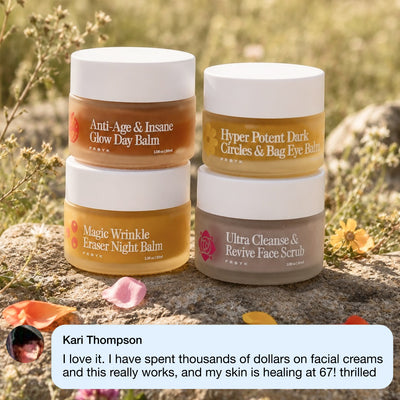
Frøya hizo una opción de formulación específica: extracto CO2 de incienso, no aceite esencial. Esa es la diferencia entre un producto que puede llevar ácidos boswélicos a tu piel y uno que principalmente lleva su aroma. Base de aceite prensado en frío. Sin agua, sin rellenos, sin fragancia sintética.
Compra el Night BalmYa sea que tu miel esté en un bálsamo o en un frasco, tiene que encajar en el resto de tu rutina. Esa es una pregunta de superposición.
Cómo superponer miel en una rutina completa de cuidado de la piel
La regla que resuelve nueve de cada diez preguntas de superposición: textura más ligera a más rica. Los humectantes a base de agua van en piel húmeda primero. Los emolientes a base de aceite y oclusivos van al final.
La miel es un humectante. El escualano es un emoliente. Se superponen limpiamente, no competitivamente.
Rutina AM
Limpia con un lavado con miel o un limpiador suave sin jabón. Tónico de equilibrio de pH opcional en piel húmeda. Aplica una capa delgada de miel en piel todavía húmeda, luego tu vitamina C o niacinamida encima, luego un hidratante, luego SPF 30+.
El paso de piel húmeda importa. Los activos solubles en agua necesitan un vehículo de humedad para penetrar, y la miel proporciona y mantiene ese vehículo mientras el activo se asienta. El protector solar siempre al final en la mañana, sin excepciones.
Rutina PM
Limpia, aplica miel en piel húmeda, luego tu retinoide encima de la capa de miel. La leve acidez y la acción humectante suavizan la irritación del retinoide, uno de los beneficios más útiles poco contados para piel madura. Sella con escualano como un emoliente pluma, luego una crema de noche más rica o bálsamo como el oclusivo. Si prefieres aceites más ricos, el aceite de espino cerval y el aceite de jojoba se superponen bien con escualano o lo sustituyen dependiendo de la estación y qué tan seca sea tu piel.
Con qué se empareja bien la miel
Vitamina C, niacinamida, retinoides (donde reduce irritación), péptidos, ácido hialurónico. El aceite de incienso es un anti-inflamatorio complementario que encaja en la misma secuencia nocturna.
Qué evitar
No apliques miel en piel completamente seca en aire de baja humedad sin un hidratante detrás de ello. Esa es la trampa de ósmosis inversa.
No apiles miel en el mismo paso que un AHA o BHA fuerte. La miel contiene ácido glucónico, que es suavemente AHA por sí solo. Superponerlo con un tónico de glicólico al 10% es una receta para ardor y una barrera infeliz.
Rutina en su lugar. La última pregunta es la que decide si te mantienes con ello. ¿Cuánto tiempo hasta que realmente veas y sientas la diferencia?
Línea de tiempo realista de resultados: qué esperar semana por semana
La mayoría de los lectores dejan un nuevo ingrediente en la semana 2 porque esperaban resultados de la semana 6. Establece la línea de tiempo correctamente de frente y no renunciarás anticipadamente a algo que estaba funcionando.
Inmediato / primera sesión
La piel se siente más suave, más tranquila, menos tirante dentro de minutos de enjuagar la primera mascarilla. El enrojecimiento visible reduce en uno a dos usos para piel sensible o propensa a rosácea.
Este es el humectante tirando agua adentro más el pH ácido calmando la superficie. Es real, rápido, y la parte que tienta a la gente a llamar a la miel "milagrosa" antes de que el trabajo estructural haya comenzado.
Semanas 1 a 2
Los parches secos que habían estado en un ciclo semanal se resuelven. La piel deja de sentirse tirante al mediodía. Múltiples ensayos de usuario en TheEveryGirl y Vitacost informan este hito consistentemente.
Después de 2 semanas de un lavado con miel, un usuario escribió que su piel "nunca había estado mejor". Otro a las 3 semanas dijo que sus parches secos ya no eran visibles. Real, repetible, y consistente con cómo funciona un humectante en un estrato córneo que estaba funcionando con reservas.
Semanas 2 a 4
El tono se iguala, los poros lucen refinados, los brotes disminuyen.
El estudio PMC11677624 ancla este punto de control con datos de instrumentos: 29,7% de mejora en hidratación, 21,3% de mejora en suavidad, y 21,4% de reducción en el área de arrugas a las 4 semanas. El protocolo de dermatitis seborreica (PMC3504486) vio resolución a las 4 semanas. Esta ventana es donde los efectos estructurales y de superficie comienzan a componer.
Semanas 6 a 8
Restauración completa de la barrera, soporte sostenido del manto ácido, y marcas post-inflamatorias desapareciendo. Esto se alinea con el ciclo de renovación de corneocitos de 4 a 6 semanas, ligeramente más largo para cambio estructural visible a los 50+. Por 8 semanas, la pregunta se desplaza de "¿esto está funcionando?" a "cómo se ve mi piel cuando esto es la nueva línea de base".
Línea de tiempo establecida. La parada final es el FAQ para las preguntas que las secciones del cuerpo no agotaron completamente.


