

 Cuenta


Tu piel se ha vuelto de repente seca, sensible y como de papel. Entraste en tus 50 y ese cutis que solía recuperarse de la noche a la mañana ahora arrastra cada cena tardía, cada semana fría, cada vaso de agua que te saltaste.
Lo sorprendente es esto. La sensación de calor que el jengibre genera en tu lengua responde a la misma vía del termorreceptor TRPV1 que, aplicada tópicamente y en la dilución correcta, dilata los capilares superficiales y devuelve el color a la piel que ha perdido vitalidad microcirculatoria (Sugimoto K et al. 2018). El jengibre no adormece, no enmascara ni seda. Envía una señal.
Este artículo repasa los beneficios del aceite de jengibre para la piel que realmente cuentan con respaldo científico revisado por pares: la bioquímica del gingerol y el 6-shogaol, la diferencia entre extracción CO2 y destilación al vapor (una de las dos formas apenas contiene los compuestos activos), las matemáticas de dilución del 0,5 al 1 por ciento para uso facial, los aceites portadores que se ganan su lugar junto a él, y la única condición de la piel en la que el jengibre queda totalmente descartado.
Si te intriga conocer los ingredientes, priorizas la evidencia y ya pasaste los 45, esto está escrito para ti.
El mecanismo del gingerol: qué hace realmente el jengibre a nivel de la piel
La mayoría del marketing sobre el jengibre omite un detalle clave: el 6-shogaol es aproximadamente el doble de potente que el 6-gingerol en los ensayos antiinflamatorios (Maghraby YR et al. 2023), y el shogaol se forma cuando el jengibre se calienta o envejece. El jengibre fresco y el envejecido actúan de forma distinta sobre la piel porque sus proporciones de compuestos son diferentes.
COX-2 y NF-kB, el interruptor de la inflamación. Aplicado tópicamente, el 6-gingerol inhibe la expresión de COX-2 inducida por TPA en piel de ratón al bloquear la vía de señalización p38 MAPK hacia NF-kB (Hossain MT et al. 2025). Imagina el NF-kB como el control maestro de volumen de la inflamación cutánea. El gingerol lo baja antes de que la COX-2, la enzima que produce prostaglandinas inflamatorias, siquiera se active.
El bloqueo dual va más allá. El 6-gingerol y el 6-shogaol inhiben tanto la COX-1 como la COX-2, además de la 5-LOX, a través del farmacóforo cetona alfa,beta-insaturada. Traducción: menos enrojecimiento leve, recuperación más rápida ante irritaciones menores y una base más tranquila en pieles que se irritan sin motivo aparente.
TRPV1, el receptor del calor y la circulación. Los gingeroles activan los termorreceptores TRPV1 de la piel, la misma familia de receptores que la menta activa por el lado frío a través del TRPM8 (Tisserand 2024). El efecto posterior es la vasodilatación de los capilares superficiales y el aumento del flujo sanguíneo cutáneo. Este es el retorno visible de ese “brillo desde dentro” que la piel opaca posmenopáusica suele perder primero.
Por qué esta combinación importa para la piel de 45+. La combinación antiinflamatoria y procirculatoria es poco frecuente entre los activos tópicos. La mayoría de los potenciadores de la circulación son proinflamatorios a la dosis que funciona (cafeína, ésteres de niacina). La mayoría de los antiinflamatorios no hacen nada por el flujo sanguíneo. Una revisión de 2024 (Matin M et al., citada 30 veces) encontró que el jengibre muestra efectos favorables en los 12 sellos distintivos del envejecimiento.
La acción dual es exactamente lo que necesita la piel opaca y de recuperación lenta después de la menopausia, y la siguiente sección hace visible esa conexión.
Beneficios del aceite de jengibre para la piel madura: lo que respalda la investigación
Existe un perfil de ingrediente que encaja casi a la perfección con la piel posmenopáusica: microcirculación opaca, inflamación crónica de bajo grado, renovación de colágeno más lenta y carga oxidativa. El aceite de jengibre cubre tres de los cuatro.
Opacidad y tono desigual. Partiendo de la dilatación capilar mediada por TRPV1 ya explicada, un ensayo cruzado controlado con placebo en mujeres (Sugimoto K et al. 2018, citado 34 veces) encontró que el jengibre produce un efecto hipertérmico significativo y mejora el flujo sanguíneo periférico. El masaje facial ayurvédico con aceite enriquecido con jengibre tradicionalmente “reduce el elemento Vata, característico de la piel envejecida, para promover una piel más joven, fresca y luminosa.” El planteamiento cultural es anterior a los datos de laboratorio, y estos confirman un mecanismo que la tradición ya describía con otras palabras.
Firmeza y colágeno. El acetil zingerona, una molécula estabilizada derivada del jengibre, mejora la homeostasis del colágeno en modelos de piel fotoenvejecida (Meyer TA et al. 2023). Un estudio independiente de acoplamiento molecular (Asoka et al. 2022, citado 20 veces) confirmó que el bisaboleno y otros sesquiterpenos relacionados presentes en el jengibre tienen actividad antioxidante y antienvejecimiento cutáneo. El aceite de jengibre no sustituye a los retinoides. Los complementa al calmar la carga inflamatoria que, en primer lugar, acelera la degradación del colágeno.
Fotoenvejecimiento y recuperación. El aceite esencial de Zingiber montanum mostró propiedades antifotoenvejecimiento en fibroblastos dérmicos humanos irradiados con UV-B in vitro (Navabhatra A et al. 2022, citado 18 veces). Nota de honestidad: se trata de un estudio in vitro, no de un ensayo aleatorizado de 60 días en mujeres. El argumento aquí es plausibilidad mecanística más uso tradicional, no una prueba concluyente.
La piel que responde bien al jengibre tiene una firma específica: opacidad, recuperación lenta, subtono apagado. La piel que no responde se aborda más adelante. No todos los frascos etiquetados como “aceite de jengibre” contienen realmente los compuestos que midieron estos estudios. La siguiente sección explica por qué la etiqueta importa más que el nombre.
CO2 frente a destilación al vapor: por qué el método de extracción lo cambia todo
La destilación al vapor, el proceso estándar para la mayoría de los aceites esenciales en los estantes, destruye los gingeroles termolábiles que aportan el valor del jengibre para el cuidado de la piel. El frasco que tienes en tu carrito puede técnicamente ser aceite de jengibre y, aun así, no contener casi nada de lo que estudiaron esos artículos científicos.
La destilación al vapor expone el material botánico a vapor de alta temperatura y condensa los compuestos volátiles que se liberan. Lo que sobrevive: el zingibereno y otros sesquiterpenos (pesados, amaderados, característicos del jengibre envejecido). Lo que no sobrevive en cantidad significativa: los gingeroles y los shogaoles, las dos familias de compuestos detrás de cada mecanismo descrito anteriormente.
La extracción con CO2 supercrítico funciona a menor temperatura y captura tanto los sesquiterpenos volátiles como los gingeroles y shogaoles, produciendo lo que el sector llama un “extracto total.” Como resumió Absolute Aromas en marzo de 2026, “la extracción con CO2 preserva más los compuestos activos de la planta, especialmente los gingeroles.” Para las afirmaciones antienvejecimiento en la piel, el CO2 es la forma que realmente describe la investigación.
Una lista de verificación para compradoras, en lenguaje sencillo. Busca “extracto de CO2” o “CO2 supercrítico” en la etiqueta. Espera un aceite más espeso, más oscuro, de un color casi color miel, no un amarillo pálido y ligero. Espera un sobreprecio de entre dos y cuatro veces respecto al destilado al vapor. Los proveedores serios indican el porcentaje de gingerol en el certificado de análisis, a menudo entre el 20 y el 30 por ciento en extractos de CO2 de calidad. Si una marca no puede decirte si su jengibre está destilado al vapor o extraído con CO2, interpreta ese silencio como la respuesta.
Saber qué contiene el frasco es la mitad del trabajo. La otra mitad es la dilución, que la siguiente sección explica con conteos de gotas exactos.
Matemáticas de dilución para la piel mayor de 45: las cifras que realmente importan
Para la piel facial madura, el rango seguro de aceite de jengibre es del 0,5 al 1 por ciento. Si te pasas, cambias el beneficio por irritación. Si te quedas corta, no sentirás el calor que indica que el efecto TRPV1 está activo.
La guía de 2024 del Tisserand Institute es clara: del 0,5 al 1,2 por ciento para cosméticos faciales, del 0,2 al 1 por ciento para piel dañada, sensible o madura. Aquí importa el principio de respuesta a la dosis. Los aceites que activan el TRPV1 se comportan como antiinflamatorios a baja concentración y potencialmente irritantes a concentraciones más altas. Esta no es una química de “más es mejor.”
Ahora las matemáticas de las gotas, con cifras concretas. Referencia estándar: 1 ml de aceite esencial equivale aproximadamente a 20 gotas. Para 30 ml de portador (alrededor de 1 onza líquida, el tamaño de un frasco cuentagotas de vidrio estándar), el 0,5 por ciento equivale a unas tres gotas de extracto de jengibre CO2; el 1 por ciento equivale a unas seis gotas. Para 10 ml de portador (un roll-on pequeño), el 0,5 por ciento equivale a una gota; el 1 por ciento equivale a dos gotas. Empieza con el 0,5 por ciento durante las primeras dos semanas y luego evalúa la tolerancia antes de pasar al 1 por ciento.
La aplicación es sencilla. Calienta dos o tres gotas de la mezcla final entre las palmas limpias y presiónalas sobre la piel limpia y húmeda después del tónico, antes de cualquier bálsamo o crema más densa. Evita el contorno de ojos. Úsalo primero por la noche. La sensación de calor es suave y agradable una vez diluida correctamente, pero la mayoría querrá probarla antes de llevarla debajo del maquillaje. Haz una prueba de sensibilidad detrás de la oreja durante 48 horas antes de aplicarla en todo el rostro.
La dilución solo es tan buena como el aceite portador que la contiene, y tres portadores específicos se ganan su lugar junto al jengibre para la piel mayor de 45.
Los mejores aceites portadores para combinar con jengibre en pieles mayores de 45
Tres portadores se ganan su lugar junto al jengibre para la piel mayor de 45: el rosa mosqueta para el tono, el argán para la elasticidad y la jojoba para la tolerancia diaria. Cada uno aborda una capa distinta del panorama de la piel posmenopáusica.
Rosa mosqueta. El aceite de semilla de rosa mosqueta contiene ácido trans-retinoico de origen natural y una alta proporción de ácido linoleico para reparar la barrera cutánea. Combinado con el impulso circulatorio del jengibre, habla directamente a quien busca abordar opacidad más pigmentación, a la mujer cuya piel está desigual más que flácida. La rosa mosqueta es lo bastante fotoestable para uso nocturno, pero se degrada rápido. Compra frascos pequeños, guárdalos en un lugar fresco y refrigera una vez abiertos. (Para una opción relacionada, consulta nuestra guía de aceite de espino amarillo para piel madura.)
Argán. Un ensayo aleatorizado de 60 días en 60 mujeres posmenopáusicas encontró mejoras significativas en la elasticidad con el uso tópico de aceite de argán. Combina el argán con el jengibre cuando la preocupación principal sea la pérdida de firmeza y rebote más que el tono. El contenido de tocoferol del argán también ofrece defensa oxidativa que complementa la acción antiinflamatoria del jengibre, de modo que ambos trabajan en capas distintas del mismo problema.
Jojoba. Técnicamente, la jojoba es un éster de cera líquido, no un aceite, y su estructura molecular imita al sebo humano lo suficiente como para no provocar una respuesta comedogénica en la piel madura (donde la producción de sebo suele haber caído de forma notable). Este es el portador de uso diario para quienes tienen 45+ y piel sensible o reactiva, y combina mejor con el jengibre en el extremo más bajo, el 0,5 por ciento. (Más sobre el perfil de la jojoba en nuestra guía de aceite de jojoba para piel madura.)
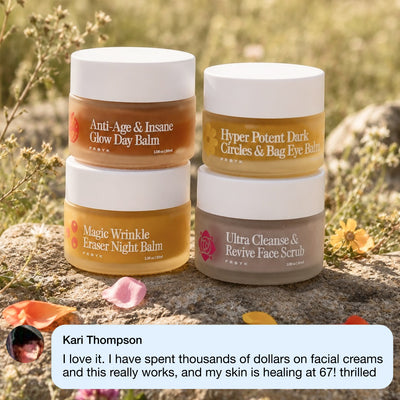
Frøya tomó una decisión de formulación específica: extracto de incienso CO2, no aceite esencial. Esa es la diferencia entre un producto capaz de llevar ácidos boswélicos a tu piel y uno que principalmente aporta su aroma. Base de aceite prensado en frío. Sin agua, sin rellenos, sin fragancia sintética.
Compra el Night BalmLa elección es en realidad un autodiagnóstico. Si tu preocupación principal es el tono, elige rosa mosqueta. Si es la firmeza, elige argán. Si es la sensibilidad, elige jojoba. También puedes alternar, usando uno por la mañana y otro por la noche, o cambiando según la estación.
Cuándo evitar el aceite de jengibre: los tipos de piel que deberían elegir otra cosa
- Piel opaca y posmenopáusica
- Tono desigual y recuperación lenta
- Extracto CO2 al 0,5–1%
- Portador de rosa mosqueta, argán o jojoba
- Rosácea (cualquier subtipo)
- Enrojecimiento persistente sin causa clara
- Capilares rotos
- Eczema o dermatitis activos
- Alergia a las Zingiberáceas
Si tu piel se enrojece con facilidad, desarrolló rosácea en tus cuarenta, o se irrita con la mayoría de los activos, el aceite de jengibre no es para ti. El mismo mecanismo de TRPV1 que lo hace útil para la piel opaca es la razón.
La Dra. Leslie Baumann, MD, ha sido directa en este punto: los aceites esenciales que generan calor “pueden empeorar el enrojecimiento y la inflamación y provocar un brote de rosácea.” También señala que ningún estudio publicado demuestra que los aceites esenciales mejoren los síntomas de la rosácea. La acción vasodilatadora del jengibre lo sitúa en la misma categoría de precaución que la canela, el clavo y el orégano en una lista de desencadenantes de rosácea.
La biología de respuesta a la dosis explica por qué. Los aceites que activan el TRPV1 son antiinflamatorios a baja concentración y proinflamatorios por encima del umbral individual. En la piel propensa a la rosácea, ese umbral es más bajo, la vasodilatación ya está desregulada, y el calor que resulta agradable en la piel madura normal se traduce en un desencadenante de brote en la piel con rosácea.
El filtro práctico, sin sermones. Evita el aceite de jengibre si tienes rosácea diagnosticada (cualquier subtipo), enrojecimiento facial persistente sin causa clara, capilares rotos, eczema o dermatitis activos en el rostro, o una alergia de contacto conocida a la familia Zingiberáceae (jengibre, cúrcuma, cardamomo). Para estos casos, el aceite de incienso activa una vía completamente distinta y resulta adecuado donde el jengibre no lo es. Detén la aplicación y enjuaga con un limpiador en crema si sientes ardor sostenido en lugar de un calor suave.
El objetivo es conocer el patrón de tu piel, no encontrar una regla universal.


