

 Cuenta



Si compraste una botella de aceite de incienso para la piel por su reputación antiedad, hay una probabilidad casi total de que no contenga las moléculas de las que provienen esos beneficios.
Los compuestos que hacen el trabajo real son los ácidos boswélicos. Son pesados, no volátiles, e incapaces estructuralmente de sobrevivir la destilación al vapor. Si tu botella dice "aceite esencial de incienso", un análisis de cromatografía de gases casi con certeza encontraría cero de ellos.
Has escuchado "resina antigua, milagro moderno" cien veces. No voy a venderte eso. En cambio, te daré un ensayo clínico revisado por pares, un mecanismo biológico específico, y una forma de 30 segundos para saber qué productos de incienso pueden llegar realmente a tu piel y cuáles simplemente la perfuman.
Esto es lo que cubren los próximos 3.000 palabras: la diferencia entre aceite esencial, extracto de CO2 e infusión de resina, y por qué importa. El estudio de 2010 a doble ciego con la mitad del rostro que definió qué hace una crema con 0,5% de ácido boswélico en caras reales durante 30 días. Cómo interactúan esos compuestos con el declive de colágeno que comienza en la perimenopausia. Qué especie de Boswellia pertenece a qué producto. Cómo usarlo. Y cómo leer una etiqueta de ingredientes con confianza.
No es un milagro. Solo claridad.
Aceite Esencial de Incienso vs Extracto de CO2: Por Qué la Forma Determina el Beneficio
La destilación al vapor es una física simple. El vapor se mueve a través del material de la planta, los compuestos volátiles se evaporan con él, el vapor se recondensa en un tubo más frío, y el aceite flota en la parte superior. Ese proceso solo transporta moléculas que pueden volatilizarse alrededor de 100°C.
Los ácidos boswélicos no califican. Se encuentran en pesos moleculares superiores a 470 daltons, con puntos de ebullición en el rango de 500 a 600°C. Físicamente no pueden subir al vapor hacia el recipiente de recolección. Robert Tisserand, coautor de la referencia clínica estándar Essential Oil Safety, ha confirmado esto claramente. Los análisis de espectrometría de masas-cromatografía de gases de aceites esenciales de incienso comerciales consistentemente devuelven cero ácidos boswélicos detectables.
¿Entonces qué hay en esa botella de aceite esencial de incienso? Principalmente alfa-pineno, limoneno, acetato de incenol, y otros monoterpenos. Estas moléculas tienen un perfil aromático agradable, actividad antioxidante leve, y algunos efectos antimicrobianos. No son inútiles. Tampoco son los compuestos que impulsan la historia antiedad por la que viniste.
La extracción con CO2 funciona diferente. El dióxido de carbono presurizado se comporta como un solvente líquido a bajas temperaturas, extrayendo tanto aromas volátiles como moléculas más pesadas no volátiles en el extracto. Esto incluye ácidos boswélicos, en concentraciones de trazas a bajas dependiendo del proceso y material de partida. Sin daño por calor. Un perfil químico más amplio que el que la destilación al vapor puede producir.
Hay una tercera forma que vale la pena conocer: infusión de resina. Resina de Boswellia secada, sumergida en un aceite portador como jojoba a 160 a 175°F durante aproximadamente 24 horas, libera ácidos boswélicos y polisacáridos que apoyan la piel directamente en el aceite a través del contacto con solvente. Las esteticistas licenciadas han estado haciendo incienso de esta manera durante años, y su química es correcta. Como dice la esteticista LoAnna, infundir la resina en aceite extrae los ácidos boswélicos, mientras que convertirla en aceite esencial los elimina. Misma planta. Producto diferente.
- Extracto de solvente estandarizado : 60–65% ácidos boswélicos (forma en polvo o cápsula)
- Aceite portador infundido con resina : ácidos boswélicos significativos extraídos mediante infusión con calor
- Extracto de CO2 : ácidos boswélicos de trazas a bajos (solo B. serrata)
- Aceite esencial (destilado al vapor) : efectivamente cero ácidos boswélicos
Esto no es una disputa semántica. Es la diferencia entre un producto que puede actuar plausiblemente sobre líneas finas y uno que simplemente huele bien en tu almohada.
Cómo Funcionan los Ácidos Boswélicos en la Piel: La Historia de 5-LOX y MMP
El incienso es la única familia botánica que inhibe selectivamente una enzima llamada 5-LOX. Esa especificidad es por qué la misma planta aparece tanto en investigación de artritis como en revistas de dermatología.
5-LOX es 5-lipoxigenasa. Produce leucotrienos, moléculas de señalización que impulsan la inflamación crónica de bajo grado que los investigadores llaman inflammaging. Esa inflamación de combustión lenta es uno de los mecanismos detrás del envejecimiento de la piel, no algo separado de él.
AKBA, abreviado como ácido beta-boswélico acetil-11-ceto, es un inhibidor selectivo de 5-LOX y es único de Boswellia. La cúrcuma, el té verde, y otras plantas anti-inflamatorias comunes no golpean esta vía de la misma manera. Los ácidos boswélicos también modulan enzimas COX, lo que añade una segunda palanca anti-inflamatoria encima de la vía de leucotrienos.
El segundo mecanismo es la inhibición de MMP. Las metaloproteinasas de matriz son las enzimas que descomponen el colágeno y la elastina en la dermis. La exposición UV, la inflamación crónica, y los cambios hormonales de la mediana edad todos los aumentan.
Los ácidos boswélicos inhiben estas enzimas, ralentizando una rama de la pérdida de colágeno en su origen. En paralelo, los extractos de incienso muestran inhibición leve de tirosina, que es la enzima productora de melanina detrás de la pigmentación post-inflamatoria.
La tercera pieza es el otro lado de la ecuación. Los ácidos boswélicos estimulan los fibroblastos, las células que construyen colágeno nuevo, y apoyan la diferenciación de queratinocitos, que es cómo la barrera se renueva.
Esto vale la pena decirlo claramente porque la gente pregunta si el incienso reemplaza un retinoide. No lo hace, y no debería intentarlo. Los retinoides actúan principalmente a través de la señalización del receptor de ácido retinoico y la renovación de queratinocitos. Los ácidos boswélicos funcionan antes en la inflamación que impulsa el daño y directamente en las enzimas de la matriz extracelular que aclaran colágeno. Diferentes palancas, misma rutina, sin redundancia.
Advertencia honesta: la mayoría de los datos de mecanismo anterior provienen del trabajo in vitro y modelos animales. El ensayo clínico, el que las personas realmente quieren saber, es la próxima sección.
El Ensayo Clínico Pedretti 2010: Lo Que un Estudio a Doble Ciego Encontró en Caras Reales
Pedretti y colegas, Planta Medica, 2010, PMID 19918712. Anótalo. Es el único ensayo clínico controlado aleatorizado revisado por pares en humanos de ácidos boswélicos tópicos en piel envejecida, y vale la pena tomarse en serio.
El diseño: 15 mujeres de mediana edad a mayores, formato de mitad del rostro. Un lado de la cara de cada mujer recibió una crema formulada con 0,5% de ácidos boswélicos de un extracto de resina de Boswellia serrata. El otro lado recibió la crema idéntica sin ácidos boswélicos. Ni las mujeres ni los evaluadores sabían cuál lado era cuál.
Aplicada una vez al día durante 30 días. Los puntos finales incluyeron líneas finas, aspereza táctil, elasticidad de la piel, y ecografía dérmica, que es imágenes de ultrasonido de la capa dérmica en sí.
El lado tratado mostró mejoras estadísticamente significativas en los cuatro puntos finales. Cero eventos adversos reportados.
Estudio pequeño. N=15 es modesto, y un ensayo no es una literatura. El peso de la evidencia detrás de los retinoides sigue siendo mucho mayor.
Pero el diseño importa. Los controles de mitad del rostro controlan la variación individual, el doble ciego controla el sesgo, y la ecografía dérmica es un instrumento objetivo, no una encuesta subjetiva. Ese es un metodología más fuerte que la mayoría de los ensayos de ingredientes cosméticos que jamás leerás.
La traducción práctica es la parte que la mayoría de artículos omiten. La concentración efectiva fue 0,5% de ácidos boswélicos en la crema terminada. Unas pocas gotas de aceite esencial mezcladas en un humectante facial en casa entregan ni remotamente eso, porque el aceite esencial no contiene ácidos boswélicos en primer lugar. E incluso un extracto de CO2 al 1 o 2% de una fórmula solo entregará una fracción de un por ciento de ácidos boswélicos reales, porque la fracción de ácido boswélico dentro del extracto es en sí misma pequeña.
Lo que es otra manera de decir: forma, especie, e inclusión son no detalles. Son los hallazgos del estudio en la práctica.
Incienso para Piel Menopáusica y Post-Menopáusica: Por Qué el Momento Importa
En los primeros cinco años después de la menopausia, las mujeres pueden perder hasta 30% del colágeno de su piel. Eso no es una deriva gradual. Eso es un acantilado.
El estrógeno no es solo una hormona reproductiva. En la piel, apoya la actividad de fibroblastos, la producción de ácido hialurónico, y la síntesis de lípidos de barrera que mantiene tu piel de perder agua. Cuando el estrógeno cae en la perimenopausia y luego se mantiene bajo, las tres funciones disminuyen.
La actividad de MMP sube en paralelo. La barrera se vuelve más delgada y más lenta para recuperarse. Las líneas finas se profundizan más rápido.
La piel se siente más seca incluso cuando estás bebiendo más agua. Las pequeñas irritaciones que solían desaparecer en un día ahora persisten durante una semana.
Este es el cuadro en el que los ácidos boswélicos suceden caber.
La inhibición de MMP aborda directamente un impulsor de la descomposición acelerada de colágeno que sigue la pérdida de estrógeno. La estimulación de fibroblastos apoya el lado de construcción de colágeno que ahora está poco apoyado hormonalmente. La inhibición de 5-LOX reduce la inflamación crónica que agrava cada uno de esos cambios.
Para la reparación de barrera específicamente, el aceite de espino amarillo es el compañero al que recurro. Su contenido de omega-7 y perfil de carotenoides funcionan en el lado de lípidos de la ecuación que el incienso no toca. Juntos cubren más del cuadro que cualquiera solo. Escribí una pieza más profunda sobre beneficios del aceite de espino amarillo para la piel si quieres el desglose completo.
¿Para quién es más útil esto?: mujeres en perimenopausia, menopausia, o la década post-menopáusica. Si tu preocupación principal es la combinación específica de pérdida de firmeza, nuevas líneas finas, y piel que tarda más en rebotar de cualquier cosa, este ingrediente es una adición racional, no una tendencia.
Boswellia serrata vs Boswellia carterii: Qué Especie Pertenece a tu Cuidado de la Piel
La mayoría del incienso etiquetado simplemente como incienso es una de cuatro especies. Dos de ellas hacen cosas bastante diferentes en la piel, y la distinción no es marketing. Es química.
| Especie | Perfil Clave | Mejor Para |
|---|---|---|
| B. serrata | Mayor contenido de AKBA, inhibición de 5-LOX más fuerte, textura más ligera | Envejecimiento impulsado por inflamación, acné adulto 45+, piel reactiva o con tendencia rosácea |
| B. carterii (sacra) | Perfil más rico de alfa-pineno y limoneno, mayor contenido de ácidos beta boswélicos, uso tradicional europeo | Piel seca, surcos, post-menopáusica; apoyo de colágeno y suavidad |
| B. frereana | Casi ningún ácido boswélico, química de ácido de resina diferente | No recomendado para afirmaciones anti-envejecimiento basadas en ácido boswélico |
| B. papyrifera | Usado en algunas formulaciones, investigación clínica limitada | Trata como no probado en lugar de activamente incorrecto |
Boswellia serrata es la especie india. Lleva el contenido más alto de AKBA de los Boswellias comerciales, lo que significa el perfil de inhibición de 5-LOX más fuerte selectivo. La mayoría de la investigación clínica publicada sobre ácidos boswélicos, incluyendo el trabajo de artritis y enfermedad inflamatoria intestinal, usa extractos de serrata. El ensayo Pedretti también usó un extracto derivado de serrata.
Para la piel, es la especie a la que recurriría cuando el cuadro de envejecimiento es impulsado por inflamación: enrojecimiento persistente, brotes de aparición adulta a los 45 años más, piel madura sensibilizada que reacciona a todo.
Boswellia carterii, a veces etiquetada como Boswellia sacra, tiene una proporción diferente. Típicamente menor AKBA, ácidos beta-boswélicos totales más altos, y un perfil de monoterpeno más rico dominado por alfa-pineno y limoneno. Su perfil se inclina hacia apoyo de colágeno y suavidad. Para piel seca, surcada, post-menopáusica donde la queja principal es textura y flacidez en lugar de enrojecimiento, carterii es la opción más dirigida.
Cómo Usar Incienso en la Piel: Dilución, Aceites Portadores, y una Rutina Simple
Si has estado añadiendo una gota de aceite esencial de incienso a tu humectante y esperando resultados, el problema no eres tú. El problema es la gota y el humectante.
Si estás comprometida con trabajar con un aceite esencial, respeta las reglas de dilución. El uso facial sin enjuague alcanza un máximo de 1 a 2%, lo que funciona a aproximadamente 6 a 12 gotas por onza de aceite portador. Nunca apliques sin diluir. Siempre haz una prueba de parche en el interior del antebrazo durante 24 horas antes de poner cualquier cosa nueva en tu cara.
El aceite portador importa más de lo que la gente se da cuenta. La jojoba es la base más comúnmente recomendada para uso facial porque su estructura de éster de cera imita el sebo humano, es oxidativamente estable, y no obstruye los poros. Para piel post-menopáusica, jojoba combinada con un aceite más rico en omega maneja tanto el lado de barrera como el de suavidad de la ecuación. Escribí un desglose más largo sobre aceite de jojoba para la piel si quieres entender por qué se comporta como lo hace.
Para lectores que quieren los ácidos boswélicos reales sin buscar un extracto de CO2, la infusión de resina DIY es una opción real. Resina seca de Boswellia serrata o carterii, cubierta en jojoba, mantenida a 160 a 175°F durante 24 horas, luego colada a través de tela fina. Estás usando el aceite como solvente para extraer los ácidos boswélicos de la resina a temperaturas lo bastante bajas para no destruirlos. Esto es lo que las esteticistas que lo hacen en casa tienen correcto.
Una rutina simple dos veces al día que la mayoría de piel madura puede tolerar:
- AM: limpieza suave, sérum de vitamina C, aceite facial o bálsamo que contiene incienso, humectante, FPS mineral.
- PM: limpieza suave, producto que contiene incienso (o incienso en noches en que saltas retinoide), humectante.
En emparejamiento de retinoide: los mecanismos son complementarios, no conflictivos. Comienza conservadoramente. Retinoide dos o tres noches a la semana, incienso en las noches libres, y mira cómo responde tu piel durante un mes completo antes de aumentar cualquiera.
Seguridad del Incienso para Piel Madura: Sensibilización, Almacenamiento, y Uso a Largo Plazo
El incienso no quema a la luz del sol, no pica piel abierta, y no tiene interacciones conocidas con los activos comunes de cuidado de la piel. Lo único que hace, si lo dejas, es oxidarse.
- Uso durante el día (no fototóxico)
- Hasta 2% sin enjuague (IFRA)
- Retinoides, vitamina C, niacinamida, AHA
- Uso diario a largo plazo cuando se almacena correctamente
- El aceite tiene más de 12–18 meses
- Brote activo de eccema en el área
- Alergia conocida a Boswellia o resina de árbol
- Embarazada o lactando
Ahora el riesgo real. Los monoterpenos en aceite esencial de incienso, alfa-pineno y limoneno en particular, se oxidan cuando se exponen al aire, luz, o calor. Los terpenos oxidados son sensibilizadores, lo que significa que pueden desencadenar una reacción tipo alérgica retrasada que se parece a nuevo escozor, enrojecimiento inexplicado, o pequeños protuberancias apareciendo semanas en un producto previamente libre de problemas.
La piel madura es más vulnerable a esto que la piel más joven porque la función de barrera ya está comprometida.
Reglas de almacenamiento que previenen esto:
- Vidrio oscuro o ámbar, siempre. No vidrio claro, no plástico.
- Tapa firmemente sellada. Las tapas con orificio reductor de gotas ayudan.
- Armario fresco y seco. No el baño, donde la temperatura y humedad oscilan diariamente.
- Reemplaza aceites esenciales 12 a 18 meses después de abrir. Para productos formulados, sigue el símbolo PAO (período después de abrir) en el frasco.
Qué Buscar en una Etiqueta de Cuidado de Incienso (y Dónde Aterriza Frøya)
Si no lees nada más en este artículo, lee esta lista de verificación. Es todo lo anterior comprimido en 30 segundos de lectura de etiqueta.
- 1 Forma. Busca "extracto de CO2 de Boswellia [especie]" o un extracto estandarizado de ácido boswélico. Si la lista de ingredientes dice "aceite de incienso" o "aceite de Boswellia carterii" sin calificador de CO2, eso es casi con certeza aceite esencial destilado al vapor, lo que significa contenido de ácido boswélico casi cero.
- 2 Especie. Serrata o carterii debería ser especificada. "Boswellia" sin especificar en un producto premium es una bandera amarilla. La empresa o no sabe o no te está diciendo.
- 3 Posición en la lista INCI. Los ingredientes se listan en orden descendente por concentración. Un extracto de CO2 que aparece significativamente en la lista, no enterrado después del conservante, está haciendo trabajo. Uno que se sienta en el último 5% de ingredientes está mayormente ahí para la etiqueta.
- 4 Elenco de apoyo. Incienso emparejado con aceites de barrera, antioxidantes, y péptidos es parte de una fórmula que respeta cómo la piel realmente funciona. Incienso flotando en una base de agua y fragancia es decoración.
- 5 Empaque. Vidrio opaco o ámbar, no plástico claro. Esta es química básica, y las marcas que se la saltan te dicen qué piensan de la estabilidad del ingrediente.
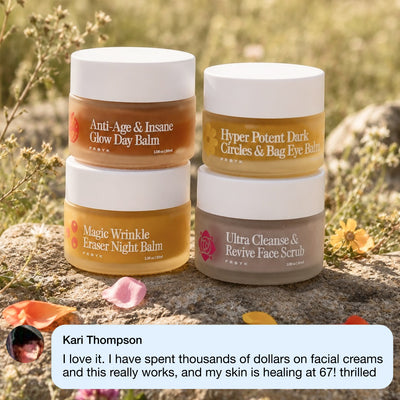
Frøya hizo una opción de formulación específica: extracto de CO2 de incienso, no aceite esencial. Esa es la diferencia entre un producto que puede llevar ácidos boswélicos a tu piel y uno que principalmente lleva su aroma. Base de aceite prensado en frío. Sin agua, sin rellenos, sin fragancia sintética.
Compra el Bálsamo de NocheEl incienso no es la respuesta completa. Es un ingrediente bien emparejado en una rutina que aún necesita protección solar, cuidado de barrera, y consistencia. Pero si vas a incluirlo, incluye la forma que realmente puede hacer algo.


