

 Account


Your moisturizer is mostly water. Between 70% and 90% of it, in most cases.
That's why your skin feels tight again by evening. The water evaporates, and it takes some of your own moisture with it.
A dry skin balm is a waterless or low-water treatment made almost entirely of oils and wax. Instead of adding water that disappears, it forms a protective barrier on the surface and locks in the moisture your skin already has. That's why dermatologists recommend balms and ointments over lotions for moderate to severe dryness.
Below, you'll learn what separates a balm from a cream, why your skin got drier without warning, how to apply one so it actually holds, and what to reach for when dryness turns into cracked or itchy skin.
Key takeaways
- A balm has a far higher oil-to-water ratio than a standard moisturizer, which is what lets it seal instead of evaporate.
- Cold air, hot showers, and a slower skin barrier after 45 all pull moisture out faster than a light lotion can replace it.
- The best balms combine humectants, emollients, and occlusives, so they hydrate, soften, and seal in one step.
- For eczema, psoriasis, and chronic dryness, a balm is the base layer that everything else builds on.
What Is a Dry Skin Balm?
A dry skin balm is a highly concentrated moisturizer built from oils, butters, and wax with little or no water in the jar. It sits on the surface and slows the water escaping from underneath.
Your skin already makes moisture. A balm's job is to stop it leaving.
80% oil. An ointment-style balm contains at least 80% oil and under 20% water. A cream sits near half and half. A lotion is mostly water. That ratio decides how long it stays put.
Balm vs Cream vs Lotion
The difference isn't texture. It's what happens twenty minutes after you rub it in.
|
|
Water content |
What it does |
Best for |
|
Lotion |
Highest |
Absorbs fast, evaporates fast |
Mild dryness, daily upkeep |
|
Cream |
Moderate |
Some sealing, lighter feel |
Normal to dry skin |
|
Balm |
Lowest |
Forms a barrier that holds |
Very dry, rough, or cracked skin |
The American Academy of Dermatology is direct about this: ointments and creams add more moisture than lotions and work better on dry skin. Among the ingredients they tell you to look for are jojoba oil, shea butter, and lanolin, all of which show up in balm formulas rather than lotions.
Three words worth knowing:
- Humectants pull water into the outer layer of your skin.
- Emollients soften and smooth it.
- Occlusives form the barrier that seals everything in.
A good balm combines all three, and it's why using a balm as a daily moisturizer changes how long hydration lasts.
A salve is a close cousin, usually thinner, and more often used on wounds than as a daily moisturizer.
Why Dry Skin Keeps Coming Back
Dryness isn't a surface problem. It's your skin barrier losing the ability to hold water, and harsh weather makes it worse.
What Cold Air and Hot Showers Do to Your Skin
Cold air holds less humidity than warm air. When the air around you is drier than your skin, it pulls moisture straight out of you.
The humidity gradient. Think how fast you dry off after a winter shower versus a humid summer day. Same towel, different air. Your skin is losing water to dry air all day, not just after bathing.
Hot showers strip the natural oils that hold moisture in. Keep them to five or ten minutes in warm water, then pat dry instead of rubbing.
Why Your Moisturizer Stops Working by Midday
Water-based products give you a short burst of hydration, then leave a thin film that does very little. Some also contain drying alcohols, which weaken the barrier further.
That's the tight feeling by lunchtime. It's also the case for waterless skincare over 40, where nothing in the jar can flash off.
Why Skin Gets Drier After 45
Dry skin becomes far more common with age, and it stops responding to what used to work.
60% had dry skin. In a study of 5,547 adults aged 51 to 101, 60% had dry skin, and a fifth of those had it across the whole body. Age, female sex, outside temperature, and eczema all raised the odds. Participants who used a cream daily had less localized dry skin. Mekić et al. · Journal of the American Academy of Dermatology · 2019
Part of the reason is that your skin replaces its own barrier oils more slowly over time. Less oil means a leakier barrier, and dryness that keeps returning no matter how much you slather on.
That daily cream finding is worth noting. The study can't prove one caused the other, but the people moisturizing every day had less dry skin than those who didn't.
This is why what worked at 35 stops working at 55. Knowing how to moisturize dry skin after 50 matters more once your barrier stops keeping up.
How to Read a Dry Skin Balm Ingredient List
Turn the jar over. A good balm has a short list you can read in one breath.
Here's what to look for:
- An oil or butter listed first. Safflower, jojoba, sweet almond, shea butter. This is the bulk of the formula.
- A wax or occlusive. Beeswax or lanolin. This is the part that seals.
- No water high on the list. Water near the top means you're holding a cream.
- A short list with no fillers. Fewer ingredients means fewer things to react to.
- No added synthetic fragrance. Synthetic fragrances can inflame sensitive skin.
Some balms use mineral oil, glycerin, ceramides, or colloidal oatmeal, and all of those have solid evidence behind them. Frøya Organics uses wild Arctic botanical ingredients instead, with organic beeswax doing the sealing.
One honest note. Frøya Organics balms are scented by their botanicals, not by added synthetic fragrance. If essential oils bother your skin, patch test first.
Where Dry Skin Needs a Balm Most

Dryness doesn't spread evenly. Some spots need a balm, others do fine with something lighter.
Hands, Cuticles, and Cracked Skin
Your hands get washed all day, and every wash strips oil. That's why they crack first, usually across the knuckles.
The fix is frequency, not quantity. A pea-sized amount after each wash beats one thick coat at bedtime, which is why the Instant Softening Hand Balm is worth keeping by the sink rather than in a drawer.
Feet, Elbows, Lips, and the Eye Area
Feet and elbows have thick, rough skin and almost no oil glands. Apply a balm at night, then cotton socks for feet.
Lips have no oil glands at all, so they chap fast in the cold. The eye area is the exception: that skin is thin and delicate, so skip the heavy body balm and use a proper eye balm made for the spot.
How to Apply a Dry Skin Balm for Best Results
Timing matters more than how much you use. The National Eczema Association calls this soak and seal, and the steps are simple.
- Soak in lukewarm water for 5 to 10 minutes. Use a gentle, fragrance-free cleanser and don't scrub.
- Pat your skin, don't rub. Leave it slightly damp rather than fully dry.
- Apply your balm within three minutes. This is the step that does the work, and it's the one most people skip.
- Use downward strokes with your palm. Rubbing up and down or in circles creates friction, which irritates already-sore skin.
- Reapply after every hand wash. Keep a jar near the sink so you actually do it.
You're not adding moisture with any of this. You're trapping the water already sitting on your skin before it evaporates.
Two small habits help. Scoop from the jar with a clean spatula rather than your fingers so you don't introduce bacteria, and if you wear makeup, let a facial balm settle for a minute so it doesn't lift your foundation.
Balms for Eczema, Psoriasis, and Sensitive Skin
If dryness comes with itching, flaking, or raw patches, a balm is the base layer everything else works on top of. It's also why balms suit chronic skin conditions and cold-weather protection so well.
From 30 days to 180. A Cochrane review of 77 trials found that people using a moisturizer went a median of more than 180 days before their next flare, compared with 30 days for those using none. They also needed about 9 grams less steroid cream to reach the same result. van Zuuren et al. · Cochrane Database of Systematic Reviews · 2017
Two things stand out in that review. Moisturizing works, and no single moisturizer clearly beat any other. The habit matters more than the brand.
A few actives get recommended for flaking skin, but each has trade-offs:
- Salicylic acid lifts scale but can sting and dry you out further.
- Retinol is proven for aging skin, though peeling and redness during the adjustment weeks are rough on a fragile barrier.
- Steroid creams calm inflammation fast but aren't built for long-term daily use.
None of that makes them wrong. It's why the grouping of balms for eczema-prone skin leans on botanical oils instead: chamomile to calm, borage for barrier lipids, beeswax to seal.
A Waterless Dry Skin Balm Routine for Face, Body, and Hands
Go back to that ingredient checklist. Oil first, wax to seal, short list, no synthetic fragrance. Here's what fits.
Ultra-Fast Relief Balm for Dry, Itchy Skin

The Ultra-Fast Relief Balm is a 100ml waterless balm for face and body, made for skin that's dry, itchy, or flaking. It ticks every box on the checklist above: oil first, wax to seal, short list, no added synthetic fragrance.
Each ingredient has a job. Chamomile calms irritation, borage seed oil supplies the fatty acids a weak barrier runs short on, and beeswax with lanolin does the sealing. Safflower, jojoba, and rosehip soften and smooth in between.
What you notice first is usually comfort. The instant relief of skin that stops feeling tight, then less itching over the following days as the barrier gets a chance to settle.
In Frøya Organics' own testing, 80% had less dry, itchy skin and 79% had clear skin after 60 days, with the skin barrier rebuilt in 7 days. Those are brand-reported figures rather than independent clinical results.
Apply a thin layer two or three times daily, thin and often rather than thick and rarely.
When the Complete Natural Pharmacy Set Works Better

One balm handles dryness. The Natural Pharmacy System was made for dry, itchy skin that doesn't come alone. Three waterless balms from Arctic plants. The set handles dryness that arrives with redness or aching joints.
|
Product |
Best for |
What it does |
How to use |
|
Dry, itchy, flaking skin on face and body |
Chamomile and borage in a waterless beeswax base |
Thin layer, 2 to 3 times daily |
|
|
Dryness that comes with facial redness |
Marigold and lavender on a lighter safflower base |
Thin layer at night |
|
|
Stiffness and aching alongside the skin picture |
Warming arnica, comfrey, and ginger |
Massage in as needed |
Safety, Allergies, and Patch Testing
Frøya Organics balms are built to be gentle. No acids, no alcohol, no added synthetic fragrance, and a short ingredient list you can read in one breath. Most people get on with them without any trouble.
Still, a patch test is always the smarter first move on skin that's already irritated. Try a little on your inner forearm each day for a week or so before going all in. If your skin stays happy, you're good.
Keep the jar somewhere cool and dry, and use clean fingers or a small spatula so water stays out of it. That's all the upkeep it needs.
Your Skin Before and After a Waterless Balm

Dry skin doesn't change overnight, and anyone telling you otherwise is selling something.
What shifts first is usually smaller than you'd expect. Less tightness by evening. Knuckles that stop splitting. The 3 a.m. itch that finally quiets down.
Julia's photo shows day 1 next to day 55, with the same habit in between: balm on damp skin, applied often. Her results are her own, and skin varies from person to person. More real customer before-and-afters tell the story better than we can.
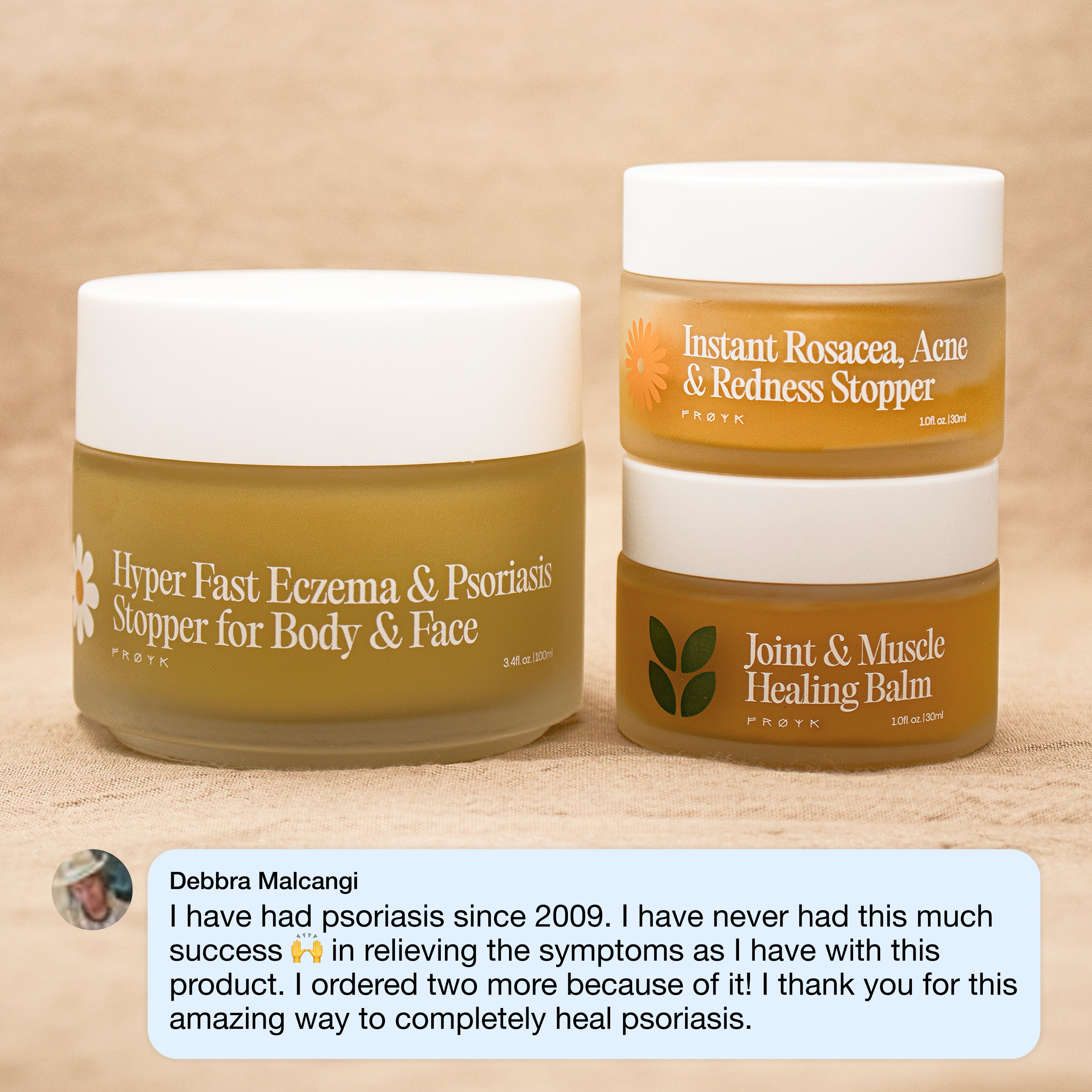
Three waterless balms for eczema, psoriasis, rosacea, and joint pain. Wild Arctic botanicals and organic beeswax calm, protect, and repair skin on face and body, backed by a 60-day money-back guarantee.
Shop the System TodayFrequently Asked Questions
Are balms good for dry skin?+
What do dermatologists recommend for extremely dry skin?+
What is the best thing to moisturize extremely dry skin?+
What is the best body balm for dry skin?+
What kind of balm is good for cracked skin on the hands?+


