

 Cuenta



El aceite de árbol de té quedó encasillado allá por 2005. Se convirtió en “lo del acné”. Pero el mismo compuesto que combate las bacterias del acné - el terpinen-4-ol del Melaleuca alternifolia - también reduce la inflamación crónica de bajo grado, elimina los ácaros microscópicos que viven en tus poros y acelera la cicatrización de heridas. Estos no son problemas de piel adolescente. Importan profundamente después de los 45.
1. Terpinen-4-ol: el compuesto que hace que el aceite de árbol de té realmente funcione
El aceite de árbol de té es un aceite esencial complejo que contiene más de 100 componentes químicos identificados, pero su actividad terapéutica está impulsada principalmente por un alcohol monoterpénico: el terpinen-4-ol. Este es el compuesto responsable de los efectos antimicrobianos, antiinflamatorios y cicatrizantes que se han documentado en la literatura clínica desde la década de 1990.
El terpinen-4-ol actúa a través de múltiples mecanismos de forma simultánea. Contra las bacterias, altera la integridad de la membrana celular, provocando fuga citoplasmática y muerte celular. Este mecanismo funciona tanto contra organismos grampositivos (como Staphylococcus aureus, el patógeno principal en heridas cutáneas infectadas y eczema) como contra organismos gramnegativos. Contra los ácaros Demodex, parece actuar como neurotoxina, paralizando y eliminando a los ácaros en concentraciones alcanzables con una aplicación tópica correctamente diluida.
Sobre las vías inflamatorias, el terpinen-4-ol suprime la producción inducida por lipopolisacáridos de TNF-alfa, IL-1beta e IL-10 en monocitos, precisamente los mediadores inflamatorios que impulsan la inflamación crónica de bajo grado (inflammaging) que acelera la degradación del colágeno tras el descenso de estrógeno. Esto hace que el aceite de árbol de té sea relevante no solo para afecciones cutáneas agudas, sino también para la carga inflamatoria diaria de la piel madura.
La conclusión práctica: la calidad del aceite de árbol de té varía enormemente. Un aceite con un 20% de terpinen-4-ol no producirá los mismos resultados que uno con un 38%. Elige siempre un aceite de árbol de té que especifique su contenido de terpinen-4-ol, idealmente con un CoA a nivel de lote. La norma ISO 4730 establece el mínimo en el 30%, pero un porcentaje más alto es significativamente mejor para uso terapéutico.
2. Los ácaros Demodex y el enrojecimiento tipo rosácea (la conexión de la que nadie habla)
Demodex folliculorum y Demodex brevis son ácaros microscópicos que viven en los folículos pilosos y las glándulas sebáceas. Todo adulto los tiene. Eso es normal. Lo que se vuelve problemático después de los 45 es la densidad de población - y la alteración de la regulación inmunitaria que acompaña al descenso de estrógeno permite que las poblaciones de Demodex se multipliquen en exceso en una proporción significativa de mujeres de este grupo de edad.
Las poblaciones excesivas de Demodex provocan un conjunto de síntomas que habitualmente se diagnostican mal o se atribuyen a la rosácea: enrojecimiento persistente, sensación de hormigueo o picor en la piel (especialmente por la noche, cuando los ácaros están más activos), pápulas foliculares y textura cutánea áspera pese a una hidratación adecuada. El enrojecimiento no es vascular - es inflamatorio, provocado por los productos de desecho de los ácaros y la respuesta inmunitaria que desencadenan.
El terpinen-4-ol es uno de los pocos agentes tópicos con eficacia documentada contra Demodex. Un estudio de 4 semanas que utilizó un exfoliante de aceite de árbol de té al 5% y un tratamiento para párpados con aceite de árbol de té al 50% redujo significativamente la densidad de ácaros y las puntuaciones de síntomas en pacientes con blefaritis asociada a Demodex - una afección directamente análoga a la proliferación excesiva de Demodex en los folículos faciales.
Si te han diagnosticado rosácea que no responde a los tratamientos estándar, o si tu piel experimenta ardor o picor de forma más intensa por la noche, vale la pena investigar la proliferación de Demodex. Un dermatólogo puede realizar un raspado cutáneo para confirmarlo. Si se confirma, un protocolo de aceite de árbol de té correctamente diluido aplicado cada noche es una opción de tratamiento respaldada por evidencia.
3. Calmar la inflamación crónica y la piel sensible
La distinción entre la inflamación aguda (el enrojecimiento de un grano) y la inflamación crónica de bajo grado (el estado inflamatorio de fondo persistente de la piel posmenopáusica) es fundamental para entender dónde encaja el aceite de árbol de té en una rutina de cuidado de la piel madura.
La inflamación crónica de bajo grado en la piel madura no siempre es visible. No siempre produce un enrojecimiento que se pueda ver. Lo que hace, de forma constante, es activar las metaloproteinasas de la matriz - las enzimas que degradan el colágeno y la elastina. También reduce la capacidad de la piel para reparar el daño causado por la exposición UV, retrasa la cicatrización de heridas y aumenta la pérdida de agua transepidérmica al alterar la expresión de proteínas de unión estrecha en la epidermis.
El terpinen-4-ol del aceite de árbol de té reduce la producción de prostaglandina E2 e inhibe la liberación de histamina de los mastocitos - dos mediadores clave de la respuesta inflamatoria en la piel. Para las mujeres cuya piel se ha vuelto más reactiva y sensible desde la perimenopausia, esto representa un mecanismo significativo. El objetivo no es suprimir por completo la respuesta inmunitaria, sino moderar la sobreactivación crónica que caracteriza al inflammaging.
Un estudio de 2020 publicado en Molecules demostró que el terpinen-4-ol a concentraciones de 0.1–0.5% reducía significativamente la producción de citocinas inflamatorias en queratinocitos sin efectos citotóxicos sobre las células. Esto se encuentra dentro del rango alcanzable con una preparación tópica correctamente diluida, lo que confirma que los efectos antiinflamatorios no requieren concentraciones elevadas.
4. Cicatrización de heridas cuando tu piel tarda más en recuperarse
Uno de los cambios menos comentados en la piel después de los 50 es la ralentización medible de la cicatrización de heridas. Los mecanismos celulares están bien documentados: menor actividad de los fibroblastos, menor señalización de TGF-beta, disminución de la migración de queratinocitos y angiogénesis alterada (formación de nuevos vasos sanguíneos) en las zonas de la herida. Un corte que sanaba en una semana a los 30 años puede tardar de dos a tres semanas a los 55. Una irritación menor que antes se resolvía de un día para otro puede persistir durante días.
El aceite de árbol de té influye en la cicatrización de heridas a través de dos mecanismos. Primero, su actividad antimicrobiana reduce la carga bacteriana en la zona de la herida, la causa principal del retraso en la cicatrización en la piel madura. Segundo, se ha demostrado in vitro que el terpinen-4-ol estimula la actividad de los fibroblastos y la migración de queratinocitos - ambas esenciales para la reepitelización de las heridas.
Un estudio de 2013 realizado por Chin y Cordell demostró un cierre de heridas significativamente más rápido en las heridas tratadas con aceite de árbol de té en comparación con los controles, en un modelo in vitro. Un estudio posterior en humanos encontró que una preparación de aceite de árbol de té reducía el tiempo de cicatrización en escisiones menores y traumatismos cutáneos en comparación con el tratamiento antiséptico estándar.
La aplicación clínica: una preparación de aceite de árbol de té al 1% aplicada sobre heridas cutáneas menores, quistes pequeños tras su extracción o zonas posteriores a un procedimiento (con autorización médica) puede acelerar de forma significativa el ritmo de cicatrización más lento que presenta la piel madura.
5. Brotes hormonales durante la perimenopausia (sí, ocurre)
La perimenopausia no produce el tipo de acné que tenías a los 17 años. Lo que produce, típicamente, son brotes quísticos y profundos concentrados a lo largo de la mandíbula y la parte inferior del rostro, impulsados por el exceso relativo de andrógenos que se produce cuando el estrógeno desciende más rápido que la testosterona durante la transición perimenopáusica. La producción de sebo se desregula, los folículos son más propensos a bloquearse, y las bacterias que colonizan los folículos bloqueados - principalmente Cutibacterium acnes (antes Propionibacterium acnes) - disponen de más material con el que trabajar.
La eficacia del aceite de árbol de té contra C. acnes se encuentra entre los hallazgos replicados de forma más consistente en la literatura sobre el árbol de té. Un histórico ensayo controlado aleatorizado de 1990 realizado por Bassett et al. encontró que un gel de aceite de árbol de té al 5% producía reducciones equivalentes en el recuento de lesiones a un gel de peróxido de benzoílo al 5% durante 12 semanas, con efectos secundarios significativamente menores - menos sequedad, menos irritación. Para la piel madura que no tolera la alteración de la barrera cutánea que provoca el peróxido de benzoílo en alta concentración, esta es una alternativa significativa.
El método de aplicación importa en los brotes perimenopáusicos. El tratamiento localizado con una preparación de aceite de árbol de té al 2–5% aplicada directamente sobre las lesiones en formación desde su primera aparición (la fase inflamada, antes de que se forme una cabeza visible) es más eficaz que la aplicación facial general. La piel madura no tolera el efecto resecante de una aplicación amplia de árbol de té - el uso localizado y concentrado preserva la barrera cutánea en el resto del rostro.
6. Eczema y parches secos persistentes que no responden a la crema hidratante
La dermatitis atópica (eczema) y sus presentaciones más leves - parches secos localizados, brotes de dermatitis de contacto, xerosis de patrón invernal - se vuelven más frecuentes tras la menopausia. Los mecanismos están interconectados: la disminución de la producción de ceramidas debilita la función de barrera del estrato córneo, permitiendo que irritantes y alérgenos penetren con mayor facilidad, desencadenando respuestas inmunitarias que producen el característico ciclo de inflamación y picor.
La colonización de la piel eczematosa por Staphylococcus aureus es un factor determinante en la gravedad de los brotes. En el eczema, la carga bacteriana de S. aureus en la piel afectada es de 100 a 1.000 veces mayor que en la piel normal. La eficacia demostrada del aceite de árbol de té contra S. aureus - incluidas las cepas resistentes a la meticilina (SARM) a concentraciones más altas - lo hace relevante para el manejo de los brotes de eczema.
Un estudio de 2011 que comparó el aceite de árbol de té, el óxido de zinc y el butirato de clobetasona (un esteroide tópico) en el tratamiento del eczema encontró que el aceite de árbol de té era significativamente más eficaz que el óxido de zinc y no presentaba diferencias significativas respecto al esteroide en la reducción de las puntuaciones de gravedad general, pero con un perfil de efectos secundarios sustancialmente más favorable para el uso a largo plazo.
El protocolo de dilución para la piel eczematosa es conservador: 1% en un aceite portador graso aplicado únicamente en las zonas afectadas, no en todo el rostro, dos veces al día durante los brotes. No superes el 2% en piel eczematosa - las concentraciones más altas pueden, paradójicamente, aumentar la irritación en una piel ya comprometida.
7. Protección antioxidante para la piel madura dañada por el sol
El aceite de árbol de té no es conocido principalmente como ingrediente antioxidante, pero sus compuestos terpénicos - incluyendo alfa-terpineol, gamma-terpineno y p-cimeno - contribuyen con una actividad medible de captación de radicales libres. De forma más relevante para la piel madura, se ha demostrado que el terpinen-4-ol aumenta la expresión de enzimas antioxidantes endógenas en los queratinocitos, específicamente la superóxido dismutasa (SOD) y la catalasa.
Esto es significativo porque el principal desafío antioxidante de la piel madura no son los antioxidantes exógenos de los productos de cuidado de la piel (aunque estos ayudan) - es la capacidad decreciente de los propios sistemas antioxidantes enzimáticos de la piel. Tras la menopausia, la actividad de la SOD en los queratinocitos disminuye, dejando la piel más vulnerable al daño oxidativo causado por la exposición UV, la contaminación y la actividad metabólica normal de las células cutáneas.
Al aumentar la SOD y la catalasa en lugar de limitarse a aportar antioxidantes exógenos, los compuestos del aceite de árbol de té trabajan junto con la biología existente de la piel en lugar de sustituirla. Este mecanismo complementario lo convierte en una adición útil a una rutina centrada en antioxidantes que podría incluir un sérum de vitamina C y aceites botánicos ricos en carotenoides.
8. Cómo usar el aceite de árbol de té de forma segura en la piel madura (dilución, aceites portadores y orden en la rutina)
La seguridad del aceite de árbol de té en la piel madura depende por completo de una dilución adecuada y del método de aplicación. El aceite de árbol de té sin diluir aplicado sobre la piel del rostro provocará quemaduras químicas, dermatitis de contacto y sensibilización duradera. Esto no es una exageración - es un efecto adverso documentado que da lugar a una reacción de sensibilización permanente al ingrediente. La buena noticia es que, en las diluciones correctas, el aceite de árbol de té es seguro para la piel madura, incluidos los tipos de piel sensible y reactiva.
Dilución para la piel madura
Cálculo de dilución: dilución al 1% = 6 gotas de aceite esencial por cada 30 ml (1 oz) de aceite portador. Dilución al 2% = 12 gotas por 30 ml. Dilución al 3% = 18 gotas por 30 ml. Para un tratamiento localizado en lugar de una aplicación amplia, puedes mezclar 1 gota de aceite de árbol de té con 1 cucharadita de aceite portador para obtener una preparación aproximada del 1%.
Empieza aplicando una concentración del 1% en una pequeña zona de prueba en la cara interna del antebrazo durante 48 horas antes de aplicarlo en el rostro. Este protocolo de prueba de parche no es opcional para la piel madura - la sensibilidad al aceite de árbol de té depende de la dosis, y es importante confirmar que no existe una sensibilidad previa antes de la aplicación facial.
Ve aumentando poco a poco: empieza con tres aplicaciones por semana y pasa al uso nocturno a lo largo de dos semanas si no se presenta irritación.
Aceites portadores para mujeres de 45+
No todos los aceites portadores son igualmente adecuados para la piel madura. Para diluir el aceite de árbol de té, el portador cumple una doble función: diluye el aceite esencial hasta una concentración segura Y aporta sus propios beneficios para la piel. Las mejores opciones para mujeres de 45+:
- Aceite de jojoba: su estructura de éster céreo imita de cerca al sebo; no comedogénico; excelente para piel madura mixta o propensa al acné
- Aceite de rosa mosqueta: rico en ácido linoleico y provitamina A; favorece la renovación celular; ideal para la hiperpigmentación y las líneas finas
- Aceite de espino amarillo (1–3% en un portador más ligero): contenido extremo de carotenoides y omega-7; sinérgico con el árbol de té para la reparación de la barrera cutánea
- Escualano: estable, ligero, no comedogénico; excelente base para tratamientos localizados que necesitan absorberse rápidamente
Evita el aceite de coco como portador para uso facial en piel madura: es comedogénico para la mayoría de las personas y su efecto oclusivo puede atrapar los compuestos del aceite esencial contra la piel en concentraciones irritantes.
Orden de aplicación en la rutina
Las preparaciones de aceite de árbol de té encajan mejor en el paso de tratamiento de una rutina nocturna, después de la limpieza y el tónico, pero antes de los aceites y cremas hidratantes más densos:
- Limpieza
- Tónico (si lo usas)
- Activos a base de agua (sérums de vitamina C, niacinamida, ácido hialurónico)
- Preparación de aceite de árbol de té (tratamiento localizado o diluido en portador)
- Aceite facial o crema hidratante más densa
La niacinamida y los péptidos son totalmente compatibles con el aceite de árbol de té la misma noche. No uses aceite de árbol de té la misma noche que el retinol - alterna las noches para evitar sumar más alteración a la barrera cutánea.
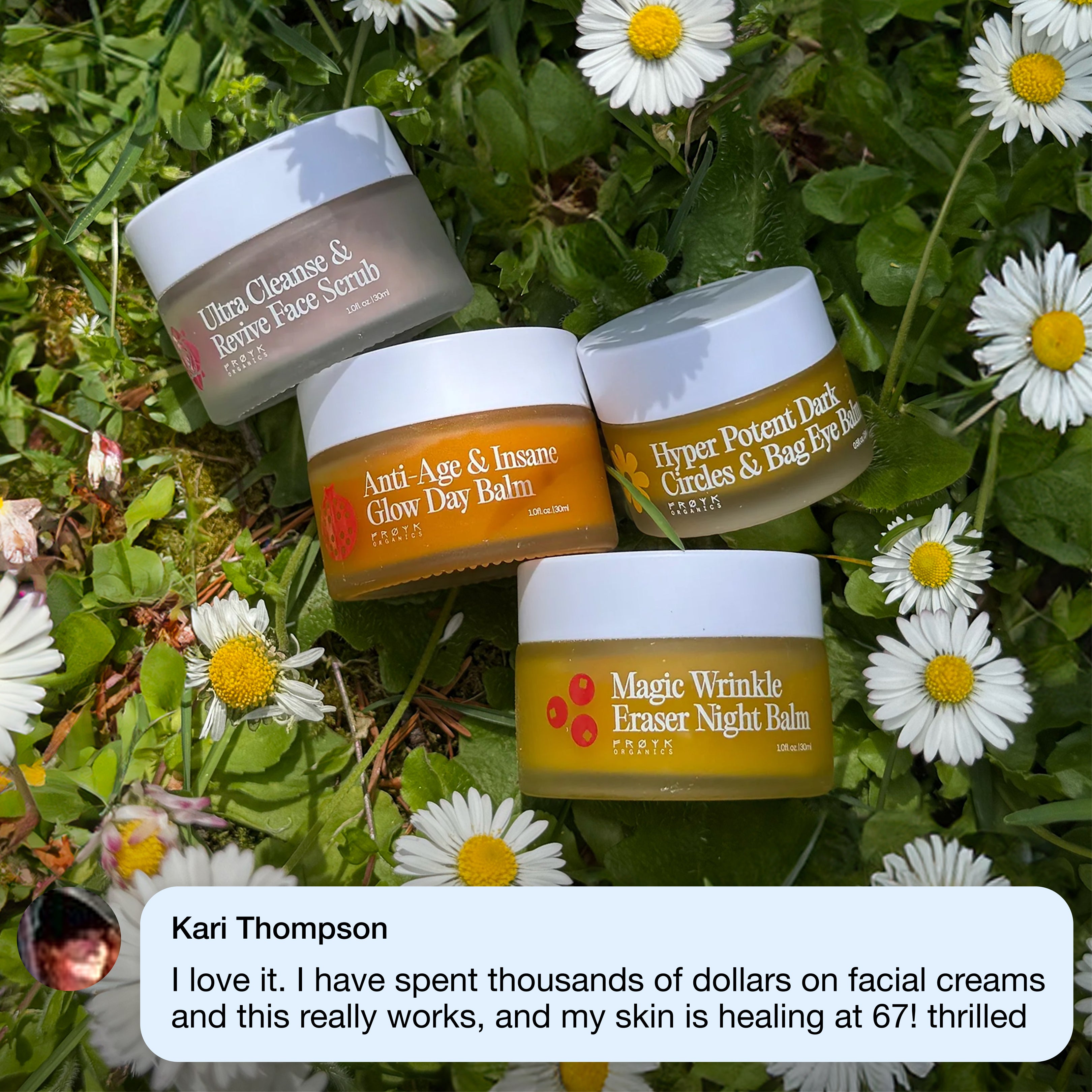
100% activos botánicos. Espino amarillo como base. Cero agua, cero conservantes sintéticos. Calificación de 4.66/5 con más de 3,152 reseñas. Garantía de devolución de dinero de 60 días.
Compra el sistema - $119Precauciones específicas para la piel madura
Oxidación: El aceite de árbol de té se oxida con la exposición al aire, la luz y el calor. El aceite de árbol de té oxidado se convierte en un alérgeno distinto - ya no se comporta igual que el aceite fresco y puede desencadenar reacciones de sensibilización incluso en personas que antes lo toleraban bien. Reemplaza tu aceite de árbol de té cada 12 meses, sin importar cuánto quede. Guárdalo en un frasco de vidrio oscuro, bien cerrado, lejos del calor y la luz. Si desarrolla un olor más fuerte y químico o se oscurece de color, se ha oxidado - deséchalo.
Aplicación en heridas: No apliques aceite de árbol de té sobre heridas profundas, heridas punzantes o incisiones quirúrgicas sin orientación médica. Para heridas superficiales menores, cortes y zonas posteriores a una extracción, una concentración del 1% es adecuada.
Condiciones sensibles a las hormonas: Algunas investigaciones sugieren que el aceite de árbol de té podría tener una débil actividad estrogénica y antiandrogénica. La evidencia proviene de estudios in vitro y no está clara su relevancia clínica para el uso tópico al 1–2%. Las mujeres con condiciones sensibles a las hormonas (ciertos tipos de cáncer de mama, endometriosis) deben consultar con su médico antes de incorporar el aceite de árbol de té a su rutina.


