

 Cuenta


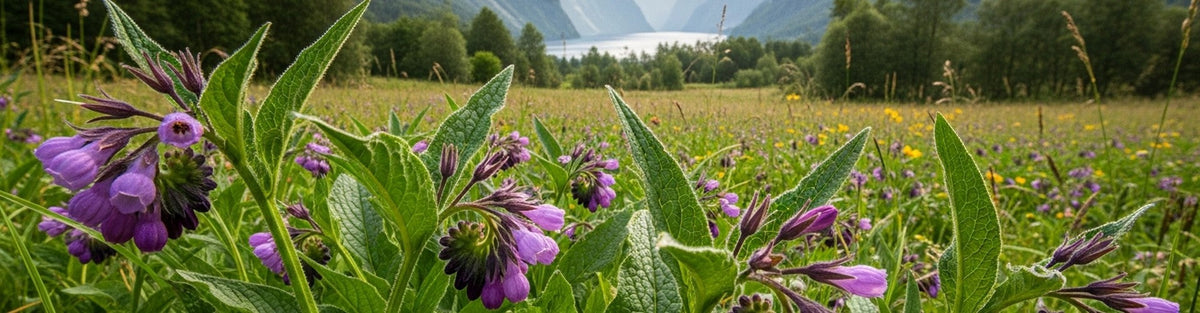
Una planta lleva más de 2000 años reparando la piel, y la investigación moderna por fin está alcanzando lo que las herbolarias siempre supieron. El aceite de consuelda para la piel no es una estrella habitual del cuidado facial. Pero su perfil de compuestos —alantoína, ácido rosmarínico, mucílago— parece una lista de deseos para la renovación de la piel madura, ya que actúa a la vez sobre la renovación celular, la producción de colágeno y la integridad de la barrera cutánea.
Qué es realmente el aceite de consuelda (y por qué importa la etiqueta)
La consuelda (Symphytum officinale) es una hierba perenne originaria de Europa y Asia, con una larga historia documentada en la medicina tradicional como cicatrizante de heridas y “soldadora de huesos”. Su nombre común en inglés, “knitbone”, refleja siglos de uso para fracturas, esguinces y reparación de la piel. Las herbolarias y formuladoras modernas han vuelto a ella por otra razón: su concentración inusualmente alta de alantoína.
Lo que encontrarás a la venta como “aceite de consuelda” no es un aceite prensado de semillas. La consuelda no tiene un aceite natural propio en sus semillas ni en sus hojas. En realidad, el aceite infusionado de consuelda se elabora macerando raíz u hoja seca de consuelda en un aceite portador —normalmente jojoba, almendras dulces o girasol— durante cuatro a seis semanas a temperatura ambiente (infusión en frío), o a fuego suave con un baño maría. El aceite portador extrae la alantoína, el ácido rosmarínico, los polisacáridos mucilaginosos y los alcaloides minoritarios y los disuelve en la solución.
Esta distinción importa en las etiquetas. Si un producto indica “extracto de consuelda” o “extracto de raíz de Symphytum officinale”, puede tratarse de un extracto en base acuosa o glicerinada, y no de un aceite infusionado con lípidos. Para reforzar la barrera cutánea y la reparación nocturna, el formato que necesitas es la infusión oleosa: entrega los activos en un vehículo lipídico capaz de penetrar el estrato córneo.
Al evaluar un producto de aceite de consuelda, fíjate en: el aceite portador indicado (jojoba, almendras dulces, girasol), la parte de la planta utilizada (la hoja es más conservadora; la raíz aporta más alantoína) y si la marca ha analizado el contenido de APs. En el mercado europeo existen formulaciones analizadas y con APs reducidos, que representan el estándar de seguridad más alto para el uso tópico habitual.
Cómo la alantoína renueva la piel madura a nivel celular
La alantoína es el compuesto que hace que la consuelda sea realmente singular en el mundo vegetal. La mayoría de los activos botánicos actúan principalmente por vías antioxidantes o antiinflamatorias. La alantoína hace algo más específico: estimula directamente la proliferación celular y acelera el proceso natural de descamación —la eliminación de células muertas de la superficie que se ralentiza drásticamente con la edad.
A nivel celular, la alantoína actúa como agente queratolítico. Ablanda los enlaces proteicos que mantienen a los queratinocitos muertos adheridos a la superficie de la piel, permitiendo que se desprendan con más facilidad. Al mismo tiempo, estimula la proliferación de fibroblastos —las células responsables de producir colágeno, elastina y ácido hialurónico en la dermis. Un estudio publicado en Molecules (2019) confirmó la capacidad de la alantoína para incrementar la actividad de los fibroblastos y favorecer la cicatrización mediante una migración celular acelerada.
En la piel madura, ambos mecanismos son directamente relevantes. Después de los 45 años, la renovación celular natural se ralentiza entre un 30 % y un 50 % en comparación con la piel más joven. Las células muertas permanecen más tiempo en la superficie, lo que produce la falta de luminosidad, la textura áspera y el tono desigual característicos de la piel envejecida. Al mismo tiempo, la actividad de los fibroblastos disminuye aproximadamente un 1 % anual a partir de los 30 años, reduciendo progresivamente la producción de colágeno y elastina. La alantoína aborda ambos procesos a la vez: limpia la superficie y estimula las células que la reconstruyen desde abajo.
La alantoína también tiene propiedades calmantes y protectoras bien establecidas. Reduce la pérdida transepidérmica de agua (TEWL) al respaldar la integridad del estrato córneo, y ha demostrado capacidad para contrarrestar la irritación cutánea causada por factores ambientales. Esta combinación —renovación celular, apoyo de barrera y acción calmante— es poco frecuente en un solo compuesto vegetal.
La evidencia clínica sobre la alantoína tópica es lo bastante sólida como para que aparezca en numerosos preparados farmacéuticos para el cuidado de heridas en Europa y Norteamérica. Los preparados a base de consuelda con alantoína estandarizada se han evaluado en ensayos controlados aleatorizados sobre cicatrización de heridas, con resultados positivos. Una revisión de 2012, próxima al enfoque Cochrane, sobre preparados de consuelda constató una aceleración constante de la reepitelización —la reconstrucción de la superficie cutánea— en múltiples estudios.
Más allá de la alantoína: ácido rosmarínico, mucílago y el perfil de reparación completo
La alantoína acapara los titulares, pero el perfil completo de compuestos de la consuelda ofrece un panorama de reparación más completo para la piel madura.
Ácido rosmarínico
El ácido rosmarínico es un polifenol presente en altas concentraciones en la hoja y la raíz de la consuelda. Tiene una acción dual: una potente actividad antioxidante y una inhibición antiinflamatoria directa de enzimas proinflamatorias, en particular la COX-1 y la COX-2. Esto lo hace directamente complementario a la alantoína: mientras la alantoína acelera la renovación celular desde dentro, el ácido rosmarínico protege esas células nuevas del daño oxidativo y mantiene calmado el entorno inflamatorio.
Para la piel madura que enfrenta el «inflammaging» posmenopáusico —la inflamación crónica de bajo grado que degrada el colágeno y acelera el envejecimiento visible—, el doble mecanismo del ácido rosmarínico resulta relevante. La capacidad antioxidante disminuye con la edad, y los propios sistemas enzimáticos antioxidantes de la piel (superóxido dismutasa, catalasa) se vuelven menos eficientes. La aplicación tópica de ácido rosmarínico directamente en la piel añade protección antioxidante exógena justo donde los sistemas intrínsecos del cuerpo se están debilitando.
Polisacáridos mucilaginosos
La consuelda contiene mucílago —una clase de polisacáridos complejos que forman una consistencia gelificada al hidratarse. En un aceite infusionado de consuelda, trazas de estos compuestos pasan al lípido portador, aportando una sensación deslizante y emoliente distintiva que lo diferencia de los aceites portadores simples.
Más importante aún, los compuestos mucilaginosos forman una capa oclusiva temporal sobre la superficie de la piel, reduciendo la pérdida transepidérmica de agua y apoyando la función de barrera mientras la alantoína actúa por debajo de la superficie. Esto es especialmente relevante para la piel madura, donde la producción natural de ceramidas disminuye y la barrera pierde capacidad para retener humedad sin ayuda.
Taninos y fenólicos minoritarios
La consuelda también contiene taninos y una serie de compuestos fenólicos minoritarios que aportan propiedades astringentes y antimicrobianas suaves. Estos ayudan a mantener el entorno general de la piel sin ser los compuestos activos principales: contribuyen a mantener equilibrada la superficie cutánea mientras la alantoína y el ácido rosmarínico realizan el trabajo de reparación más profundo.
La contribución del aceite portador
Dado que el aceite infusionado de consuelda es una maceración en un vehículo, este aporta de forma significativa a los beneficios cutáneos del producto. La jojoba es, técnicamente, una cera líquida con un perfil de ácidos grasos muy similar al del sebo cutáneo: es altamente estable, no comedogénica y tiene una gran afinidad por la superficie de la piel. El aceite de almendras dulces es rico en ácido oleico y ácido linoleico, lo que favorece la reparación de la barrera. El producto final es la suma del extracto vegetal y el vehículo, y un vehículo bien elegido mejora sustancialmente la entrega de los activos botánicos.
La cuestión de la seguridad: los alcaloides pirrolizidínicos y lo que dice realmente la ciencia
La reputación de seguridad de la consuelda se ha visto complicada por los alcaloides pirrolizidínicos (APs) —una clase de compuestos presentes en la raíz de consuelda y, en menor medida, en la hoja. Los APs son hepatotóxicos cuando se ingieren en cantidades significativas. Varios casos históricos de daño hepático por infusiones orales de consuelda y preparados internos llevaron a los organismos reguladores de EE. UU. y la UE a restringir su uso interno. El Reino Unido prohibió los preparados internos de consuelda en 2002. La Comisión E alemana desaconseja su uso oral.
El uso tópico es un asunto distinto.
Un estudio farmacocinético de 2012 midió la absorción dérmica de APs a partir de un preparado estandarizado de extracto de raíz de consuelda aplicado sobre piel humana intacta. La absorción típica fue inferior al 1 %, con un techo en el peor de los casos del 4,9 % bajo condiciones de aplicación máxima. La dosis hepatotóxica de los APs es órdenes de magnitud superior a lo que el uso tópico aporta de forma sistémica a estas tasas de absorción.
El Comité de Medicamentos a Base de Plantas de la Agencia Europea de Medicamentos (EMA) publicó una monografía sobre los preparados de consuelda para uso tópico, en la que concluye que la aplicación externa sobre piel intacta es aceptable durante periodos limitados, siendo la precaución principal evitarla sobre piel dañada o con heridas, donde las tasas de absorción aumentan considerablemente. La EMA también recomendó una dosis diaria máxima de 35 microgramos de APs para preparados tópicos, un límite dentro del cual están diseñados para mantenerse los productos comerciales bien formulados.
Las precauciones clave son sencillas:
- Solo sobre piel intacta. Nunca apliques aceite de consuelda sobre piel dañada, heridas abiertas o afecciones cutáneas inflamadas y con exudado. La absorción de APs a través de piel comprometida es considerablemente mayor.
- Evítalo durante el embarazo y la lactancia. No hay datos de seguridad suficientes para ninguno de estos periodos.
- Hoja antes que raíz para uso facial habitual. Menor concentración de APs con niveles de alantoína igualmente eficaces.
- Elige productos analizados para detectar APs cuando estén disponibles, sobre todo para aplicaciones de uso diario.
- Limita el uso continuo a 4–6 semanas si sigues las directrices más conservadoras de la EMA, y luego haz una pausa antes de retomarlo.
Para las mujeres maduras que usan aceite infusionado de consuelda como parte de una rutina facial habitual —aplicando unas gotas sobre piel intacta cada mañana o cada noche—, los datos farmacocinéticos respaldan firmemente su seguridad. El historial de 2000 años de uso tópico de consuelda sin casos reportados de hepatotoxicidad, en ausencia de uso interno, es coherente con los datos de absorción.
Cómo usar el aceite de consuelda en tu rutina de cuidado facial
El aceite infusionado de consuelda encaja de forma natural tanto en la rutina matutina como en la nocturna, aunque tiene un valor especial como parte de la reparación nocturna.
Ubicación en la rutina matutina
Limpieza → sérum en base acuosa (vitamina C o niacinamida) → aceite de consuelda (2–3 gotas, calentadas entre las yemas de los dedos y presionadas suavemente) → crema hidratante con SPF. La combinación de vitamina C y consuelda cubre a la vez la protección antioxidante y la renovación celular. La niacinamida combina bien con la acción de refuerzo de barrera de la consuelda.
Ubicación en la rutina nocturna
Limpieza → sérum en base acuosa (péptidos o ácido hialurónico) → aceite de consuelda (3–4 gotas) → crema hidratante o de noche. La capa de aceite va después de los activos en base acuosa y antes de cualquier crema más densa. Esta secuencia preserva la capacidad de penetración del aceite, mientras que la crema por encima actúa como oclusivo para frenar la pérdida transepidérmica de agua durante la noche.
Método de aplicación
Calienta 2–4 gotas entre las palmas de las manos durante cinco segundos. Presiona suavemente sobre la piel limpia en lugar de frotar o arrastrar. Presta especial atención a las zonas donde la renovación celular es visiblemente más lenta: mandíbula, sienes, mejillas superiores, líneas periorales. Para el contorno de ojos, usa el dedo anular y da golpecitos suaves en lugar de presionar a lo largo del hueso orbital, evitando la línea de las pestañas.
Protocolo de inicio
Haz primero una prueba de sensibilidad. Aplica una pequeña cantidad en la cara interna del antebrazo y espera 24 horas. Si no hay reacción, empieza con un uso nocturno tres veces por semana durante las dos primeras semanas. Progresa hacia el uso diario —por la mañana, por la noche o ambos— según cómo responda tu piel. La mayoría de las pieles maduras toleran bien el aceite de consuelda desde el principio; esta introducción prudente es una práctica estándar para cualquier aceite activo nuevo, no algo específico de la consuelda.
Cronología de resultados
La textura superficial y la falta de luminosidad suelen mejorar en dos a tres semanas, a medida que la acción queratolítica de la alantoína elimina las células muertas acumuladas. Los cambios más profundos —piel más firme, menor profundidad de las líneas finas, tono más uniforme— aparecen a lo largo de seis a ocho semanas, conforme se acumulan la estimulación de fibroblastos y el apoyo al colágeno. La mejora de la barrera (menos reactividad, menor tirantez, mejor retención de humedad) suele notarse ya en la primera semana.
Aceite de consuelda frente a otros aceites reparadores para la piel madura
¿Qué lugar ocupa la consuelda frente a los aceites botánicos ya consolidados en el cuidado de la piel madura? La comparación revela tanto sus ventajas particulares como los casos en los que otros aceites cubren necesidades distintas.
Consuelda frente a aceite de árnica
El aceite de árnica actúa sobre la vía inflamatoria NF-kB gracias a la helenalina, lo que lo convierte en la opción más potente para el inflammaging agudo: enrojecimiento visible, hinchazón bajo los ojos, piel reactiva. La consuelda actúa de forma más directa sobre la renovación celular y la reparación de barrera a través de la alantoína. Son complementarios, no competidores: árnica por la noche para la acción antiinflamatoria, consuelda por la mañana para la renovación y el apoyo de barrera. Muchas rutinas para piel madura se benefician de ambos.
Consuelda frente a aceite de rosa mosqueta
El aceite de rosa mosqueta es rico en ácido trans-retinoico (un precursor natural de los retinoides) y ácido linoleico, lo que lo hace excelente para la pigmentación, el desvanecimiento de cicatrices y la renovación superficial. La consuelda es superior en la reparación de barrera, la retención de humedad y el estímulo directo de proliferación celular de la alantoína. La rosa mosqueta suele tolerarse mejor en verano; el carácter emoliente más rico de la consuelda la hace especialmente valiosa en los meses de invierno, cuando la barrera está sometida a mayor estrés ambiental.
Consuelda frente a aceite de espino amarillo
El espino amarillo aporta un perfil de ácidos grasos extraordinario (ácido palmitoleico, un omega-7 poco frecuente) y una densidad de carotenoides que la consuelda no puede igualar en cuanto a protección antioxidante de la piel. La ventaja de la consuelda está en la renovación celular directa y la acción queratolítica de la alantoína. El espino amarillo protege la estructura de la piel desde arriba; la consuelda la renueva desde abajo. De nuevo, la comparación favorece usar ambos en lugar de elegir entre ellos.
Consuelda frente a aceite de borraja
El principal activo del aceite de borraja es su contenido en GLA (ácido gamma-linolénico) —el más alto de cualquier aceite vegetal de uso común—, que apoya directamente la síntesis de ceramidas y la reposición de lípidos de barrera. La consuelda no sustituye al GLA. Para una barrera de piel madura que pierde lípidos más rápido de lo que puede reponerlos, la borraja y la consuelda abordan partes distintas del mismo problema: la borraja repone los lípidos de barrera, la consuelda apoya a las células que generan la superficie que hay debajo de ellos.
Dónde la consuelda no tiene competencia
Ningún otro aceite facial botánico de uso común aporta alantoína en concentraciones relevantes. La combinación de acción queratolítica y estimulación de fibroblastos es la contribución única de la consuelda a una rutina de reparación para piel madura. Si buscas apoyo a la renovación celular de origen vegetal sin el riesgo de sensibilidad de los retinoides sintéticos, el aceite infusionado de consuelda es la opción disponible con mayor respaldo científico.
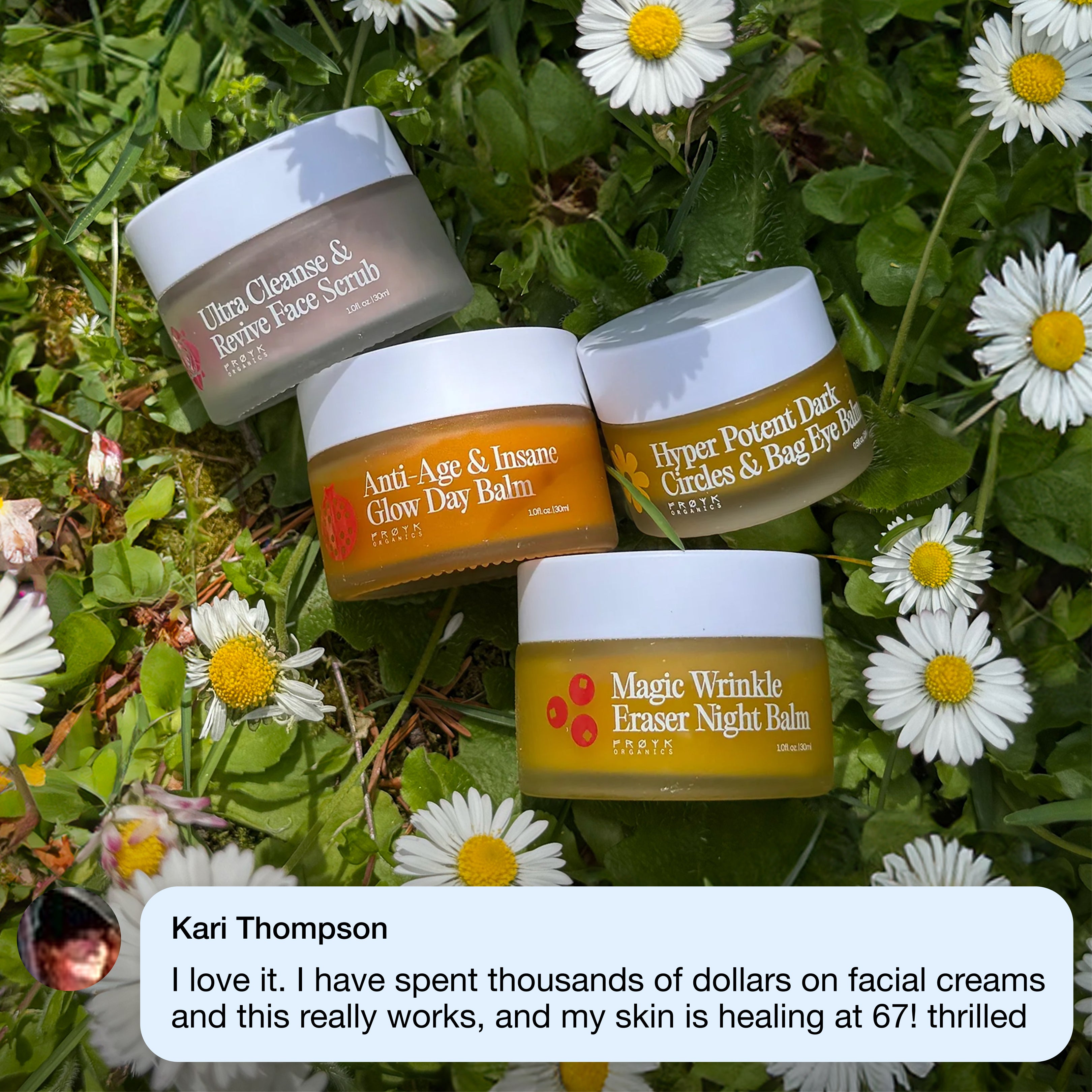
100 % de activos botánicos. Espino amarillo como base. Cero agua, cero conservantes sintéticos. Valorado con 4.66/5 según más de 3,152 reseñas. Garantía de devolución del dinero de 60 días.
Compra el sistema - $119


