 Cuenta


Veía árnica por todas partes. En cremas para hematomas. En píldoras homeopáticas. En kits de recuperación post-cirugía. ¿Pero en cuidado de la piel madura? Eso me tomó por sorpresa. Entonces miré el mecanismo, y tuvo sentido inmediato.
El compuesto primario del árnica, la helenalina, inhibe el NF-kB: el interruptor inflamatorio maestro que tu cuerpo usa para desencadenar TNF-alfa e IL-6. Esas son exactamente las citocinas que aceleran la degradación del colágeno después de que el estrógeno comienza a declinar. El término científico es inflamación por envejecimiento, y los beneficios del aceite de árnica prensado en frío la atacan directamente. Después de los 40, esta inflamación de bajo grado se agrava mes tras mes, degradando las proteínas estructurales que mantienen la piel firme y resiliente.
La mayoría confunde el árnica homeopático (diluido a nada) con el aceite de árnica tópico real (compuestos vegetales concentrados que alcanzan tu dermis). No son lo mismo. Al terminar este artículo, sabrás cuáles son los beneficios del aceite de árnica prensado en frío más importantes para tu piel, cómo elegir un producto que realmente funcione, y exactamente dónde encaja el árnica en tu rutina nocturna.
¿Qué es el aceite de árnica? (Y por qué la versión homeopática no cuenta)
El árnica homeopático se diluye tantas veces que el producto final puede no contener ninguna molécula detectable de árnica. Una revisión de la Clínica Cleveland encontró que el árnica homeopático no funcionó mejor que un placebo para el dolor o los hematomas. La Dra. Candice Price, DC, ha señalado que el proceso de dilución esencialmente elimina la planta activa.
¿Entonces cuál es lo real?
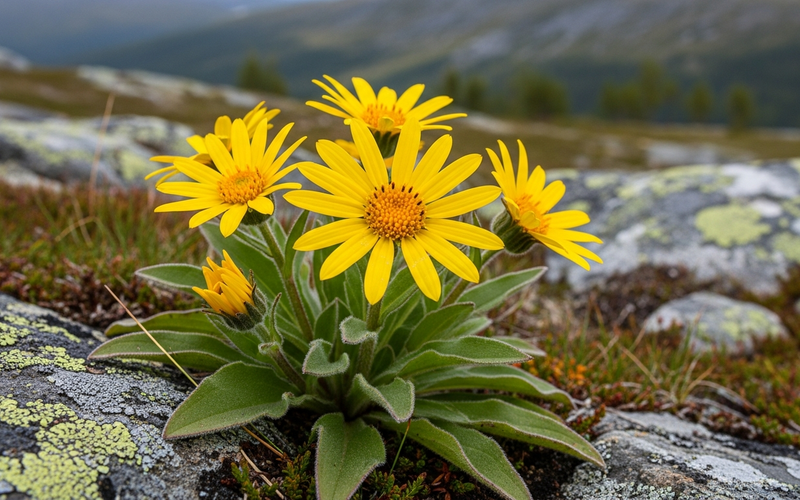
Arnica montana es una planta alpina con flores en la familia Asteraceae (la misma familia que los girasoles y las margaritas). Sus compuestos activos incluyen lactonas sesquiterpénicas, principalmente helenalina y dihidrohelenalina, junto con flavonoides como la quercetina y la luteolina.
El aceite esencial de árnica es una categoría de producto separada —un extracto de CO2 concentrado o un absoluto de los compuestos volátiles de la flor (el verdadero aceite esencial de árnica destilado al vapor es comercialmente raro). Se formula para aplicaciones corporales como masaje deportivo y tratamiento de hematomas, diluido al 2–3% en un aceite portador. Para un producto de cuidado facial, el aceite de árnica prensado en frío es lo que buscas: entrega los activos en la concentración y textura correctas para el uso facial diario.
Un estudio de 2006 de Tekko et al. demostró que la helenalina puede permeabilizar la piel intacta y alcanzar las capas dérmicas. Los activos no se quedan solo en la superficie. Penetran a la profundidad donde la inflamación por envejecimiento causa su daño, lo que hace que los beneficios del aceite de árnica prensado en frío sean más que teóricos para la piel madura.
Inflamación por envejecimiento: la razón oculta por la que tu piel cambió después de los 40
Probablemente lo notaste antes de que alguien lo nombrara. Tu piel comenzó a recuperarse más lentamente. Una noche de mal sueño se mostraba en tu cara durante días en lugar de horas. La hinchazón persistía.
El enrojecimiento se quedaba. Todo se veía más apagado, más cansado, y ninguna cantidad de sueño lo arreglaba. Eso es inflamación por envejecimiento: inflamación crónica de bajo grado que se acelera después de los 40, particularmente durante la perimenopausia.
El proceso es acumulativo. No lo notas semana a semana, pero durante 12 a 18 meses el daño estructural se vuelve visible. La Dra. Amber Hayden, DO, describe el declive del estrógeno como desencadenante de un aumento de citocinas que descompone directamente el colágeno. La Dra. Toula Berti, una dermatóloga con sede en Nashville, lo explica aún más: la señalización constante de IL-6 y TNF-alfa degrada activamente tanto el colágeno como la elastina.
Aquí es donde los beneficios del aceite de árnica se vuelven relevantes para la piel envejecida. La helenalina alquila la subunidad p65 de NF-kB (Lyss et al., 1997, PMID 9348104), apagando efectivamente el interruptor maestro que controla la producción de TNF-alfa e IL-6. Con ese interruptor parcialmente suprimido, menos señalización degradadora de colágeno llega a tus fibroblastos. La quercetina y la luteolina apuntan a una vía separada, suprimiendo la fosforilación de ERK1/2 (PMC6842955), lo que calma la señalización inflamatoria sobreactiva en otro nivel.
La herborista Rosalee de la Foret enfatiza que el árnica modera la inflamación en lugar de suprimirla completamente, preservando la respuesta de sanación saludable mientras reduce el ruido de fondo crónico. Para la piel madura, donde necesitas que la reparación y la protección suceda simultáneamente, esa distinción importa.
5 beneficios del aceite de árnica que más importan después de los 40
No todos los beneficios del árnica que leerás en línea son relevantes para la piel madura. Algunos apuntan a lesiones deportivas. Otros se basan en preparaciones homeopáticas que contienen casi nada. Estos cinco están respaldados por mecanismo e investigación específica para la piel envejecida, y son lo que debes buscar en productos anti-edad que incluyan árnica.
1. Calma la micro-inflamación crónica (defensa contra la inflamación por envejecimiento)
Este es el beneficio fundamental. La inhibición de NF-kB por helenalina reduce la producción de TNF-alfa, IL-6, COX-2 y especies reactivas de oxígeno. Un estudio de 2024 en el Journal of Ethnopharmacology (Verre et al.) confirmó esto en macrófagos inflamados, mostrando reducciones significativas en los cuatro marcadores.
Lo que eso significa para tu piel: menos de la señalización inflamatoria constante e invisible que descompone colágeno y elastina mes tras mes. Esta es protección estructural a largo plazo, no un arreglo rápido para un brote.
2. Reduce la hinchazón bajo los ojos y las ojeras
La helenalina y la dihidrohelenalina mejoran la microcirculación y reducen la retención de líquidos en el delicado tejido periorbitario. LaBruna Skincare ha documentado estos efectos específicamente en el contexto de tratamientos oculares a base de árnica.
Después de los 40, el drenaje linfático se ralentiza. El líquido se acumula más fácilmente, y la hinchazón matutina tarda más en resolverse. El mecanismo detrás de este beneficio del aceite de árnica es directo: la circulación mejorada despeja el líquido acumulado mientras la inflamación reducida previene la fuga vascular que contribuye a la pigmentación oscura.
Un usuario de Reddit compartió un PSA acreditando el aceite de árnica con la eliminación de la oscuridad bajo los ojos después de un mes de uso consistente. Eso es anecdótico, no clínico. Pero el mecanismo subyacente está bien establecido.
3. Apoya la reparación de la piel y la cicatrización de heridas
El mismo estudio de 2024 en el Journal of Ethnopharmacology (Verre et al.) encontró que el árnica mejoró la migración de fibroblastos en un modelo de cicatrización de heridas. Los fibroblastos producen colágeno, y su actividad declina aproximadamente el 1% por año después de los 30.
No regenerarás el colágeno de tu piel de los 30 años. Pero apoyar la actividad de los fibroblastos significa que el ciclo de reparación natural de tu piel opera más eficientemente. Los cortes pequeños sanan más rápido, y las marcas post-acné se desvanecen más pronto. La textura general se mantiene más resiliente contra el daño microscópico diario.
4. Calma la piel reactiva y sensibilizada
La piel madura tiene una barrera más delgada. Los productos que funcionaban bien a los 35 podrían causar escozor o enrojecimiento a los 50. La respuesta inflamatoria de la piel se desencadena más fácilmente y se calma más lentamente a medida que la barrera de lípidos pierde densidad con la edad.
La quercetina y la luteolina suprimen la fosforilación de ERK1/2 (PMC6842955), calmando vías inflamatorias sobreactivas sin despellejar o adormecer la piel. Esta es modulación suave, no supresión. Tu piel aún responde a amenazas reales. Solo deja de sobrereaccionar a las menores.
5. Mejora el tono de la piel y reduce el enrojecimiento
Este es el beneficio que notarás primero. La microcirculación mejorada combinada con la inflamación de fondo reducida produce un cutis más uniforme y menos manchado.
¿Ese aspecto apagado y cansado que no mejora con el sueño? Una parte significativa proviene de la inflamación crónica de bajo nivel que silencia tu tono de piel natural. Cuando reduces esa inflamación y mejoras el flujo de sangre, el color natural de la piel regresa. Sutil, pero visible en dos a cuatro semanas.
Cómo elegir un aceite de árnica prensado en frío que realmente funcione
Verifica tres cosas en cualquier etiqueta de aceite de árnica antes de comprar.
Prensado en frío, macerado en frío. Busca ambas afirmaciones juntas. Prensado en frío confirma que el aceite portador fue extraído mecánicamente sin calor, preservando su integridad de ácidos grasos. Maceración en frío (a veces listada como "infusionado en frío" o "maceración a temperatura ambiente") confirma que las flores de árnica fueron procesadas sin calor —el paso que mantiene la helenalina y los flavonoides intactos. Si un producto simplemente dice "aceite de árnica" sin detalle de extracción, asume que se usó calor en alguna etapa.
Calidad del aceite portador. El aceite portador es el vehículo de entrega para cada compuesto activo. Busca portadores nombrados, sin refinar, prensados en frío: girasol, jojoba u oliva. Los aceites refinados o blanqueados pierden los ácidos grasos y compuestos menores que apoyan la absorción y la salud de la piel. El portador debe aparecer temprano en la lista de ingredientes —es la mayoría del producto.
Empaque. Botella de vidrio oscuro. La helenalina y los compuestos de flavonoides se degradan con la exposición a la luz. Las botellas transparentes o el empaque de plástico significan que los activos se están degradando en el estante. La Dra. Candice Price recomienda comprar de fabricantes regulados en la UE o Reino Unido, donde los estándares de calidad para preparaciones botánicas tienden a ser más estrictos. Para obtener el rango completo de beneficios del aceite de árnica prensado en frío, la calidad del producto es innegociable.
Qué evitar: productos sin método de extracción indicado (sin "prensado en frío" o "macerado en frío" en ningún lado de la etiqueta), árnica apareciendo por debajo del quinto ingrediente, fragancia sintética añadida, cualquier producto comercializado principalmente como homeopático, y cualquier producto que no especifique el aceite portador utilizado.
Dónde encaja el aceite de árnica en tu rutina nocturna de cuidado de la piel
El aceite de árnica pertenece a tu rutina PM, después de sueros a base de agua y antes de tu humectante o crema nocturna. Los productos a base de agua van primero (ácido hialurónico, niacinamida), luego aceites, luego cremas más pesadas para sellar todo.
Si usas retinoides: alterna noches con árnica, o aplica primero el aceite de árnica y espera 10 minutos antes de tu retinoide. Ambos son activos. Dale a cada uno espacio para absorber completamente.
Estrategia general de capas: Vitamina C en la mañana para protección antioxidante. Péptidos más aceite de árnica en la noche para reparación y apoyo antiinflamatorio. Esta combinación maximiza los beneficios del aceite de árnica porque los péptidos señalan la producción de colágeno mientras el árnica protege el colágeno que ya tienes.
Protocolo de inicio: Prueba de parche en tu antebrazo interno primero. Espera 24 horas. Comienza con tres noches por semana. Calienta tres a cuatro gotas entre tus dedos y presiona suavemente en tu piel. No frotes ni arrastres. Deja que absorba durante dos a tres minutos antes de aplicar tu próxima capa.
Para aplicación bajo los ojos, usa tu dedo anular (presión más ligera) y golpea suavemente el aceite a lo largo del hueso orbital. Mantenlo alejado de la línea de pestañas y evita contacto directo con el ojo. Después de dos semanas sin irritación, aumenta al uso nocturno si tu piel responde bien.
Notas de seguridad: quién debe evitar el aceite de árnica
Nunca apliques en piel rota, heridas abiertas o sitios quirúrgicos. La helenalina en piel comprometida causa irritación y retrasa la cicatrización en lugar de apoyarla. Esto incluye cortes frescos, lesiones activas de eccema y piel post-procedimiento. Espera hasta que la herida haya cicatrizado completamente antes de aplicar.
Alergia a Asteraceae. Si reaccionas a la ambrosía, margaritas, caléndulas, girasoles o crisantemos, puedes desarrollar dermatitis de contacto del árnica. La familia Asteraceae comparte proteínas reactivas cruzadas, así que la sensibilidad a un miembro a menudo se extiende a otros. Prueba de parche en tu antebrazo interno durante 24 horas antes del uso facial. Si tienes una alergia confirmada a esta familia de plantas, evita el árnica completamente.
Medicamentos anticoagulantes. El árnica puede interactuar con anticoagulantes como la warfarina y la aspirina. Incluso la aplicación tópica puede afectar la agregación plaquetaria en individuos sensibles. Si tomas algún medicamento anticoagulante o para la presión arterial, consulta a tu médico antes de usar. Deja el árnica dos semanas antes de cualquier cirugía programada.
Embarazo y lactancia. Pruebas insuficientes para confirmar seguridad en ambos. Evita hasta que más datos estén disponibles.
Sensibilidad de concentración. Si experimentas enrojecimiento persistente, picazón o ardor después de tu prueba de parche de 24 horas, no uses el producto en tu cara. Cambia a una fórmula de concentración más baja o descontinúa.