

 Account


You bought the good moisturizer. You use it every morning (most mornings, anyway). And somewhere after 40, it started wearing off by lunch while your foundation found lines it never used to find.
It's not the moisturizer's fault, exactly. Your skin is running on less estrogen now, so it holds less water and gets touchy about things it used to shrug off.
Natural skincare for mature skin handles this better than you'd think. Rich botanical oils and beeswax hold water in a thinner barrier and calm skin that reacts faster than it used to, and you don't need ten steps to get there.
Below, you'll see what changes after 40, why botanical ingredients suit your skin so well, and how to build a routine that works with your biology. We'll start with what's changing under the surface, because once you see it, the rest makes a lot more sense.
Key Takeaways
- Estrogen loss, not bad habits, drives most of the dryness and thinning you see after 40.
- After menopause, skin collagen and thickness drop by about 1 to 2% a year.
- Natural skincare for mature skin works best when it supports the barrier and calms inflammation.
- Nutrient-dense botanical oils like rosehip and sea buckthorn have real research behind them.
- A simpler routine beats a shelf full of strong actives on sensitive, aging skin.
What Really Happens To Your Skin As You Age

Aging skin gets drier, thinner, and less bouncy mostly because your estrogen drops. Estrogen tells your skin to make collagen, hold water, and keep its barrier strong. When it falls during perimenopause and menopause, all three slow down at once.
Collagen loss is steady, and every year of it shows up as thinner, softer-looking skin. These are some of the biggest menopause skin changes you will notice.
Your oil glands also produce less, so skin feels dry and rough where it once felt normal. Then the early signs of aging settle in, starting with facial wrinkles and crow's feet. Wrinkles develop around the eyes, mouth, and forehead due to loss of elasticity.
Undereye bags are caused by weakened muscles and tissues around the eyes. Years of UV rays and old sun damage also leave an uneven skin tone and age spots, the flat dark spots common after 50 on the face, hands, and neck. None of this means you did something wrong.
So the real question is what to put on skin that has changed this much. It is the question the Frøya mature skin system was built to answer, and the sections below show why.
Why Natural Skincare Suits Mature Skin
Natural skincare fits mature skin because botanical oils and extracts feed the skin real nutrients without the sting of strong actives. Thinner, more sensitive skin reacts faster to strong acids and synthetic fragrances, so a botanical formula often means fewer flare-ups. Many botanical oils are also rich in vitamins your skin can actually use, which supports real anti-aging benefits over time.
Here is the honest part. Natural does not automatically mean safe or effective. Some plant extracts and essential oils can irritate certain skin types, so a patch test still matters no matter your skin type.
Labels make all of this harder, since "natural" has no legal definition on a US skincare label. "Clean" means even less, as our look at clean skincare brands explains. What matters is what sits inside the jar, and our guide to organic skincare after 45 shows you how to read past the front of the bottle.
The Core Principles Of Natural Skincare For Mature Skin

An effective routine for mature skin comes down to three habits: protect the barrier, cleanse without stripping, and keep things simple. Get these right and most of your skin concerns settle down on their own. For the full step-by-step version, see our skincare routine for mature women.
Support And Repair Your Skin Barrier
Your skin barrier is the wall that keeps moisture in and irritants out, and it weakens as ceramide and oil levels drop. Rebuilding it is the single most useful thing you can do for your skin's health and appearance after 40.
Rich botanical oils and waxes help by sealing in water and smoothing rough skin texture. A 2023 review in the Journal of Cosmetic Dermatology reports that beeswax works as an occlusive, helping create a semi-occlusive barrier that cuts water loss through the skin. That is why a good balm often beats a thin face cream on dry, mature faces.
Moisturizers with shea butter help maintain skin barrier integrity. Most moisturizers are water-based creams, though, so that shea arrives diluted.
If your barrier already feels raw or stings, slow down and calm it first. You can repair a damaged skin barrier with steady care rather than more products.
Cleanse Without Stripping and Keep Your Routine Simple
Harsh cleansers strip the oils your skin can no longer spare. Dermatologists suggest a mild cleanser with no added fragrance and warm water instead of hot. It is one of the simplest dermatologist skincare recommendations to follow, and one of the most useful.
A little physical exfoliation helps as cell turnover slows, but keep it light. Two to three times a week is enough for mature skin. When you try something new, add only one product every couple of weeks so you can spot what your skin likes.
Natural Ingredients That Actually Support Aging Skin
The best natural ingredients for mature skin repair the barrier, help defend against free radical damage, and calm inflammation. A few plants have real clinical research behind them, not just marketing.
Here is what stands out and why it helps your skin after 40:
- Rosehip: rich in carotenoids and essential fatty acids. Rosehip seed oil supports cellular turnover and enhances moisture retention.
- Sea buckthorn: a hardy Nordic berry rich in omega-7 fats, tied to a brighter, firmer-looking glow.
- Calendula and chamomile: soothing botanicals that calm redness and reactive skin, including skin prone to hormonal acne.
- Squalane and beeswax: lock in lasting hydration and support the skin's natural balance.
Jojoba oil resembles the skin's natural lipids and helps reduce moisture loss. Squalane plays the same skin-matching role, and it sits in Frøya's day, night, and eye balms, so you get that benefit without another bottle.
Where Retinol And Strong Actives Fall Short
Retinol, vitamin C, and alpha-hydroxy acids are well studied for anti-aging, and over-the-counter retinol products are easy to find. Bakuchiol, a plant-derived option, is sometimes used to soften fine lines with less sting. Any of these can help.
The catch is how they behave on skin over 40. A thinner barrier lets these actives sink in faster, so many women get dryness, flaking, redness, and stinging that lasts longer than the bottle suggests. When that happens, the fix is usually to slow down, not push harder.
This is why gentler, nutrient-dense botanicals have a place in a mature-skin routine. They work toward the same goals, softer lines and firmer texture, while being easier on a barrier that is already more fragile.
What Is The Best Natural Skincare For Mature Skin?

The best natural skincare for mature skin does four things: it cleanses without stripping, defends against daily damage, repairs the barrier overnight, and stays simple. A range built on Arctic botanicals and organic beeswax checks each of those boxes.
The Complete System for Mature Women's Skin covers those four jobs in four steps. Made in Norway with high quality ingredients like wild Arctic botanicals and organic beeswax, it has no water and no fillers. You can also browse each step on its own in our natural skincare for mature skin collection.
Here is how to build the routine, one step at a time.
Step 1: Ultra Cleanse & Revive Face Scrub

This is your cleanse step, and there is not a drop of water in the jar. The Frøya face scrub is a fine blend of rice powder, apricot seed powder, and rose petal powder that lifts away the dead skin cells that linger longer as turnover slows. It smooths rough texture without stripping the oils your skin can no longer spare, so the balms that follow spread more easily.
Use it two to three times a week in the shower. Tip a small amount into a dry palm, mix it with a little water, and massage it over your face before rinsing. Keep the jar dry between uses.
Step 2: Anti-Age & Insane Glow Day Balm

This is the step for that tight, dull feeling that creeps in by afternoon. The Frøya day balm pairs sea buckthorn oil, rich in omega-7, with pomegranate seed oil, rosehip oil, and squalane, then seals them in with organic beeswax. Vitamin E adds antioxidant support, so your skin stays soft and comfortable from morning to evening.
Apply a thin layer to clean skin every morning. A small fingertip amount covers your whole face, and if your skin looks orange, you are using too much.
Step 3: Magic Revive Eye Balm

The skin around your eyes is thinner than anywhere else on your face, so it shows tiredness, puffiness, and fine lines first. The Frøya eye balm is built for that delicate area, with arnica, squalane, rosehip oil, and pomegranate seed oil in a soft beeswax base. It helps the under-eye area look smoother, brighter, and less puffy, without the sting strong eye treatments can bring.
Pat a small amount around the eye area in the morning, at night, or both. Use your ring finger, since it presses the lightest, and skip any rubbing or tugging.
Step 4: Wrinkle Smoothing Night Balm

Night is when your skin does most of its repair, so this is the richest step in the routine. The Frøya wrinkle eraser layers rosehip oil, arnica, pomegranate, and squalane over a beeswax base that holds moisture in while you sleep. You wake up to skin that feels softer and plumper, and over the weeks the look of fine lines softens too.
Smooth a thin layer over clean skin before bed as your last step. A tiny fingertip amount is plenty, since the formula is concentrated.
Because the balms are waterless, a small fingertip amount is enough for daily use. Each step is already blended to work with the next, so there is nothing to mix or measure yourself. Our how to use Frøya balms page walks through the full order step by step.
Lifestyle Habits That Support Healthy, Aging Skin
Your skin care products work better when your daily routine backs them up. What you eat, how you sleep, and how you handle the sun all show up on your face.
A few small changes make a real difference:
- Sleep: aim for restful sleep, since your skin does most of its repair overnight.
- Nutrition: eat antioxidant-rich foods and healthy fats to feed skin from within.
- Hydration: drink enough water so skin stays smooth and less tight.
- Smart sun habits: mainstream dermatology advice centers on daily sunscreen, but in everyday life the goal is simpler, which is to enjoy some sun without burning. Shade, a hat, and clothing protect skin well, and for long stretches outdoors, a mineral sunscreen with zinc oxide is the sun protection to pack.
None of this needs to be strict. Small, steady habits beat dramatic overhauls you cannot keep up.
Your Skin Can Still Change, and So Can Your Glow
Here is the encouraging truth: mature skin responds beautifully when you stop fighting it and start feeding it. The real before-and-after results come from women who simplified their routine and gave botanicals time to work.
You do not need a ten-step shelf of targeted treatments or the harshest active on the market. Give it about six months of steady, kind care, watch the small shifts, and adjust as you go. Your skin has given you decades, and it still knows how to respond.

Disclaimer: This article is for general information only and is not medical advice. Everyone's skin is different, so talk to a doctor or dermatologist before changing your routine, especially if you have a skin condition or are pregnant. Patch test any new product first.
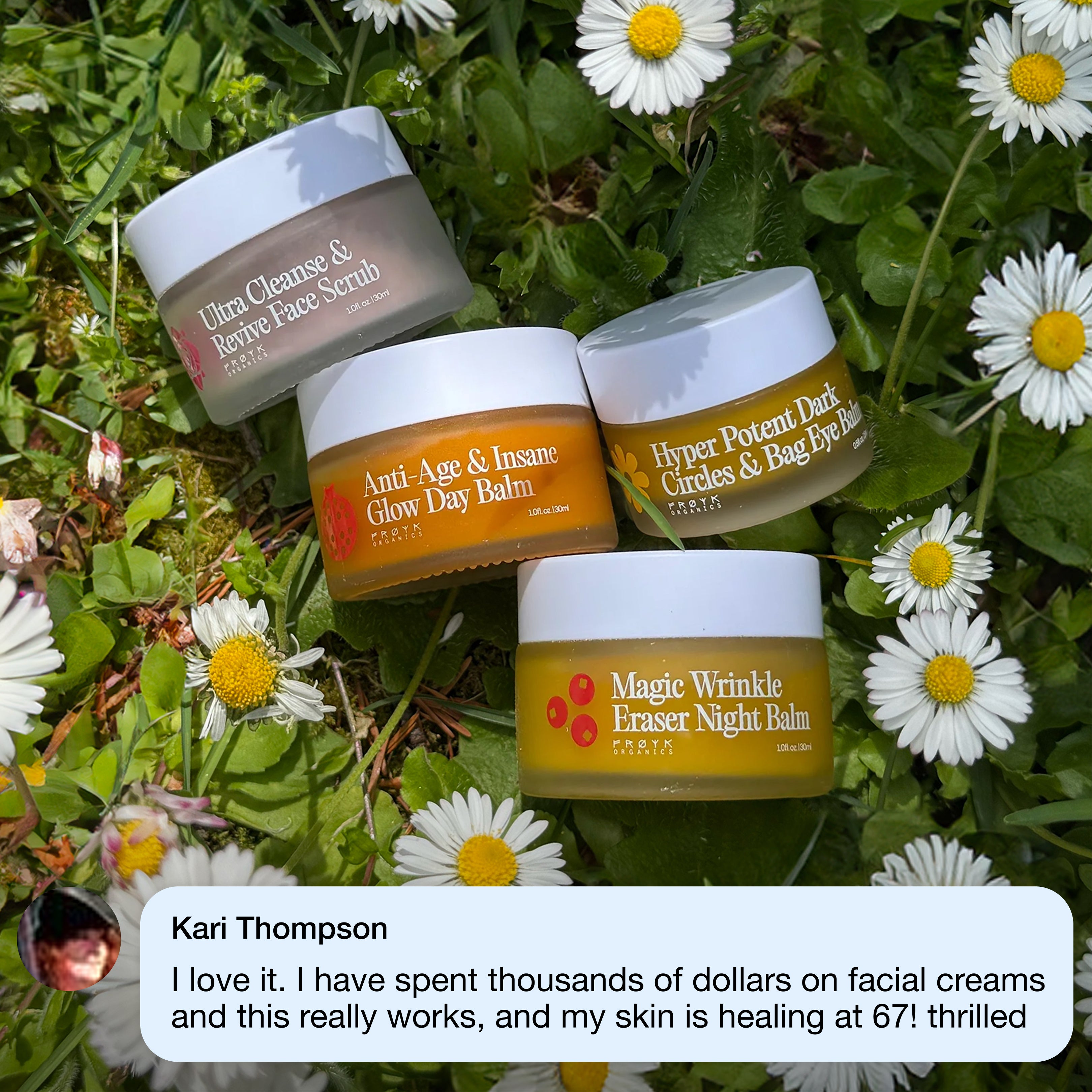
Four waterless steps, one set. Day balm, night balm, eye balm, and cleansing scrub made in Norway from wild Arctic botanicals and organic beeswax, backed by a 60-day money-back guarantee.
Shop the System TodayFrequently Asked Questions
Can natural skincare really reduce fine lines and wrinkles?+
Are natural skincare ingredients safe for sensitive, mature skin?+
Who can use Frøya Organics balms?+
What is the best skincare routine for older women?+
How long does it take to see results with natural skincare?+


