

 Account


The most effective natural acne treatment for women over 40 combines zinc, omega-3 fatty acids, sea buckthorn oil, and gut support. Hormonal breakouts after 40 need barrier-safe care, because benzoyl peroxide and strong retinoids strip lipid-depleted skin and make things worse. Many women prefer natural alternatives for managing mild to moderate acne for exactly this reason.
Turns out, 26% of women aged 40 to 49 experience acne, compared with 12% of men. This is not rare. It is barely discussed.
Acne vulgaris starts inside the hair follicles, where oil and dead skin cells plug the opening. Cutibacterium acnes bacteria then multiply there and trigger inflammation. That is how acne occurs at any age.
What changes after 40 is the skin around it. Estrogen drops, weakening your barrier. Progesterone falls, removing natural anti-inflammatory protection.
Testosterone's relative effect rises, driving oil production up. These skin changes during menopause reshape how your skin responds to everything you apply.
The ceramides menopause depletes are the linoleic-acid ones, and acne-prone skin is already short on linoleic acid. Two problems, same fatty acid.
10 Barrier-Safe Natural Treatments for Hormonal Acne in Women 45+

1. Sea Buckthorn Oil: Clears Breakouts and Repairs the Barrier
On lipid-depleted skin, prescription retinoids frequently cause scaling, stinging and photosensitivity. Sea buckthorn offers a gentler path.
Sea buckthorn is rich in beta-carotene, a natural vitamin A precursor. Your body converts it at its own pace, supporting the turnover that pushes dead skin cells out of the follicle and helps unclog pores without abrasion. That matters when your skin makes new skin cells more slowly after 45.
Omega-7 (palmitoleic acid) is the second reason it works. It is structurally similar to human sebum, so it supports the lipid barrier directly and reduces water loss.
How to use it: One to two drops at night, warmed between clean fingertips. It is deeply orange, so dilute to prevent staining. Non-comedogenic, and redness usually eases within one to two weeks.
2. Zinc: The Mineral That Calms Acne Without the Side Effects
Zinc helps settle the oil-gland activity that ramps up during perimenopause, which means less of the thick excess oil that plugs follicles. Topical zinc at 5% concentration has shown benefit, and oral zinc has stronger evidence still.
Zinc also works as an anti-inflammatory, which matters because acne breakouts on mature skin are more painful and slower to heal.
How to use it: Zinc bisglycinate absorbs well with the least nausea. Take with food, adding 2 mg copper if your dose exceeds 40 mg. Expect improvement at eight to 12 weeks.
3. DIM: Shifting Estrogen Metabolism at the Source
Estrogen comes in more and less inflammatory forms, and which one your body favors matters for your skin.
DIM (diindolylmethane) comes from cruciferous vegetables like broccoli and kale. These vegetables help clear excess hormones linked to acne by shifting estrogen metabolism toward the protective 2-hydroxy form and away from the inflammatory 16-alpha-hydroxy form.
How to use it: 100 to 200 mg daily with a fat-containing meal. Give it two to three months. The evidence is promising but still emerging.
4. Omega-3 Fatty Acids: The Deficiency Almost Every Acne Patient Shares
A 2024 study in the Journal of Cosmetic Dermatology found 98.3% of acne patients had an omega-3 deficit at baseline. The cohort was 97% women, with acne persisting an average of nine years.
Over 16 weeks on a Mediterranean diet plus algae-derived supplementation, both inflammatory and non-inflammatory acne lesions dropped, and most patients noticed a change at around 40 days.
The mechanism runs through IGF-1, the same growth factor that rises with blood sugar spikes. Omega-3s lower serum IGF-1 and raise its binding protein, which keeps it from reaching receptors on the oil-producing cells in your follicles. They also reduce inflammatory cytokines including IL-1, IL-6 and IL-8.
Correcting a deficit is one of the more reliable ways to ease acne from the inside, and the benefits extend to cardiovascular and joint health. The study had no placebo group, so diet and supplementation moved together.
How to use it: The study used 900 mg of combined EPA and DHA daily, rising to 1.2 g. Third-party tested fish oil, or algae-based if you prefer a botanical source. Take with a meal containing fat.
5. Gut Health and Diet: What Happens Below the Surface
Microbiome research has found pronounced gut alterations in people with acne, supporting what researchers call the gut-skin axis. Your gut houses bacteria called the estrobolome that metabolize estrogen, and when that flora is disrupted, excess estrogen may recirculate instead of being excreted.
High dairy consumption has also been linked to moderate or severe acne across multiple observational studies.
What helps: diverse-strain probiotics, particularly Lactobacillus, plus fermented foods. Cut processed foods and refined carbohydrates, and support liver function with milk thistle or dandelion root tea. A healthy gut addresses underlying causes rather than symptoms.
6. Rosehip Oil: Fading the Dark Marks Acne Leaves Behind
At 50, a mark that once faded in weeks can linger six to 12 months. A clinical study of 108 adults found rosehip oil applied twice daily improved scar appearance scores at 6 to 12 weeks versus no treatment. Those were post-surgical scars rather than acne scars, so treat it as supportive evidence.
Rosehip is rich in polyphenols and vitamin E, bringing anti-inflammatory properties alongside antioxidant action.
The more useful layer is lipid chemistry. Acne-prone skin carries less linoleic acid, and a review of lipid mediators in acne describes how that shortage is thought to drive the follicular hyperkeratosis behind comedone formation.
Low linoleic acid also weakens the barrier, letting inflammatory substances cross more easily. Rosehip is linoleic-rich, correcting that shortfall where it starts.
How to use it: One to two drops at night. Store in dark glass and pair with sea buckthorn from item 1. If you will be outdoors for extended stretches while dark spots fade, a mineral sunscreen with zinc oxide helps.
7. Topical Botanical Remedies Worth Knowing
Several botanicals have topical evidence behind them, though the quality varies and so does the irritation risk. Green tea extract reduces sebum production and pimples when applied topically. Honey has antibacterial properties that may soothe skin wounds.
Witch hazel tightens pores and reduces surface bacteria, though it can be drying on skin that is already lipid-depleted.
Apple cider vinegar is the riskiest of the group, since undiluted application burns thin skin. Anything acidic on a compromised barrier tends to cost more than it returns after 45.
How to use it: Patch test 24 hours before facial use to rule out a reaction. Never apply undiluted. Spot treatment only.
8. Jojoba Oil: The Counterintuitive Sebum Regulator
Jojoba is not really an oil. It is a liquid wax ester, structurally almost identical to human sebum, and that similarity signals your oil glands to slow production.
Stripping skin does the opposite. A compromised barrier floods itself with more oil trying to repair the damage.
Learning to repair a damaged skin barrier breaks that cycle, which is why supporting lipids helps prevent breakouts rather than just settling them.
Jojoba is non-comedogenic and works on both oily skin and dry skin, common in perimenopause when your T-zone and cheeks behave differently.
How to use it: At night, as a carrier for essential oils, or as the first step of a double cleanse.
9. Vitex (Chasteberry): Herbal Support for Perimenopause
Vitex agnus-castus acts on the pituitary gland to regulate luteinizing hormone and prolactin. Chasteberry supports a healthier progesterone-to-estrogen balance, smoothing the swings that drive cyclical breakouts.
An eight-week randomized controlled trial showed lower menopausal disorder scores and vasomotor symptoms versus placebo, with no serious adverse events. A separate study found chasteberry improved menstrual-related acne.
Vitex suits perimenopause, when cycles are still present. After menopause its usefulness is less clear.
How to use it: 20 to 40 mg of standardized extract daily, for three to five months. As with all herbal supplements, avoid if you are on hormonal medications.
10. Stress, Sleep, and the Adaptogen Question
Cortisol drives acne independently of sex hormones, increasing sebum production and weakening the barrier.
The non-supplement levers are strongest. Prioritizing sleep helps regulate cortisol and reduce inflammation, which does more for skin health than most products. Exercise lowers insulin and improves glucose uptake, hitting the same blood sugar pathway.
Not every popular supplement fits every hormonal profile, and some end up making acne worse.
If you would rather skip the blending and dosing and start with something already formulated for reactive, breakout-prone skin over 40, a waterless balm delivers these botanicals at full strength.
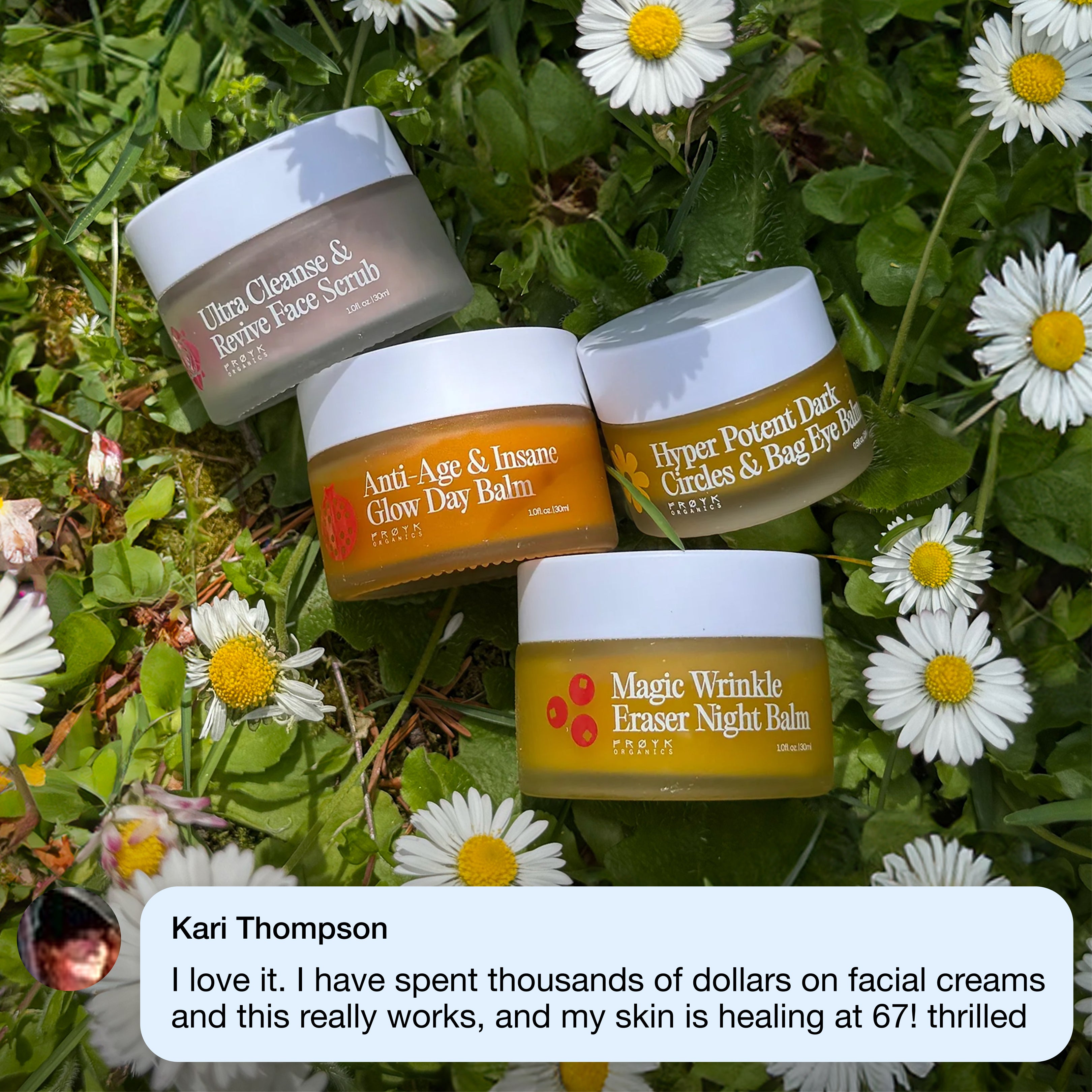
Wild Arctic botanicals and organic beeswax. Zero water, zero synthetic fragrance. Four balms in one routine that feed the barrier lipids a lasting glow depends on, backed by a 60-day money-back guarantee.
Shop the System TodayFrequently Asked Questions
Why am I suddenly getting acne in my 40s or 50s after years of clear skin?+
Can I use the same acne treatments I used as a teenager?+
Is it safe to use facial oils on acne-prone mature skin?+
How long before I see results?+
Why do acne marks last longer on my skin now?+


