

 Account


Tightness after cleansing that no balm can quiet. The product you have used for five years suddenly stings. A cheek flush that looks like windburn, inside a heated room, in April.
Why is your skin so dry all of a sudden? It drinks up everything and still feels parched.
That is not sensitive skin. That is skin barrier damage. If you are over 40, the cause is probably not what you think.
The hidden variable is estrogen. As it declines, the lipid matrix of your outermost layer of skin changes. Ceramide production drops and fatty acid chains shorten, so your barrier becomes structurally different, not temporarily irritated.
Frøya Organics builds every balm on wild Arctic botanicals plus organic beeswax, waterless and filler-free. That formula feeds a changed barrier the botanical lipids it is now short on.
Key Takeaways
- A damaged skin barrier after 40 is structural, driven by falling estrogen, not simple dryness.
- Repair it by simplifying your routine, feeding botanical lipids, and protecting skin while it heals.
- A healthy skin barrier keeps moisture in and irritants out. Full repair takes 3 to 6 weeks.
Step 1: Diagnose What Is Actually Wrong

Three conditions feel almost identical on a Tuesday morning and need opposite care. Barrier damage, sensitive skin, or purging. Misread the signal and you spend weeks treating the wrong thing.
Several signals point squarely at a compromised skin barrier:
- Persistent dryness that no moisturizer resolves indicates a compromised skin barrier, because your skin can no longer retain moisture.
- Tight or itchy skin can signal skin barrier damage.
- Increased sensitivity to products you tolerated last season suggests a damaged barrier.
- Sudden breakouts, since a weakened barrier lets bacteria and irritants reach deeper.
Here is the science underneath those signs. Think of your barrier as a brick-and-mortar wall. The skin cells are the bricks, and a lipid matrix of ceramides, cholesterol, and fatty acids is the mortar holding them together. When that mortar thins, transepidermal water loss accelerates. Moisture escapes outward while irritants travel inward, so a compromised skin barrier feels both parched and reactive at once.
Barrier damage versus purging is simpler than it looks. Purging happens only in your usual breakout zones, follows cell turnover, and resolves. Barrier damage appears in new areas, worsens with continued product use, and spreads.
Quick home check: Apply plain water to clean skin. If it dries fast and your skin feels uncomfortable and tight, your barrier is leaking water it should be holding.
Step 2: The Perimenopause Factor No One Told You About
The cracks are not metaphorical. They are structural, and they trace back to one hormone.
For decades, estrogen stimulated ceramide synthesis, supported longer lipid chains, and kept your skin cells turning over. As it falls, your skin makes less of the fats it needs, and tiny gaps open in the shield.
A 2022 study in Scientific Reports made the shift measurable. Post-menopausal skin showed reduced ceramide levels and shorter chain lengths, changes that hormone replacement therapy prevented.
What this means: Picture a brick wall built with half-bricks. Same square footage, far less structural integrity. That is a menopausal barrier.
In the mirror, it looks familiar. Products absorb differently, safe actives suddenly burn, and moisturizer does nothing because the matrix cannot hold water. A compromised barrier also lets environmental stressors like UV rays and pollution penetrate more easily.
Repair needs three things: botanical lipids to replace what your skin under-produces, sustained use over weeks, and internal support.
This is where a waterless approach earns its place. Frøya Organics builds balms for mature skin on beeswax and Arctic plant oils, so the lipids arrive undiluted rather than diluted in water.
Step 3: Run the Barrier Reset (Stop, Simplify, Stabilize)
Doing less is the intervention. Before reaching for another product, ask why your barrier became compromised in the first place. The answer is usually the routine itself.
Clear the following for 7 to 10 days:
- All acids and chemical exfoliants
- Retinoids of any strength
- High-strength vitamin C
- Harsh scrubs, washcloths, and physical exfoliants
- Fragrance, synthetic or essential
- Any new product added in the last 30 days
Over-exfoliating strips protective lipids from the skin, and harsh cleansers disrupt its natural balance. Most of these actives are exactly what wore the barrier down, so this is the moment to trade them for gentler, botanical care.
Then simplify to three gentle steps:
- Cleanse gently, or simply rinse, with lukewarm water only.
- Press a barrier balm onto damp skin, within 60 seconds of any water.
- In the morning, moderate sun is fine. Just avoid burning, and for long stretches outdoors, reach for a mineral sunscreen.
The free interventions do as much work as the products. Skip hot water, since it washes away natural lipids from the skin. Rinse in warm water instead and moisturize soon after any contact.
Run a humidifier if your dry air sits under 40% humidity, and stop touching the irritated areas. Managing these everyday habits matters as much as anything you apply, especially through cold weather.
What to expect: Days 1 to 3 can feel worse as your skin registers the absence of chronic irritation. By day 7, reactivity is measurably down. Younger skin recovers in two to four weeks, though a mature barrier runs longer.
Step 4: Choose the Right Natural Oils (Linoleic Beats Oleic)
The internet told you oils are all natural and safe. On a damaged mature barrier, that is incomplete. The fatty acid profile decides whether an oil supports the matrix or disturbs it.
Linoleic beats oleic. Linoleic acid is the most abundant polyunsaturated fatty acid in your outermost layer, and your skin uses it to build and maintain the barrier.
A review of plant oils and skin barrier repair found that high-linoleic oils like rosehip preserve barrier integrity, while oleic acid can disrupt the barrier and raise water loss on already compromised skin.
Reach for these during repair:
- Rosehip seed oil, one of the most linoleic-rich plant oils
- Sea buckthorn, adding rare omega-7 that mirrors your own sebum
- Squalane, close to skin and low-risk
Ease off these while healing:
- Olive oil, which is oleic-dominant and raises water loss
- Heavy essential oils on broken skin
Sea buckthorn earns its own line. It is the only common plant source of omega-7, and sebum palmitoleic content falls with age, so it gives a mature barrier something structurally familiar.
Frøya formulates these botanicals into balms rather than single oils, so there is nothing to mix or measure yourself. You can read the full ingredient logic on the wild Arctic botanicals page.
Step 5: Build the Natural Rebuild Routine (Morning and Night)

Barrier repair happens as a matrix, not a single hero ingredient. Your outermost layer is roughly half ceramides, with cholesterol and free fatty acids filling the rest.
In aged skin, a cholesterol-forward lipid ratio speeds barrier recovery, while a fatty-acid-heavy mix can slow it. This is why single-ingredient creams tend to underperform on mature skin: the barrier rebuilds as a full matrix, not from one lipid alone.
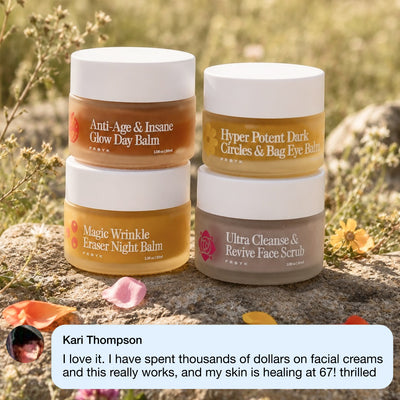
That is the thinking behind the Complete System for Mature Women's Skin, a four-balm routine where each step feeds the barrier a different way:
|
Step |
Product |
When |
What it does |
|
Day |
Morning, on damp skin |
Botanical oils and beeswax feed the barrier and lock in moisture through the day. |
|
|
Eye |
Morning and night |
Arctic arnica and squalane soften the thinner, more fragile skin around the eye. |
|
|
Night |
Night, on damp skin |
Rosehip and marigold work during the barrier's overnight repair window. |
|
|
Cleanse |
2 to 3 times a week, once healed |
A gentle botanical refresh, once the barrier has fully settled. Skip it during the reset. |
Morning rebuild:
- Cleanse gently, or rinse with water.
- Press the day balm onto damp skin, so its botanical oils reach the matrix first, then let its beeswax seal water in.
- Sun in moderation is fine through the day. Just avoid burning, and for long stretches outdoors, reach for a mineral sunscreen.
Calendula is a genuine ally in a botanical day step. Alongside oat, its avenanthramides calm inflammatory signaling while calendula soothes redness.
Evening rebuild:
- Cleanse.
- Apply the night balm, rich in rosehip and marigold.
Overnight is the barrier's busiest repair window, when water loss peaks and lipid synthesis is most receptive. Botanical lipids applied before sleep arrive right on time.
Application matters almost as much as ingredients. Warm the balm between your hands, press rather than rub, and always apply to damp skin.
Mature skin is thinner, so friction is a stressor you do not need. Gentle care, done nightly, is what rebuilds a healthy skin barrier.
Step 6: Feed the Barrier from Within
You can apply the perfect product and still plateau. If internal lipid synthesis is suppressed, the factory never fully reopens, so skin health is partly built at the dinner table.
Cortisol is the most underestimated variable. Chronically high cortisol suppresses the skin's ability to make ceramides, cholesterol, and fatty acids at once, so an unhealthy skin barrier is often a stressed, triple-deficient one.
Cooler showers, magnesium in the evening, morning light, and less screen time first thing all help settle it.
A few internal supports worth checking:
- Omega-3 fats support skin hydration over 8 to 12 weeks, working on different tissue than topical oils.
- Water, since maintaining hydration matters for skin health.
- Vitamin D, which tracks with barrier function when low.
- Zinc, a cofactor for barrier enzymes.
Sleep is the overnight shift. Cortisol bottoms out and lipid synthesis peaks, which makes 7 to 8 continuous hours a skincare step, not a luxury.
Step 7: Know When Your Skin Barrier Is Healed
The difference between women who stay healed and women who relapse is what they do once the barrier settles.
You are healed when four things hold:
- No new reactivity for 14 straight days.
- Lukewarm water on bare skin does not sting.
- Skin looks dewy within 10 minutes of a balm and stays comfortable.
- Redness has faded toward your baseline.
If any one is still no, extend the rebuild by two weeks.
With the Complete System, most women notice calmer, less reactive skin in the first week, steadier hydration by week three, and a stronger, more comfortable barrier by weeks four to six. A weakened skin barrier takes 3 to 6 weeks of steady care to fully repair.
Once healed, the same gentle routine is what keeps the barrier strong, not a shelf of separate actives. The reset-and-rebuild framework is your reset button for any future flare.
You do not have a permanently sensitive skin problem. You have a barrier that can be rebuilt, naturally, for as long as you need.
This article is for general information only and is not medical advice. Everyone's skin is different, so patch test new products and speak with a qualified professional if you have a skin condition or ongoing concern. Individual results vary.
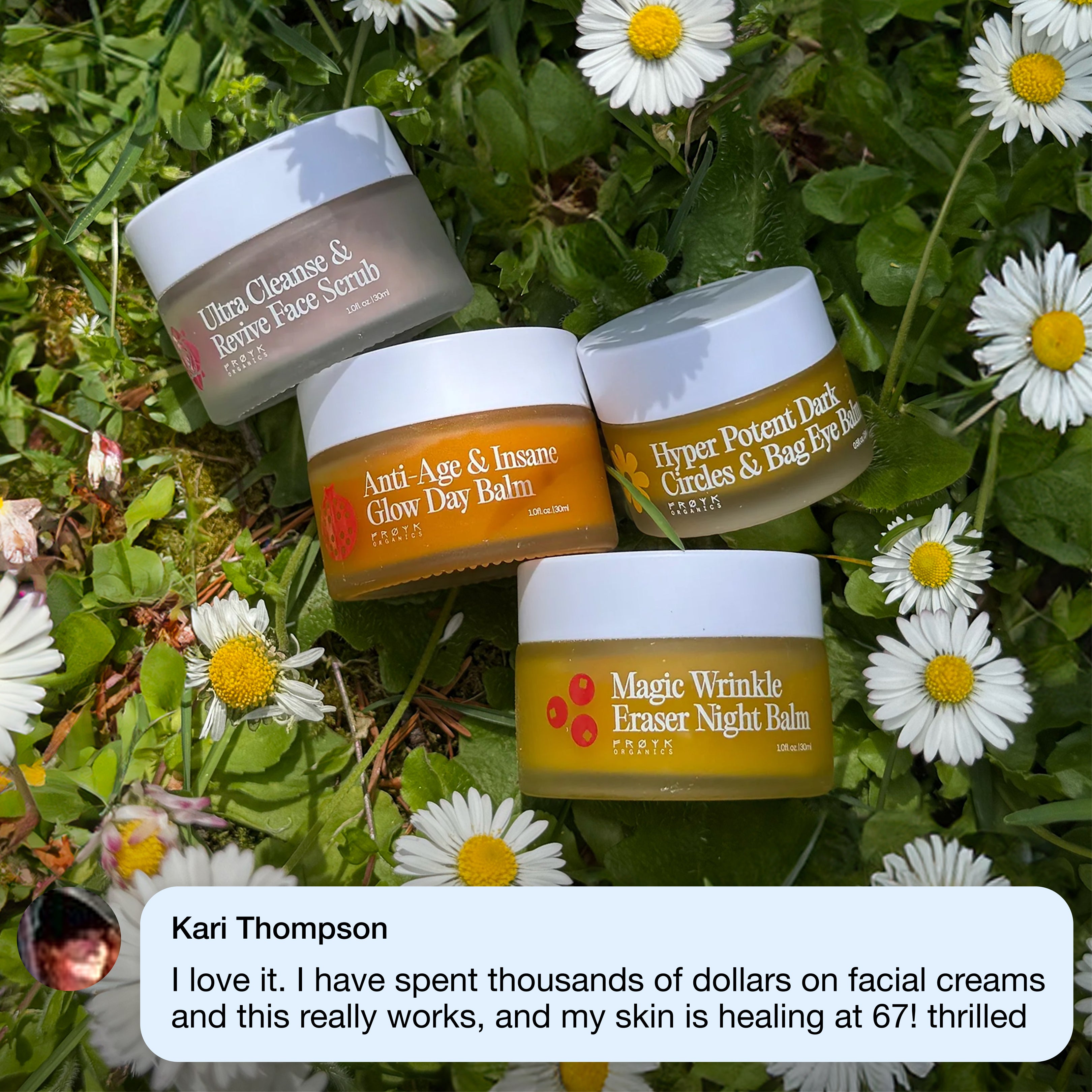
Wild Arctic botanicals and organic beeswax. Zero water, zero synthetic fragrance. Four balms that feed your barrier the botanical lipids it is now short on, backed by a 60-day money-back guarantee.
Shop the System TodayFrequently Asked Questions
What are the signs of a damaged skin barrier?+
How long does it take to repair a damaged skin barrier naturally after 40?+
Can harsh cleansers and hot water damage the skin barrier?+
What ingredients repair the skin barrier naturally?+


