

 Account


It started as a faint prickle on my shins around 2 a.m. Within weeks it felt like ants were living under my skin, marching across my forearms, crawling up the back of my neck.
I checked the sheets. I checked the dog. I changed laundry detergent. None of it was the problem.
If you are 45 or older and reading this at midnight while scratching your calves, hear this first: menopause skin itching affects 50 to 64% of women at menopause clinics. You are not imagining it.
What’s happening is more complex than “dry skin.” Three mechanisms stack. Estrogen decline collapses ceramides in your skin barrier and sends transepidermal water loss skyrocketing. A bidirectional estrogen-histamine loop sets your mast cells leaking. And up to 20% of midlife women develop a neuropathic crawling sensation called formication. Treating one and ignoring the other two is why most over-the-counter products fail menopausal skin.
The default medical answer is HRT. But a plant-based, mechanism-aware path works on barrier, histamine, and nerve signaling at the same time, without touching hormones.
Below are the eight strategies that actually moved the needle for me, ordered from fastest relief tonight to deepest long-term repair.
1. Rebuild Your Skin Barrier With Ceramides and Niacinamide
If you do one thing this week, do this one.
Estrogen drives ceramide synthesis in the stratum corneum. When estrogen drops, ceramide production stalls and your skin literally cannot hold water. Niacinamide does two jobs: it boosts ceramide production and acts as an occlusive that slows water loss while ceramides rebuild. Pair it with topical ceramides 1, 3, and 6-II for a working barrier again.
Practical rules:
- Choose products with ceramides 1, 3, and 6-II plus 4 to 5% niacinamide
- Apply to damp skin within 60 seconds of showering, while pores are open
- Twice daily, neck down. Do not skip hands, shins, or forearms. Those are the classic menopause skin itching zones
- Avoid synthetic fragrance, sulfates, and dyes. They worsen the barrier problem
One detail most women miss: most skincare is 70 to 90% water. When that water evaporates, it carries your own moisture with it, the opposite of what you want when transepidermal water loss is already high. A waterless, plant-oil-based formula delivers the same actives without that evaporation effect.
- Itch that worsens after showering
- Dry climates or winter months
- Skin that feels tight and papery
- Already on a ceramide regimen and itch persists
- Itch comes with flushing or welts
- Issue is likely histamine or nerves (see Items 5 and 6)
2. Use the 10pm to 2am Skin Repair Window for Night Itch
Itching that wakes you at 1 a.m. is not random. It is a triple-mechanism trap.
Three things converge between 10 p.m. and 2 a.m. Histamine peaks in the late evening. Cortisol troughs, so its anti-inflammatory effect bottoms out at the worst possible time. And transepidermal water loss climbs during sleep.
Meanwhile, your skin’s own repair cycle peaks in the same window. Topicals applied here outperform daytime application. That’s the lever you pull.
The night protocol that works:
- Lukewarm shower at 9:30 p.m. Never hot. Hot water strips ceramides faster than your skin can replace them
- Pat dry, do not rub. Apply a plant-oil-based barrier product to damp skin on legs, arms, and torso. Here a waterless oil formula beats a water-based lotion. It seals instead of evaporating
- Bedroom at 60 to 67°F with 40 to 50% humidity. A $30 humidifier is non-negotiable in winter
- Cotton or bamboo sleepwear. Never wool or synthetic. Both trap heat and trigger itch
- For severe nights, take an antihistamine 30 to 60 minutes before bed. Ask your doctor which one
Damp-skin-before-sleep is the highest-leverage moment of the day for menopause skin itching. A cold-pressed plant oil locks into the repair window and does not evaporate. Sea buckthorn oil shines here, and Item 4 explains why.
3. Take a Colloidal Oatmeal Bath When the Itch Spikes
Old-fashioned, yes. Backed by FDA approval and a real molecule called avenanthramide? Also yes.
Colloidal oatmeal contains avenanthramides, polyphenols that interrupt histamine-triggered itch signaling at the nerve level. They do not just soothe the surface. They quiet the signal traveling toward your brain by inhibiting NF-kB inflammation and reducing prostaglandin release.
The FDA classifies colloidal oatmeal as a skin protectant. Its beta-glucan starches form an occlusive film that traps moisture for hours after the bath ends, which is exactly what compromised menopausal skin needs.
How to do it right:
- Use plain colloidal oatmeal. Aveeno packets work, or grind plain oats in a blender to a fine powder
- Lukewarm water, under 98°F. Hot water defeats the purpose and strips the lipids you are trying to protect
- Soak 15 to 20 minutes, no soap during the bath
- Pat dry. Apply ceramide cream to damp skin within 60 seconds. This stacks directly with Item 1
- Skip if you have an open rash or broken skin
4. Try Sea Buckthorn Oil for Long-Term Barrier Support
A small orange Arctic berry delivers omega-7, the fatty acid your skin barrier is missing.
Sea buckthorn is one of the only meaningful plant sources of palmitoleic acid, the omega-7 your skin and mucous membranes use to maintain barrier integrity. It also contains roughly 190 bioactive compounds, including flavonoids that suppress NF-kB and JAK2/STAT1 inflammation pathways, the same pathways driving menopausal mast cell infiltration. Critically, it does not raise estrogen. It is a true hormone-free option, not a phytoestrogen workaround.
The evidence is unusually strong. A Maturitas randomized controlled trial of 116 menopausal women found 3 grams per day improved vaginal epithelial integrity versus placebo with no estrogen elevation:
How to use it:
- Oral: 3 grams per day, typically six 500mg capsules or 1 teaspoon of oil. Allow 8 to 12 weeks for barrier changes
- Topical: a few drops in your evening routine, patted into damp skin
- Choose CO2-extracted, whole-berry oil. Seed and pulp together deliver the omega-7 plus carotenoids
This is the ingredient we built Frøya around, because it repairs the barrier from the inside out without hormones.
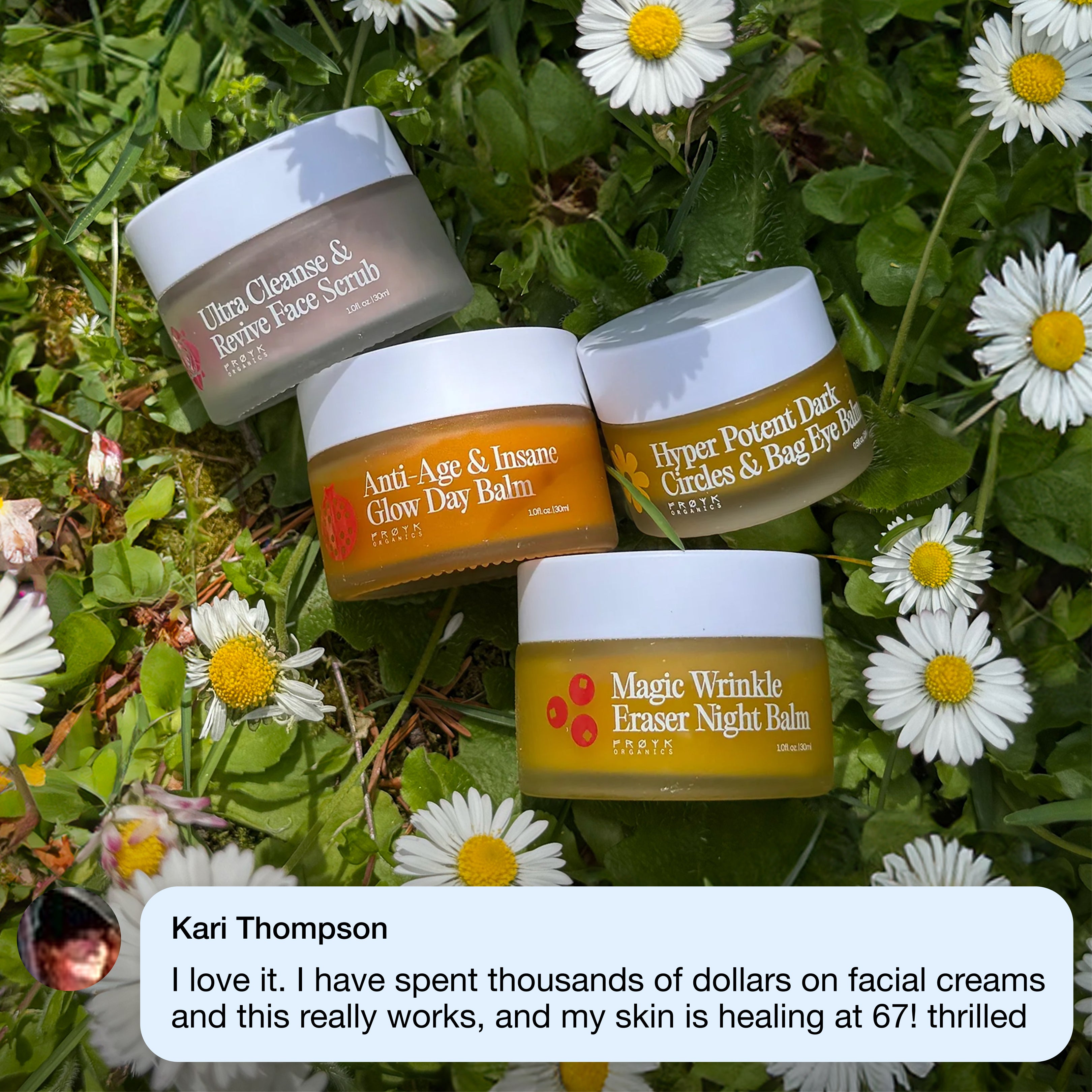
Built around sea buckthorn and cold-pressed Arctic botanicals. Waterless formulas that seal instead of evaporate, chosen for the barrier-histamine-nerve stack that drives menopausal skin itching.
Shop the System- Women avoiding HRT
- Deepest evidence-backed plant option
- Barrier + mucous membrane repair
- On blood thinners (mild anticoagulant activity)
- Check with your doctor first
5. Add Quercetin to Calm the Histamine Loop
If your itch comes with random welts, sudden flushing, or flares after red wine and aged cheese, your mast cells are leaking.
Estrogen and histamine run a bidirectional loop. Estrogen stimulates mast cell histamine release. Estrogen also degrades DAO, the gut enzyme that breaks histamine down. As estrogen fluctuates wildly through perimenopause, the loop goes haywire and your skin pays the price. The classic tell: itch that worsens premenstrually in your 40s, then escalates as cycles get erratic.
Quercetin is a plant flavonoid that stabilizes mast cell membranes. Fewer cells degranulate, less histamine reaches your skin’s nerve endings, and the itch quiets.
How to use it:
- 500mg twice daily with food. Pair with bromelain for absorption
- Add 250mg vitamin C. The two synergize for mast cell stability
- Allow 4 to 6 weeks to assess effect. Quercetin is a slow-build, not a same-day intervention. Stay consistent
- During flare weeks, run a low-histamine diet. Skip aged cheese, red wine, fermented foods, and cured meats
6. Address the Cortisol-Itch Connection
Stress does not just feel like itchy skin. It builds itchy skin.
Clinical studies show elevated cortisol measurably increases transepidermal water loss and impairs synthesis of new barrier lipids in your epidermis. Translation: every stressful week, your barrier weakens and ceramides take longer to rebuild. Cortisol also amplifies mast cell activation, which means a stressed week piles histamine release on top of barrier loss.
In menopause, when baseline barrier function is already compromised and estrogen no longer buffers the HPA axis, chronic cortisol spikes are catastrophic for skin. The progesterone drop makes it worse, since progesterone normally damps cortisol response.
Five evidence-based cortisol levers I rely on:
- 20-minute morning walk in natural light. This resets the cortisol curve more than any supplement
- Five deep belly breaths the moment stress hits. Vagal activation cuts the spike before it builds
- Caffeine cutoff at noon. Half-life matters more than total intake
- Consistent sleep window. Even 30 minutes of variance disrupts the cortisol rhythm
- Magnesium glycinate, 200 to 400mg before bed
- L-theanine, 200mg, on high-stress afternoons. Blunts cortisol without sedation
7. Recognize Formication: When Itching Feels Like Bugs Crawling
If you have ever checked your sheets at 3 a.m. convinced something was crawling on you, there is a name for it, it is real, and you are not losing your mind.
Formication is a neuropathic sensation: the prickling, crawling, biting feeling without anything actually on your skin. It affects up to 20% of midlife women, peaks in late perimenopause around the final menstrual period, and has a true neurological component. It is not “just” itch, and it is not anxiety.
Estrogen modulates peripheral nerve sensitivity through small-fiber nociceptors. As estrogen drops, nerve endings misfire, and your brain interprets the misfiring as movement on your skin.
What helps:
- Layer the previous six strategies first. Barrier and histamine work ease the surface trigger that often co-occurs with the nerve signaling
- For severe cases, ask your doctor about gabapentin or pregabalin. Low-dose, neuropathic-targeted prescriptions exist for this exact reason
- Magnesium glycinate, 200 to 400mg nightly, supports nerve calming
- A cool, weighted blanket can interrupt the sensation loop long enough to fall asleep
- Naming it matters. Research shows symptom labeling reduces distress independently of treatment
8. Know the Timeline and When to See a Doctor
Honest answer no one gives you: this can last years. But it does respond to a real protocol, and the timeline is more predictable than it feels at 2 a.m.
Perimenopause itself runs 4 to 10 years. Itching often persists past menopause and remains the top skin complaint among women 65 and older. Most women see meaningful improvement within 8 to 12 weeks of consistent barrier and histamine work. Expect the night protocol (Item 2) to bite first within a week. Sea buckthorn and quercetin are 8 to 12 week interventions, not overnight fixes. Formication can take longer.
Not every itch is “just menopause.” See your doctor if you notice any of these:
- Itching with visible rash, blisters, or jaundice
- Unintentional weight loss alongside the itch
- Itch localized to one area that will not resolve
- Severe sleep disruption past two weeks on protocol
- Warmth, pus, or spreading redness from scratching
- Anxiety or depression triggered by chronic itch
- Past month three of consistent protocol
- Seeing gradual improvement
- Night itch is the primary complaint
- No systemic symptoms alongside itch


