

 Account


I caught my reflection in the car mirror at 47 and nearly didn’t recognize myself. The dark circles I had been blaming on a bad night’s sleep had settled in as a permanent feature, and no concealer was fixing them. I had a drawer full of eye creams, each promising the moon, and not one had moved the needle.
Most eye cream guides give you a list of lab actives and leave the biology unexplained. This one starts with the plants Nordic women have reached for across generations, and explains what the clinical research now confirms about why they work. The best eye cream for dark circles is not a single hero ingredient. It is a stack, and the base of that stack is botanical.
Here is the part no one told me. Dark circles and puffiness are two different problems, and most eye creams only fix one. Dark circles are a color problem, where blood vessels, pigment, or a small shadow show through thin skin. Puffiness is fluid and structure, where the area swells or the fat under your eyes shifts forward.
A quick honest note before we start. Give any natural routine eight to 12 weeks, not two. Your skin responds on its own timeline, not Amazon’s.
Key Takeaways
- Dark circles and puffiness have different causes, so they respond to different fixes.
- Dark circles come from thin skin, pigment, or a shadow. Puffiness comes from fluid and shifting fat.
- Natural treatments that help: a cold compress, more sleep, a raised pillow, less salt, less alcohol, and calming botanicals like arnica and chamomile.
- After 45, thinner skin and lost collagen make both more visible. That is normal change, not damage.
- See a provider if darkness or swelling shows under one eye only, or comes on suddenly.
Dark Circles vs Puffiness: What’s Actually Going On
Dark circles change the color under your eyes. Puffiness changes the shape. Knowing which one you have tells you which natural treatment to reach for first.
Frøya built the Frøya eye balm around that split, with arnica and chamomile for reactive vessels and redness, and squalane to support thin, dry under eye circles. Here is how the two concerns compare.
| Concern | What you see | Main cause after 45 | Natural helpers |
|---|---|---|---|
| Dark circles | Blue, purple, brown, or a gray shadow | Thin skin showing blood vessels, pigment, or a hollow | Arnica, chamomile, sea buckthorn, sleep, sun sense |
| Bags under your eyes | Swelling, a soft pouch, fuller in the morning | Fluid pooling, weaker tissue, fat shifting forward | Cold compress, raised pillow, less salt, less alcohol |
The Stretch Test
You can sort your own under eye dark circles in about 30 seconds. Stand in natural light and gently stretch the skin under your eye out toward your temple.
If the darkness fades, it is mostly pigment. If it deepens, it is a shadow from a hollow. If the color barely changes but reads blue or purple, it is blood vessels showing through thinning skin.
What Causes Dark Circles After 45
The most common reason you develop dark circles is aging. What causes dark circles comes down to thinning skin. As skin thins, the blood vessels underneath become more visible, and small hollows called tear troughs cast shadows that make the area look darker and puffier. Doctors sometimes call the under-eye version infraorbital dark circles.
Other causes stack on top. Genetics, pigment from sun, short sleep, dehydration, stress, alcohol, and smoking all play a part, and darker skin tones and a family history raise the odds. Rubbing itchy eyes from allergic reactions breaks tiny vessels, and conditions like eczema can leave the blood vessels dilated so they show through the skin beneath your eyes.
After menopause, the shift speeds up. Collagen production slows to a loss of roughly 1% to 2% a year, and the under-eye area is the thinnest skin on your body, so it shows that loss first. For the bigger picture on mature skin after 50, the same thinning that softens your cheeks is what deepens the appearance of dark circles.
See a provider if darkness or swelling shows up under just one eye, or arrives suddenly. One-sided changes can point to something that needs a proper look, rather than another eye product.
What Causes Under-Eye Puffiness After 45
Puffiness is swelling, and it has its own triggers. With age, the tissue and muscle that support your eyelids weaken, so fat moves into the lower eyelids and the area holds more fluid. That mechanism is what causes under-eye bags in the first place.
That is why bags often look worst first thing in the morning, after fluid has settled overnight. A salty dinner, a late glass of wine, short sleep, and allergies all drive fluid retention into the area. Genetics set the baseline, and that bit of excess fat and loose skin does the rest.
“The most common cause of under-eye bags or puffiness is natural aging,” says Dr. Kofi Boahene, a facial plastic surgeon at Johns Hopkins. The useful part is that most morning puffiness is fluid, so the underlying cause is often something you can change.
Natural Treatments for Dark Circles
To fade the look of dark circles, you first have to know which type you have, then calm the vessels, support the thin skin, and protect against pigment. Botanicals and topical treatments do the first two well, and your habits handle the rest.
Arnica and Chamomile for Reactive Vessels
Arnica and chamomile are the two plants that speak to vascular dark circles, the blue-purple kind. Arnica supports microcirculation and eases the puffiness that comes with inflammation, and the arnica benefits for skin are strongest for short-term swelling and bruising, which is exactly the under-eye picture many women have by evening.
The honest part: the data for daily cosmetic arnica is still thin, so arnica is one helper, not a cure on its own. Chamomile brings anti-inflammatory properties that calm redness and reactivity, so together they help manage dark circles at the botanical level. Both sit in Frøya’s eye balm, so you are not mixing anything yourself. You will see vitamin K and caffeine in conventional eye creams for the same vascular kind, while Frøya leans on these plants instead.
Sea Buckthorn for Brown Pigment
Brown circles are a pigment story, and pigment is mostly about prevention. Sea buckthorn is rich in carotenoids and omega-7, which help defend against the oxidative stress and sun damage that drive melanin, and support the turnover that lets pigmented skin cells cycle off.
Sun sense matters more than any single product here. You do not need a daily SPF rule to protect this area. Wear sunglasses, sit in the shade, and save a mineral sunscreen for long stretches outdoors, which is what dermatologists suggest for extended sun.
Squalane to Support Thin Skin
Squalane is a skin-identical lipid that mirrors the oil your skin makes less of after 45. On thin under-eye skin, it holds moisture in, supports the skin’s own repair, and improves how the skin texture looks, so the area reads less crepey and dull.
A steady barrier is what makes everything else work, since dry, stressed skin shows circles and lines more. If your under-eye skin feels tight and papery, start here and repair thin under eye skin before you chase the color.
The Home Remedies
You have seen the classics, and some genuinely help for a quick refresh. These home remedies are short-term, not a fix, but they are easy.
Cold tea bags. Green tea bags and chamomile tea bags add a little caffeine and antioxidants, and green tea brings anti-inflammatory properties. Chill them, rest them on closed eyes, then rinse with cold water.
Cucumber slices. Cool and hydrating, since cucumbers are mostly water and some vitamin C.
A light oil. A dab of almond oil or vitamin E oil can soften the skin, used sparingly so it does not sit heavy.
Skip the lemon juice and pineapple juice tricks, and go easy on witch hazel and coconut oil, which can sting, dry, or clog this delicate skin. Use the cold tricks when you want a fast lift, and let the botanical balm and your sleep do the longer work.
Natural Treatments for Puffiness
Puffiness is fluid, so the fastest natural remedies for puffy eyes move fluid out and stop it pooling. These work in days, not weeks.
- Cold compress. A chilled spoon, cucumber slices, or a cool washcloth over closed eyes for a few minutes helps constrict blood vessels and reduce swelling.
- Raise your head at night. An extra pillow helps prevent fluid from settling under your eyes while you sleep, so you wake up less puffy.
- Cut the salt and the late drinks. A salty meal makes you hold water, and alcohol dehydrates and hurts sleep quality. Both show up under your eyes by morning.
- Protect your sleep. Most adults do best on 7 to 9 hours. Adequate sleep is one of the simplest habits that keeps the area from looking full and shadowed.
Caffeine is the one active worth knowing here. Applied to the skin, caffeine for under-eye puffiness works by constricting blood vessels, which is why chilled tea bags help. It is a short-term refresh, so the lasting work comes from calming botanicals, enough sleep, and a healthy lifestyle.
Arnica and chamomile earn their keep here too, overnight, when the day’s fluid and inflammation settle. If puffiness is your main concern, this deeper guide to natural remedies for puffy eyes walks through the bag-specific routine.
How Frøya’s Organics Helps Dark Circles and Puffiness
Frøya’s eye balm works on both concerns at once, because the under-eye problem is usually both at once. It calms the vessels and redness behind dark circles, and it supports the thin skin that lets puffiness and shadows show through. The formula is waterless and potent, so a little does a lot.
The actives are matched to the causes, not thrown together. Arnica and chamomile settle reactive, flushed vessels. Sea buckthorn brings antioxidants for pigment, and squalane, rosehip, and vitamin E hold moisture in thin skin to support under-eye skin health. There is no synthetic fragrance and no water filler, which suits sensitive skin.
How to Use the Eye Balm for Dark Circles and Puffiness

Use a rice-grain amount per eye, morning and night. This skin is about half a millimeter thin, so more balm just sits on top and can cause small white bumps.
Tap it in with your ring finger, your weakest finger, moving from the inner to the outer corner along the bone. Do not rub, since rubbing stretches skin and breaks vessels. Keep a jar in the fridge if you want a cool morning de-puff, which also calms swelling.
Timing is where most people go wrong. The cold and the calm show up the same day, but the fuller change in tone and texture takes eight to 12 weeks of steady use. A single eye-balm jar lasts around 90 days, so one jar carries you through a full test, and the same approach extends to the rest of your face with barrier support mature skin.
How It Works in the Complete Mature Skin System

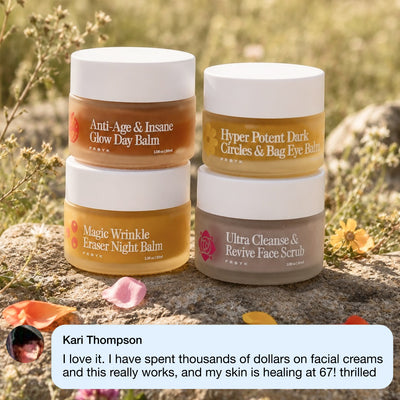
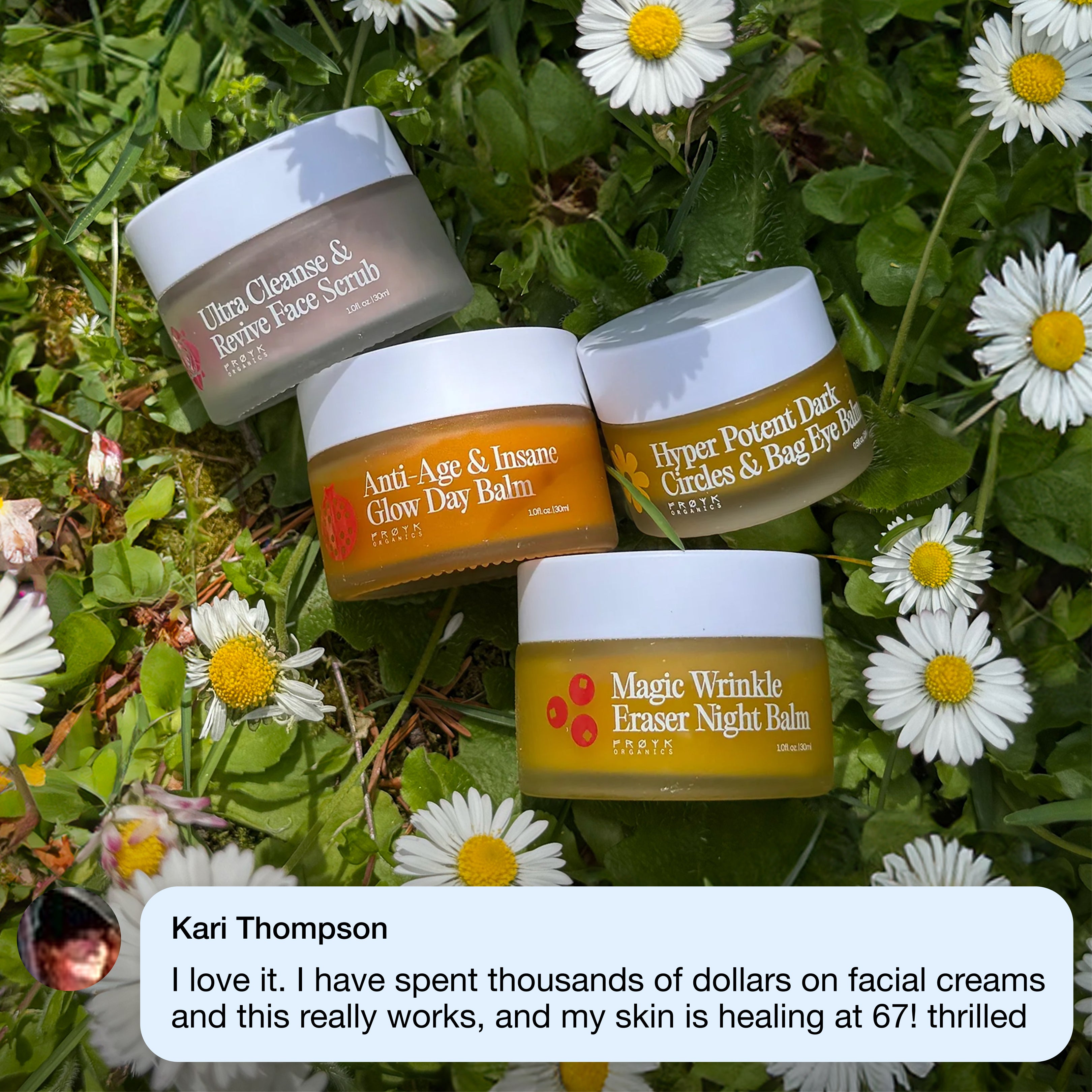
The eye balm is the eye step inside Frøya’s four-piece routine for mature skin. The day balm, night balm, eye balm, and scrub all support the same thinning, drier skin, so the eye area is not working alone.
Here is what each step is and when you use it.
| Step | Product | What it is and does | When to use |
|---|---|---|---|
| Cleanse | Ultra Cleanse & Revive Face Scrub | A waterless rice-powder and rose-petal scrub that lifts off the day and refreshes dull skin | 2 to 3 times a week, in the shower |
| Day | Anti-Age & Insane Glow Day Balm | A waterless day balm with sea buckthorn and squalane that supports a hydrated, fresher-looking daytime glow | Mornings, on clean skin |
| Eye | Magic Revive Eye Balm | A waterless eye balm with arnica and chamomile to calm reactive vessels, and squalane to support thin under-eye skin | Morning and night, a rice-grain per eye |
| Night | Magic Wrinkle Eraser Night Balm | A waterless night balm with rosehip, arnica, and squalane that supports overnight repair and softer-looking lines | Nights, on clean skin |
The four pieces are formulated to work together, with nothing to mix or measure yourself. A little of each waterless balm goes a long way, so one set runs as a full 60-day routine. If you want the whole routine rather than the single step, the Frøya mature skin system carries the eye balm plus the day, night, and cleanse steps.
When to See Professional Help
Natural treatments reduce how dark circles and bags look, but they cannot refill a deep hollow or remove loose skin. For stubborn cases, medical treatment and cosmetic procedures like fillers, laser therapy, chemical peels, and eyelid surgery can help.
These in-office procedures last longer than anything topical, but they are not the first step, and a healthcare professional can walk you through them or rule out an underlying health condition. That is not a reason to skip the natural route. Most people are working with everyday shadows and morning puffiness, and those respond well to calm skin and better habits.
Before and After Results from Frøya Customers
The honest proof is in the faces, not the promises. Women in their 50s and 60s use Frøya’s eye balm for the under-eye area and report softer, calmer, less tired-looking skin over a couple of months.
You can see the real customer before-and-afters and read how long it took for each of them. Give any natural routine eight to 12 weeks before you judge it, because skin works on its own timeline.

Disclaimer: This article is for general education and is not medical advice. Frøya Organics balms are cosmetic products that support and soothe the skin, and are not intended to diagnose, treat, or cure any condition. If dark circles or swelling appear under one eye only, or come on suddenly, see a healthcare provider.
Wild Arctic botanicals sealed under organic beeswax. Zero water, zero synthetic fragrance. Four balms that seal moisture into mature skin from morning to night, backed by a 60-day money-back guarantee.
Shop the System - $119Frequently Asked Questions
Do natural eye treatments really work for dark circles?+
What helps puffy eyes under the eyes fast?+
Why do I have puffy eyes in the morning after 45?+
How long does the Frøya eye balm take to work?+
Do botanicals work as well as retinol for under-eye skin?+
Can I use an eye balm around my eyes safely?+
Which skin types and ages is the Frøya eye balm for?+


