

 Account




You have probably tried a face oil that promised a lot and left your skin greasy, shiny, or broken out. So you gave up on oils. Fair enough.
Here is the part most labels skip. Not all plant oils behave the same way on skin, and the one that suits you comes down to what it’s made of.
Safflower oil for skin is one of the lightest options out there, and it rarely clogs pores. It absorbs fast, feels close to weightless, and plays well with most skin types.
Below is what it actually does for human skin, backed by research, and how to tell if it fits your skin.
Key Takeaways
- Safflower oil is a light vegetable oil pressed from safflower seeds, high in linoleic acid, one of the unsaturated fatty acids your skin uses in its outer layer.
- It works as an emollient, so skin feels softer and holds moisture better.
- It sits at 0 on the comedogenic scale, meaning it’s unlikely to clog pores.
- The high-linoleic type is the one you want for skincare, not the high-oleic cooking type.
- At Frøya Organics, safflower seed oil is the base our balms are built on.
What Is Safflower Seed Oil?
Safflower seed oil is a light plant oil pressed from the seeds of the safflower plant (Carthamus tinctorius L.), a bright, thistle-like flower. It has been used for food, dye, and skin for a long time.
In skincare it acts as an emollient. That means it fills the tiny gaps between skin cells, so your skin feels smoother and less tight.
One thing to watch for: the oil in your kitchen and the oil in your skincare are not always the same grade. Pure safflower oil made for the face is handled differently from the cooking kind, which matters more than you’d think once you get to the two types below.
Safflower Oil Composition: Linoleic Acid and the Two Oil Types
The main reason safflower oil suits skin is its linoleic acid content, an omega-6 essential fatty acid your body can’t make on its own. You get it through food or topical application straight onto your skin.
There are two versions of this seed oil, and they are not interchangeable:
- High-linoleic safflower oil: about 75 to 80% linoleic acid. This is the skincare type. Light, fast-absorbing, easy on most skin.
- High-oleic safflower oil: about 75 to 80% oleic acid. This is the cooking type. Richer and heavier on skin.
So when you shop, look for “high-linoleic” on the label. That one dose of label-reading saves you from a heavier oil than your face wants.
Safflower Oil Benefits for Skin Health

Most of safflower oil’s reputation comes down to one thing: a fatty-acid profile your skin recognizes. Here is where that shows up.
Linoleic Acid and Skin Barrier Support
Linoleic acid is one of the fatty acids your epidermis uses in its outer layer, the part that keeps water in and irritation out. When skin runs low on it, that outer layer gets less orderly and loses water faster.
Topping it up helps skin retain moisture. Safflower oil reduces transepidermal water loss, which is water escaping through the surface, and that supports better hydration. The link between linoleic acid and skin barrier recovery has been shown in essential-fatty-acid-deficient skin.
In plain terms, a high-linoleic oil like safflower gives skin a raw material it already works with. That’s why it feels at home and leaves skin soft rather than coated.
Antioxidant and Anti-Inflammatory Effects
Safflower oil naturally contains vitamin E, an antioxidant that helps protect skin cells from free radical damage, which is linked to visible aging. You’re not adding a synthetic active here. It’s already in the oil, alongside other plant antioxidants like phenolic compounds.
Safflower has also been looked at for calming, anti-inflammatory activity. Anti-inflammatory plant oil research points to compounds like luteolin, which has been shown to ease inflammation in skin studies. That work is early and done at the ingredient level, so treat it as promising, not proven.
Why it feels calming
Safflower’s plant compounds, including the flavone luteolin, have been reported to act on the skin’s inflammation signals, which helps explain its soothing reputation.
Plant Oils and Skin Review, Int. J. Molecular Sciences (2018)
What this means for you: safflower can help calm the look of redness and soothe skin that feels dry and tight. You can read more about its vitamin E for skin benefits if you want the full rundown.
Does Safflower Oil Help With Skin Aging and Wrinkles?
Safflower oil won't smooth lines overnight, but its antioxidants give skin some help against the daily stress that shows up as visible aging. Lab studies have looked at how compounds in safflower, including a flavonoid called acacetin, behave against UVB stress in skin cells, the kind of stress linked to fine lines over time.
If strong actives leave your skin unhappy, a botanical base is an easier everyday option. Safflower is light, made for gentle, daily use, and tends to suit skin that reacts easily. No harsh steps, nothing to build up to.
Note: This is lab research done on skin cells, not proof that an oil smooths wrinkles on your face. Clinical evidence in people is still limited, so think of safflower as supportive, everyday skincare.
Day to day, what you’ll actually notice is softer, more comfortable skin. That’s the realistic win, and it’s a good one.
Is Safflower Oil Comedogenic?
No. Safflower oil scores a 0 on the comedogenic scale, which means it’s among the least likely oils to clog your pores. The scale runs 0 to 5, where 0 won’t block pores and 5 very likely will.
Two honest notes, since ratings aren’t perfect:
- These scores started from animal and lab testing, so your own skin may respond a little differently.
- Any plant oil can oxidize over time, and an old, poorly stored oil is less friendly to skin than a fresh one.
Safety testing backs this up. The Cosmetic Ingredient Review found safflower oil to be non-comedogenic in cosmetic use, with no irritation, sensitization, or photosensitization in testing. For most people, that makes it a low-risk oil to try.
Safflower Oil for Acne-Prone and Combination Skin
If your skin is oily or breakout-prone, a light oil like safflower can still suit you, because oily skin isn’t a reason to skip seed oils. The old “oil makes acne worse” rule doesn’t hold for every oil.
Research has noticed that acne-prone skin tends to carry less linoleic acid in its surface oil. That pattern has been studied for years as one piece of the clogged-pore puzzle, which you can see in this research on linoleic acid and acne.
Safflower oil isn't a fix for breakouts, and no oil clears them on its own. What a light, high-linoleic oil does offer is moisture for combination skin without the heavy, pore-clogging feel of a richer oil.
Safflower Oil vs Other Seed Oils
Safflower isn’t the only light plant oil, and the right pick depends on your skin, not on which oil is “best.” Texture and fatty-acid makeup are what set them apart.
| Oil | Feel | Best suited to |
|---|---|---|
| Safflower (high-linoleic) | Very light, fast-absorbing | Most skin, including oily or combination |
| Grapeseed oil for skin | Light, slightly silkier | Oily, congestion-prone skin |
| Jojoba oil for skin | Medium, close to skin’s own oil | Balanced, sensitive skin |
Jojoba is worth a note: it’s technically a wax ester, not a true seed oil, which is why it mimics your skin’s own oil. Safflower, by contrast, is a true high-linoleic seed oil. Different jobs, both useful. Safflower also turns up in some hair care, where it helps with conditioning the scalp and strands.
An Easier Way to Get Safflower Oil’s Benefits

If managing a raw oil sounds like a hassle, a balm built on a safflower base gives you the same light, linoleic-rich oil already blended and stabilized. No measuring, no guessing on freshness.
That’s how we build at Frøya Organics. Safflower seed oil is the first ingredient in our face balms, so it isn’t a flashy add-on, it’s the foundation. Everything else is a mixture of botanicals chosen to work with it, nothing to mix yourself.
Here’s how the safflower base shows up across the balms:
| Frøya balm | What it’s made for | How safflower helps | How to use |
|---|---|---|---|
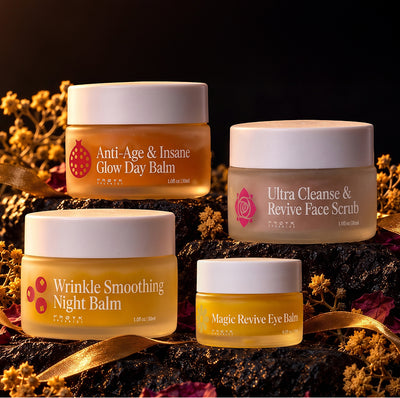
| Anti-Age & Insane Glow Day Balm | Daytime softness and a natural glow | Light safflower base softens the look of fine lines without a heavy feel | A small fingertip amount in the morning |
| Wrinkle Smoothing Night Balm | Overnight comfort for mature skin | Safflower helps skin feel supple while you sleep | A thin layer at night |
| Magic Revive Eye Balm | The delicate eye area | A light, soft base for thin skin | Pat a tiny amount around the eyes |
These three balms share the same safflower foundation, so your day, night, and eye steps all start from the same skin-friendly oil. The Complete Anti-Aging Routine pairs them into one simple morning-and-night set, alongside a waterless scrub to cleanse.
Safety and Patch Testing
Safflower oil is well tolerated by most people, but a quick patch test is always smart before you put anything new on your face. It takes a day and gives you peace of mind.
Keep these in mind:
- Patch test on your inner arm and wait 24 hours.
- Stop if you notice redness, itching, or irritation.
- Avoid broken or wounded skin.
- Safflower is in the daisy family, so patch test first if you react to ragweed or marigold.
If skin stays irritated or you’re dealing with an ongoing condition, check in with a dermatologist. An oil is skincare, not medical care.
What Makes Safflower Worth Keeping
The best skincare oil is usually the one that stops giving you problems, and for a lot of people, that turns out to be safflower. Plenty of oils feel lovely for a week, then leave skin congested or greasy.
Safflower tends to last because of what it is: light, high in linoleic acid, and easy for skin to get along with. It isn’t loud or trendy. It just suits skin, which after a certain age is exactly what you want.
No single ingredient does the work on its own, though. The before-and-after below comes from sticking with the full routine over time, not from one oil. Read more honest customer reviews to see what steady, consistent use looks like.

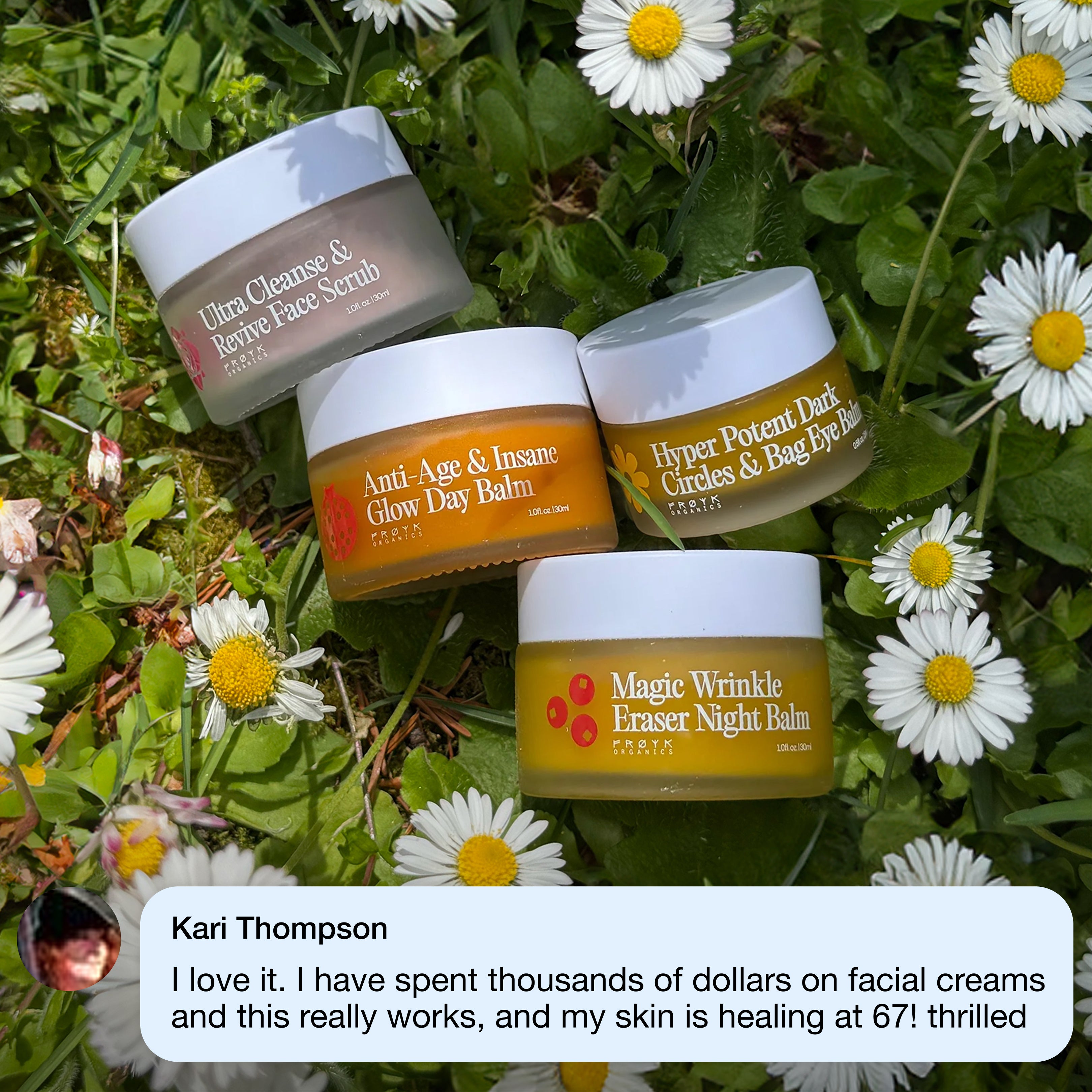
A day balm, a night balm, and an eye balm that all start with safflower seed oil as their first ingredient, plus a waterless scrub to cleanse. Already blended, nothing to measure, backed by a 60-day money-back guarantee.
Shop the System TodayDisclaimer: This article is for general information only and isn't medical advice. Safflower oil and Frøya Organics balms are cosmetic products made for everyday care, not medical use. If you have a persistent skin concern, please speak with a dermatologist.
Frequently Asked Questions
Is safflower oil good for the face?+
What oil is least likely to clog pores?+
Which is better for skin, sunflower oil or safflower oil?+
Which oil is best for face aging?+
What are the downsides of safflower oil?+
What is the healthiest oil to put on your face?+
What is the Frøya anti-aging set made of?+


