

 Account


Grapeseed oil sits in a strange place on the shelf. Everyone mentions it. Almost nobody takes it seriously.
The version most people grab at the grocery store is clear, odorless, and refined into something neutral. That version is basically a different ingredient from the one a thoughtful formulator would reach for.
After 45, skin changes are not loud. You notice a slow loss of bounce, dullness that was not there before, and dryness that moisturizer alone does not fix.
Perimenopause is doing quiet work underneath. Estrogen declines, collagen drops roughly 30% in the first five years post-menopause, and the water channels in your skin start to close. The right grapeseed oil for skin speaks directly to that biology.
This article covers the version worth using and the real benefits of grapeseed oil for skin after 45. You will see the quality difference that matters, the OPC compounds that make cold-pressed worth the premium, and what the clinical evidence shows. The label may read grape seed oil or grapeseed oil, but among these natural oils it rewards a closer look than most.
Cold-Pressed vs. Refined Grapeseed Oil: Why the Difference Is Everything
Most grapeseed oil on shelves has been heated past 200°C, washed with hexane, bleached, and deodorized. By the time it reaches your skin, almost everything research has measured in grapeseed is gone.
Cold-pressed and refined grapeseed oil share a name and a fatty acid profile. They do not share bioactives. That distinction is the whole conversation.
What cold-pressing preserves
Mechanical pressing at low temperature keeps the compounds that make grapeseed functional. That means OPCs (oligomeric proanthocyanidins), vitamin E tocopherols, polyphenols, and a largely intact linoleic acid profile.
You can see it on sight. Cold-pressed grapeseed oil is pale green to golden, with a faint wine or grape aroma. Water-clear and odorless means refined.
What refining destroys
High-heat deodorization, hexane extraction, bleaching, and caustic neutralization strip almost every compound that makes the ingredient useful. What remains is mostly inert fatty acid.
It still adds moisture, but it is no longer the ingredient the research is evaluating. Some refined oils also carry synthetic stabilizers like BHT or BHA, the opposite of what you want next to skin already losing antioxidant defense.
Expert view and shelf life
Karina Freedman, a New York esthetician with 25 years of clinical work, is blunt. Cold-pressed, clinical-grade oil is essential, and cheap oxidized grapeseed oil can do more harm than good.
If a label does not say "cold-pressed" or "virgin," assume it is refined. For skin after 45, that one word on a bottle is the difference between a moisturizer and a treatment.
Grapeseed Oil for Mature Skin: What Changes After 45
You know the feeling. Skin thinner, drier, and less resilient than five years ago, even though you are doing everything the magazines said.
Nothing is broken, but something is not responding the way it used to. That is not imagination. It is endocrinology.
Grapeseed oil, used properly, speaks to three specific shifts in skin health happening underneath. It is a gentle helper inside skincare for mature skin, not a miracle fix.
The collagen cliff
Estrogen supports fibroblast activity, which is how your skin makes collagen. When estrogen declines through perimenopause, that collagen production slows down.
The drop is steep at first. Studies put the loss at roughly 30% in the first five years after menopause, then about 2% a year after that. You see it as less elasticity, deeper fine lines, and that quality people call "bounce" quietly fading.
Grapeseed oil cannot replace lost collagen. What its OPCs can do is protect the collagen you still have from oxidative breakdown. Think of it as scaffolding support for the structure already there, while stronger actives do the building work.
Barrier thinning and linoleic acid
Estrogen also supports the lipid matrix that holds your skin barrier together. As it falls, ceramide levels shift and the mix of fatty acids in your skin changes. Linoleic acid, in particular, tends to drop.
Grapeseed oil is roughly 70 to 76% linoleic acid, one of the highest levels of any carrier oil. Applied to the skin, linoleic acid helps maintain the moisture barrier and hold water in, which eases that "my skin can't stay hydrated" feeling. Its calming action also soothes the reactive, sensitive skin that shows up as estrogen drops. That is the same goal behind barrier repair for sensitive skin.
The AQP3 dehydration piece
Your skin cells contain a water channel protein called aquaporin-3 (AQP3). It moves water and glycerol between cells.
AQP3 expression drops alongside estrogen. That is a major reason mature skin feels dehydrated even when you are moisturizing more than ever.
Research by Tsuchiya and colleagues in 2020 found that procyanidin B1, an OPC compound concentrated in grapeseed, promotes AQP3 expression in skin cells. New metabolic insights like this show the mechanism lines up with the biology, not just the marketing.
OPCs: The Antioxidant Compound That Makes Grapeseed Worth Using
The real value in cold-pressed grapeseed oil is a group of antioxidants called OPCs. Studies describe their antioxidant power as 20 times stronger than vitamin E and 50 times stronger than vitamin C. That is not a marketing line. It is what the research on grape seed polyphenols reports.
If you only remember one thing about why cold-pressed grapeseed oil is worth the premium, remember that. These powerful antioxidants are why it earns a place in anti aging skin care.
What OPCs actually are
OPCs, short for oligomeric proanthocyanidins, are polyphenols concentrated in the seeds of the grape, Vitis vinifera. They also appear in pine bark and cranberry, and they give cold-pressed grapeseed oil its green tint.
In the plant, they protect the seed from oxidation so it can survive long enough to germinate. On skin, they do something similar. They defend against free radical damage, the oxidative stress that breaks down collagen and drives premature aging.
The AQP3 mechanism
The Tsuchiya 2020 study looked at procyanidin B1, one of the OPC compounds abundant in grapeseed. In a randomized controlled trial, it promoted aquaporin-3 expression in skin.
AQP3 is how skin cells move water. Its expression declines as estrogen falls, and that drives the "no matter what I put on, my skin feels dry" complaint.
An ingredient that nudges AQP3 back up is not just hydrating the surface. It supports the way skin holds water in the first place.
Collagen protection, not stimulation
Karina Freedman describes OPCs as "scaffolding support." They protect existing collagen from oxidative breakdown rather than building new collagen the way a retinoid does.
That protective role is the logic behind collagen support skincare balms built on botanicals. It is steady help rather than a quick change.
The "antioxidant" label gets thrown onto almost every plant oil in skincare. OPCs earn their antioxidant properties with real potency and a mechanism that matches mature skin biology.
What the Clinical Evidence Actually Shows
Most botanical oils are over-claimed. Grapeseed is unusual because there is a small but specific body of clinical work to look at. The honest answer sits between the hype and the skepticism.
The Rached 2025 barrier and collagen study
Grapeseed has a small but real body of clinical work behind it. A 2025 clinical trial published in the journal Cosmetics tested a grape seed extract serum on 40 women over 12 weeks.
The results that reached significance were about moisture and fine lines, not overnight change:
- A clear rise in skin hydration over the 12 weeks.
- A visible drop in wrinkle depth around the eyes.
- A directional calming of redness, though smaller.
Better hydration means your skin holds water more effectively. Softer fine lines are the slow, structural payoff that shows up over months, not days. It is steady support, not a quick fix.
AQP3 in clinical context
Pair Rached's results with the Tsuchiya 2020 mechanism work, and a plausible chain appears. OPCs upregulate AQP3, skin cells retain more water, the barrier improves, and water loss drops.
Earlier work by Kim and colleagues (2017) showed OPCs protect procollagen in fibroblasts. Yarovaya and colleagues (2020) found grapeseed extract protects fibroblasts from UVA damage. Grapeseed also shows antibacterial properties that promote wound healing, which supports its use on redness or slow-healing blemishes.
Honest limits
These are mostly smaller studies, often on grape seed extract rather than the cold-pressed oil itself. The evidence base is nowhere near the mountain of research behind retinoids or sunscreen.
Grapeseed oil is a supporting ingredient with real but modest backing, and more research would sharpen the picture. As Karina Freedman puts it, the oil is a supporting player, not the lead.
This is where Frøya's balms fit that same science. The Complete System for Mature Women's Skin is built on Arctic botanicals with a similar antioxidant and barrier logic, which is why so many customers use it as a full routine for their skin health.
How to Use Grapeseed Oil in a Mature Skincare Routine

The most common mistake for skin after 45 is using grapeseed oil alone and expecting a treatment. It will not act like one.
Mature skin rarely responds to single-ingredient fixes, and most routines rely on multiple products doing different jobs. Placement is simple once you know the logic.
Placement in your order of operations
Oil goes after your water-based products and before heavier creams or balms. It gives moisture without heaviness.
When applying grapeseed oil, warm three to five drops in your palms. Then press, do not rub, into skin still slightly damp from your serum, so it does not feel greasy.
- Damp skin helps the oil absorb quickly and evenly.
- Its silky texture makes it a nice massage oil for the face and neck.
- You can mix it with other moisturizers or serums for added hydration.
Using stronger actives, and their trade-offs
You can boost results with stronger actives, but they come with side effects. Retinol and exfoliating acids speed cell turnover, yet they often cause dryness, flaking, and sun sensitivity.
If irritation occurs, those actives are usually the reason. Many women prefer gentle botanical balms that skip acids, so they support the skin barrier without stacking products that sting.
Synergistic pairings
Grapeseed is a light penetrating oil. It sinks in quickly and leaves no greasy residue, which makes it a natural partner for other natural oils:
- Rosehip oil for gentle renewal and extra fatty acids.
- Pomegranate seed oil for extra antioxidants and structure.
- A little vitamin C serum underneath for daytime defense.
It also works as a carrier for other essential oils, diluting them so they sit safely on the face. Among face oils, it is one of the lightest, which is why it suits oily and combination skin. It rates 1 on the comedogenic scale, so it is gentle across skin types.
The Sourcing Story: Why Grapeseed Oil Is Skincare's Quiet Circular Ingredient
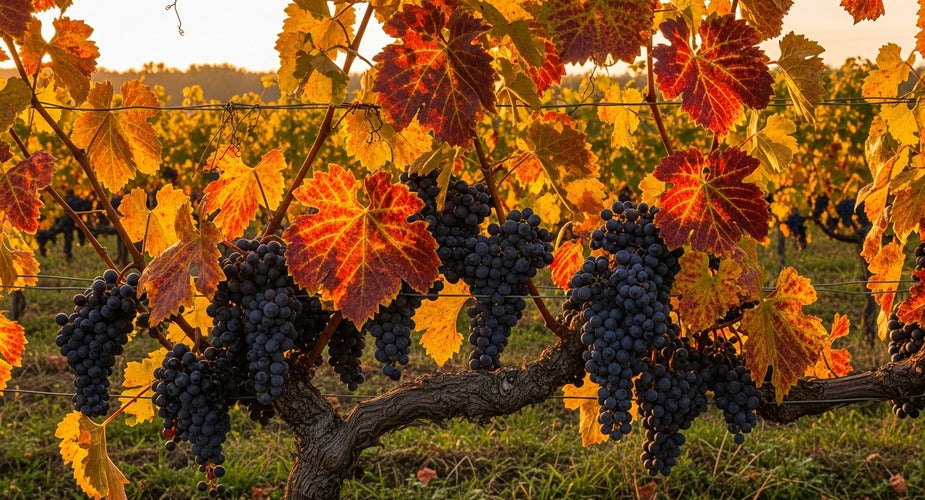
Every liter of wine leaves behind grape pomace: skins, stems, and seeds. For most of wine's history, these were simply discarded.
Grapeseed oil exists because someone figured out the seeds were a functional product hiding in the waste stream.
The byproduct story
The chain is straightforward. Grapes are pressed for wine, the pomace separates, and the seeds are dried and cold-pressed for oil.
Nothing is grown specifically for the oil. Unlike crops planted to meet skincare demand, grapeseed oil turns an existing waste stream into a high-value ingredient. Genuinely circular sourcing stories are rare in cosmetics, and this is one of them.
Quality correlates with sourcing
Industrial refining exists to squeeze yield from low-quality seeds. Cold-pressing needs better starting material, smaller batches, and more hands-on processing.
Cold-pressed grapeseed oil from a cruelty-free brand that cares almost always traces back to European wine regions with real traceability. The best ingredients are the ones where the story on the bottle matches the biology on your skin.


