

 Account


Here is the moment nobody warns you about. You pull your hair into a ponytail one morning, feel how thin it has gotten, and realize the hair tie now wraps around one extra time.
That was the message that started this piece. A woman wrote in after her 48th birthday, saying she had bought every thickening shampoo on the shelf and none of it helped. Her words stuck with me: "I feel like I am feeding my hair and starving my scalp."
She was closer to the answer than most advice out there. After 40, the fix is rarely one more product for your strands. It usually starts with the ground they grow from, your scalp.
So this is not another pile of products to layer on. It is a natural scalp and hair growth routine that starts where your hair actually begins, your scalp, and works outward.
Key Takeaways
- Most thinning hair after 40 comes from breakage and a tired scalp, not dead hair follicles.
- A scalp-first routine helps you keep the hair growth you already have.
- Natural ingredients like rosemary oil support the scalp without the side effects of stronger actives.
- Real change takes months, so steady hair care beats any single miracle product.
Why Your Hair Looks Thinner After 40

Your hair changes after 40 mostly because of hormones. Estrogen helps keep strands in their growth phase, so as it drops, research shows the estrogen decline shortens the hair cycle, and strands grow back finer and shed sooner.
Stress plays a part too. A rough season can trigger telogen effluvium, a temporary surge in hair shedding that shows up two or three months later.
Thinning after menopause is far more common than most women realize, and it is rarely something you caused. The same research notes that menopausal women see more hair loss and thinning than younger women, so if this is you, you are in very normal company.
Here is the part most women miss. A lot of what looks like thinning is breakage, not lost follicles.
When strands snap from heat or tight hairstyles, your hair looks sparse even though it is still growing. The good news is that steady scalp care helps you keep the long hair and fullness you already have, so see these products for thinning hair for a wider view.
What Actually Helps Hair Growth, and What Doesn't
Let's be honest about the limits first. Dermatologists agree that products cannot regrow hair the way medication can.
Prescription routes exist. The treatment of androgenetic alopecia, also called androgenic alopecia or pattern hair loss, may involve medication a doctor prescribes. Conditions like alopecia areata need medical attention too.
But medication is not where most women need to start. A natural routine works on three things you control:
- A clean, calm scalp, since that is where every strand begins.
- Less breakage, so the length you grow actually stays.
- Nourished strands that look and feel thicker.
Think of it this way. You are not trying to grow hair faster. You are trying to lose less of what you already have.
The Natural Scalp and Hair Growth Routine, Step by Step
A good routine is simple. Four habits, done steadily, do most of the work. Expect noticeable change in about 8 to 12 weeks of consistency.
Cleanse Your Scalp, Not Just Your Hair
Your scalp is skin, and it collects oil and buildup that leaves a dry scalp feeling tight and fine or straight hair flat at the root.
Wash the scalp directly with a gentle, non-stripping shampoo that cleans the scalp without pulling out the natural oils it needs. A scalp scrub once a week can help if you get flaky buildup, but gentle daily cleansing matters more.
Stimulate With a Daily Scalp Massage
A few minutes of massage is the most research-backed free habit you have. It supports blood flow to the dermal papilla cells at the base of each follicle, and gentle stretching of those cells is what seems to help.
In a small 2016 study, four minutes of daily scalp massage increased hair thickness after 24 weeks. It was an early, small trial, so read the result as promising rather than proof, but it is free and low-risk.
Use your fingertips, not your nails, in small circles across your whole head.
Treat the Scalp With a Lightweight Oil
After cleansing, the scalp needs a few drops of something nourishing. Light hair oils feed the roots without weighing hair down.
Keep essential oils diluted in a carrier before they touch your scalp, since undiluted oils can irritate. Lighter blends like a scalp oil for growth suit mature hair better than heavy ones. If you are weighing a leave-in treatment, here is how a natural hair thickening serum fits a scalp-first routine.
Protect the Length You Already Have
This step saves more hair than any product. Wet hair is at its weakest, so handle it gently, which dermatologists point to as a simple way to prevent hair breakage.
- Blot with a soft towel, do not rub, and let hair dry a little before you style.
- Detangle from the ends up with a wide-tooth comb, never root to tip.
- Skip tight ponytails that pull at the hairline.
- Use low heat and a silk pillowcase to cut friction. A weekly hair mask on the ends helps keep coily hair and dry ends from snapping.
Natural Ingredients That Support Thicker Hair
The best natural ingredients work on the scalp and the hair shaft together. Here is what the research actually supports.
Rosemary has the most human data. In a six-month trial, rosemary oil matched minoxidil for hair count, with less scalp itching, and it may support microcirculation in the scalp. You can learn more about rosemary oil for hair in our full guide.
A few other botanicals and nutrients have research worth knowing.
- Pumpkin seed oil has been studied for thicker, fuller-looking hair and is a seed oil that keeps showing up in hair growth-promoting effects research.
- Ginseng, coconut oil, jojoba, and squalane strengthen strands and cut breakage, which is what keeps hair healthy day to day.
- Iron can help thicken hair if your levels are low, since iron deficiency is a known cause of hair loss, and low zinc is linked to shedding too.
- Vitamin E is a natural antioxidant that helps protect hair follicles from oxidative stress.
- Green tea is rich in antioxidants that support a calm, healthy scalp environment, though it is a scalp-support botanical, not a proven growth fix.
Hair is mostly keratin, so it relies on nutrients like protein, iron, zinc, and vitamin C. If you suspect a gap, a blood test is smarter than loading up on hair supplements, since some do nothing and a few can even set you back.
The Frøya Hair & Scalp System: Your Routine in Three Steps

Here is the honest reason a system beats a single bottle. One product chases one symptom, while a routine resets the whole scalp at once.
The three steps below are the same cleanse, stimulate, and nourish habits from earlier, already built into one routine. Nothing to mix, nothing to measure.
Step 1: Magic Revive Hair & Scalp Shampoo

A shampoo should clean your scalp without leaving it tight and squeaky, and that is the whole job of the Magic Revive Hair & Scalp Shampoo. It lifts buildup with rosemary, argan, and jojoba, so your roots start clean and your fine hair is not flattened.
What I like is that it does not strip. Your lengths get just enough lather as it rinses, so they are never roughed up twice.
Use it in the shower like a normal wash, and shake it first.
Step 2: Hair Thickening Rosemary Water

Rosemary is the most studied botanical for the scalp, so this step quietly earns its place. The Hair Thickening Rosemary Water is a light mist that adds body to damp hair and keeps the scalp calm between washes.
It is barely-there light, which is the point. You get scalp support without the greasy, weighed-down feeling heavier products leave. Spray 3 to 5 spritzes onto damp hair after you shower.
Step 3: Hair Thickening Serum

This is the step that pairs with your daily scalp massage, and the one most women feel first. The Hair Thickening Serum feeds the roots with rosemary, pumpkin seed, jojoba, and squalane.
It is waterless and concentrated, so a few drops really is enough. Go heavier and it sits greasy, so trust that a little does the work.
Massage it across your whole scalp, morning and night.
In Frøya's own customer reporting, 79% noticed fuller hair and 93% reported better scalp health in six weeks. Read these as customer-reported, not clinical proof, but they match what steady scalp care tends to do.
Used together, these cover cleanse, support, and nourish in one habit. You can see the rest in the organic haircare for women collection.
How Long a Natural Hair Growth Routine Takes
Patience is the hard part. Hair grows about half an inch a month, and no routine changes that speed much.
What changes is how much you keep. A calmer scalp and less breakage can show in a few weeks, while real fullness takes three to six months.
Take a photo on day one in daylight, because day-to-day change is almost impossible to see in the mirror. Staying hair healthy is a long game, not a quick fix.
Simple Habits That Protect Your Growth

What you do day to day matters as much as what you apply. A few easy habits protect the hair you are growing.
- Skip tight hairstyles, since constant tension from tight ponytails or braids can lead to traction alopecia, a preventable kind of hair loss.
- Eat for your hair with a whole-food diet, which supports follicles from the inside, as they are some of the most active cells in your body.
- Stay hydrated, because drinking enough water supports scalp health and helps keep oil production balanced.
- Be wary of trend remedies. Onion juice is a popular folk fix, for example, but the research behind it is thin, so treat it as a maybe, not a must.
These are natural antioxidants and nutrients, not magic. They give your own growth a healthy base to show.
A Fair Look at Other Options
You will see louder promises everywhere, so let's be fair about them. Some commonly used natural alternatives and devices can help, but each has trade-offs.
Stronger topical actives often cause scalp irritation, dryness, and early shedding. Red light therapy, also called low level laser therapy, shows some promise for density but needs consistent, pricey sessions. Caffeine and other natural remedies appear in research, yet the everyday evidence is thin.
That is the appeal of a botanical routine for promoting growth. If you want to compare gentler picks, these natural hair growth products for women skip the harsh side effects and support a scalp you can care for long term.
When to See a Doctor
Most thinning after 40 responds well to gentle, steady care. But some signs need a professional.
See a dermatologist for sudden or patchy shedding, a fast-receding hairline, scalp pain, or no change after months. A quick blood test rules out iron, thyroid, or other causes, so you treat the right thing.
See What a Scalp-First Routine Can Do

Fuller hair after 40 is not about chasing one miracle. It is about caring for your scalp, protecting your length, and giving it real time.
The women in these before and after photos did exactly that. Steady scalp care, a little patience, and hair that started to feel like theirs again.
A matched set makes that consistency easier, since the cleanse, support, and nourish steps are built to work together rather than pull against each other. You can see more real customer hair results in their own words, and decide if a scalp-first routine is worth your next few months.
This article is for general information only and is not medical advice. Frøya Organics products support scalp and hair health and are not intended to treat, cure, or prevent any condition. If you have a specific scalp or hair concern, please speak with a board-certified dermatologist before changing your routine.
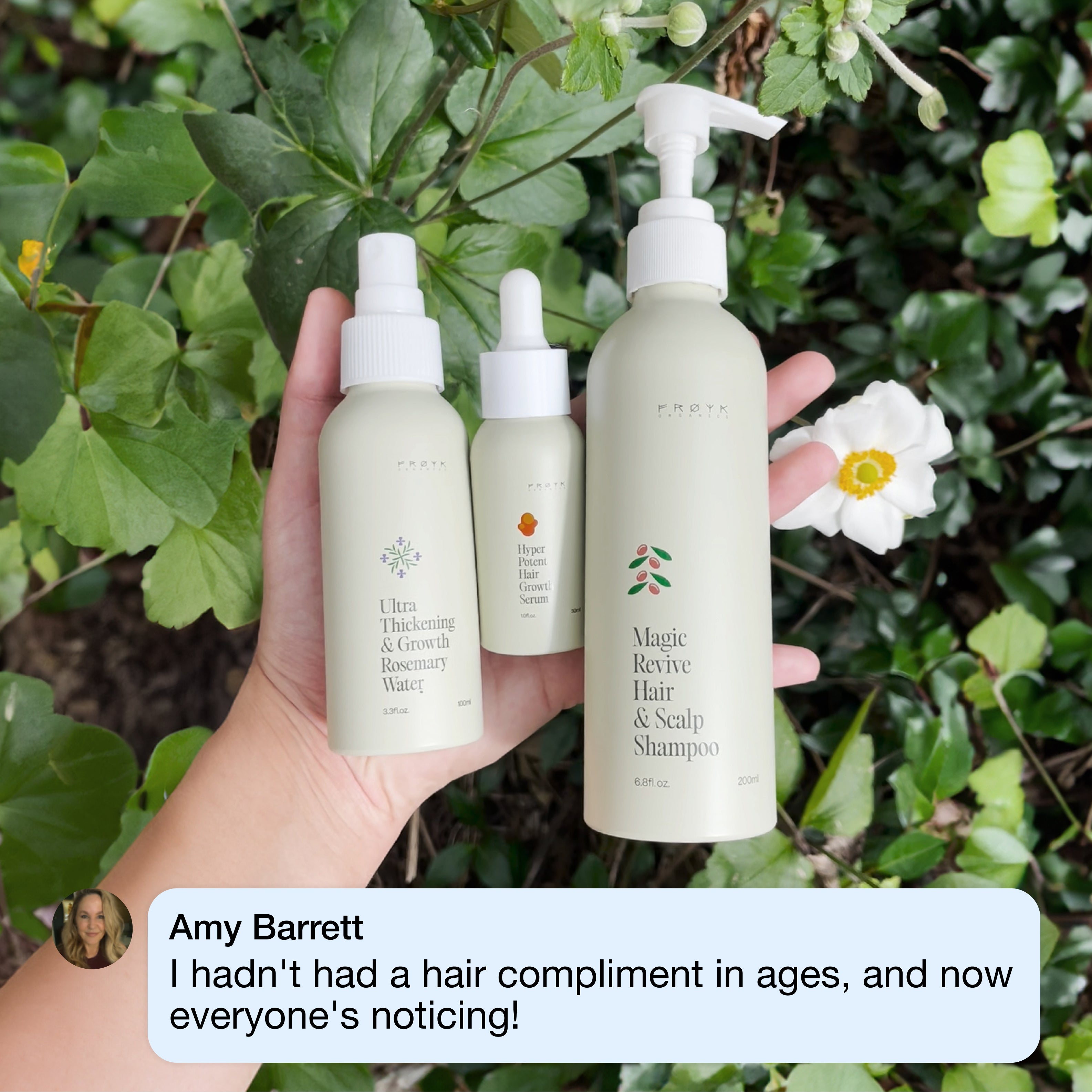
Three waterless botanical steps in one set: shampoo, rosemary water, and hair thickening serum, made in Norway from wild Arctic botanicals, backed by a 60-day money-back guarantee.
Shop the System TodayFrequently Asked Questions
What helps hair growth in women over 40?+
Can women’s thinning hair grow back?+
What stimulates hair growth in women naturally?+
What to put on the scalp for thinning hair?+
Can I regrow hair without minoxidil?+
What is the best natural hair routine for growth?+


