

 Account


You're standing in front of a shelf with a serum, a cream and a balm, and all three promise softer skin. Meanwhile, your face feels tighter by mid-afternoon than it did five years ago.
The main difference between a face balm, serum and cream is the base: serums are thin and concentrated, creams blend water and oil, and balms are waterless blends of oils and waxes that hold moisture in. For skin that feels tighter by mid-afternoon than it did five years ago, that difference decides which one helps.
A natural, oil based approach can do a lot for skin that's drying out with age, because botanical oils and waxes help skin hold on to its water. Here's how each format works, who it suits, and how to pick the one that fits you.
Key Takeaways
- A serum delivers concentrated ingredients in a few drops, but it's too thin to seal moisture in.
- A face cream mixes water and oil, which makes it a comfortable middle ground for normal and combination skin.
- A face balm is a waterless mix of oils and waxes that slows moisture loss, a strong fit for dry or tight mature skin.
- Your skin type and how many steps you want matter more than your age alone.
- The first ingredient on the label tells you which format you're really buying.
The Main Difference Between A Face Balm, Serum And Cream
A serum adds ingredients, a cream adds a mix of water and oil, and a balm seals moisture in, so the right pick depends on what your skin is missing. This matters more after 45, when skin often runs drier and loses water faster.
Skin changes are one of the most common complaints around menopause. A 2022 dermatology review also suggests that lower estrogen may play a part in skin losing more water.
Here's who each format suits:
- A serum, if you want a light, targeted extra.
- A cream, if your skin is normal or combination and you like a soft finish.
- A balm, if your skin feels dry or tight and you'd rather keep your routine to a few steps.
Everyone's skin is different, so there's no single best choice for every woman. If natural ingredients you can read and a short skincare routine matter most to you, a balm could be your fit.
At Frøya Organics, that's the idea behind our approach to waterless skincare for mature skin. We're a Norwegian brand, and our face balms pair wild Arctic botanicals with organic beeswax.
Balm vs. Serum vs. Cream Side By Side
 The biggest difference side by side is texture, along with how well each format holds moisture in. Brands make endless formulas, but the form a product takes tells you a lot about what it can do. Here's the short answer to balm vs serum vs cream:
| Serum | Cream | Balm | |
|---|---|---|---|
| Base | Water based or oil based, sometimes a gel | Water and oil held together by emulsifiers | Oils and waxes, with no water |
| Texture | Thin and quick to sink in | Soft, thicker than a lotion | Rich and solid, softens with warmth |
| Main job | Delivers concentrated ingredients | Hydrates and softens | Seals moisture in |
| Often suits | Oily, combination or normal skin | Normal to combination skin | Normal to dry and very dry skin |
Of the three, a balm feels the richest, so a little goes further than you'd expect. A small amount on the tip of your finger covers your whole face and leaves a comfortable finish. If wrinkles are your main reason for shopping, our guide to choosing an anti-wrinkle balm after 45 compares balms and creams in more detail.
What A Face Serum Does Well
A face serum delivers a concentrated dose of active ingredients in just a few drops. Serums use thin formulas made to penetrate deep and absorb fast, which makes them popular as a first step in skincare routines.
Most serums fall into one of two groups:
- Water based serums, which feel light and suit oily and combination skin.
- Oil serums, which carry oil-soluble ingredients and feel a little richer.
The trade-off is that a serum is too thin to seal moisture in on its own. That's why serums usually go on as the first layer, with a moisturizer on top.
Where A Vitamin C Serum Fits In
A vitamin C serum is a common pick if brightness and the look of past sun damage, like dark spots, top your list. It's one of the best-known active ingredients in skincare, and many women use it for more radiant skin.
Strong actives can be a lot for drier, aging skin, though. Vitamin C and retinol, the go-to ingredient for wrinkles, can both cause irritation when skin is already tight or flaky. If retinol has been hard on your skin, a natural retinol alternative may be easier to stick with.
Our balms take a different route. Vitamin E (listed as tocopherol) is a well-known antioxidant, and rosehip and pomegranate seed oils bring fatty acids that help keep skin soft. All three are already blended into our night and eye balms, so there's nothing to mix or measure yourself.
Do You Need A Facial Serum And A Moisturizer?
Not always: the moisturizer step is the one dry, mature skin can't skip, while a facial serum is an optional extra. A face serum adds ingredients, but facial moisturizers are what hydrate the surface and help hold that hydration in.
Routines grow fast. Toner, serum, moisturizer: the steps add up, and it gets hard to tell what's actually helping.
If you'd rather keep things simple, a balm can moisturize and seal in one step. In our balms, the botanicals are already part of the formula, so you aren't stacking extra products to get them. For a full morning and night plan, our skincare guide for women over 50 walks through each step.
What A Face Cream Does Well
A face cream blends water and oil with emulsifiers, so it hydrates and softens with a lighter feel than a balm. That formulation makes creams thicker than lotions and serums. Many also add other ingredients like glycerin to draw moisture into the skin.
Creams have a few real strengths:
- They help strengthen the skin barrier.
- They're often less irritating than serums for sensitive skin.
- They suit normal and combination skin that wants comfort without a rich finish.
The catch is that the water in a cream evaporates after you apply it. On very dry skin, the oils left behind do most of the sealing, which is where richer formats come in.
Is A Cream Lotion Enough For Very Dry Skin?
A face cream usually holds up better than a lotion, and for very dry, tight skin, a balm sits at the richest end of the scale. The American Academy of Dermatology says ointments and creams add more moisture to skin and are more effective than lotions. It also suggests applying moisturizer while your skin is still damp.
Lotions are water based like creams, but they hold even more water, so they feel light and can fade fast on dry skin. A balm works more like an ointment, with oils and waxes that protect the skin from moisture loss. That's why balms are often the best fit for extremely dry skin, the kind that feels tight right after washing.
Why Natural Oil Based Formulas Suit Mature Skin

Oil based formulas suit mature skin because their oils and waxes form a thin layer that slows water loss. Mature skin tends to run drier, so that layer does a lot of the work.
A 2017 review of moisturizers describes occlusives as mostly oil based ingredients that form a water-repelling barrier over the skin and block water loss. Face oils are nourishing, but they seal in less moisture than a balm's wax layer. That seal helps reduce moisture loss in harsh weather and keeps skin comfortable overnight.
Your skin is your largest organ, and it loses water all day long. Plant oils bring fatty acids that help it stay soft, which is why many balms blend them with waxes and sometimes butters.
We formulated our day, night and eye balms with safflower seed oil first, then beeswax, then a mix of botanical oils. We explain why we chose that wax in our post on beeswax benefits for skin. They're the heart of our full botanical skincare routine.
A balm doesn't add water, because it's built to protect what's already there. So rinse your face with water first, then apply a thin layer while your skin is still damp.
Which Format Suits Your Skin Type?
The easiest way to choose is to match the format to how your skin feels by midday. If it looks shiny, go lighter, and if it feels tight, go richer.
Here's a quick guide by skin type and common skin issues:
- Oily or combination skin: a water based serum, a light cream or a thin layer of balm.
- Normal skin: any of the three, depending on the finish you like.
- Dry skin: a cream or a balm, since both hold moisture better than a lotion.
- Very dry, tight or flaky skin: a balm, or a richer balm for very dry skin that works on face and body.
- Sensitive skin: fewer ingredients and fewer steps, with new products added in small batches and patch tested first.
If your skin is sensitive, our guide to organic skincare for sensitive skin covers what to look for. Our balms work for almost all skin types: oily, dry, normal, combination and sensitive.
Still not sure which way to go? Our quiz helps you find your skin routine based on your answers.
Can You Use A Natural Face Balm On Oily Skin?
Yes, as long as you go light. You still need to moisturize oily skin, because it can lack water even when it looks shiny. A thin layer of balm helps hold that water in.
A balm is the richest of the three formats, so on oily or oily combination skin, use less than you would on dry skin. Spread a thin layer, and patch test for a few days to see how your skin responds.
If your skin is acne prone, the Magic Revive & Glow Day Balm is the day balm in our Complete System for Acne-Prone Skin. Adult acne doesn't always end in your 30s, so we grouped our balms for breakout-prone skin in one place.
What The Label On Natural Skincare Products Tells You
The ingredient list on the back tells you more than any claim on the front. Ingredient lists on skincare products usually run from most to least, so the first few tell you what the formula is mostly made of.
The first ingredient tells you the format.
Water first usually means a cream, lotion or serum, while an oil or wax first usually means a balm.
A product's appearance helps too: a balm looks solid in the jar, a cream looks soft and a serum usually comes in a dropper or pump. If organic ingredients or botanical oils matter to you, the ingredient list is where you can check for them by name. On every Frøya face balm, safflower seed oil comes first, so the formula is built on oil from the very first line.
You can compare the full ingredient lists across our natural skincare for mature skin collection.
Is A Natural Frøya Balm Routine Right For You?

A Frøya Organics balm routine could be a good fit if you want botanical ingredients you can read, fewer steps and lasting comfort for dry or tight skin. If a few of these sound like you, a balm routine may be the better match:
- You're tired of keeping up with a long routine.
- Your skin feels tight by the afternoon, even after moisturizer.
- You want natural ingredients you can read and recognize.
- You'd rather not mix, measure or layer products yourself.
Our Complete System for Mature Women's Skin keeps everything to four products. You cleanse with our waterless face scrub, made from rice, apricot seed and rose petal powders. Then the Anti-Age & Insane Glow Day Balm goes on in the morning, the Wrinkle Smoothing Night Balm goes on before bed, and the Magic Revive Eye Balm is made for the delicate eye area.
The system is backed by our 60-day money-back guarantee, so you can try the full routine and see how your skin feels.
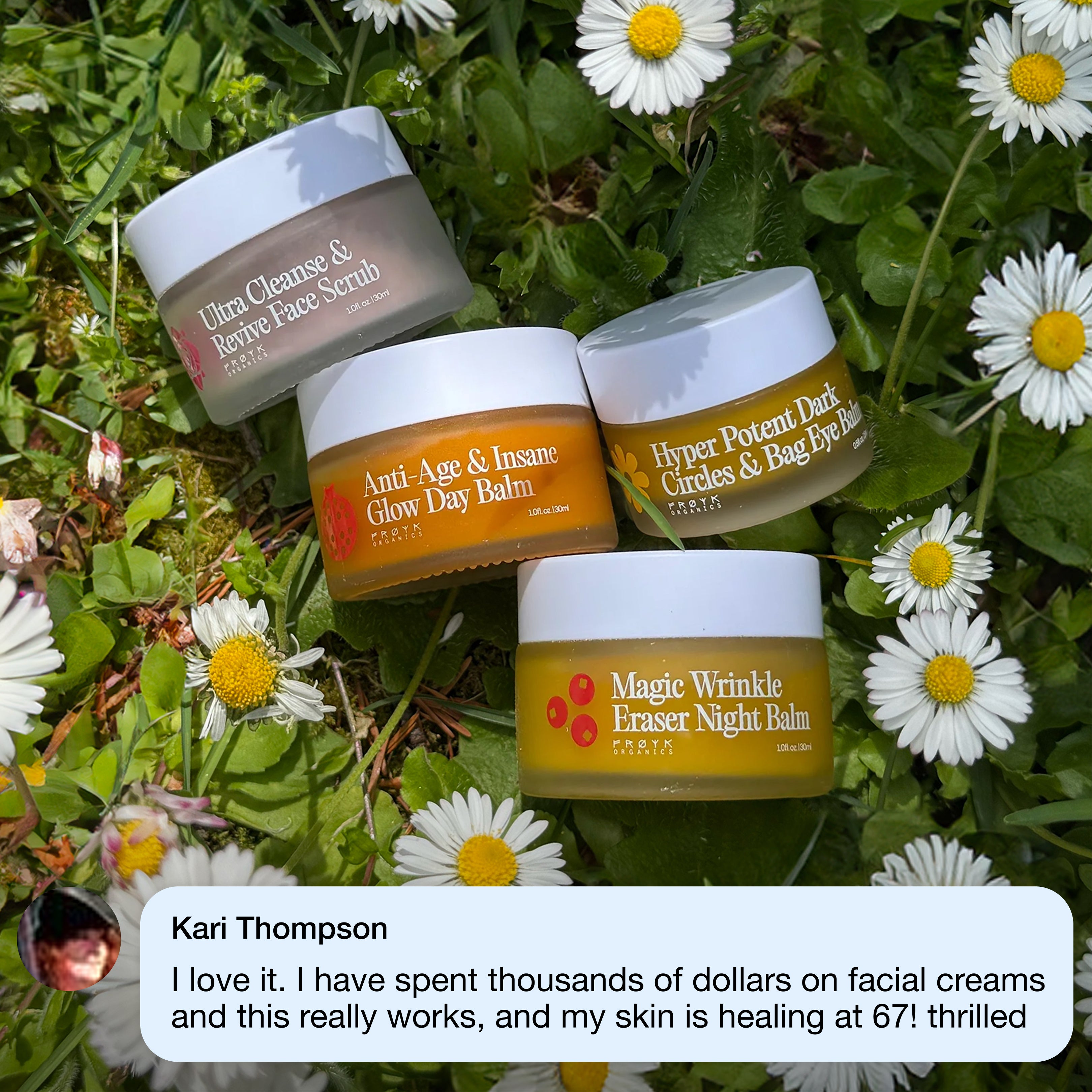
Day balm, night balm, eye balm and scrub in one 40-day set, waterless and built on botanical oils and beeswax, backed by a 60-day money-back guarantee.
Shop the System Today
Disclaimer: This article is for general information and isn't medical advice. Patch test any new skincare product on a small area first, and talk to your doctor or dermatologist if you have a skin condition or a reaction.
Frequently Asked Questions
What is a face balm?+
Should you put serum or cream first?+
Which skin types can use Frøya balms?+
What age group are Frøya balms made for?+
How much face balm should you use?+
Do you need a different balm for day and night?+


