


 Account


For over 2,000 years, people trusted one leafy plant to help mend sprains, bruises, and aching joints. They called it "knitbone," because they believed it helped the body grow back together. That plant is comfrey, and modern research now backs much of what those old healers claimed.
The main comfrey root benefits are easing joint and muscle pain, calming swelling, and supporting skin and tissue repair when applied to the skin. It has held up in real clinical trials for sprains, strains, and arthritic knees. The catch is that it works on the skin only, never taken by mouth.
Here is what makes comfrey root worth a second look. It is one of the few traditional plant remedies with actual science behind it, yet most people have never heard of it. In this guide, you will learn what comfrey root does, what the studies found, how to use it safely, and the one detail about it that matters more than any other.
Key takeaways
- Comfrey root has been used for over 2,000 years for sprains, strains, bruises, and joint pain.
- Its active compounds, allantoin and rosmarinic acid, calm swelling and support tissue repair.
- Clinical trials show comfrey root cream eased ankle sprain and knee pain, in some cases as well as a standard gel.
- Comfrey is for external use only. Taken by mouth, it can seriously harm your liver.
- Always apply it to clean, unbroken skin, and skip it during pregnancy or breastfeeding.
What Comfrey Root Is, and Why It Was Called Knitbone
Comfrey is a flowering plant known botanically as Symphytum officinale, part of the borage family. It grows tall with rough leaves and small purple or white flowers, above a thick, dark root. Comfrey leaves and roots both hold the compounds behind its long use in traditional medicine.
The old name says a lot. "Knitbone" and "boneset" come from the belief that comfrey helped bone fractures and broken bones grow back together. Roman writer Pliny the Elder mentioned comfrey around 79 AD, and Dioscorides noted it for sealing fresh wounds in his ancient texts.
Its reputation grew from there. In the Middle Ages, comfrey was used for rheumatism and gout, and herbalist Nicholas Culpeper recommended comfrey for a range of ailments. Related plants like Russian comfrey, prickly comfrey, and wild comfrey belong to the same Symphytum genus.
The Main Comfrey Root Benefits, Backed by Research

Comfrey root benefits center on three things: easing pain, calming inflammation, and supporting tissue repair. Each one traces back to the natural compounds the root contains. Here is what the research actually supports.
Eases Joint and Muscle Pain
Comfrey root is best known for soothing sore joints and tired muscles. Studies tested topical comfrey preparations on people with sprains, strains, and arthritis, with positive results.
For ankle sprains, a randomized trial comparing comfrey root ointment to a diclofenac gel found the comfrey extract worked at least as well as the standard gel for easing pain and swelling. For knee osteoarthritis, a separate double-blind, placebo-controlled trial reported reduced pain and better mobility versus a placebo.
Calms Inflammation and Swelling
A big part of joint and muscle pain comes from inflammation deep in the tissue. Comfrey root contains rosmarinic acid, plus supporting compounds like chlorogenic acid and caffeic acid, which act as antioxidants.
Lab research shows comfrey root extract can quiet the signals that drive inflammation, calming swelling at its source. A 2019 study in Frontiers in Pharmacology found the extract dampens a master inflammation switch called NF-κB, which controls many pain-related genes.
Supports Skin and Tissue Repair
Comfrey root is rich in allantoin, the compound behind its wound healing effects. Allantoin encourages cell proliferation and helps skin and connective tissue rebuild, which also supports callus formation during recovery.
It helps skin hold moisture too, keeping the area supple while it mends. This is why comfrey earned its reputation for supporting healthy skin and soothing minor bruises.
How Comfrey Root Works at the Site of Pain
Comfrey root works through two standout compounds: allantoin and rosmarinic acid. Allantoin supports new cell growth and tissue repair. Rosmarinic acid calms the inflammation behind the pain.
Together they explain why comfrey offers both quick comfort and slower, steadier improvement. One calms the swelling, the other helps the tissue rebuild.
There is a reason topical preparations work best on the skin. Rubbing comfrey into a sore spot lets the compounds act right where it hurts, close to the source. That local action is how topical joint pain relief makes comfrey work, and it is the form most research supports.
Good to know
Comfrey does not just mask pain like a numbing agent. Its compounds work with your skin and tissue to calm swelling and support repair, which is why relief tends to build over a few days rather than fade the moment it wears off.
Comfrey Root vs. Other Pain Actives
Comfrey is not the only ingredient people rub on for aches. Menthol and capsaicin creams are common too, working by creating hot or cold sensations that distract from pain.
The trade-off is comfort. Capsaicin often causes a burning feeling, and some people find menthol too intense, which can lead to skin irritation on sensitive skin. Neither does much for the tissue underneath; they mostly change how the pain feels.
This is where a botanical blend has an edge. The healing properties comfrey contains work with your skin, not against it, and a well-made balm pairs it with other soothing plants instead of relying on heat. You can see how these botanicals come together in Frøya's balms for muscle joint pain.
A Gentle Arctic Take: The Joint and Muscle Healing Balm

Everything above points to one form of comfrey: something you rub into the sore spot, on clean skin. The Joint and Muscle Healing Balm is Frøya's take on that old idea, carrying comfrey and arnica in a base of wild Arctic botanicals.
Arnica leads the blend, with comfrey and its soothing allantoin close behind. Cooling eucalyptus and a warming touch of camphor and peppermint round it out. It is waterless and free of fillers, so a small amount covers a lot and one jar lasts.
You massage it into a stiff knee or an aching shoulder, feel a light tingle, and let it settle in where it hurts. It soothes the worn-out ache instead of numbing it. Frøya reports that 82% of customers felt less pain day to day, a brand-reported figure rather than a clinical result.
How to Use Topical Comfrey Safely
Comfrey is safe for most people when used correctly, and correct use comes down to a few simple rules. The most important one: comfrey is for external use only, never to swallow.
Follow these guidelines to stay on the safe side:
- Apply to clean, unbroken skin only. Never use comfrey on open wounds, cuts, or damaged skin.
- Do a patch test first. Dab a little on your inner arm and wait a day to check for irritation.
- Skip it if you are pregnant or breastfeeding, and keep it away from children.
- Follow the product label, since strengths and directions vary between balms.
Stick to these and applying comfrey is a gentle addition to your routine. Next, let's clear up the safety point that trips people up most.
Is Comfrey Root Safe? Understanding Pyrrolizidine Alkaloids
Comfrey's main safety concern is a group of natural compounds called pyrrolizidine alkaloids, or PAs. Taken by mouth, PAs can build up and cause liver damage, which is why oral comfrey is restricted in many countries.
The route of use changes everything. Swallowed, comfrey sends PAs through your body to your liver in harmful amounts, a real risk for anyone with existing health problems. Applied to intact skin, far less gets absorbed, which is why topical use is the safer path.
The U.S. Food and Drug Administration advised against oral comfrey in supplements back in 2001, and many modern balms now use extracts processed to lower their PA content.
Keep it simple
Topical comfrey on clean, unbroken skin is the tested, accepted way to use it. Oral comfrey, including teas and capsules, is the version linked to liver harm.
See What the Joint and Muscle Healing Balm Can Do

If your joints and muscles have been asking for a break, this is where comfrey's long story meets your daily routine. The Joint and Muscle Healing Balm carries that same tradition into something you reach for when the aches set in.
It offers what comfrey always has: steady, natural comfort rubbed right into the sore spot. You can see how others have felt over time in the real Frøya customer reviews.
Your body does a lot for you every day. Giving it a little Arctic-botanical care at the end of a long one is a simple way to return the favor.
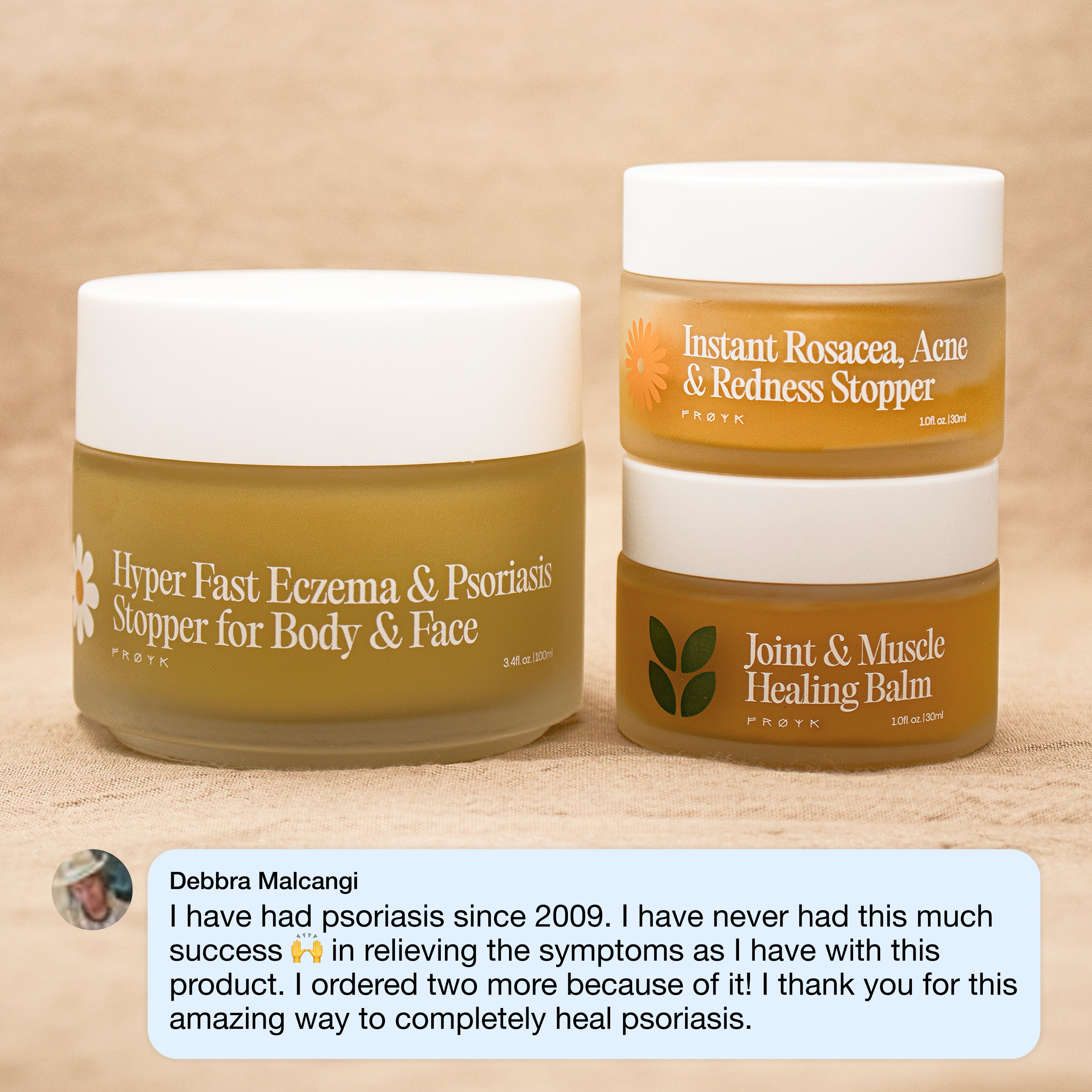
Three waterless balms for eczema, psoriasis, rosacea, and joint pain. Wild Arctic botanicals and organic beeswax calm, protect, and repair skin on face and body, backed by a 60-day money-back guarantee.
Shop the System - $109Frequently Asked Questions
How was comfrey used in traditional medicine?+
Which is better, comfrey leaf or root?+
Can I drink comfrey root tea?+
What not to mix with comfrey?+
Does comfrey heal nerve damage?+


