

 Account



The moisturizer that worked beautifully at 35 stopped working somewhere around 48. You didn't change your routine. Your skin changed its chemistry.
No one explained why. That unexplained shift sent you searching for serums, creams, and ingredients that never quite delivered.
Here's what happened: an enzyme in your liver called delta-6-desaturase started slowing down. That enzyme converts dietary linoleic acid into gamma-linolenic acid (GLA), an essential fatty acid your skin cannot make on its own. Without enough GLA, your skin barrier thins, dries out, and becomes reactive.
Borage oil is derived from the seeds of the Borago officinalis plant, also known as starflower. It contains 18 to 26% GLA, the highest concentration of any plant source on earth. For comparison, evening primrose oil delivers only 7 to 10%.
That makes borage oil for skin a direct answer to the problem your body developed after 45. Not a trend ingredient, not a marketing angle, but a biochemical match for what your body stopped producing efficiently.
These are six borage oil benefits for skin that go beyond what the product label tells you, and why they matter specifically after 45.
1. It Replaces a Fatty Acid Your Body Stops Making
Your skin has never been able to manufacture GLA. Not at 25, not at 55. It has always depended on your liver to convert dietary linoleic acid into GLA through delta-6-desaturase, and after 45 that enzyme slows down considerably.
Aging is one of the primary factors known to attenuate delta-6-desaturase activity, but it isn't the only one. Diabetes, chronic stress, high alcohol intake, and poor diet all impair the same enzyme, and those conditions become more common after 45. The result: your skin becomes GLA-starved even when your food intake is reasonable.
This is why surface-level moisturizers stop being enough, and why skin after 45 needs deep hydration for mature skin, not just a layer on the surface. They add water and occlusives, but they don't replace the structural omega-6 fatty acid your barrier actually needs. That missing fatty acid is a major cause of the dryness, flaking, and reactivity you started noticing in your late 40s.
If your skin has become more reactive over time, Frøya Organics barrier repair balms can address the lipid gap directly.
As dermatologist Dr. Cynthia Bailey puts it: "The liver enzyme which creates GLA from linoleic acid is slow and highly vulnerable to conditions such as aging." When that enzyme falters, you need to supply GLA directly. Topical application of borage oil is recommended to replenish low levels of GLA in dry skin.
How Borage Oil Compares to Other GLA Sources
Borage seed oil delivers two to three times the concentration found in evening primrose oil, and dramatically more than black currant or hemp seed oil. Drop for drop, nothing else comes close for skin health.
Once you understand the GLA mechanism, the rest of borage oil's benefits start to make sense. They all trace back to this one fatty acid and its effect on your overall health.
2. It Rebuilt the Skin Barrier in People Over 65
In a clinical study published in Archives of Gerontology and Geriatrics, 29 healthy elderly people with a mean age of 68.6 took borage oil daily for two months. The dose delivered 360 to 720 mg of GLA per day, the same fatty acid your skin runs short on after 45.
The main measure was transepidermal water loss, or TEWL: the amount of water escaping through your skin into the air. A healthy barrier holds water in. A damaged one lets it leak out, so your skin dries and tightens.
A 10.8% drop in water loss means the barrier sealed back up and started holding moisture the way younger skin does. The other results followed the same pattern. Every person who reported itch at the start reported none by the end.
Dry skin complaints fell by more than half, and GLA levels in their cell membranes climbed 70%, refilling the fatty acid their skin had been missing.
Brosche and Platt tied this to the enzyme slowdown from section one. Your body stops making enough GLA after 45, and borage oil delivers it straight, no conversion needed. That refill was the mechanism behind the stronger barrier.
For the full picture of how your skin's lipid layer breaks down and how to restore it, this guide on how to repair a damaged skin barrier covers the broader approach.
A Second Study Confirmed It in Healthy Women
De Spirt and colleagues (2009) gave 45 healthy women approximately 2 grams of borage oil daily for 12 weeks. Transepidermal water loss dropped by about 10%, matching the barrier improvement seen in the elderly study. Skin roughness and scaling both decreased significantly, and these gains did not appear in the placebo group.
The study was randomized, placebo-controlled, and published in the British Journal of Nutrition.
Two independent studies, both showing measurable positive effects on skin barrier function in adult women and elderly participants. Measured outcomes, published in peer-reviewed journals, in real people whose skin looks a lot more like yours than the 22-year-old in most skincare ads.
It is worth noting that borage oil should be considered an adjunct rather than a replacement for eczema medications. If you have been diagnosed with atopic dermatitis or another chronic skin disorder, GLA supplementation works alongside your current care, not instead of it. Talk with your healthcare provider before making changes to an existing treatment plan.
3. It Calms Inflammation Without Triggering More of It
If your skin developed a new kind of sensitivity in your late 40s, redness that wasn't there before, reactions to products you've used for years, a flush that appears for no obvious reason, you're not imagining things. Declining GLA production feeds a cycle of low-grade chronic inflammation that makes irritated skin progressively more reactive.
Most anti-inflammatory skincare products suppress symptoms at the surface. Borage oil works differently, and deeper, thanks to its anti-inflammatory properties.
How the GLA Anti-Inflammatory Pathway Works
GLA from borage oil converts to DGLA (dihomo-gamma-linolenic acid) in your body. DGLA then converts to prostaglandin E1 (PGE1) and 15-HETrE, both potent anti-inflammatory compounds. The critical distinction is that GLA supplementation selectively elevates PGE1 without raising pro-inflammatory PGE2.
Fan and Chapkin confirmed this pathway in a 1998 study published in the Journal of Nutrition. This selectivity matters. Evening primrose oil may increase prostaglandins more broadly, potentially aggravating inflammation in some women.
What This Means for Acne and Rosacea
In a double-blind study of 31 rosacea patients, adding 320 mg per day of GLA to standard treatment produced a significantly higher success rate than standard treatment alone. GLA also suppresses leukotriene B4, a pro-inflammatory compound linked to redness and irritation.
Borage oil also has antibacterial properties that can help manage acne breakouts. It helps balance natural sebum production without clogging pores, which makes it relevant for skin issues beyond rosacea alone.
For redness and breakouts that flare after 35, a targeted balm like the Balm for Acne-Prone Skin delivers GLA alongside calming botanicals like calendula and lavender.
Your skin doesn't need another calming mist. It needs the raw material to produce its own anti-inflammatory compounds.
4. It Supports Collagen and Fights UV Damage From the Inside
Most people think of borage oil as a moisturizer. A 2026 review published in Biological Diversity tells a fuller story.
Reviewing both lab and human studies, researchers found borage oil's skin benefits come from three compounds working together: GLA, rosmarinic acid, and kaempferol. GLA repairs the barrier. Rosmarinic acid promotes collagen synthesis and shields against UVB damage, while kaempferol blocks MMP-1 and elastase, the two enzymes that break down collagen and elastin as you age.
That combination matters after 45. Your collagen has already started declining, and years of sun exposure speed the loss. One ingredient that protects existing collagen, helps build new collagen, and defends against UV does far more than a moisturizer adding surface water.
Borage oil also supports skin regeneration. GLA stimulates cell turnover, helping new skin form faster and more evenly, which is why the same oil is studied for wound healing.
This is what separates borage from simpler carrier oils like plain jojoba or argan. Its GLA sits at 18 to 26%, backed by barrier-supporting linoleic acid and antioxidant vitamin E. Those compounds work together to support a more even skin tone and glowing skin over time.
5. It Outperforms Evening Primrose Oil for Topical Use
If you've been using evening primrose oil on your face, you're getting less than half the GLA you could be.
The numbers are straightforward. Borage oil contains 18 to 26% GLA. Evening primrose oil contains 7 to 10%, so borage gives you two to three times more GLA per drop.
Evening primrose had better branding. Borage has better numbers.
To be honest about the full picture: when taken orally as a supplement, evening primrose oil's GLA sits at the sn-3 position on its molecular structure, while borage oil's GLA sits at sn-2. This may mean slightly better absorption for evening primrose in supplement form. Borage's higher concentration often compensates, and for topical application the sn-position distinction matters less because GLA is delivered directly to skin.
Other Differences Worth Knowing
Evening primrose oil may be estrogenic, which is a concern for women with hormone-sensitive conditions. Borage is not estrogenic. Evening primrose can increase prostaglandins generally, potentially aggravating inflammation, while borage selectively elevates the anti-inflammatory PGE1.
When applied topically, borage oil is considered a dry oil and is easily absorbed into the skin. That lightweight texture means it layers well without leaving a greasy residue, and a few drops go further than you'd expect.
You can use both oils if you want to. Some women apply borage topically for direct barrier support and take evening primrose orally for broader hormonal benefits. If you're choosing one oil for your face, borage delivers more of what matters per drop, and that's concentration data rather than opinion.
6. How to Use It Without Wasting Your Money
Borage oil is potent, but it's also fragile. Buy it wrong or store it wrong, and you'll apply rancid, inflammatory oil to your face thinking you're doing something good.
What to Look for When Buying
Five markers separate a stable, usable borage oil from one that will oxidize before you finish it:
- Cold-pressed, not solvent-extracted
- Organic certification from a recognized body
- Dark amber glass bottle, not clear plastic
- A labeled GLA percentage on the packaging
- A freshness date or PAO (period after opening) symbol
Patch testing is recommended before broad application. Apply a small amount to the inside of your wrist, wait 24 hours, and check for redness or irritation before using it on your face. This step matters for all skin types, but especially if you already have reactive or sensitized skin.
How to Apply It
Application is straightforward once you have a fresh, well-sourced oil:
- Mix three to four drops into your facial moisturizer, or apply after water-based serums and before your final cream
- You can also mix borage oil with jojoba oil for a simple facial blend
- Apply at night when possible, because the longer contact time allows better lipid integration into your skin barrier
- Gently massage it in and wait until it is fully absorbed before layering anything on top
If you have sensitive skin, don't apply it neat. Dr. Bailey specifically recommends blending borage oil with other oils for sensitive skin. Combining it with other botanical emollients in a balm can buffer the concentration while still delivering GLA where it counts.
Consistency matters more than quantity. The clinical studies that showed real barrier improvement ran eight to 12 weeks of daily use. This is not an overnight fix. It's a slow, cumulative rebuild of your skin's lipid structure.
Storage (Non-Negotiable)
Keep it in a cool, dark place away from direct sunlight. Not the bathroom shelf. Use within six months of opening, and refrigerate if you're using it slowly.
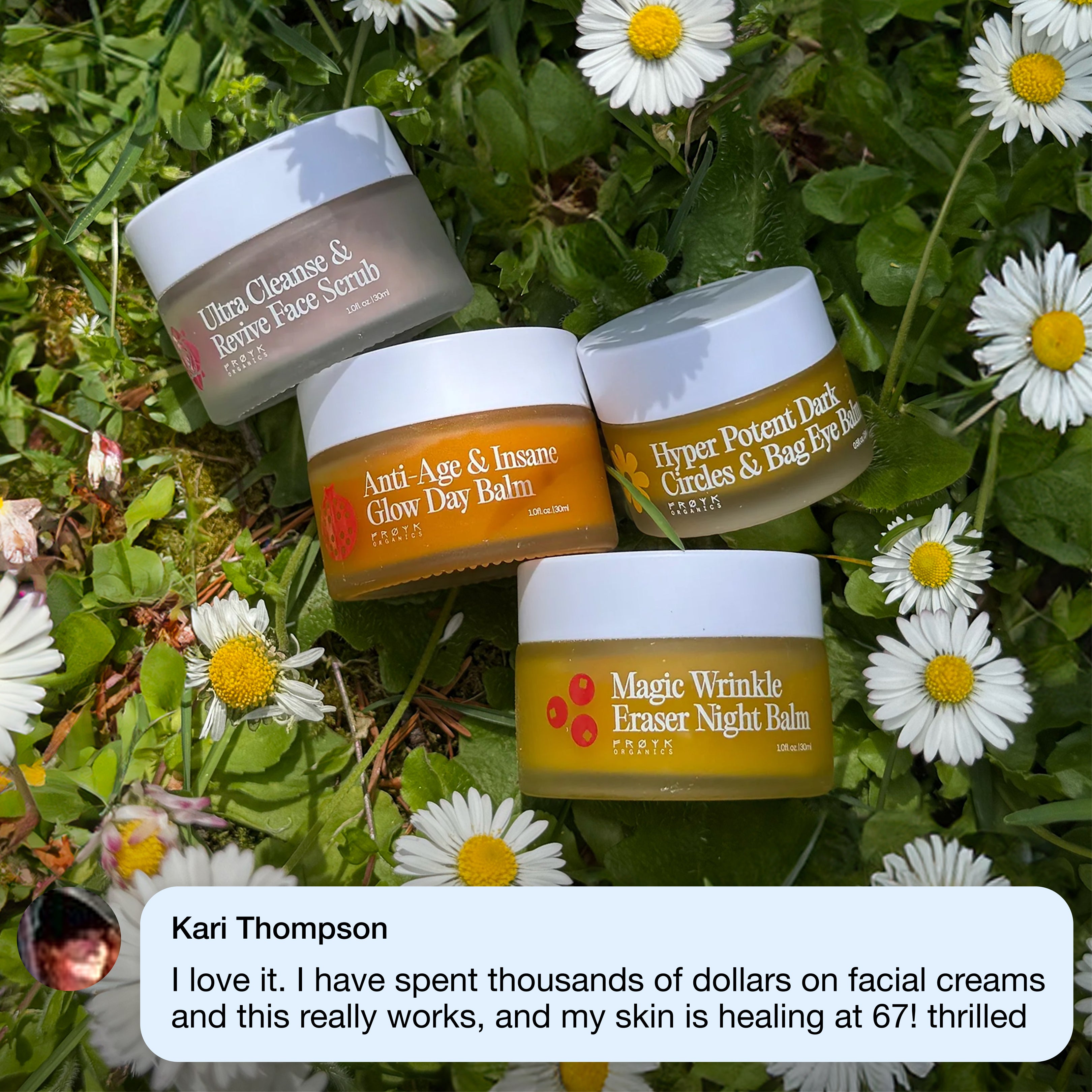
Wild Arctic botanicals sealed under organic beeswax. Zero water, zero synthetic fragrance. Four balms that seal moisture into mature skin from morning to night, backed by a 60-day money-back guarantee.
Shop the System - $119Frequently Asked Questions
Can I use borage oil on my face?+
Which is better, evening primrose oil or borage oil?+
Does borage oil help with wrinkles?+
What ingredients pair well with borage oil?+
Can borage oil help with eczema after 45?+


