

 Cuenta


El romero tiene una larga historia en la medicina tradicional, pero la razón por la que se apoderó de tus redes es un estudio de 2015. Cien hombres, seis meses, y un resultado que casi nadie vio venir.
Aquí está la respuesta corta. El aceite de romero parece apoyar el crecimiento del cabello, y en ese ensayo aleatorizado de 2015 igualó un tratamiento estándar sin receta para la caída del cabello en términos de conteo. Tampoco hizo nada medible en los tres meses, que es la parte que la mayoría de artículos omiten discretamente.
Esa brecha entre el mes tres y el mes seis es donde casi todos se rinden, razón por la cual Frøya Organics crea su agua de hoja de romero para uso diario en lugar de tratamiento ocasional. A continuación aprenderás qué encontró realmente la investigación, cómo usar aceite de romero en tu cuero cabelludo, en qué funciona, y cuánto tiempo dar antes de decidir.
Puntos Clave
- Un ensayo de seis meses encontró que el aceite de romero igualó un tratamiento común para la caída del cabello en términos de conteo.
- La comodidad del cuero cabelludo tiende a llegar primero, y las mujeres que usan la rutina Frøya Organics la reportan dentro de aproximadamente seis semanas
- El nuevo conteo de cabello tarda más tiempo, así que no ver cambios visibles en tres meses es normal en lugar de un signo de que no está funcionando
- El aceite esencial de romero funciona mejor diluido en un aceite portador y masajeado en el cuero cabelludo.
- El ensayo estudió a hombres, así que las mujeres tienen buena razón para interesarse y aún así datos limitados.
¿Por Qué tu Cabello Comienza a Adelgazarse Después de los 45
El adelgazamiento del cabello después de los 45 es común, no inusual. La caída del cabello de patrón femenino afecta aproximadamente a la mitad de las mujeres a los 50 años, y los números aumentan a partir de ahí.
El cambio hormonal es parte de ello. La producción de estrógeno disminuye durante la transición de la menopausia, que puede comenzar hasta diez años antes de tu último período. Tu folículo capilar es sensible al estrógeno, así que responde cuando los niveles cambian.
Aquí está lo que sorprende a la mayoría de las mujeres. En el adelgazamiento de aparición tardía, los niveles de andrógenos también suelen estar bajando, e investigadores aún no pueden explicar completamente la causa. Si has notado otros cambios en la piel durante la menopausia, tu cuero cabelludo está pasando por su propia versión del mismo cambio.
Así que cuando escuches que una planta podría ayudar, vale la pena saber exactamente qué planta es.
Qué es el Aceite de Romero y Por Qué la Forma Importa

El aceite de romero proviene de las hojas de la planta de romero, una hierba de hoja perenne nativa del Mediterráneo. La destilación al vapor extrae el aceite esencial, que es altamente concentrado y nunca se aplica puro.
Verás tres formas vendidas para el cabello, y sus beneficios no son idénticos:
- Aceite esencial de romero. Destilado al vapor, muy potente, siempre diluido en un aceite portador primero.
- Aceite infusionado. Romero remojado en un aceite portador durante semanas, lo suficientemente suave para usar directamente del frasco.
- Agua de romero. Romero fresco remojado en agua, lo suficientemente ligero para nebulizar diariamente en cabello mojado.
La investigación clínica utilizó la forma de aceite esencial. Eso importa cuando comparas productos, porque un spray de agua ligera y un aceite concentrado están haciendo trabajos diferentes.
El romero también aparece en el cuidado facial por razones que no tienen nada que ver con tu cuero cabelludo. Si ese lado te interesa, los beneficios del aceite de romero para la piel merecen una lectura separada.
Lo Que la Investigación sobre Romero para el Crecimiento del Cabello Realmente Muestra
Dos ensayos en humanos cargan con la mayor parte aquí. Uno es famoso, uno es más útil de lo que la gente se da cuenta, y juntos muestran qué hace el romero por tu cabello y tu cuero cabelludo.
El Ensayo de Seis Meses Detrás de Cada Titular
Ese ensayo de 2015 puso el aceite de romero frente a frente con una solución de minoxidil al 2% en 100 hombres con caída del cabello de patrón. Ambos grupos aplicaron su producto en el cuero cabelludo dos veces al día con masaje suave, y regresaron a la clínica cada tres meses.
A los tres meses, ninguno de los grupos había cambiado aún. A los seis meses, ambos grupos mostraron un aumento real en el conteo de cabello, sin diferencia significativa entre ellos.
Hubo una victoria clara para el romero. La picazón del cuero cabelludo aumentó en ambos grupos, y el estudio reporta que fue significativamente más frecuente entre los usuarios de minoxidil, que es una de las razones más comunes por las que la gente deja de usar ese tratamiento.
Qué Romero Hace por un Cuero Cabelludo con Picazón
Aquí es donde el romero se ve más fuerte, y recibe mucha menos atención que la historia del crecimiento. Un ensayo doble ciego de 2024 comparó una loción de extracto de romero contra una loción de ketoconazol al 2% en 42 personas con dermatitis seborreica del cuero cabelludo, aplicada dos veces al día durante dos meses.
La loción medicada aclaró la descamación mejor. El romero alivió la picazón mejor, en los controles del mes uno y el mes dos.
Aquí está la parte que más importa. Ambos grupos reportaron una mejora similar en la calidad de vida día a día, así que la opción a base de plantas se mantuvo firme contra el tratamiento estándar donde contaba para los pacientes.
Eso encaja con lo que sabemos sobre la planta. El romero lleva propiedades antiinflamatorias y propiedades antimicrobianas, una combinación razonable para un cuero cabelludo que se siente irritado en lugar de simplemente adelgazado.
Cómo Funciona Romero en el Cuero Cabelludo, No en los Mechones
El romero hace su trabajo en la raíz, que es la cosa más útil de saber antes de empezar. Ese ensayo de seis meses midió el conteo de cabello, no el brillo o la suavidad, y el cuero cabelludo es donde sucedió el cambio.
Así que piénsalo como cuidado del cuero cabelludo en lugar de un acondicionador. Tus largos tienen sus propias necesidades, y calor más suave además de un buen acondicionador cuidará de eso mientras el romero se ocupa del terreno de donde crece tu cabello.
En cuanto a cómo funciona allí arriba, los investigadores tienen dos teorías. El romero parece relajar los pequeños vasos sanguíneos que alimentan el folículo, y una mejor circulación sanguínea llevaría más oxígeno y nutrientes a la raíz.
La segunda teoría es la piel más tranquila. La actividad antioxidante y antiinflamatoria del romero puede aliviar la irritación de bajo grado que hace que un cuero cabelludo sea menos cómodo, lo que encaja con el resultado de la picazón anterior.
Ambas siguen siendo teorías, aunque se alinean perfectamente con lo que los ensayos encontraron. La Dra. Khetarpal expresa la expectativa simplemente: el aceite de romero puede ayudar, particularmente cuando el adelgazamiento ha comenzado recientemente, así que cuanto antes comiences, mejores serán tus probabilidades.
Cómo Usar Aceite de Romero para el Crecimiento del Cabello
Hacer que el aceite de romero funcione se reduce a tres cosas: en qué lo diluyes, dónde lo pones, y cuánto tiempo lo dejas. Ninguno de ellos es complicado, y ninguno de ellos involucra tus mechones de cabello.
Qué Aceite Portador para Diluir Aceite de Romero
Nunca pongas aceite esencial de romero puro en la piel desnuda. Unas pocas gotas van en un aceite portador primero, lo que disminuye la potencia y ayuda a difundir.
Las opciones comunes se comportan de manera diferente:
- Aceite de jojoba se siente ligero en el cuero cabelludo y se enjuaga fácilmente.
- Aceite de argán se adapta al cabello seco y fortalece el cabello que se siente frágil.
- Aceite de coco es más pesado y mejor para tipos de cabello grueso.
- Aceite de ricino es espeso y pegajoso, y a menudo elegido por su reputación de aumentar el flujo sanguíneo.
- Aceite de oliva es fácil de encontrar pero puede sentirse grasiento en cabello fino.
La jojoba es el punto de partida habitual para el trabajo del cuero cabelludo. Si quieres los detalles, aquí hay más sobre aceite de jojoba para la piel y cómo se comporta.
También verás romero mezclado con otros aceites esenciales. El aceite de menta es un compañero popular, que se dice estimula el cuero cabelludo y promueve el crecimiento del cabello, aunque puede hormiguear fuertemente en la piel sensible. La lavanda a menudo se añade por el aroma y la suavidad.
Una Rutina Completa Construida para Cabello Maduro y Cuero Cabelludo

Frøya Organics hace tres productos capilares, y cada uno cubre un paso diferente en lugar de repetir el mismo trabajo. Juntos, forman la línea de productos de cabello y cuero cabelludo más fuerte.
Agua de Romero Densificante

El Agua de Romero Densificante es un spray ligero para cabello húmedo, tres a cinco pulverizaciones después de la ducha. Su lista de ingredientes es de una línea: agua de hoja de romero.
Esa es la idea completa. Frøya Organics es una marca noruega construida sobre listas botánicas cortas, así que no hay nada que diluir o medir tú misma, y se absorbe sin dejar tu cabello grasiento antes del trabajo.
Un agua se absorbe más rápido que un aceite, lo que es lo que hace que sea realista llegar a ella cada mañana. El uso diario durante seis meses es exactamente lo que la investigación recompensó.
Champú Mágico Revitalizante para Cabello y Cuero Cabelludo

El Champú Mágico Revitalizante para Cabello y Cuero Cabelludo es una limpieza suave que no daña el cuero cabelludo. Agita antes de usarlo, luego lava como de costumbre.
Un cuero cabelludo tranquilo es la base para todo lo demás, que es exactamente adonde apunta la investigación de la dermatitis seborreica.
Sérum Densificante para el Cabello

El Sérum Densificante para el Cabello es el paso dejado puesto, masajeado en el cuero cabelludo mañana y noche. Eso coincide con el ritmo de dos veces al día, enfocado en el cuero cabelludo usado en la investigación, que es la parte que la mayoría de rutinas caseras hacen mal.
Masajéalo correctamente en lugar de deslizarlo sobre la superficie. Una pequeña cantidad es suficiente, y funciona en todos los tipos de cabello. Este es el paso haciendo el trabajo lento mientras la niebla te mantiene consistente día a día.
Por Qué el Agua de Romero Funciona Mejor con la Rutina Completa
El ensayo que comenzó todo esto tenía participantes haciendo una cosa dos veces al día durante seis meses. Una niebla diaria te consigue el hábito, y el sistema completo de cabello y cuero cabelludo maduro da a ese hábito un lugar donde aterrizar.
Cada paso maneja una parte diferente del cuadro:
|
Producto |
Dónde Encaja |
Cuándo lo Usas |
Bueno de Saber |
|
Champú Mágico Revitalizante para Cabello y Cuero Cabelludo |
Paso de limpieza |
Cuando laves el cabello |
Se enjuaga, así que los pasos dejados puestos hacen el trabajo duradero |
|
Agua de Romero Densificante |
Niebla diaria ligera |
En cabello húmedo después de la ducha |
Un único ingrediente, agua de hoja de romero |
|
Sérum Densificante para el Cabello |
Paso dejado puesto en cuero cabelludo |
Masajeado mañana y noche |
Uso de cuero cabelludo dos veces al día, el mismo ritmo que el ensayo probó |
Frøya Organics reporta que las mujeres que usan la rutina completa vieron cabello más lleno y mejor comodidad del cuero cabelludo en seis semanas. Esos son resultados reportados por clientes en lugar de hallazgos clínicos, así que léelos como estímulo en lugar de una promesa.
Con Qué Frecuencia Aplicarlo, y Cuánto Tiempo Dejarlo Puesto
La dermatóloga de Cleveland Clinic, Dra. Shilpi Khetarpal, es clara en que la colocación importa más que la cantidad. Cubrir tus largos no hace nada, así que su guía sobre cómo usar aceite de romero para el cabello comienza trabajándolo en el cuero cabelludo y dejándolo reposar al menos algunas horas. Su sugerencia práctica es aplicar por la noche y lavar el cabello por la mañana.
En frecuencia, es directa. Dos o tres veces a la semana durante seis meses es lo que dice que toma ver mejora significativa, y su consejo es mantenerse consistente y darle tiempo.
Algunas cosas pequeñas hacen la rutina más fácil de mantener:
- Usa un par de gotas a la vez, ya que más producto no significa resultados más rápidos.
- Elige productos suaves sin fragancia añadida, ya que la fragancia puede aumentar el riesgo de irritación.
- Aplica antes de acostarte para que tenga horas para reposar sin interrumpir tu día.
¿Deberías Hacer tu Propio Aceite de Romero?
Puedes, pero es más complicado de lo que parece. El agua de romero casera es romero fresco remojado en agua, y sin conservante puede echarse a perder en días en un baño cálido.
Las mezclas de aceite caseras y máscaras capilares traen un problema diferente. Equivocarse en la dilución es la causa más común de irritación del cuero cabelludo, y una reacción que te hace renunciar te cuesta meses.
Si disfrutas haciendo cosas, mantén lotes pequeños en la nevera y úsalos rápidamente. Si prefieres no pensar en ello, un producto formulado elimina las conjeturas.
Seguridad, Efectos Secundarios, y Quién Debe Evitar el Aceite de Romero
El aceite de romero se adapta a la mayoría de las personas, pero no a todos. No se recomienda durante el embarazo o la lactancia, y algunos productos de romero al 100% llevan advertencias de etiqueta sobre efectos en un feto.
La concentración es lo que generalmente causa problemas. El aceite esencial sin diluir en piel desnuda puede dejarte con enrojecimiento o ardor, que es la razón más común por la que la gente se rinde en la semana dos. Los productos Frøya Organics llegan ya diluidos y equilibrados para uso diario, con sin fragancia sintética, así que no hay conjeturas sobre qué tan fuerte resultó tu mezcla.
Haz una prueba de parche antes de comprometerte. Aplica una pequeña cantidad en un área, espera 24 horas, y verifica si hay enrojecimiento o picazón antes de hacerlo en toda la cabeza.
Antes de empezar: Detente y habla con un médico si notas ardor, enrojecimiento extendiéndose, una erupción, o desprendimiento que empeora. La pérdida repentina o manchada, incluyendo una mancha calva o alopecia areata, necesita un diagnóstico adecuado primero. El adelgazamiento también puede reflejar lo que está sucediendo en tu cuerpo, desde cambios en la tiroides hasta hierro bajo, y ningún aceite corrige ninguno de esos.
La comida importa aquí también. La ingesta de hierro y proteína afectan el folículo, así que un tratamiento tópico natural solo es siempre una parte del cuadro.
Por Qué la Consistencia Vence el Aceite que Eliges
Aquí está la verdad incómoda en ese ensayo. El resultado vino de aplicar algo dos veces al día durante seis meses, no de encontrar una botella mágica.
La mayoría de las personas nunca llegan al mes seis. Mezclan un blend, lo usan durante algunas semanas, no ven nuevo crecimiento en tres meses, y se detienen justo antes de que el estudio diga que algo sucede.
Así que la pregunta real no es qué aceite es mejor. Es qué rutina de cuidado del cabello realmente vas a mantener, que es el pensamiento detrás de la ciencia detrás de plantas árticas con las que trabajamos.
Lo Que Seis Meses con el Set de Crecimiento del Cabello Realmente Se Ve

La parte más difícil de cualquier rutina es esperar en el espejo. La comodidad del cuero cabelludo generalmente aparece primero, luego un día tu cabello se siente más saludable y realmente puedes verlo. Las mujeres que usan la rutina capilar Frøya Organics a menudo notan que su cuero cabelludo se siente más tranquilo semanas antes de que las fotos muestren algo.
Esa es la razón completa por la que el champú, niebla y sérum Frøya Organics se construyen para trabajar juntos. Tres pasos que ya haces de todos modos son mucho más fáciles de mantener que uno que tienes que recordar.
Cada pedido de Frøya Organics viene con una garantía de devolución de dinero de 60 días, así que puedes descubrir cómo responde tu propio cuero cabelludo sin comprometerte a un año de esperanza. Puedes ver qué otras mujeres experimentaron en la galería de resultados de antes y después de clientes.
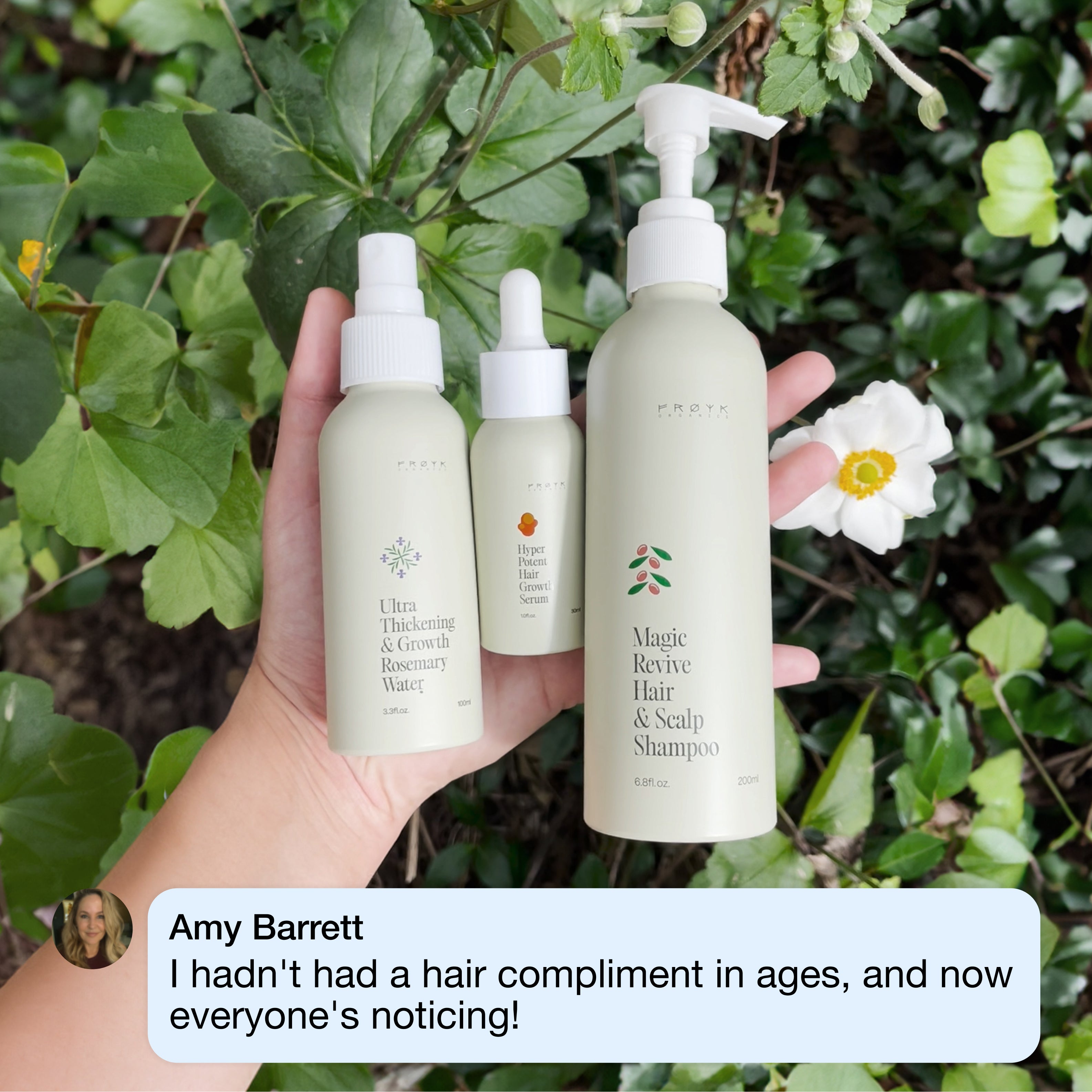
Tres pasos botánicos árticos: limpiar, refrescar y tratar. Romero, menta y aceite de semilla de calabaza apoyan cabello más lleno y fuerte, respaldado por una garantía de devolución de dinero de 60 días.
Compra el Sistema HOYPreguntas Frecuentes
¿Cómo usas romero para el crecimiento del cabello?+
¿Qué tan rápido hará crecer tu cabello el romero?+
¿Puedo rociar agua de romero en mi cabello todos los días?+
¿Cuál es el trío principal para el recrecimiento del cabello?+


