

 Cuenta


Durante años creí que el antienvejecimiento se reducía a lo que te aplicas en la piel. El sérum correcto. La hidratante perfecta. Quizás un retinol si me sentía ambiciosa. Y aunque el cuidado tópico de la piel es absolutamente importante, el verdadero cambio para mi piel no vino de una botella. Vino de mi cocina.
Cuando empecé a prestar atención a lo que comía — no por bajar de peso, no por hacer dieta, sino específicamente para mi piel y mis células — todo cambió. Se fue la opacidad. Bajó la hinchazón. Mi piel se veía menos cansada, incluso en los días en que realmente estaba cansada. No fue de la noche a la mañana, pero después de unos meses, la diferencia era evidente.
Por Qué el Antienvejecimiento Comienza Con lo Que Comes
Aquí está lo que la mayoría de la gente no entiende: tu piel es un reflejo de lo que está pasando dentro de tu cuerpo. La inflamación aparece como enrojecimiento, hinchazón y líneas prematuras. El estrés oxidativo acelera el envejecimiento celular. La mala salud intestinal opaca tu tez. El desequilibrio hormonal causa brotes, sequedad y esa sensación general de desajuste que ningún corrector puede ocultar.
La comida es la forma más directa de influir en todos estos sistemas a la vez. Cada comida está alimentando la inflamación o combatiéndola. Cada bocado está apoyando tu producción de colágeno o silenciosamente saboteándola. Eso no es alarmismo — es solo biología. Y una vez que lo entiendes, el supermercado te parece muy diferente.

La Conexión del Colágeno — Y Por Qué las Cremas No Son Suficientes
El colágeno es la proteína que mantiene tu piel firme, tersa y elástica. Después de los 25 años aproximadamente, tu cuerpo empieza a producir menos cada año. Por eso comienzan a aparecer líneas finas, por eso la piel pierde su elasticidad, por eso las cosas no vuelven como antes.
La mayoría de la gente intenta reemplazar el colágeno desde afuera. Cremas de colágeno, suplementos de colágeno, todo infusionado con colágeno. Pero aquí está lo que cambió mi perspectiva: tu cuerpo produce colágeno. Solo necesita los componentes adecuados. La vitamina C es absolutamente esencial para la síntesis de colágeno, junto con zinc, cobre, prolina y glicina. Puedes obtener casi todos ellos de la comida. Pimentones, cítricos, vegetales de hoja verde, caldo de huesos, huevos, frutos secos, semillas. Estos no son superalimentos exóticos. Son solo comida real, consumida consistentemente.
Alimentos Que Combaten la Inflamación y el Estrés Oxidativo
Si el colágeno es la estructura, entonces los antioxidantes son el sistema de seguridad. Protegen tus células del daño oxidativo — el tipo causado por exposición al UV, contaminación, estrés, falta de sueño y comida procesada. Sin controlar, el estrés oxidativo te envejece más rápido que casi cualquier otra cosa.
Las bayas son la opción obvia, y por una buena razón. Los arándanos, las moras y las frambuesas están cargadas de polifenoles — compuestos que neutralizan los radicales libres y reducen la inflamación a nivel celular. Pero no son solo las bayas. Los vegetales de hoja verde oscura, la cúrcuma, el té verde, el chocolate negro, el aceite de oliva virgen extra y los pescados grasosos como el salmón y las sardinas tienen un poder anti-inflamatorio y antioxidante serio.
La clave es la variedad y la consistencia. No estás buscando un alimento mágico. Estás construyendo un patrón de alimentación que mantiene la inflamación baja día tras día, semana tras semana. Eso es de dónde vienen los verdaderos resultados anti-envejecimiento.
Las Grasas Saludables No Son Opcionales
Durante años nos dijeron que evitáramos las grasas. Todo bajo en grasa. Margarina en lugar de mantequilla. Leche descremada en lugar de entera. ¿Y qué pasó? Nuestra piel se secó. Nuestras hormonas se colapsaron. Nuestros cuerpos olvidaron cómo absorber las vitaminas solubles en grasa — A, D, E, K — que son esenciales para la salud de la piel y la reparación celular.
Las grasas saludables son esenciales si te importa envejecer bien. Aguacates, aceite de oliva, frutos secos, semillas, pescado salvaje, incluso mantequilla de pasto — estos proporcionan los omega-3 y omega-6 que tu barrera de piel necesita para mantenerse intacta, hidratada y resiliente. Sin ingesta adecuada de grasas, tu piel pierde su humedad desde adentro, y ningún suero de ácido hialurónico puede compensarlo completamente.

Hidratación, Minerales y el Factor Brillo
Cuando la gente habla del "brillo", generalmente se refiere a piel bien hidratada y bien nutrida que refleja la luz uniformemente en lugar de verse plana u opaca. Ese brillo viene de dos cosas: hidratación adecuada y los minerales correctos.
El agua es el punto de partida obvio, pero los minerales lo hacen funcionar. Potasio, magnesio, sodio — estos electrolitos ayudan a tus células a absorber y retener agua en lugar de simplemente expulsarla. Pepinos, sandía, apio, agua de coco, vegetales de hoja verde, plátanos — todos estos apoyan la hidratación celular profunda de una forma que solo beber agua simple no siempre logra.
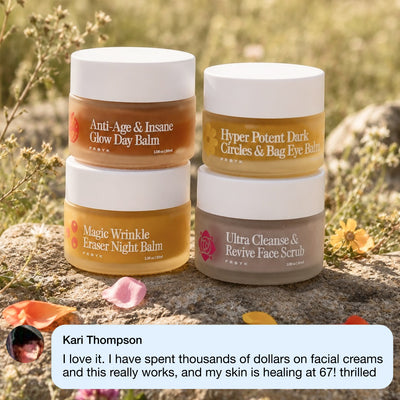
Y luego está la barrera de tu piel, que es la defensa de primera línea de tu cuerpo contra la pérdida de humedad. Apoyarla desde afuera también importa — por eso busco productos que nutran en lugar de despojar. The Complete System for Mature Women's Skin funciona con la barrera natural de tu piel en lugar de combatirla, y esa filosofía se extiende a todo lo que uso ahora.

Envejecer Lentamente Es una Práctica, No un Producto
El mayor cambio en mi enfoque del envejecimiento no fue encontrar el producto correcto. Fue darme cuenta de que envejecer bien es una práctica diaria — y la comida es el fundamento. No necesitas una dieta perfecta. No necesitas eliminar nada completamente. Solo necesitas elegir consistentemente alimentos que apoyen tus células, tu colágeno, tus hormonas y tu intestino.
Nutrición sobre restricción. Consistencia sobre perfección. Comida real sobre suplementos. Ese es el marco que realmente cambió cómo me veo y me siento. Porque al final del día, realmente envejeces como comes. Y eso es lo liberador — tienes mucho más control del que crees.
Preguntas rápidas sobre dieta y envejecimiento de la piel:
-
¿Realmente el azúcar envejece tu piel? Sí. El exceso de azúcar en el torrente sanguíneo causa un proceso llamado glicosilación, donde las moléculas de azúcar se adhieren a las proteínas de colágeno y elastina. Esto las hace rígidas y quebradizas, lo que causa caída y arrugas profundas con el tiempo.
-
¿Cuánto tiempo tarda en notarse un cambio en la piel por la dieta? La renovación celular de la piel toma aproximadamente 28 a 40 días, y aún más a medida que envejecemos. Cuando cambias tu dieta, podrías notar menos hinchazón en unos pocos días, pero los cambios estructurales verdaderos (como una tez más brillante y mejor elasticidad) generalmente requieren 1 a 2 meses de consistencia.
-
¿Si como bien, aún necesito cuidado de la piel? Absolutamente. La dieta construye tu piel desde adentro hacia afuera, pero el cuidado tópico de la piel la protege desde afuera hacia adentro. Una rutina de cuidado de la piel pura y sin agua protege tu barrera exterior del daño ambiental (como viento y contaminación) mientras sella la hidratación que tu dieta saludable proporciona.
Mejor piel y cabello en 60 días o devolución del dinero garantizada
Usa los productos diariamente durante 60 días y si no ves resultados, no queremos tu dinero.
Sabemos que nuestros productos son los mejores del mercado, pero no van a funcionar para todos.


