

 Account




You washed your hair, switched shampoos, maybe tried the dandruff one, and your scalp still itches.
Here’s the part that actually explains it. Once you hit perimenopause or menopause, falling estrogen leaves your scalp making less oil and holding less moisture, so it turns dry, tight, and itchy, and that dryness, not dandruff, is often what’s behind the itch.
A dry scalp doesn’t need a stronger wash, it needs its moisture back. Below is why it happens, what settles it day to day, and when to see a doctor.
Key Takeaways
- An itchy scalp in menopause often comes down to lower estrogen levels, which leave the skin drier and more reactive.
- The dryness, not dandruff, is often the culprit, so anti-dandruff products often do nothing.
- Mild washing and a nourishing routine like Frøya Organics’ Complete System for Mature Hair & Scalp help more than stripping quick fixes.
- Itch that won’t quit, bleeds, or disrupts your sleep is worth getting checked.
What Helps an Itchy Scalp During Menopause?
The best treatment is to handle your scalp like the dry, sensitive skin it has become, which means washing it softly, keeping it moisturized, and not stripping away what little oil it still makes. Reaching for a stronger anti-dandruff shampoo usually backfires, because this itch often isn’t a dandruff problem.
A calmer scalp comes from a few steady habits. Wash with a mild shampoo instead of a more stripping one, rinse with warm rather than hot water, and space out your washes so your scalp keeps some of its natural oils. Then feed the skin a little moisture back with a botanical routine built for mature hair, the kind broken down step by step further down.
Why Does Menopause Make Your Scalp Itchy and Dry?
Blame the estrogen, not your shampoo. Menopause makes your scalp itchy because falling estrogen means less oil and less moisture, leaving the skin dry, tight, and easily irritated. Estrogen helps your body produce collagen and natural oils, and when it drops, both drop with it, so menopause itching scalp is often dry skin reacting to that change.
Lower estrogen levels decrease natural oil production, so the scalp dries out and starts to itch. That drop in oil is why dry scalp menopause feels so different from a decade ago, and why dry hair often shows up with it.
Collagen falls too, so you get thinner, less springy skin all over, scalp included. It drops by about 2.1% per year after menopause, tied to those lower estrogen levels.
Your scalp follows your hormones, not the calendar. How long it’s been since menopause matters more than your age in how dry and sensitive it feels.
Thinner hair plays a part too. As strands get finer, more scalp sits exposed to sun damage and weather, so small irritations land harder.
Why Does Perimenopause Bring Itchy Skin Too?

Perimenopause brings itchy skin and scalp because estrogen starts swinging before it settles, and those hormonal changes make skin drier and more reactive. The menopause itching often shows up here first, years before periods fully stop, which catches many women off guard.
As the hormone levels shift, your scalp’s protective barrier weakens and leaves the skin around your hair follicles more sensitive. This scalp itching often worsens at night, when dryness, hot flashes, hot flushes, and night sweats pile on, and stress turns the dial up further.
Is It Dry Scalp or Dandruff?
For most women in menopause, an itchy, flaky scalp is dryness, not dandruff, and that difference changes what works. Dandruff is tied to extra oil and the Malassezia yeast that overgrows in the scalp microbiome, while menopausal dry scalp is the opposite problem, too little oil.
This matters because the two don’t respond to the same things. Dermatologist Zoe Draelos notes that postmenopausal dry scalp shows up as fine, powdery white flakes with no fungal cause and no inflammation, which is exactly why anti-dandruff treatments do nothing for it. So if a dandruff shampoo has gotten you nowhere, that’s a clue it may be dryness.
A quick way to tell them apart:
| What you notice | Leans dry scalp | Leans dandruff |
|---|---|---|
| Flakes | Fine, dry, white | Larger, oily, yellowish |
| Scalp feel | Tight, dry | Oily, sometimes greasy |
| Anti-dandruff shampoo | Does little | Usually helps |
If the dry-scalp column sounds like you, the answer is moisture and softer care, not a stronger shampoo.
What Could Be Causing My Itchy Scalp Without Dandruff?
What could be causing your itchy scalp without dandruff is usually plain dryness from lower estrogen, though a few other things can mimic it. A few common ones to keep in mind:
- Skin conditions like scalp eczema, psoriasis, or seborrheic dermatitis, which bring their own itching, flaking, and inflammation.
- An allergic reaction to a shampoo, styling product, or hair dye, often from a dye ingredient called PPD, which usually shows up as an itchy rash.
- An itch with no rash at all, which can point to a nerve issue rather than the skin itself.
- Plain winter dryness from cold air and indoor heating.
Dermatologists count 10 reasons a scalp itches, so if you’ve changed nothing and the itch still won’t settle, it’s worth ruling those out with a doctor. A piece on menopause skin sensitivity covers more of these overlaps.
How to Stop Hormonal Scalp Itch Day to Day
Small, steady changes tend to calm an itchy scalp faster than any single product, and the first rule is to stop scratching. It feels good for a second, then makes everything worse.
Here’s why. Scratching gives a quick hit of relief, but it damages the skin and feeds an itch-scratch cycle, where that reward keeps pulling you back and each scratch leaves the scalp itchier than before. Patting the spot instead breaks the loop, and short nails help too.
The itch tends to spike at night, when you’re least able to resist it and may scratch in your sleep. Keeping nails short and your scalp moisturized before bed protects the skin while you’re not watching it.
A few habits that tend to help:
- Wash with a mild, nourishing shampoo, and use warm, not hot, water.
- Space out washes, since overwashing strips natural oils and makes dryness worse.
- Use a lightweight conditioner once or twice a week, and book regular haircuts to keep split ends in check.
- Ease off heat styling, and add scalp-friendly oils to put moisture back.
On the inside, omega-3 fats from oily fish, walnuts, and flaxseed support skin and scalp moisture. A colloidal oatmeal bath can soothe dry, irritated skin if the itch spreads further.
Frøya’s Hair and Scalp Routine for a Dry, Itchy Scalp
Frøya Organics’ Complete System for Mature Hair & Scalp is a 3-step botanical routine made for the exact hair and scalp issues menopause brings: dryness, itch, and thinning. Together the three steps cleanse, moisturize, and support finer hair without stripping it.
In Frøya’s own six-week testing, 79% of users noticed visibly fuller-looking hair and 93% reported improved scalp health. These are the brand’s own results, not an independent clinical trial.
Magic Revive Hair & Scalp Shampoo

This is your cleanse step, a shampoo for thinning hair built to wash softly rather than strip, using rosemary leaf oil, jojoba, avocado, and argan to lift buildup while leaving your scalp’s moisture mostly intact. Use it in place of your usual shampoo, massaging it in for a few seconds as you wash, then rinsing with warm water. A sulfate-free wash like this is less drying for menopausal hair.
Hair Thickening Rosemary Water

Think of this rosemary water for hair as a daily drink of water for your scalp. You spray it onto a clean scalp and leave it in, so it feeds moisture between washes and keeps the skin comfortable rather than tight. Rosemary earns its place here, long used to support scalp health and fuller-looking hair, so use it daily.
Hair Thickening Serum

The serum is the support step for thinning, finer strands. You work this serum for thinning hair into the scalp and lengths a few times a week, letting the botanical oils nourish the hair and keep it looking thicker. It layers cleanly over the rosemary water, so give it steady use, since new growth is slow and fuller-looking hair builds gradually.
A softer routine like this stays close to the scalp’s natural pH balance, which keeps it calm. You’ll also see salicylic acid and medicated shampoos suggested for flaking, but strong formulas don’t suit a scalp already dry from menopause. For the oils that do the soothing, this argan oil for hair primer helps.
Can HRT or Other Options Help?
Hormone replacement therapy comes up a lot for menopausal itching, since it raises estrogen levels, but it’s a medical decision to weigh with a doctor, not a scalp fix to chase on its own. It’s one option among several, and isn’t right for everyone.
Doctors sometimes point to other options for stubborn itching. Topical corticosteroids, the mild steroid creams, are used for scalp itching and inflammation, and medicated shampoos with ketoconazole are aimed at flaking. These treat different causes, such as inflammation or seborrheic dermatitis. If moisturizing care isn’t helping after a few weeks, that’s a sign something else may be going on, and these may be what you need.
For more on the hormonal shift behind it all, Frøya’s guide to menopause skin changes is worth a read.
When to See a Doctor
Most menopausal scalp itch settles with better habits, but some signs mean it’s time to get it looked at rather than wait it out. Book an appointment if you notice:
- Itching that lasts several weeks and won’t settle with softer care.
- Scalp pain, bleeding, weeping, or signs of infection like spreading redness.
- A lot of sudden hair shedding or hair loss alongside the itch.
- Itch that keeps you up at night or wears on daily life.
A doctor or dermatologist can rule out other skin conditions and point you to the right care.
So, What Actually Helps a Menopausal Itchy Scalp?
If you take one thing from all of this, it’s that a menopausal itchy scalp is in many cases a dry scalp, and dry skin responds to moisture and softer care, not to a harder scrub or a stronger shampoo. Once you stop stripping your scalp and start feeding it back a little moisture, the itch usually settles on its own.
That’s the whole idea behind treating your scalp like the skin it is. A softer, botanical routine built for mature hair gives it the oils and moisture that falling estrogen took away, which is exactly what the Complete System for Mature Hair & Scalp is made to do.

If you want to see how it plays out for real women, the before and after photos and reviews are the best place to look. Give your scalp a few weeks of softer, steadier care, and watch how it answers back.
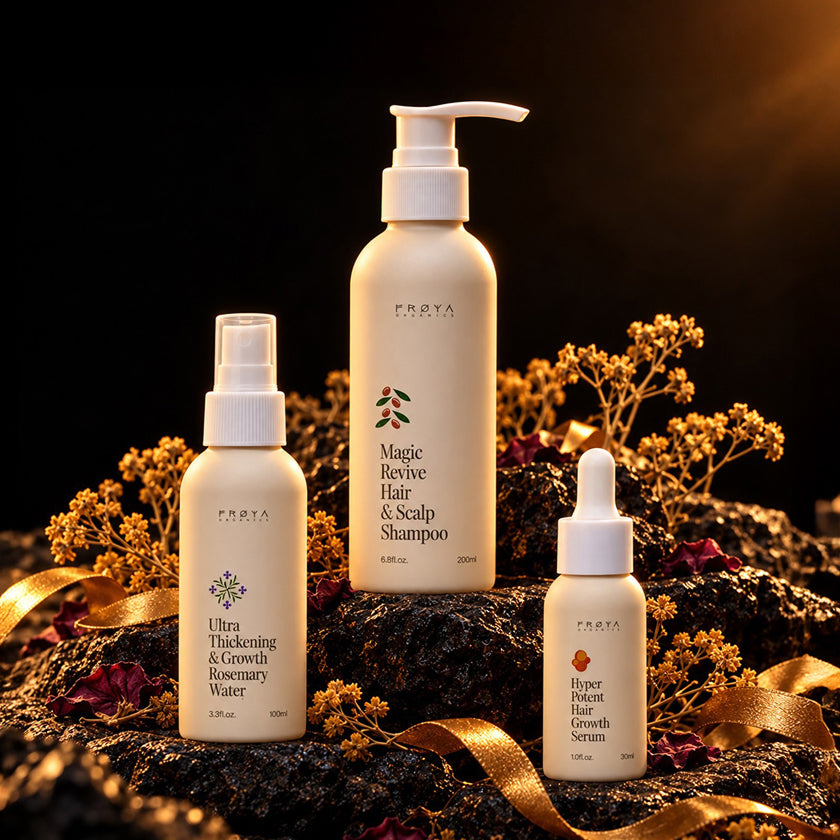
A three-step botanical routine for the dryness, itch and thinning menopause brings: a sulfate-free shampoo with rosemary, jojoba, avocado and argan, the Hair Thickening Rosemary Water, and the Hair Thickening Serum. Backed by our 60-day money-back guarantee.
Shop the System TodayDisclaimer: This article is for general information and isn’t medical advice. If your scalp itch is severe, lasting, or paired with other symptoms, talk to your doctor or a dermatologist for care that fits you.
Frequently Asked Questions
What hormone deficiency causes itchy scalp?+
What vitamin deficiency causes scalp itch?+
Does hair grow back after menopause?+
Can women of any age and skin type use this scalp routine?+
Is it safe to use oils on a menopausal scalp?+


