

 Account


The best moisturizer for winter is a richer formula, not a thicker layer: a waterless balm of barrier-friendly botanical oils and beeswax, used in thin layers.
Maybe it's January, the heat has been running since breakfast, and by 10 a.m. your face feels tight again. You already swapped your light lotion for the thickest cream on the shelf, yet the flaky patches around your nose keep coming back.
That's where a waterless, botanical formula helps: oils and beeswax hold moisture in through dry indoor air, so a fingertip amount goes a long way.
Key Takeaways
- Cold air, indoor heat and fewer barrier lipids after 45 all pull water from your skin.
- Every moisturizer type has a fit, and waterless balms suit dry, mature skin that likes botanical labels.
- Use a fingertip amount, because more product doesn't mean more moisture.
- Oil choice matters more than thickness.
- Apply to slightly damp skin, keep showers warm, and care for your hands and body too.
What Is The Best Moisturizer For Winter?
The best moisturizer for winter holds water in your skin without irritating it, and the right type depends on your skin and what you want from a label. Here's how the main types compare:
| Option | Best for | Keep in mind |
|---|---|---|
| Lotion | Oily or combination skin. Glycerin acts as a humectant to attract water. | Mostly water, so it fades fast in heated rooms. |
| Cream | Normal to dry skin. Emollients like squalane and shea butter smooth rough patches. | Usually water-based, so you may reapply often. |
| Ointment | Cracked heels and very dry patches. Occlusives create a strong seal. | Heavy and shiny on your face. |
| Facial oil | A quick, light ritual. | Results depend on the oil. |
| Waterless balm | Dry, mature skin and label readers. | A fingertip covers your face, so a jar lasts weeks. |
If you read labels and want one product instead of three, a balm may fit you. Our Anti-Age & Insane Glow Day Balm is a face balm for dry skin that blends safflower, sea buckthorn, pomegranate and rosehip oils with squalane and vitamin E, sealed with beeswax for barrier support.
How Winter Weather Dries Out Skin After 45
Winter weather dries out your skin from three sides: cold air outside, heated air inside, and fewer barrier lipids after midlife. Cold outdoor air holds less moisture, and indoor heating drops humidity even further, pulling water from the top layer of your skin.
Age makes these seasonal changes hit harder. One study of women's skin found that barrier lipids drop in winter and with age, with levels dramatically depleted compared with spring and summer. The low humidity of the winter months can impact lipid balance in skin, so winter weather can weaken your skin barrier just when it has less to work with.
You'll notice it as tight, flaky or itchy facial skin, and as makeup that clings to dry patches. Dry, cold air can also make fine lines more noticeable in the colder months.
Why Thicker Isn't Always Better For Winter Skin
 Your winter skin may want a heavier formula, but heavier should mean more concentrated: not more product, not just any rich oil, and not more layers. Here's where "thicker" goes wrong:
More product isn't more moisture. A thick layer tends to sit on the surface instead of melting in, so a thin layer is usually all you need.
A rich oil isn't automatically barrier-friendly. In a small study of 19 adults, plain olive oil weakened the barrier on the forearm after four weeks, while sunflower seed oil preserved skin barrier function and improved hydration. It was a small trial, but it shows the oil matters more than the thickness, and sunflower seed oil is one of the oils in our night balm.
More layers aren't more protection. Layering products can enhance moisture retention in winter, but each extra serum and cream adds ingredients for your skin to tolerate. Our balms are a standalone routine, with everything already blended into the formula, so there's nothing to mix or measure.
Heavier formula, lighter hand.
Pick a waterless balm for winter, then use a fingertip amount and add a little to tight spots instead of piling it on.
Best Moisturizer For Dry Skin In Winter: What To Look For
The best moisturizer for dry skin in winter has little or no water, barrier-friendly oils and a natural occlusive like beeswax. Rich moisturizers are essential for easing winter dryness, because they help lock in moisture lost during winter and support skin hydration. Using one every day matters just as much.
The same study linked daily moisturizer use with less localized dry skin. When you compare labels, check for these:
- Texture: waterless or very low in water, so less evaporates in dry air.
- Oils: barrier-friendly natural oils, like sunflower seed oil.
- An occlusive: beeswax helps lock moisture into your skin.
- Alcohol: skip drying alcohol (often "alcohol denat.") near the top of the list.
- Cost per day: a 30 ml jar of our day balm lasts 40 days, so compare how long a jar lasts.
Our guide on how to read a balm label covers each ingredient group in detail.
What Sensitive Skin Needs In Winter
Sensitive skin does best in winter with a simpler routine: no synthetic fragrance, a mild cleanse, and a break from strong exfoliating acids. For sensitive skin, look for products with no synthetic fragrance, since dry air already leaves winter skin quicker to react. We make every Frøya balm with no synthetic fragrance.
If you already use a cleanser, make it a gentle cleanser, ideally a hydrating cleanser, and avoid harsh foaming cleansers to prevent skin dryness. Many mornings, lukewarm water is enough to lift sweat and impurities and leave skin feeling fresh. It also helps to cut back on exfoliating acids like glycolic acid and salicylic acid in winter.
Prone to acne or clogged pores? You still need moisture, so use a thin layer and patch test anything new. Cold weather can also make eczema and psoriasis flare, so if your skin cracks or bleeds, see a board-certified dermatologist.
A Simple Winter Skincare Routine For Mature Skin
 A winter skincare routine for mature skin can be one balm in the morning, one at night, and a scrub a few times a week. Fewer layers means less for dry, reactive skin to deal with:
Morning: rinse with lukewarm water, then press a thin layer of our day balm over your face, using a tiny amount on your fingertip.
Evening: rinse with water, then smooth a thin layer of our night balm for fine lines over your face and neck before bed, since using a lot may turn your pillow yellow. It works overnight while you sleep and softens the look of fine lines that dry air makes more noticeable.
Two to three times a week: mix a pinch of our rice powder face scrub with water in your palm. Massage for a minute or two to lift dead skin.
Switching to thicker creams or balms at night can help prevent overnight moisture loss. If you're used to a serum plus a night cream, two balms may feel almost too simple, and that's the point. Our botanical skincare routine brings the day balm, night balm, eye balm and scrub together in one 40-day set.
The Extra Step That Seals Moisture In
The extra step is timing: apply your balm to slightly damp skin right after washing, then give your hands and body the same care. Applying moisturizer on damp skin can help trap water in skin cells. A few habits help even more:
- Use cooler water for showers to maintain skin moisture: warm, not hot.
- Run a cool-mist humidifier in your bedroom.
- Bundle up outside instead of turning up the heat inside.
- Wear gloves outdoors for extra protection from wind and cold.
Hands take the most winter wear, so give them their own balm. Massage a pea-sized amount of our instant softening hand balm into clean hands: it absorbs fast with a smooth, non-greasy finish and helps restore softness.

For your body, warm a small amount of our arctic botanicals body balm between your palms after a shower, while your skin is still slightly warm. It deeply nourishes but is light enough to absorb fast, with zero stickiness.
Made For Harsh Weather: Why Our Balms Work In Winter
Frøya Organics balms were made for harsh weather first: in Norway, we live with temperatures from 30 to -30 degrees Celsius, along with rain, wind and snow. That's why every balm we make is waterless, built on botanical oils and beeswax, and used in small amounts. Every formula is backed by our 60-day money-back guarantee, so you can judge it through the coldest weeks.
Start your winter routine with the day balm, night balm and hand balm in our natural skincare for mature skin range: together they cover face and hands, with nothing to mix or measure yourself.
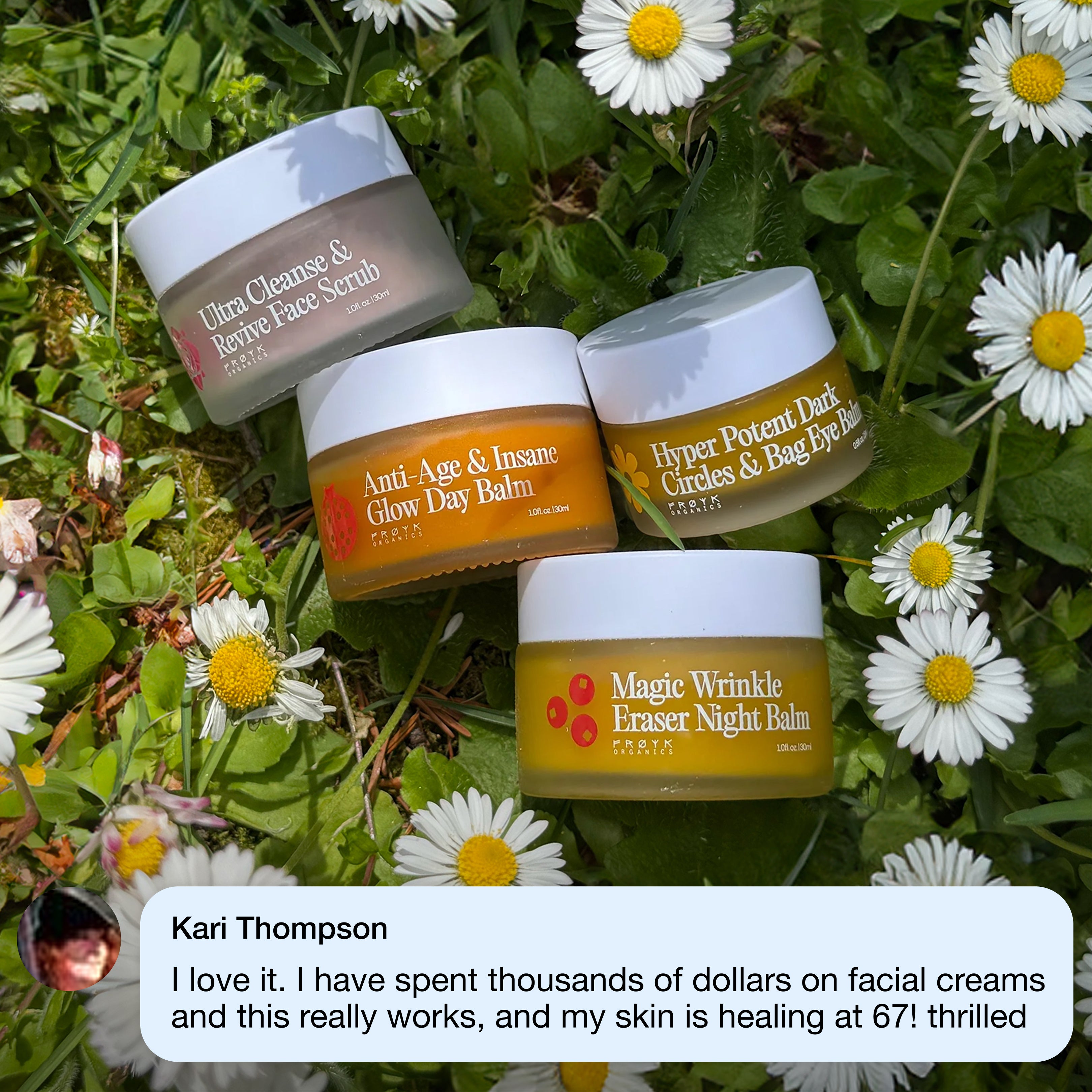
Day balm, night balm, eye balm and scrub in one 40-day set, waterless and made for cold, dry weather, backed by a 60-day money-back guarantee.
Shop the System Today
Disclaimer: This article is for general information and isn't medical advice. Patch test any new product on a small area of skin for 24 to 48 hours before using it on your face. If you have eczema, psoriasis or skin that cracks or bleeds, talk to a board-certified dermatologist.
Frequently Asked Questions
What are the winter uglies?+
Should I switch moisturizers in winter?+
Do I need sunscreen in winter?+
Which skin types can use Frøya balms in winter?+
Are Frøya balms right for my age?+
Do I need different balms for my face, hands and body?+


