

 Account


That deep ache when you stand up. The stiff fingers that fight you every morning. Sore joints have a way of running your whole day.
Arnica is a mountain flower people have rubbed on aching bodies for hundreds of years. Long before painkillers, mountain arnica was a go-to across Europe for bruises, sprains, and sore joints.
So does it actually work? Used on the skin, arnica may calm the inflammation behind sore, stiff joints, and scientific evidence backs that up. What most people do not realize is that how you use it, and which form you pick, changes everything.
This guide breaks down the real benefits of arnica, what the research shows, how to use it safely, and how to fold it into your day.
Key takeaways
- Arnica is a flowering herb studied mostly as a gel applied topically for joint and muscle pain.
- In one hand arthritis trial, arnica gel worked about as well as ibuprofen gel.
- Herbal arnica has real plant content, while homeopathic remedies are diluted to almost nothing.
- Arnica goes on clean, unbroken skin only, never on cuts or open wounds.
- Frøya's balm blends arnica with comfrey, ginger, and other botanicals, so nothing needs mixing.
Living With Joint Pain That Never Fully Lets Up

Joint pain is that daily wear you feel in your knees, hips, hands, or shoulders. It can turn simple things, like opening a jar or climbing stairs, into small battles.
Some days it is a dull background ache. Other days it flares and steals your focus. Muscle aches often tag along, since sore joints and tired muscles tend to travel together.
Most everyday joint pain comes from inflammation and stiffness in and around the joint. The goal is not to numb yourself. It is to calm that inflammation so you can move more freely and feel like yourself again.
Why Reaching for Pills and Synthetic Rubs Wears Thin
Popping a pill every day gets tiring, and it is fair to want another option for pain management. Oral pain relievers can upset your stomach, and many people would rather not lean on them long term.
Then there are the drugstore rubs. Many rely on menthol or lidocaine to mask pain with a strong cooling hit that fades quickly.
Even common topical options like diclofenac gel carry common side effects such as skin irritation, redness, and a burning feeling where you apply them. That is what sends people looking for something gentler and plant-based. Arnica keeps coming up in that search, so let's start with what it actually is.
What Is Arnica Montana?

Arnica is a yellow-orange mountain flower, known in science as Arnica montana. It belongs to the daisy, or sunflower, group called the Asteraceae family.
You might also see it called wolf's bane, leopard's bane, or mountain tobacco. Over-the-counter arnica cream is made from this plant.
People have used arnica oil and balms on the skin for centuries to soothe sore muscles, bruises, and aching joints. You can read more about arnica oil benefits for skin in our full ingredient guide.
Herbal Arnica vs Homeopathic Arnica
These two are not the same, and the difference matters. Herbal arnica is the real plant, used in creams, gels, and balms with actual arnica extract in them.
Homeopathic products are a different story. They are diluted so many times that little to no plant may remain, which is why those pills, tinctures, and dietary supplements often perform no better than a placebo.
When you want arnica to actually reduce pain in a sore joint, you want the herbal, topical kind. That is the version backed by the studies we will look at next.
Quick rule of thumb
If a product lists real arnica extract and you rub it on your skin, that is herbal arnica. If it is a tablet, tincture, or pellet meant to dissolve in your mouth, that is homeopathic, and the plant content is usually near zero.
What the Research Says About Arnica for Joint Pain
Topical arnica has real research behind it for joint pain, mostly as a gel applied to the skin. The findings are promising, with honest limits worth knowing.
The strongest study is a 2007 hand osteoarthritis trial. In it, arnica gel performed about as well as ibuprofen 5% gel for pain and hand function over three weeks, with no meaningful difference between them.
An earlier knee osteoarthritis study followed 79 people using arnica gel twice a day. They reported real improvement in pain and stiffness over six weeks, and most rated it well tolerated. That study had no placebo group, so it is a promising signal, not final proof.
Muscle soreness research is more mixed. Arnica is worth trying for sore, stiff joints, but more research is still needed before anyone can call it settled.
How Arnica Eases Inflammation
Arnica works by calming inflammation, not just masking the ache. Its active ingredient, helenalin, helps quiet the body's inflammatory signals where you apply it.
Some botanicals in this space are also studied for mild antibacterial properties, though arnica's main draw is its anti-inflammatory action. Think of inflammation as an alarm ringing in a sore joint, and arnica helps turn the volume down at the source.
Because you rub it right onto the sore spot, it goes to work where you need it. That is why the topical form is the one worth your attention.
A Plant-Based Balm Built Around Arnica for Sore Joints

Arnica does its best work blended into a balm you rub right onto the sore spot. That is how Frøya built the Joint & Muscle Healing Balm for aching joints and muscles. It goes to work where it hurts, calming the ache with plant power instead of masking it. Everything is already blended in, so there is nothing to mix or measure yourself.
The balm is waterless and fast absorbing, so a small amount covers a lot without a greasy feel. For whole-body aches that come with dry or reactive skin, the Complete Natural Pharmacy for Face includes this balm alongside two others.
What's Inside the Joint & Muscle Healing Balm
Each plant in the balm earns its place for sore, stiff joints. Here is what the blend brings, and why it feels the way it does on your skin.
- Beeswax carries the botanicals into your skin and helps lock in moisture.
- Eucalyptus adds a fresh, cooling note as you rub it in.
- Rosemary brings a herbal, warming aroma long tied to comfort for tired muscles.
- Camphor gives that gentle warming, cooling tingle you feel on contact.
- Arnica is the studied botanical at the heart of it, long used to calm aches.
- Comfrey is a traditional herb for everyday aches, and ginger is a warming root that has soothed stiff joints for generations.
Together, these plants work on the ache from more than one angle. You feel them going to work the moment the balm warms into your skin.
How to Use the Joint & Muscle Healing Balm
Using it is simple, and the tingle tells you it is working. Take a small fingertip amount and massage it into the sore area.
Use it on clean, intact skin whenever your joints or muscles feel it. A light warming, cooling feeling is normal and means the botanicals are active. Keep the amount small, since this balm is potent and waterless.
Arnica Safety, Side Effects, and Who Should Avoid It
Topical arnica is well tolerated for most people, but it is not for everyone. Knowing the cautions ahead of time keeps you safe.
Mild side effects can include an allergic reaction, itching, or swelling where you apply it. Stop if you notice any of the following symptoms. More serious side effects come from swallowing arnica, since taking it by mouth can be toxic and cause nausea, vomiting, and a racing heartbeat.
When to Avoid Arnica
Some people should skip arnica or check with a doctor first. Play it safe if any of these apply to you.
- Allergy to the daisy family. Ragweed, marigold, or sunflower trouble can mean arnica trouble too.
- Pregnancy or breastfeeding. Avoid it during this time to be safe.
- Blood thinners. Arnica may raise bleeding risk, so ask your doctor first.
- Upcoming surgery. Stop using it at least two weeks before any procedure.
- Broken or irritated skin. Wait until your skin has fully healed.
Some medications carry possible arnica drug interactions, so talk to your doctor if any of this applies to you. This matters most if you take something daily.
Real Relief for Your Aches and Your Well-Being

You deserve to move through your day without your joints calling the shots. A plant-based balm with real arnica gives you a gentler way to care for everyday aches.
The research is honest here. Topical arnica is not magic, but it has genuine science behind it for sore, stiff joints, and it does its best work in a botanical blend. That is what Frøya set out to make. Every balm is waterless, made from Arctic plants, and free of synthetic fragrance, so you know exactly what you are putting on your skin.
If you are ready to swap the daily pills and quick-fade rubs for something plant-based, our natural muscle and joint relief is a good place to start. And with a 60-day money-back guarantee, you can try it with nothing to lose but the ache.
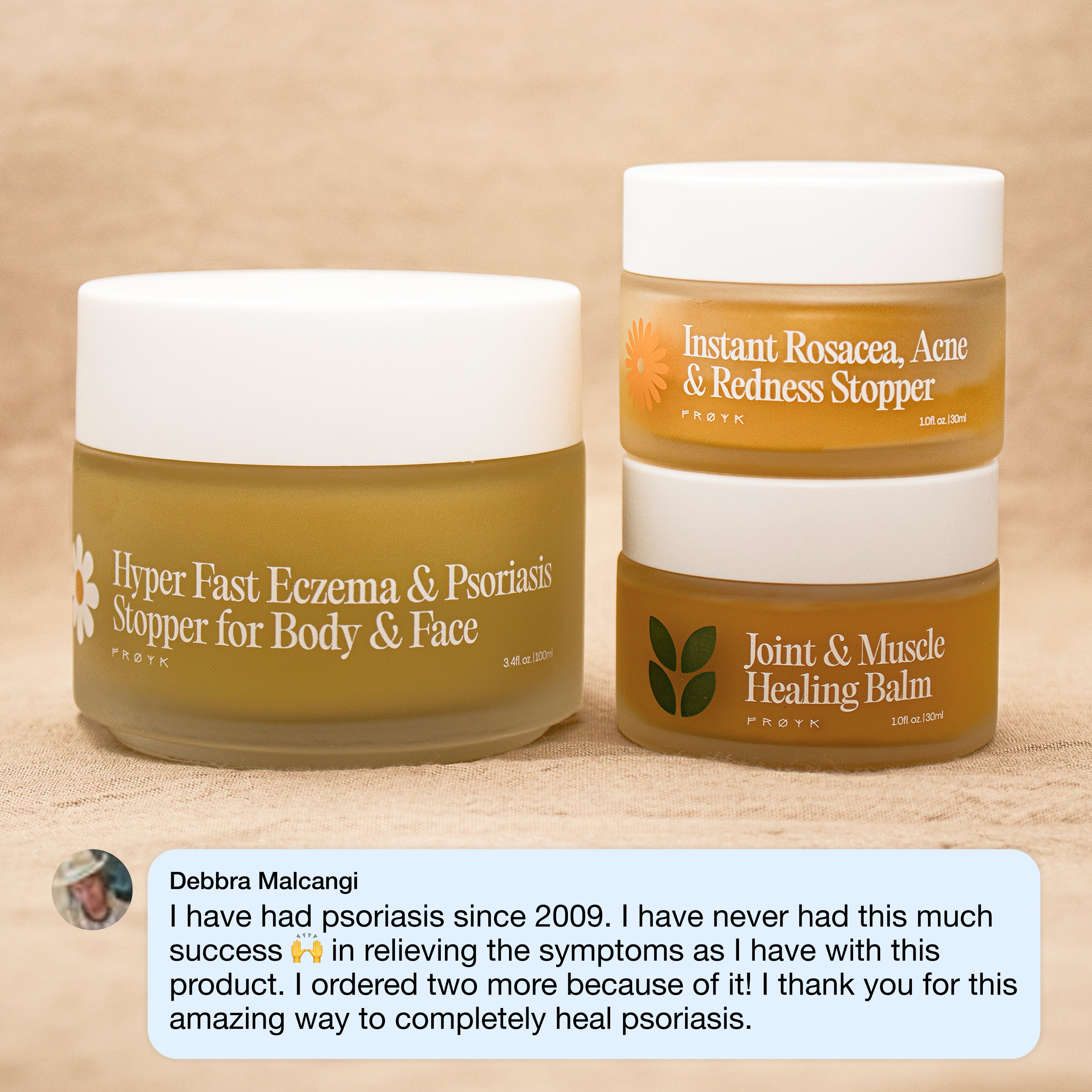
Three waterless balms for eczema, psoriasis, rosacea, and joint pain. Wild Arctic botanicals and organic beeswax calm, protect, and repair skin on face and body, backed by a 60-day money-back guarantee.
Shop the System - $109Frequently Asked Questions
Is arnica an anti-inflammatory?+
How quickly does arnica cream work?+
How often should you apply arnica balm?+
Can you apply too much arnica balm?+
When not to use arnica balm?+
Does arnica cream speed up bruise healing?+


