

 Account


Calendula has calmed red, angry skin for centuries, and it is one of the gentlest ingredients you can use. If your face flushes at the smallest thing, this is the flower people reach for.
A cold wind, a warm room, a new product, and your cheeks turn red and tight. From your mid-30s on, skin thins a little and reacts more, so it needs care that soothes rather than a harsh fix that stings.
Marigold oil for skin is almost always calendula oil, made from the flowers of Calendula officinalis, also called pot marigold. Here is what it really does for mature, sensitive skin, and how to use it without guessing.
Key Takeaways
- Marigold oil used in skin care is calendula oil, made from the pot marigold flower, not the garden marigold.
- Calendula calms redness and soothes sensitive skin thanks to its anti-inflammatory properties.
- It supports your skin barrier and deeply hydrates, which helps dry skin feel soft instead of tight.
- Research links calendula to faster early healing and antioxidant protection for firmer-looking skin.
- It is gentle and well tolerated, but patch test first if you are allergic to daisies or ragweed.
What Is Marigold Oil, and Is It the Same as Calendula Oil?
Yes, in skincare they are the same thing. When a label or article says marigold oil, it nearly always means calendula oil infused from the pot marigold flower. That single fact clears up most of the confusion.
The mix-up happens because "marigold" is a shared common name. Knowing which plant you are buying matters for your skin.
Marigold vs. Calendula: Which Plant Is in Your Skincare
The marigold used in skincare is Calendula officinalis, not the bright garden marigolds you might picture. Those garden flowers belong to a different group of plants called Tagetes.
Both are part of the daisy family, so you could call them distant cousins. But only calendula has the long track record on skin. Look for certified organic calendula on the label, since artificial colours are never needed in a good oil.
Quality calendula oil has a warm, vibrant golden-orange color from its natural carotenoids. That orange tint is a quick sign the flowers were rich and well preserved.
Infused Oil, Extract, or Essential Oil?
Calendula is usually an infused oil or an extract, not a true essential oil. The flowers are steeped in a carrier oil so the plant's fat-loving compounds slowly move into the oil.
Common carrier choices include olive oil, jojoba oil, and coconut oil, and some blends mix in other oils too. The infusion process often runs four to six weeks for a full, rich oil. You will also see calendula officinalis flower extract on labels, a more concentrated form used in balms.
True calendula essential oil is rare and strong, and it is not the same as the calm, unscented oils used in aromatherapy blends. For the concentrated form, our guide to calendula extract for skin explains how it differs from a simple infused oil.
Is Marigold Good for Your Skin?
Yes. Marigold oil suits most skin types, and it shines on dry, sensitive, and reactive skin. Its strength is calming, not stripping.
Calendula is packed with flavonoids, carotenoids, and vitamin E. Together, these support skin health in a few clear ways.
It Calms Redness and Soothes Sensitive Skin
Calendula's best-known benefit is soothing irritated, red, or itchy skin. Its anti-inflammatory compounds help quiet the signals that drive redness and swelling, in part by acting on the COX-2 pathway tied to inflammation.
Calendula flowers contain faradiol, a natural compound studied for calming inflammation at the skin level. This is why it appears so often in products for reactive faces, and why it is a common pick for treating dermatitis.
If lingering redness is your main worry, Frøya's rosacea redness relief range is built around these same calming botanicals.
It Strengthens Your Barrier and Deeply Hydrates
Calendula helps your skin hold on to moisture instead of losing it. Its fatty acids sit close to the natural fats in your skin barrier, so they slot in and reinforce it.
A stronger barrier means less water escapes through the surface. That steady hydration is what makes skin feel soft rather than tight, and it can even help balance oil on eczema-prone or combination skin.
This is why calendula suits dry skin and thin, fragile skin that struggles to stay comfortable. Pairing it with barrier repair for sensitive skin products gives reactive skin steadier support over time.
It Fights Oxidative Damage for Firmer Skin
Calendula's antioxidants help defend skin from daily wear. Its flavonoids scavenge free radicals, which slows the oxidative damage that ages skin over time.
Research points to calendula supporting collagen and firmer, more even-looking skin. In one controlled study, a calendula cream improved skin firmness and hydration on the cheeks over eight weeks.
A quick, honest note on sun protection. Calendula's antioxidants help defend against sun-related free radicals, but it is not a sunscreen and should not replace one for long exposure.
What the Clinical Trials Say About Calendula and Healing
Calendula has real backing for calming skin and supporting wound healing, though the strongest claims still need bigger studies. Here is the honest state of the research.
Calendula appears to speed the early stage of healing by helping new tissue form and by settling inflammation. It is also known for mild antibacterial and antiseptic activity, which helps protect minor wounds while they recover. This fits its long history of calming various skin conditions, including psoriasis-prone, irritated skin.
You will also see calendula in gentle staples like calendula ointment and everyday lip balm, thanks to how well tolerated it is. It is even studied for mild uses like soothing diaper rash, though that sits outside the scope of adult facial care.
Where Marigold Fits Against Stronger Actives
Strong actives get fast results, but they often come with a cost. Calendula plays a different role, and knowing that helps you build a calmer routine.
Retinol can smooth wrinkles, yet it commonly brings dryness, flaking, and stinging while your skin adjusts, plus higher sun sensitivity. Exfoliating acids can leave skin tight, red, and more reactive, especially on mature or sensitive faces. Hyaluronic acid draws in water but does little to calm the inflammation behind redness.
Calendula works in the opposite direction. It calms and supports the barrier those harsh actives can wear down. Other factors like stress and weather add to redness too, so a gentle base helps.
For skin prone to flushing, a gentler path often beats a strong active. Our guide to natural rosacea treatment walks through that calmer approach.
How Frøya Organics Puts Marigold to Work for Your Skin

Calendula's active compounds are fat-loving, so they work best in a rich, waterless base rather than a thin facial oil or watery skin cream. Frøya builds its balms with organic beeswax and botanical oils that carry those compounds into the skin. A little goes a long way, so a small amount lasts.
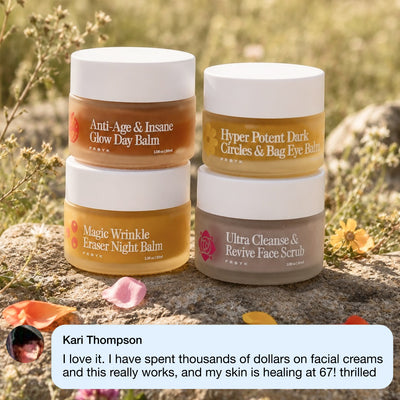
If you would rather not piece a routine together, the Complete System for Mature Women's Skin brings the calendula balms into one simple day-and-night set. Each step targets a different concern, so you follow it without guessing what to layer.
|
Frøya Product |
Marigold (Calendula) Form |
What It Helps With |
|
Marigold flower extract |
Daytime calm and glow for mature skin |
|
|
Marigold oil and marigold CO2 extract |
Overnight repair and fine lines |
|
|
Marigold CO2 extract |
The delicate under-eye area |
If redness is your main concern, the Instant Rosacea, Acne & Redness Stopper leads with calendula as a top active, so it works well on its own for reactive, easily flushed skin. Each balm pairs the flower with other Arctic botanicals, so its soothing effect is backed by the rest of the formula.
How to Use the Froya Organics Complete Acne System
Calendula works best as part of a steady routine, not a one-off fix. If breakouts and redness are your main concern, the Complete Acne System for Women gives you the steps in order, so you never have to guess what goes on next.
Here is an easy way to follow it:
- Cleanse: use the scrub a few times a week to lift away buildup and prep the skin.
- Day: smooth on a thin layer of the day balm after cleansing to calm and protect through the day.
- Night: apply the night balm so skin can repair while you sleep.
- Spot care: press a little of the Rosacea, Acne & Redness Stopper onto flare-prone areas whenever skin feels reactive.
A little goes a long way with each step, so start light and build up as your skin adjusts. Whichever product you begin with, patch test first by dabbing a small amount on your inner forearm and waiting 24 hours before using it on your face.
Safety matters most for one group. Calendula is in the daisy family, so if you are allergic to ragweed, chamomile, or daisies, you may react to it, which is why that patch test matters. If you are pregnant or breastfeeding, check with your doctor first, since research suggests caution and the data is limited.
Your Calmer, Steadier Skin Starts Here
 Real change with calendula is gradual, and that is a good thing. You are working with your skin instead of forcing it, so the results tend to hold.
From your mid-30s on, skin starts to lose moisture and bounce back more slowly, so it reacts to harsh products more than it used to. That is exactly when a gentle, barrier-friendly ingredient earns its place, calming the redness and dryness that stronger actives often leave behind. Steady care beats a quick fix here.
Give it a few weeks of consistent use, and most women notice skin that looks calmer, softer, and more even. You can see that same shift in our customers' before and after photos, where redness settles and skin looks healthier over time.
Disclaimer: This article is for general information only and is not medical advice. Calendula affects everyone differently, so results can vary from person to person. If you have a skin condition, an allergy, or any health concern, speak with a qualified healthcare provider before starting a new product.
Frequently Asked Questions
Is marigold oil and calendula oil the same thing?+
Is marigold cream good for wrinkles?+
Is calendula oil good for acne-prone skin?+
Can you use marigold oil on your face every day?+
How long does calendula oil take to show results?+
Who should not use calendula oil?+


