

 Account



You have probably heard coconut oil called a miracle one week and a face-wrecker the next. Both camps are half right, and neither answer was written for skin over 45. The honest version depends on the type of coconut oil and the part of your body you put it on.
This guide shows you where coconut oil works, where it falls short, and what your face needs instead.
Key Takeaways
- Coconut oil is a proven moisturizer for dry body skin, but whether it suits your face depends on your skin type.
- Dry, mature skin often handles it well, while oily or acne-prone skin can break out from the same oil.
- Lauric acid gives it real antibacterial action against the bacteria behind inflammatory acne.
- In a clinical trial, virgin coconut oil reduced eczema severity by about 68%, so it helps on dry, itchy patches.
- It seals moisture in but cannot rebuild the collagen your face loses after menopause.
What Coconut Oil Is and What's Inside It?
Coconut oil is a plant fat pressed from the meat of the coconut, solid at room temperature and melting the second it touches warm skin. People reach for it as a body moisturizer, a hand salve, and a lip balm. It also turns up as a hair mask, and coconut oil for hair can smooth dry ends, though this piece stays on your skin.
What makes coconut oil interesting is the fat itself. It is about 90% saturated fat, which is why it sits on skin and seals rather than sinking in fast. Its medium-chain fats include lauric, myristic, palmitic, caprylic, and capric acid, and it is low in linoleic acid, the lighter fat that breakout-prone skin tends to prefer.
Most of the health benefits people repeat about coconut oil trace back to those fats and to the antioxidants in the fresh fruit. That mix is what gives it both its soothing reputation and its pore-clogging risk.
Virgin vs Refined vs Fractionated: The Type Question Most People Get Wrong
Three kinds of coconut oil sit on the shelf, and they are genuinely different products.
Virgin coconut oil
Virgin coconut oil is cold-pressed coconut oil made from fresh coconut meat, often from organic coconuts pressed in small batches and bottled in glass jars. As an unrefined coconut oil, sometimes labeled extra virgin coconut oil, it keeps the full fatty acid profile plus the vitamin E from the fruit. Unrefined coconut oil has higher phytonutrient content than refined oil, which is why most skin research uses this version.
Coconut oil can be made through dry or wet processing, pressing dried or fresh meat from raw coconuts. Either way, virgin is the version your skin wants, with one catch: a comedogenic rating of 4 out of 5.
Refined coconut oil
Refined coconut oil, the ordinary coconut oil sold for cooking, comes from dried copra and loses most of those antioxidants. It withstands high temperatures and has a higher smoke point, which suits a frying pan but adds nothing for your skin. As a cost-effective kitchen oil it is fine, but for skincare there is no reason to choose it over virgin.
Fractionated coconut oil
Fractionated coconut oil is stripped of the long-chain fats, including lauric acid, so it stays liquid and clear. Its comedogenic rating is much lower because the heavier pore-clogging chains are gone. That makes it a safer carrier for facial use on oily skin, though it loses the nourishing punch of the whole oil.
Quick buyer's guide:
- Virgin: body, dry mature skin, eczema-prone patches. Skip if your face breaks out.
- Fractionated: face, oily skin, lighter blends. Skip if you want the full nourishing oil.
- Refined: cooking only. Skip for skincare.
What Coconut Oil Does for Mature Skin
Around 45, your skin stops holding water the way it did. Estrogen decline thins the skin, lowers oil, and leaves gaps in the lipid barrier, so adding moisture from the outside matters more. Pressed into damp skin, coconut oil forms a protective layer that keeps skin hydrated and leaves skin softer.
Adding coconut oil to damp skin traps a thin layer of water against the barrier instead of coating dry skin with grease. That simple, super hydrating step is the strongest move coconut oil makes in a body skin care routine.
Does coconut oil help eczema and dry, itchy skin?
Yes. Coconut oil is one of the better natural options for eczema and dry, itchy skin. In a clinical trial, virgin coconut oil cut eczema severity by about 68% over eight weeks, clearly beating mineral oil on a standard severity score.
Its anti-inflammatory properties help calm the redness and itch that come with these skin conditions. Apply a thin layer two to three times a day, since thin and frequent beats thick and seldom.
For stubborn patches, a botanical relief balm for dry skin gives the same soothing on the face without the pore risk virgin coconut oil carries.
Is coconut oil good for acne?
Coconut oil is a mixed answer for acne. The lauric acid in it targets the harmful bacteria behind breakouts, inhibiting the growth of Propionibacterium acnes, the strain that drives inflammatory acne, with antibacterial action stronger than benzoyl peroxide in research in the Journal of Investigative Dermatology.
The catch is that whole virgin coconut oil is also pore-clogging on oily skin. On a breakout-prone face it can feed the very breakouts you are trying to clear, so the acne-fighting active rides in an oil that may block your pores. Dry, mature skin tolerates it far better, but for active acne the oil works against itself.
If acne or rosacea is the real issue, balms that clear acne-prone skin are built for it without that trade-off.
Does coconut oil heal wounds?
Coconut oil shows real healing properties in wound research, though mostly in animals so far. In research in Skin Pharmacology and Physiology, virgin coconut oil helped accelerate wound healing, raising collagen cross-linking and the skin's repair markers during healing.
A separate 2013 animal study found coconut oil improved antioxidant status more than olive oil or sunflower oil. These effects trace back to its anti-inflammatory action, which can reduce inflammation and may even ease some of the discomfort that comes with it.
So coconut oil may help with irritated, reactive skin, and those potential benefits are real. They just do not extend to firming or anti-aging on a mature face.
The Comedogenic Scale, Honestly
You have seen coconut oil rated 4 out of 5 for clogging pores, on a scale from 0 to 5. That number came from tests on rabbit ears at full strength, not from finished products on real faces. Concentration, formulation, and other factors decide what actually happens on your skin.
A 4 out of 5 is not a universal red flag. Dry, non-acne-prone mature skin often tolerates virgin coconut oil that would send an oily 20-year-old straight into a breakout. On the face, lighter oils and butters like jojoba or shea butter are gentler than heavy virgin coconut oil, while on your body the rating barely matters and you can use virgin freely.
Lauric Acid, Collagen, and What Coconut Oil Cannot Do
Nearly half of virgin coconut oil is lauric acid, a fat linked to barrier support and skin cell repair. But coconut oil is not a retinoid, and it does not rebuild collagen the way deeper actives do. Collagen drops about 30% in the five years after menopause, and a sealing oil cannot replace what time removes.
Coconut oil also does nothing for dark spots or uneven tone. It seals moisture in; it does not restore. For fine lines, dullness, and tone, balms for mature skin are formulated to do what an oil cannot.
How to Use Coconut Oil After 45: A Practical Playbook
Applying coconut oil the right way is mostly about where, not how much. These four routines are worth your time.
- The damp-skin body routine. Warm one tablespoon of virgin coconut oil between your palms and press it into damp skin after a shower, focusing on shins, elbows, and forearms.
- The scrub mix. Add a small amount to a dry palm, mix with warm water, and massage onto rough patches, then rinse.
- Lips and hands. Dab a little on dry lips or cracked hands as a quick, natural salve.
- What to skip. Do not use heavy virgin coconut oil as a daytime face moisturizer, and keep it off seborrheic dermatitis or dandruff-prone skin, since its lauric acid feeds the yeast behind those flares.
Start with the damp-skin body routine this week. Highest yield, lowest risk, fastest read on whether your skin likes coconut oil at all.
The Real Verdict on Coconut Oil for Skin After 45

So, is coconut oil good for skin after 45? On your body, yes. On your face it depends: dry, mature skin can enjoy it, while oily or breakout-prone skin is better off skipping it.
The real benefits of coconut oil are moisture, barrier sealing, soothing, and antibacterial action, not collagen repair or tone correction. It earns its place in your body skin care more than your face routine. Coconut oil seals; it does not restore.
Your skin after 45 needs more than a single oil can give. Frøya Organics builds a complete, waterless routine from wild Arctic botanicals and organic beeswax, made to support the mature face coconut oil cannot. The routine built for mature skin pairs barrier support with botanical actives, with no layering guesswork.
Women who make the switch tend to see the difference, and the customer before-and-after photos tell that story better than any claim can.
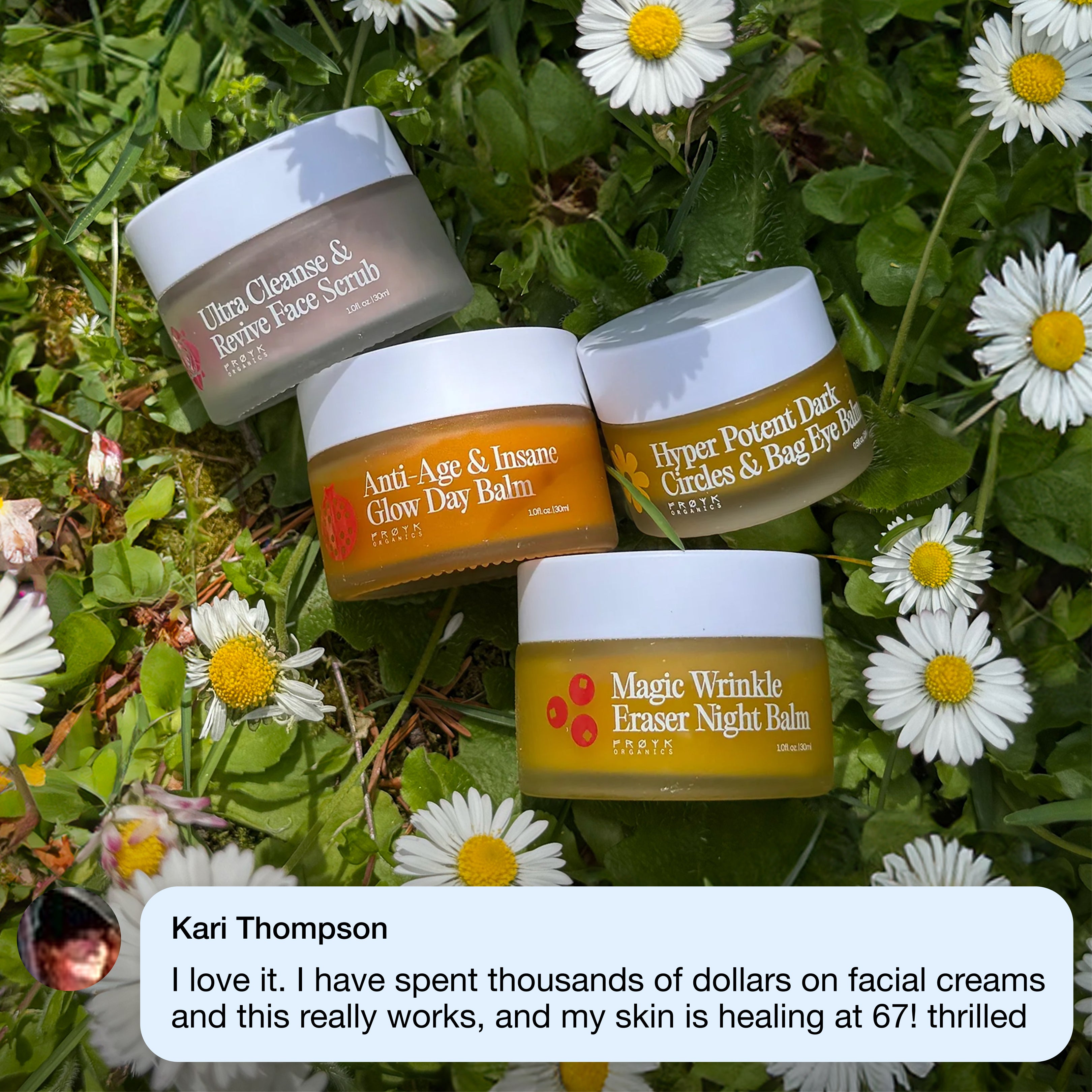
Wild Arctic botanicals and organic beeswax. Zero water, zero synthetic fragrance. Four balms in one routine that feeds the barrier lipids a lasting glow depends on, backed by a 60-day money-back guarantee.
Shop the System - $11Frequently Asked Questions
Can I use coconut oil on my face if I’m over 45?+
What’s the difference between virgin and fractionated coconut oil?+
Does coconut oil actually help with wrinkles?+
Can I use coconut oil if I have dandruff or seborrheic dermatitis?+
How does coconut oil compare to argan or jojoba for mature skin?+


