

 Account


Granaatappel is niet één huidverzorgingsingrediënt. Het zijn er drie, en ze doen compleet verschillende dingen met je gezicht.
De zaden geven een olie. De schil geeft een extract. Het sap geeft weer iets anders. De meeste merken vermengen alle drie tot één woord op het etiket, en zo betaal je uiteindelijk voor een voordeel dat jouw product helemaal niet kan leveren.
Deze natuurlijke vrucht staat bekend om antioxidanten, en die reputatie is verdiend. Wat bijna niemand uitlegt, is dat de belangrijkste voedingsstoffen achter elk voordeel zich in verschillende delen van de vrucht bevinden.
Hieronder lees je de echte voordelen van granaatappel voor de huid, wat het onderzoek daadwerkelijk aantoont en hoe je het na je 45e kunt gebruiken.
Belangrijkste punten
- Granaatappelpitolie, schilextract en sap bevatten verschillende stoffen en leveren verschillende resultaten.
- Pitolie ondersteunt je huidbarrière en buitenste laag, en dat is wat je huid dag in dag uit gezond houdt.
- Het onderzoek naar collageen gaat over schilextract, niet over de pitolie die in de meeste producten zit.
- Het sterkste bewijs bij mensen voor anti-verouderingseffecten komt van het eten van granaatappel, niet van het aanbrengen ervan.
- Puniczuur breekt af door water en licht, dus de formulevorm van je product is net zo belangrijk als de ingrediënten zelf.
Wat Is Granaatappel, en Welk Deel Belandt in Huidverzorging?
Granaatappel (Punica granatum) levert drie afzonderlijke grondstoffen voor huidverzorging, en die zijn niet uitwisselbaar.
- Granaatappelpitolie wordt koud geperst uit de zaden. Het bevat puniczuur en andere vetzuren, en dit is wat de meeste oliegebaseerde producten gebruiken.
- Granaatappelschilextract komt uit de schil en bevat punicalaginen en ellagzuur.
- Granaatappelsap komt uit de pitjes die je eet. Het bevat vitamine C, en het meeste onderzoek richt zich op het drinken ervan voor de algemene gezondheid.
Onderzoekers testten deze naast elkaar en ontdekten dat ze bijna tegengestelde dingen doen.
De auteurs beschreven dit als herstel dat in twee tegengestelde richtingen werkt, waarbij de waterige extracten de diepere laag helpen en de pitolie het oppervlak helpt. Daarom is het slim om vruchtextracten op een etiket nog eens goed te bekijken. "Granaatappelextract" zonder vermelding van het specifieke deel laat je gissen naar wat je eigenlijk hebt gekocht.
7 Voordelen van Granaatappel voor de Huid

Dit is wat granaatappelpitolie daadwerkelijk doet, en hoeveel bewijs er achter elk voordeel schuilt.
1. Het Bestrijdt Schade door Vrije Radicalen van UV-Straling en Vervuiling
Je huid heeft altijd zelf antioxidantverdediging aangemaakt. Na je 45e maakt ze er minder aan, net op het moment dat je er meer nodig hebt.
Vrije radicalen zijn instabiele moleculen die ontstaan door vervuiling, stress en UV-straling. Ze onttrekken elektronen aan gezonde huidcellen, en die schade stapelt zich jarenlang stilletjes op tot ze zich toont als dofheid en ruwheid.
Granaatappel helpt schade door vrije radicalen van UV-straling en vervuiling te bestrijden. Laboratoriumonderzoek suggereert ook dat de antioxidanten de huid beschermen tegen UVB- en UVA-schade en helpen collageenafbraak door UV-blootstelling te voorkomen.
Twee dingen om duidelijk te maken. Dit is werk op celniveau, geen bewijs van zonbescherming voor je gezicht. En granaatappel is geen middel ter preventie van huidkanker, dus zie het als dagelijkse ondersteuning en niet als een schild. Dit geleidelijke verlies van antioxidantverdediging is een groot deel van waarom een rijpere huid haar glans verliest, ook als je routine niet is veranderd.
2. Het Houdt Vocht Vast en Voorkomt Droogheid
Puniczuur is een zeldzaam omega-5-vetzuur dat een groot deel van granaatappelolie vormt. Het komt bijna alleen in deze plant voor.
Samen met de andere vetzuren in de olie helpt het vocht in de huid vast te houden. Dat is nog belangrijker na je 45e, wanneer je huidbarrière dunner wordt en sneller vocht verliest dan vroeger.
Droogheid gaat niet alleen om comfort. Een huid die vocht heeft verloren, ligt vlakker en toont lijntjes duidelijker, en daarom verandert hydratatie hoe je gezicht eruitziet, nog voordat er iets structureels is veranderd.
3. Het Ondersteunt Je Huidbarrière
Je huidbarrière is de buitenste laag die vocht binnenhoudt en irriterende stoffen buiten. Ze bestaat grotendeels uit vetzuren, en daar komt granaatappelolie om de hoek kijken.
Niet alle vetzuren doen hetzelfde werk. Linolzuur helpt de barrière te onderhouden die vochtverlies reguleert, en granaatappelpitolie bestaat voor 29% uit linolzuur.
Plantaardige oliën werken ook door op het oppervlak te blijven liggen en vochtverlies te vertragen, wat deels verklaart waarom een rijkere textuur vocht beter vasthoudt dan een lichte.
Een sterkere huidbarrière ligt stilletjes aan de basis van de meeste andere voordelen op deze lijst. Als ze goed functioneert, houdt je huid vocht vast, reageert minder snel en herstelt sneller.
4. Het Helpt Ontstekingen Kalmeren en Roodheid Verminderen
In celstudies onderdrukte granaatappelpitolie meerdere ontstekingsmarkers die verband houden met irritatie.
Dat onderbouwt het gebruik op een geïrriteerde huid en maakt het een verstandige keuze wanneer je irritatie wilt kalmeren zonder een agressief actief ingrediënt. Dezelfde ontstekingsremmende stoffen helpen ook roodheid na verloop van tijd te verminderen.
Belangrijk om te weten: dit is laboratoriumwerk en geen studie bij mensen. Het betekent ook dat granaatappel geen behandeling is voor bepaalde ontstekingsaandoeningen van de huid, zoals eczeem of psoriasis, die goede medische zorg vereisen.
5. Het Ondersteunt Vernieuwing in de Buitenste Laag
Het onderzoek uit 2006 toonde aan dat pitolie de activiteit in de buitenste huidcellen stimuleerde, met een lichte verdikking van die laag.
Celvernieuwing vertraagt met de leeftijd. Je huid verving beschadigde cellen vroeger snel, en nu blijven die cellen langer liggen, wat een rijpere huid een vermoeid, onregelmatig oppervlak geeft.
Die vertraging is ook de reden waarom geduld na je 45e belangrijker is dan op je 30e. Het ondersteunen van de celvernieuwing in de buitenste laag verzacht de huidtextuur geleidelijk, maar de verandering is echt en langzaam in plaats van dramatisch, en daarom is vier tot acht weken een redelijke termijn.
6. Het Brengt een Natuurlijke Glow Terug
Betere hydratatie en een sterkere huidbarrière weerkaatsen licht gelijkmatiger over je gezicht.
Dat is wat de meeste mensen eigenlijk bedoelen met een stralende huid. Geen glitter, geen highlighter-finish, maar een gelijkmatig oppervlak dat eruitziet als een gezonde huid die haar werk doet.
Een rijpere huid verliest die gelijkmatigheid omdat ze dunner en droger is, niet omdat ze meer polijsten nodig heeft. Als je huid er de laatste tijd vlak uitzag, ligt de oplossing meestal in hydratatie en barrière-ondersteuning in plaats van nog een exfoliërende stap. Een stralende teint volgt uit een huid die zich comfortabel voelt.
7. Het Werkt Ook van Binnenuit
Het sterkste bewijs bij mensen voor granaatappel en de huid komt van het eten ervan, niet van het aanbrengen.
Onderzoekers voerden een vier weken durende gerandomiseerde, dubbelblinde studie uit met een gestandaardiseerd granaatappelsupplement in plaats van verse vrucht of sap.
De onderzoekers gaven eerlijk toe dat ze de exacte oorzaak niet konden vaststellen. Hun beste verklaring is dat granaatappel rijk is aan antioxidanten en mogelijk helpt beschermen tegen collageenafbraak. Dezelfde publicatie meldt dat granaatappelstoffen huidcellen beschermden tegen UVA- en UVB-schade in laboratoriumtests.
Twee dingen om in gedachten te houden. Dit was een pilotstudie met een kleine groep, en de deelnemers namen een geconcentreerd supplement, geen handvol rode zaadjes.
Het eten van granaatappel is dus een zinvolle gewoonte voor je algemene gezondheid. Het vervangt niet wat je op je gezicht aanbrengt.
Ondersteunt Granaatappel Écht de Collageenproductie?
Niet vanuit de pitolie, nee. Dit is waar de meeste artikelen over granaatappel het mis hebben.
De gangbare bewering gaat zo: granaatappel is rijk aan vitamine C, vitamine C helpt de collageenproductie ondersteunen, dus granaatappel houdt de huid stevig. Elke stap klinkt logisch, maar de keten breekt in het midden.
Vitamine C zit in de pitjes en het sap, niet in koudgeperste pitolie. Het persen van zaden levert vetzuren op, geen ascorbinezuur.
Het echte onderzoek naar collageen gaat over schilextract, dat procollageen ondersteunt en het enzym remt dat collageen afbreekt. Die bevinding is oprecht. Ze hoort alleen bij een deel van de vrucht dat zelden in jouw potje terechtkomt.
Wat pitolie wél ondersteunt, is je huidbarrière, en een goed gehydrateerde huid oogt nog altijd gladder.
Waarom de Meeste Granaatappel-Huidverzorging Nooit Levert Wat Ze Belooft
Drie dingen staan in de weg, en geen daarvan is de schuld van de vrucht.
- Puniczuur oxideert makkelijk. Het breekt af door licht, warmte en vocht, dus waterrijke formules werken vanaf dag één al tegen het ingrediënt in.
- De meeste producten bestaan vooral uit water. Serums en lotions bevatten 70 tot 90% water, waardoor de olie ver onderop de lijst terechtkomt.
- Zelfgemaakte maskers missen het punt. Vers granaatappelsap mengen met honing geeft je wateroplosbare stoffen. De vetzuren zitten in de pit.
Waarom puniczuur beschermd moet worden: een ingrediënt dat afbreekt in water heeft een formulevorm nodig die met dat probleem rekening houdt. Water weglaten is de simpelste oplossing, en dat is het argument achter watervrije huidverzorging na je 40e. Een balsem gedraagt zich hierbij heel anders dan een gezichtsolie of serum.
Is Granaatappel Veilig voor een Gevoelige Huid?
Granaatappel wordt door de meeste huidtypen goed verdragen, inclusief een gevoelige en droge huid. Reacties zijn zeldzaam maar mogelijk.
In tegenstelling tot retinol en exfoliërende zuren veroorzaakt granaatappelpitolie geen purging, vervelling of een branderig gevoel. Die actieve stoffen versnellen de celvernieuwing, waardoor je vaak weken lang last hebt van schilfering en geïrriteerde huid voordat er verbetering optreedt.
Die zachtheid is belangrijk wanneer de huid al fragiel is. Je krijgt de antioxidantondersteuning zonder de herstelperiode.
Test toch eerst op de binnenkant van je arm en wacht 24 uur. Bekijk ook de volledige ingrediëntenlijst, want balsems bevatten vaak notenoliën. Heb je een huidaandoening of een voorgeschiedenis van allergieën, overleg dan eerst met je arts.
Hoe Watervrije Arctische Balsems Granaatappelpitolie Leveren aan de Rijpere Huid
Frøya Organics gebruikt koudgeperste granaatappelpitolie in watervrije balsems. Zonder water in de pot staat granaatappel bovenaan de ingrediëntenlijst in plaats van ergens onderaan.
Verjongende Dagbalsem voor een Stralende Huid

De Verjongende Dagbalsem voor een Stralende Huid is de enige formule die granaatappel expliciet in haar samenstelling noemt, naast duindoorn. Granaatappel staat op de vierde plaats van veertien, gecombineerd met rozenbottel zodat het antioxidantwerk gedeeld wordt.
Breng elke ochtend een dun laagje aan op een schone huid. Een vingertopje is voldoende, en als je huid oranje aandoet, heb je te veel gebruikt.
Ultrakrachtige Oogbalsem tegen Wallen & Donkere Kringen

De Ultrakrachtige Oogbalsem tegen Wallen & Donkere Kringen bevat twee granaatappelmaterialen, pitolie en pitextract. Beide zijn afkomstig van de pit, wat belangrijk is gezien wat je nu weet over dat onderscheid.
Klop 's avonds een kleine hoeveelheid rond het ooggebied. Het bevat zoete amandelolie, dus vermijd het bij een notenallergie.
Revitaliserende & Verhelderende Dagbalsem

De Revitaliserende & Verhelderende Dagbalsem heeft de hoogste positie voor granaatappel in het assortiment, derde van vijftien. Ze is ontwikkeld voor een gemengde en acnegevoelige huid, met lichte oliën die niet zwaar aanvoelen op een huid die al genoeg eigen olie aanmaakt. Spoel je gezicht 's ochtends af en breng daarna een dun laagje aan.
Hoe Voeg Je Granaatappel Toe aan Je Huidverzorgingsroutine
Granaatappelpitolie werkt het beste wanneer je het dagelijks in kleine hoeveelheden op een schone huid aanbrengt.
- Begin met een schone huid. Spoel of reinig je huid zodat er niets tussen de olie en je gezicht zit.
- Gebruik een vingertopje. Watervrije balsems zijn geconcentreerd, en te veel geeft een oranje waas.
- Breng aan 's ochtends, 's avonds, of beide. Er is geen wenperiode en geen rustdagen nodig.
- Geef het 60 dagen. Veranderingen in huidtint en -textuur duren vier tot acht weken.
- Houd het simpel. Meer producten betekent niet automatisch betere resultaten.
Consistentie verslaat complexiteit, hetzelfde principe achter de beste huidverzorging voor vrouwen boven de 50. Voor het bredere assortiment is de collectie balsems voor de rijpere huid op dezelfde manier opgebouwd.
Hoe 60 Dagen met het Compleet Systeem er Écht Uitzien

Granaatappelpitolie is een solide antioxidant- en huidbarrière-ingrediënt. Het is geen collageenbouwer, dus de resultaten komen van consistent gebruik in plaats van van één krachtig actief ingrediënt.
Daar helpt een eenvoudige set bij. Vier stappen in een vaste volgorde betekenen dat je niet hoeft te twijfelen welk product het beste werkt, en consistentie is wat de meeste routines missen.
Zestig dagen is de eerlijkste test die je een balsem kunt geven, want de sterkte van je huidbarrière, elasticiteit en textuur veranderen allemaal langzaam. Deze echte huidresultaten van klanten komen van vrouwen die dagelijks dezelfde vier stappen gebruikten en het verschil zelf bijhielden.
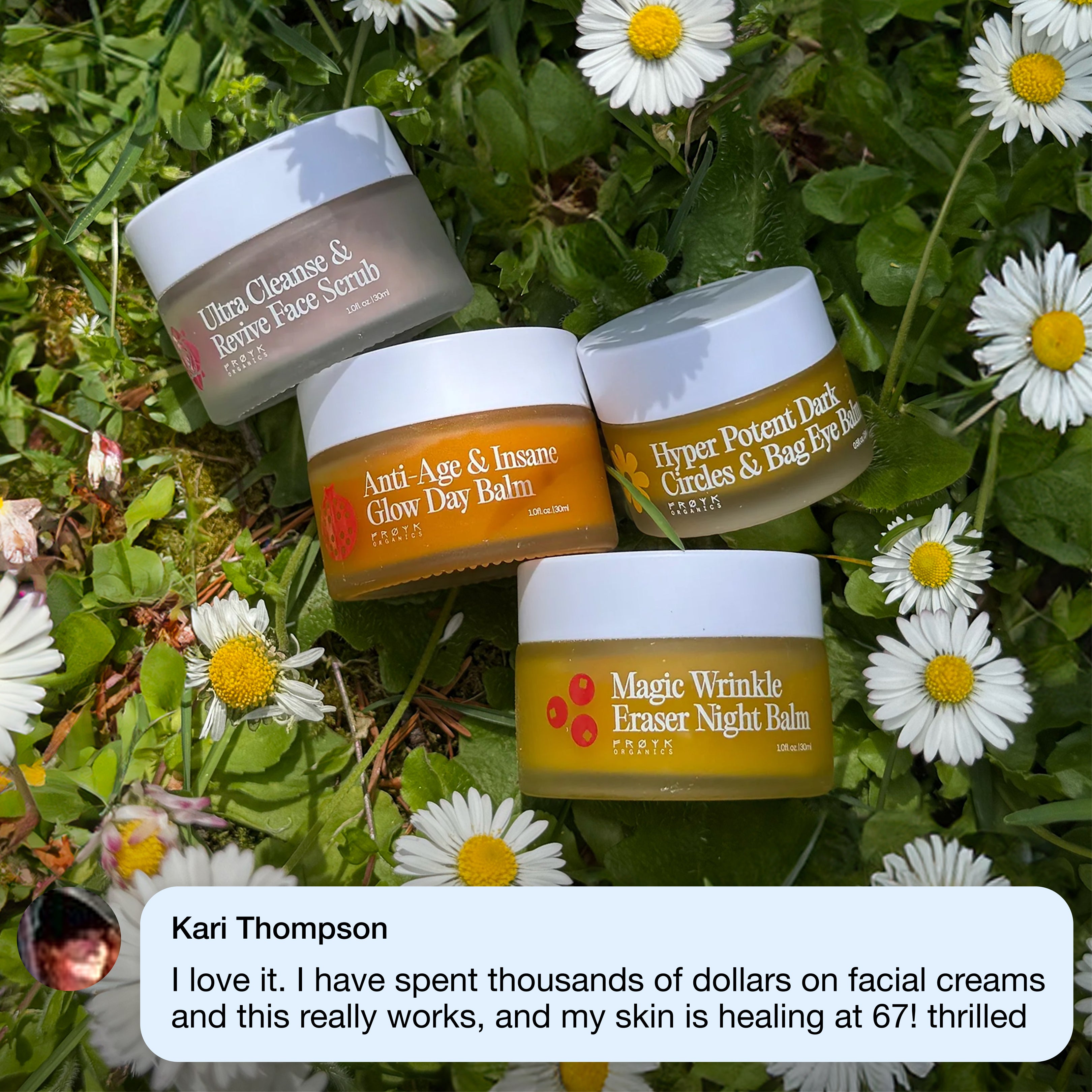
Arctische wilde planten en organische bijenwas. Nul water, nul synthetische geurstoffen. Vier balsems in één routine die de barrièrelipiden voeden waar een blijvende glow van afhangt, met een niet-goed-geld-terug-garantie van 60 dagen.
Shop het Systeem - $119Veelgestelde Vragen
Hoe gebruik je granaatappel op je gezicht?+
Wat gebeurt er als je dagelijks granaatappel eet voor je huid?+
Wat niet mengen met granaatappel?+
Welk fruit is het beste voor de huid?+


