

 Compte


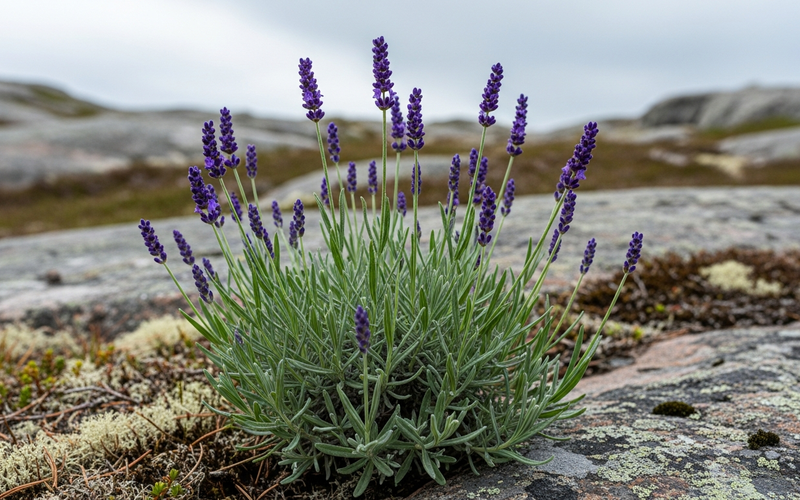
La plupart des gens classent la lavande sous « relaxation » sans jamais se demander ce qu'elle fait lorsqu'elle entre en contact direct avec la peau. C'est passer à côté d'une véritable opportunité. L'huile de lavande pour la peau est l'une des plantes les plus étudiées pour apaiser les rougeurs, soulager la peau sèche et soutenir la réparation, ce qui en fait un atout discret pour une peau mature, sensible et sujette à la rosacée après 45 ans.
L'huile de lavande est extraite par distillation à la vapeur des fleurs de la plante de lavande, membre de la famille de la menthe. Elle porte un parfum apaisant accompagné de composés actifs qui font un vrai travail. Comme remède naturel, elle possède une longue histoire, du soulagement des petites plaies au rôle de répulsif contre les insectes.
L'histoire raconte que le parfumeur français René-Maurice Gattefossé s'est brûlé le bras, l'a plongé dans l'huile de lavande, et a été frappé par la rapidité de la guérison. Ce moment a contribué à lancer l'aromathérapie moderne. Voici huit bienfaits de l'huile de lavande qui comptent le plus pour une peau après 45 ans, plus comment l'utiliser en toute sécurité.
1. Apaise la rosacée, l'eczéma et les rougeurs chroniques
La lavande apaise les rougeurs au niveau des composés, ce qui explique pourquoi elle convient aux peaux réactives qui piquent face à la plupart des produits. Les bienfaits de la lavande ici reposent sur une véritable chimie, pas sur de vagues promesses apaisantes.
Deux composés font le gros du travail : le linalol et l'acétate de linalyle. Dans les études en laboratoire, cette paire a aidé à apaiser l'inflammation cutanée en calmant des signaux comme NF-κB qui déclenchent les poussées et les rougeurs visibles. La plupart de ces données proviennent jusqu'à présent de recherches animales, alors considérez-les comme un soutien prometteur plutôt que comme une preuve.
Ces composés agissent aussi comme des antioxydants qui aident à défendre la peau contre les stresseurs environnementaux quotidiens comme la pollution. Cette douceur explique pourquoi la lavande apparaît si souvent dans les discussions sur le traitement naturel de la rosacée pour une peau après 45 ans. Elle figure aussi parmi les huiles essentielles les plus étudiées pour une peau mature.
Utilisée à faible dose et bien diluée, elle apaise la peau réactive plutôt que de l'irriter. Testez d'abord sur une petite zone si votre peau réagit facilement.
2. Soutient la barrière cutanée après la ménopause
L'huile de lavande aide à soutenir la barrière alors qu'elle s'amincit avec l'âge, ce qui est l'une de ses qualités les plus utiles pour une peau mature. Les changements cutanés après 45 ans ne sont pas anodins. À mesure que l'œstrogène diminue, la production de collagène ralentit et la barrière lipidique retient moins d'humidité, de sorte que la peau se dessèche et réagit davantage.
Les conseils génériques du type « hydratez davantage » ne traitent que la surface. La lavande agit plus profondément. Ses composés apaisants réduisent l'inflammation chronique de bas grade qui use la barrière, et sa texture légère aide une couche lipidique amincie à retrouver du confort.
Une barrière plus forte retient mieux l'eau et semble plus calme, ce qui est la base d'une peau saine à tout âge. C'est pourquoi la lavande s'intègre dans les routines conçues pour réparer une barrière cutanée endommagée.
Si votre peau retient moins l'humidité depuis la mi-quarantaine, l'huile de lavande offre un bon soutien au confort quotidien, particulièrement là où la peau sèche et la sensibilité se chevauchent.
3. Apaise par son parfum calmant
La lavande agit sur votre peau et sur votre sens du calme simultanément, ce qui la distingue de la plupart des huiles topiques. Son arôme doux et floral est l'un des parfums les plus étudiés pour la détente.
Appliquée sur la peau, ses composés apaisent la surface. Respirée pendant une routine du soir, ce même parfum apaisant vous aide à vous détendre avant le coucher. Pour une peau qui réagit au stress et au manque de sommeil, ce double confort est un petit bonus mais bien réel.
Quelques respirations lentes avec un baume à la lavande le soir est un moyen facile de l'utiliser.
Idéal pour : Les femmes confrontées à des poussées liées au stress, à un sommeil perturbé, ou à une peau terne et fatiguée.
À éviter si : Vous avez une allergie connue à la lavande ou une sensibilité de contact au linalol.
4. Soutient la guérison des plaies et le collagène
L'huile de lavande démontre un véritable potentiel de cicatrisation, que les chercheurs continuent de cartographier. Dans les recherches animales, l'huile de lavande topique a aidé les plaies à se fermer plus vite que la peau non traitée au cours des premiers jours de cicatrisation.
L'étude a révélé que la lavande augmentait le collagène de type I et III dans le tissu cutané en augmentant un signal de réparation appelé TGF-bêta. Plus de collagène et plus de cellules de réparation actives, c'est exactement ce dont la peau a besoin pour se reconstruire après de petites plaies ou l'usure quotidienne. Ce soutien en phase précoce explique la longue histoire de la lavande dans les baumes apaisants.
Pour une peau mature, où le collagène naturel diminue d'environ 1 % par an après 30 ans, ce soutien doux est utile quand les actifs plus puissants causent de l'irritation. Gardez à l'esprit que ces bienfaits de l'huile de lavande proviennent d'études animales précoces, alors considérez-la comme un soutien au quotidien, non comme un correctif pour les plaies profondes ou les conditions médicales.
Le verdict : La lavande ne remplacera pas les actifs anti-âge plus puissants pour les rides profondes. Ses propriétés de soutien du collagène et de réparation tissulaire en font néanmoins un ajout précieux à une routine pour peau mature, surtout si ces actifs plus puissants irritent votre peau. La recherche est prometteuse, bien que davantage d'essais cliniques humains de haute qualité soient encore nécessaires.
5. Estompe les taches pigmentaires et unifie le teint dans le temps
L'huile de lavande ne blanchit pas la peau ni n'inhibe la mélanine comme le fait l'hydroquinone. Son approche des taches pigmentaires est plus lente, mais elle agit simultanément par trois voies différentes, et cela compte pour des résultats durables.
Cela concerne particulièrement les femmes de plus de 45 ans, chez qui des décennies d'exposition solaire cumulée rencontrent des changements hormonaux qui rendent la pigmentation plus tenace. Ces antioxydants sont la raison pour laquelle la lavande garde une peau plus lumineuse et plus uniforme, particulièrement pour la pigmentation liée au vieillissement, aux cicatrices et aux dommages solaires.
Fixez-vous des attentes réalistes. Vous ne verrez pas d'éclaircissement du jour au lendemain. Associez la lavande à l'huile de rose musquée, riche en vitamine A naturelle, et à l'argousier, qui contient plus de 190 composés antioxydants, pour un mélange puissant contre les taches.
Appliquez le soir uniquement, après le nettoyage, et limitez l'exposition au soleil prolongée pendant que les marques s'estompent.
Comparaison rapide : Les sérums à la vitamine C ciblent les taches pigmentaires plus rapidement mais peuvent irriter les peaux sensibles et sujettes à la rosacée. La lavande est l'option douce à privilégier sur le long terme pour les femmes dont la peau réagit aux actifs éclaircissants plus puissants.
6. Apaise les imperfections et équilibre la production de sébum
La lavande aide à apaiser la poussée d'acné occasionnelle chez l'adulte sans l'effet desséchant des actifs anti-acné puissants. Pour une peau mature qui est plus sèche globalement mais qui réagit quand même dans certaines zones, cet équilibre compte.
Sa qualité antimicrobienne douce aide à limiter les bactéries responsables de l'acné, tandis que son action apaisante calme les rougeurs autour d'une imperfection. Elle fait cela sans décaper la peau, de sorte que vous rééquilibrez au lieu de dessécher. Cela rend la lavande bien adaptée au schéma « zones sèches plus poussées » fréquent après 35 ans, particulièrement quand les rougeurs et les poussées d'acné apparaissent ensemble.
C'est exactement pourquoi l'huile de fleur de lavande se trouve dans le Soin Immédiat Rosacée, Acné & Rougeurs, où elle travaille aux côtés d'autres plantes arctiques dans un baume sans eau pour apaiser les rougeurs visibles sur une peau réactive.
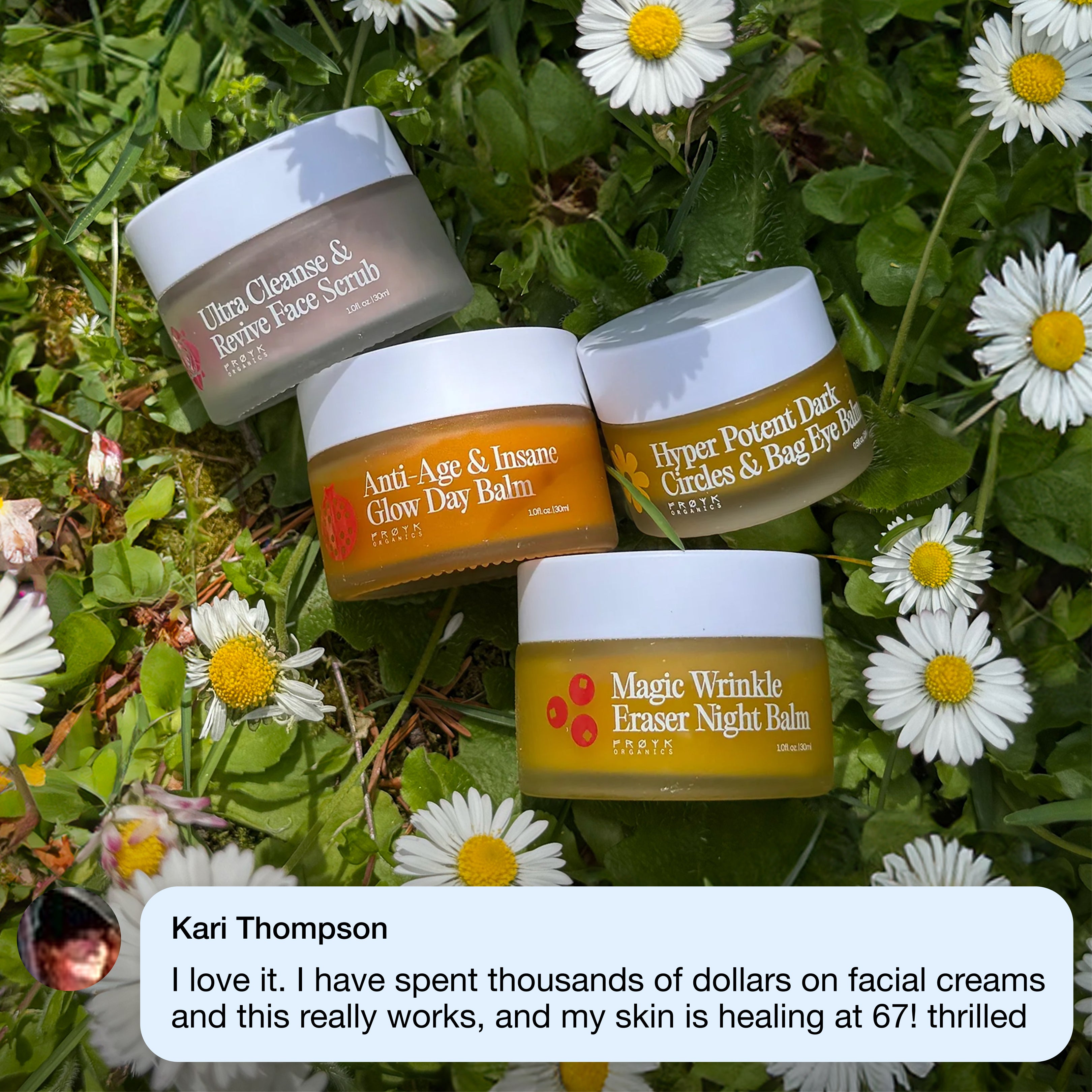
100 % d'actifs botaniques avec l'argousier en base. Zéro eau, zéro conservateur synthétique. Garantie satisfait ou remboursé de 60 jours.
Découvrir le Système - $1197. S'associe à l'huile végétale adaptée à votre problématique cutanée
Choisir la bonne huile végétale est tout aussi important que la lavande elle-même. La mauvaise huile peut annuler les bienfaits de la lavande ou créer de nouveaux problèmes pour une peau réactive.
L'huile essentielle de lavande ne s'applique jamais pure sur le visage. L'huile végétale que vous choisissez détermine la moitié du résultat. Voici un guide de référence rapide adapté à des problématiques cutanées spécifiques :
- Peau mature ou vieillissante : Huile de jojoba plus vitamine E. Le jojoba imite le sébum naturel de votre peau, ce qui la rend anti-inflammatoire et bien tolérée. La vitamine E soutient la protection du collagène et maintient l'élasticité.
- Rosacée ou peau sensible : Huile de jojoba, pour ses propriétés anti-inflammatoires imitant le sébum.
- Peau sèche ou sujette à l'eczéma : Huile d'amande douce ou huile d'avocat. Toutes deux sont riches en acides gras qui offrent une hydratation profonde sans irriter une barrière compromise.
- Peau grasse ou sujette à l'acné : Une base légère de jojoba, qui équilibre la production d'huile sans lourdeur.
- Hyperpigmentation et taches pigmentaires : Huile de rose musquée, pour la vitamine A, plus argousier et ses plus de 190 composés antioxydants. Appliquez le soir uniquement.
Conservez vos mélanges dans des flacons en verre ambré ou bleu cobalt, à l'abri de la chaleur et de la lumière. Correctement conservés, les mélanges gardent leur efficacité pendant un à deux mois. Après cela, l'oxydation dégrade les composés actifs et peut causer une irritation cutanée.
Pour des résultats réguliers sans la confusion, les baumes Frøya pour peaux sujettes aux rougeurs offrent ces botaniques dans une base sans eau et sans fillers.
La lavande ne se limite pas au visage. Sa nature apaisante convient aussi bien au cuir chevelu, et certaines recherches précoces explorent si elle peut aider à stimuler la croissance des cheveux en soulageant l'irritation, de sorte qu'un cuir chevelu apaisé soutient l'apparence de cheveux plus sains.
8. Comment repérer la véritable lavande et éviter les produits frelatés
Pas chaque flacon étiqueté lavande ne contient de la lavande. L'écart d'approvisionnement est assez large pour que l'adultération soit la norme plutôt que l'exception.
Trois espèces comptent pour les acheteurs de produits de soin. Lavandula angustifolia (véritable lavande) contient moins de 0,5 % de camphre et est apaisante et anti-inflammatoire. Lavandula latifolia (lavande aspic) contient plus de camphre et un profil plus médicinal.
Lavandula x intermedia (lavandin) est l'hybride des deux, avec 6 à 8,5 % de camphre, ce qui la rend stimulante plutôt qu'apaisante.
La véritable lavande ne produit que 40 kg par hectare contre 120 kg par hectare pour le lavandin. Cet écart de rendement explique à la fois la différence de prix et l'incitation à l'adultération. Protégez-vous grâce à ces vérifications :
- Vérifiez le nom botanique. L'étiquette doit indiquer Lavandula angustifolia, et non « huile de lavande » ou Lavandula x intermedia.
- Évaluez le prix. La véritable lavande ne produit que 40 kg par hectare avec un taux d'extraction de 1 à 1,5 %. Si le prix vous semble étonnamment abordable, vous achetez probablement du lavandin.
- Demandez le rapport CG-SM. Un test de chromatographie gazeuse-spectrométrie de masse devrait montrer l'acétate de linalyle à 25 à 45 % et le camphre à l'état de trace à 0,5 %. Les fournisseurs réputés publient ces rapports ou les fournissent sur demande.
- Faites confiance à votre odorat. La véritable lavande a une odeur douce, florale et légèrement fruitée. Le lavandin a une odeur plus vive et plus médicinale.
- Envisagez la lavande bulgare de haute altitude. Cultivée au-dessus de 1 500 mètres, elle produit une teneur plus élevée en acétate de linalyle (30 à 46 %) et un profil plus doux. Le stress lié à l'altitude force la plante à produire plus d'esters, les composés les plus liés aux effets apaisants et anti-inflammatoires.
Le verdict : Si l'étiquette n'indique pas Lavandula angustifolia et que le prix semble trop beau pour être vrai, c'est probablement le cas. Demandez le rapport CG-SM ou passez votre chemin.
Plantes arctiques sauvages scellées sous cire d'abeille bio. Zéro eau, zéro fragrance synthétique. Quatre baumes qui scellent l'humidité dans la peau mature du matin au soir, soutenus par une garantie de remboursement de 60 jours.
Découvrir le Système - $119Frequently Asked Questions
Puis-je utiliser de l'huile de lavande sur mon visage tous les jours ?+
Qu'apporte l'huile de lavande à votre peau ?+
Quand faut-il éviter d'utiliser l'huile de lavande ?+
L'huile de lavande est-elle bonne pour la peau mature ?+
Quelle est la meilleure huile pour cicatriser la peau ?+


