

 Cuenta


The best skincare for 50s is not one product. It is a brand that matches what aging skin needs now: barrier repair, real skin hydration, and honest claims you can check. After 50, your skin makes less collagen and turns drier, thinner, and more reactive, so the brand you pick matters more than any single ingredient on the label.
Most "best of" lists just hand you a ranked pile of products. This guide does something more useful. It shows you how to judge any brand against what mature skin actually goes through, from fine lines and dry skin to a weaker barrier, so you can tell a brand that gets it from one that is selling you hype.
By the end, you will have a simple five-point checklist you can take to any shelf or website, plus a clear read on which ingredients earn their hype and which do not.
Key Takeaways
- After 50, collagen production drops about 1 to 2% a year, and falling estrogen thins the skin, deepens fine lines, and leaves it drier.
- The best skincare for mature skin leads with barrier repair and deep skin hydration to help produce collagen, smooth fine lines, and brighten skin, not a long list of trendy active ingredients.
- Vet a brand on five things: formula focus, ingredient transparency, honest claims, a return policy, and fit for dry or sensitive skin.
- Strong actives like retinol come with real trade-offs on aging skin, so how a brand delivers an ingredient matters as much as the name on the label.
What Happens to Aging Skin After 50: Dark Circles and Fine Lines

After 50, your skin makes less collagen, holds less water, and gets thinner and more easily irritated. This is why a skincare routine that worked in your 40s can suddenly feel like it does nothing, or starts to sting. The fix is a routine built for repair, not one built for a younger face, helped along by daily hydration and a diet rich in healthy fats that support skin health.
The biggest driver is hormones. Hormonal changes can increase skin's susceptibility to irritation. Estrogen falls during and after menopause, and your skin's ability to produce collagen drops with it. Less collagen is what brings on fine lines, less skin firmness, weaker elastin production, slower skin cell turnover, visible sagging skin, and rougher skin texture.
At the same time your skin makes less oil, so dry skin and more moisture loss leave it tight, dull, or flaky. The skin barrier, the outer layer that keeps moisture in, gets weaker. A weaker barrier is why aging skin often turns reactive, why dull skin, dark spots, and uneven skin tone creep in, and why dry or sensitive skin shows up for the first time in your 50s.
The practical takeaway is simple. The best skincare for 50s has to do two jobs first: rebuild the skin barrier and help your skin maintain moisture. If a brand leads with anything else, it is solving the wrong problem, which is why a barrier-first routine like the Complete System for Mature Skin from Frøya Organics is built around exactly those two jobs.
How Do You Vet the Best Skincare for 50s?
The best skincare for 50s comes from a brand that fixes the barrier first, tells you exactly what is inside, and backs its promises with a real guarantee. Judge a brand on five checks, in this order. If it fails the first two, the rest barely matters.
- Does the formula lead with barrier repair and intense hydration?
- Can you see the full ingredient list, and does it make sense?
- Are the claims honest and not absolute?
- Is there a real return policy?
- Is it right for all skin types, including drier, more reactive skin?
Start with the formula, because it is the thing that actually touches your face. For a mature skin care routine you want rich natural oils and emollients that rebuild the barrier and help your skin retain moisture, not a thin product that sits on top and evaporates. A brand that hides its ingredient list or pads it with fillers is not one to trust with a weaker barrier.
Then weigh the promises. "Softens the look of fine lines" is believable, while "erases deep wrinkles in a week" is not, so walk away from any brand promising to reverse aging. A money-back guarantee matters too, since mature or sensitive skin can be unpredictable and you want room to test without losing your money.
Frøya Organics is a Norwegian maker of waterless balms built on wild Arctic botanicals and organic beeswax, and it lines up with this checklist: a barrier-first routine, full ingredient lists on every product page, and a 60-day money-back guarantee. If you want the day-to-day steps that go with it, Frøya's complete skincare guide for women over 50 walks through the full routine.

Which Anti Aging Ingredients Actually Matter, and Which Are Hype?
Most brands sell you on one hero active, but on mature skin the barrier matters more than any single trendy ingredient. Brands lean on retinol, peptides, ceramides, niacinamide, or vitamin C. Each can do something real, yet each carries a catch for aging skin, and chasing the active is not the same as repairing the barrier.
Retinol Side Effects on Mature Skin
Retinol gets pushed hardest for anti aging because it can signal skin cells to support collagen production and skin cell turnover. The side effects of retinol are the catch: on thinning, dry skin it often brings redness, peeling, stinging, and flaking, which is the last thing a weak barrier needs. Prescription retinoids are stronger still and harder for reactive or acne prone skin to tolerate.
If you have felt that burn, you are not imagining it, and a softer route is worth looking at. The point is not that retinol does nothing. It is that the trade-off often lands hardest on exactly the skin that needs the most care after 50.
What the Other Popular Actives Really Do
Peptides are sold as collagen signals, while ceramides and niacinamide are sold as barrier helpers, yet a product can list any of them and still be mostly water and filler, so the active barely works. A vitamin C serum is famously unstable and a common irritant, strong acids like alpha hydroxy acids can over-exfoliate and irritate sensitive, mature skin, and even calming extras like aloe vera do little for a barrier that has lost its own oils. None of this means the ingredients are useless. It means the label is not the whole story, and the delivery matters as much as the name.
How Frøya Handles the Same Jobs
Frøya Organics takes the other path and leans on anti aging ingredients that come straight from botanicals. Unlike prescription retinoids, its balms use sea buckthorn, rosehip, squalane, and vitamin E in a base of organic beeswax, a blend of natural oils, omega fatty acids, amino acids, and antioxidants that supports the barrier and helps neutralize free radical damage without the irritation. Many of those botanicals carry anti inflammatory properties, which is part of why the routine suits reactive skin.

Because the formulas are waterless, those botanicals sit at full strength instead of being watered down, so they can support natural collagen production, smooth fine lines, and brighten skin for a more radiant complexion over time, and help calm the look of dark spots for radiant skin. For nighttime repair, a balm built on arctic plants for skin is a good example of that approach working to target fine lines and wrinkles over time. It presses a thin layer of rosehip, marigold, and arnica over clean skin and works overnight to support the barrier and leave skin looking more rested.
How Do You Judge a Brand's Claims and Proof?
Treat every number on a skincare page as a claim until you know who measured it. The best brands separate customer-reported results from clinical testing, and they never dress one up as the other. Learning to spot the difference protects you from marketing math.
Watch for three red flags: results stated with no source, percentages that keep changing across the site, and before-and-after photos with no detail. A trustworthy brand tells you whether a figure came from a lab, a dermatologist-graded trial, or its own customers.
Frøya Organics labels its proof. In a dermatologist-graded Citruslabs trial of the full routine, participants saw measured gains in skin health, brightness, and signs of aging, and the brand presents those as trial results rather than guarantees. That kind of clear sourcing is itself a vetting signal.
Does a Brand Need Broad Spectrum SPF to Count as Good for Mature Skin?
A good mature skin brand does not have to sell sunscreen, and any brand telling you SPF is the only thing that matters is oversimplifying. The American Academy of Dermatology does recommend sun protection to help prevent premature aging, sun damage, and skin cancer, and that advice stands on its own for long stretches outdoors. It is about limiting burning during extended exposure, not a rule every single product must carry.
Sun protection is for exposure, not every product
The American Academy of Dermatology links regular sun protection to less premature aging and lower skin cancer risk, scoped to real time outdoors. Source: American Academy of Dermatology
What matters more for daily care is a barrier strong enough to hold moisture and protect skin on its own. A well-formulated balm will not give you broad spectrum SPF, and it should not claim to. Judge a day product on how it repairs the barrier, and handle sun separately with shade, clothing, and a mineral sunscreen when you are out for a long stretch.
Why Do Natural, Waterless Formulas Suit Dry Skin Over 50 with Deep Wrinkles?
A natural, waterless routine fits mature skin because it delivers active botanicals at full strength with nothing to dilute them or irritate a thinning barrier. Fewer ingredients also means fewer things that can trigger dry or sensitive skin. For a face that is drier and more reactive, simple and concentrated beats long and complicated.
Water-based products need preservatives and fillers to stay stable, and those extras do nothing for your skin. Waterless balms skip all of that, so you get oils, butters, and plant extracts, and a little goes a long way. This is also why natural skin care products in balm form tend to feel richer than a hydrating serum or a facial moisturizing lotion of the same size.
This is the whole idea behind Frøya Organics, one of the few Norwegian skin care lines built this way. The routine is designed to stand on its own, already blended into each balm, so there is nothing to mix or layer yourself. The cleanse step is waterless too: the exfoliating face scrub clears dead skin cells with rice and rose petal powders, so it protects your natural oils instead of over-exfoliating, which also minimizes pores. From there the morning balm, one of the brand's bestselling organic skincare products, keeps the rest of your skincare routine to a few simple steps, supporting skin rejuvenation and a brighter complexion with a healthy, youthful glow.
The Bottom Line

The best skincare for 50s is less about one miracle product and more about picking a brand that understands what your skin is going through. Vet it on barrier repair, transparency, honest claims, a guarantee, and fit for reactive skin, and most hype falls away fast. Frøya Organics checks each box with a waterless, botanical, barrier-first routine made for mature skin, so healthy skin and a youthful appearance come from care, not hype.
Ready to put the checklist to work? See how a barrier-first routine feels with the Complete System for Mature Skin, backed by a 60-day money-back guarantee.
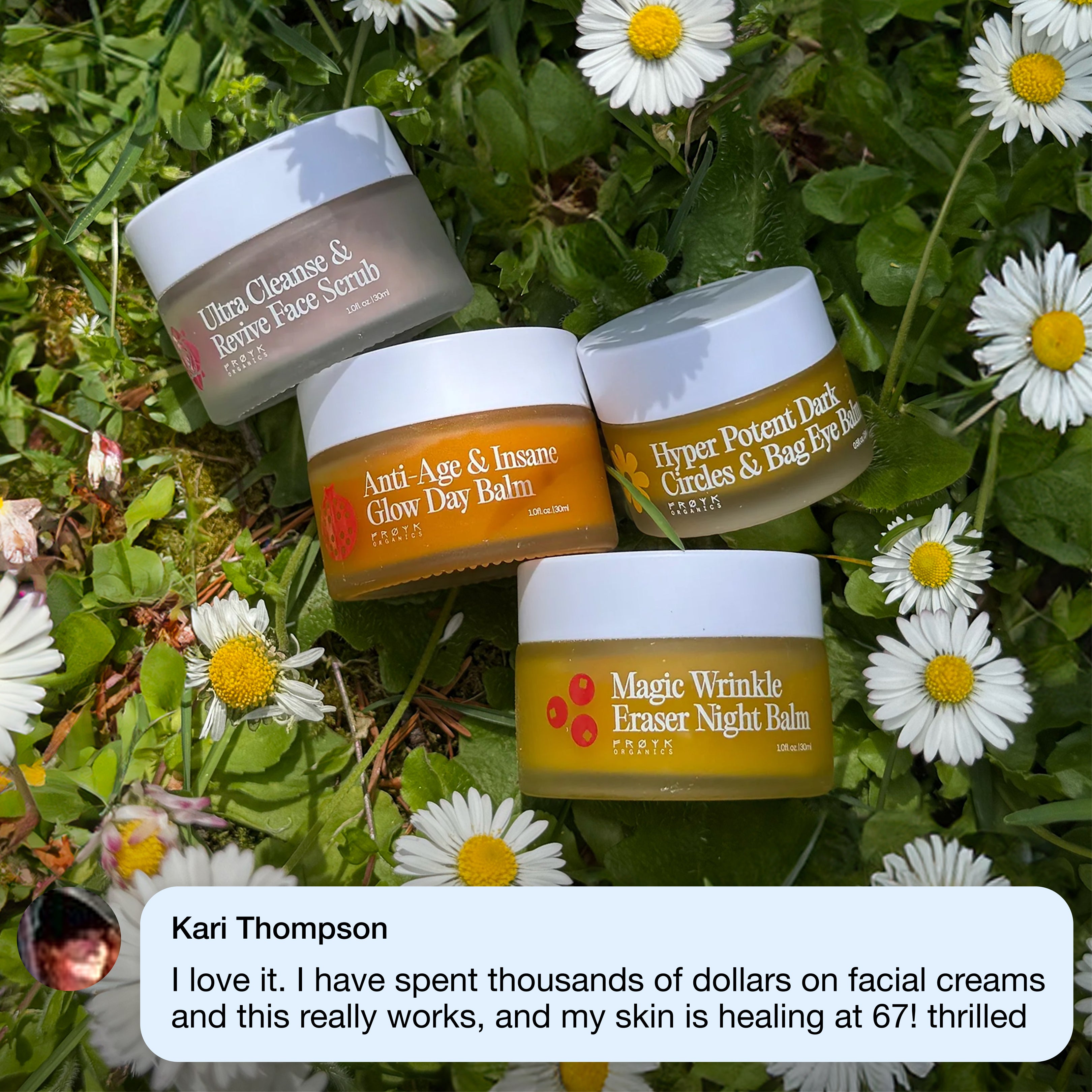
Wild Arctic botanicals and organic beeswax in a waterless four-step routine. Barrier repair, deep hydration, and honest claims in one set, designed for skin over 50. Backed by a 60-day money-back guarantee.
Shop the System TodayThis article is for general information and is not medical advice. Frøya Organics products are cosmetic and are not intended to diagnose, treat, or cure any condition. If you have a skin concern or allergy, talk with a dermatologist.
Preguntas Frecuentes
How do you vet the best skincare for 50s?+
Which anti-aging ingredients actually matter after 50?+
How do you judge a skincare brand’s claims and proof?+
Does a mature skin brand need to sell broad-spectrum SPF?+
Why do natural, waterless formulas suit dry skin over 50?+


