

 Cuenta


Te lavas la cara, aplicas el humectante que compraste el mes pasado, y 60 minutos después tu piel vuelve a estar tensa. Así que lo vuelves a aplicar. La botella dice «hidratante profunda», el precio era correcto, pero tu cara te está diciendo algo diferente.
El mejor cuidado de piel económico después de los 60 no está en la portada de la botella. Está atrás. La mayoría de los productos de skincare económicos son de 60 a 80% agua, por lo que los ingredientes activos se han diluido para hacer casi nada. Después de la menopausia, la producción de sebo se reduce un 40 a 50%, y tu piel ya no puede autohumedecerse como lo hacía a los 45.
A continuación se presentan ocho opciones, la mayoría de ellas aceites de plantas concentrados que cuestan menos por uso que el humectante de farmacia que ya tienes en el estante. Cada una tiene datos clínicos que la respaldan, un mecanismo específico que aborda la fisiología de la piel posmenopáusica, y un costo por aplicación que supera el producto económico que estás buscando ahora. Los puntos uno al cuatro son lo que debes agregar. Cinco y seis son la base. Siete son las matemáticas. Ocho es la versión donde el trabajo ya está hecho.
¿Cuál es el Mejor Cuidado de Piel Económico Después de los 60?
El mejor valor no es el frasco más barato, sino el producto que hace más por uso. Muchas cremas de farmacia son principalmente agua, así que las reutilizas todo el día y se acaban rápido.
Un aceite botánico concentrado o un bálsamo sin agua cuesta más al inicio, pero una pequeña cantidad de punta de dedo cubre todo tu rostro, así que un frasco dura meses y reemplaza varios productos. Las ocho opciones a continuación están clasificadas por lo que entregan por el dinero.
1. Lee Primero la Línea del Agua: Por Qué el Skincare Económico de Farmacia No Cumple
Voltea la botella y lee el primer ingrediente. Si dice aqua o agua, estás pagando por agua. Los ingredientes se enumeran en orden descendente por volumen, por lo que el primer elemento es la mayor parte de lo que estás comprando.
Los humectantes económicos de farmacia típicamente son 60 a 80% agua y 10 a 40% ingredientes activos. Los aceites de plantas concentrados son 100% activos. Cuando pones un producto cargado de agua sobre una piel que ha perdido el 40 a 50% de su sebo, la mayoría del agua se evapora en minutos y se lleva consigo un poco de la humedad restante a través de la pérdida transepidérmica de agua. Esa es la sensación de tensión una hora después. No es imaginación. Es física.
¿Por qué las marcas de farmacia formulan de esta manera? El agua es barata. El agua hace que un producto sea más fácil de aplicar. El agua también permite que una marca imprima «con ácido hialurónico» en la etiqueta cuando la fórmula contiene una fracción de uno por ciento. El ácido hialurónico está presente, técnicamente, de la misma manera que una cucharadita de azúcar está presente en una piscina. En una encuesta del sector, el 48% de las mujeres estadounidenses dijeron que buscan cuidado de la piel hecho con ingredientes naturales, sin embargo, la mayoría de lo que se vende sigue siendo sintético y relleno de agua, no cuidado de piel completamente natural.
La solución es un replanteamiento. Para la piel después de los 60, la rutina más eficaz y económica invierte la prioridad. Una pequeña botella de aceite de plantas concentrado y sin agua ofrece más ingrediente activo por gota que una tina de loción a base de agua al mismo precio, que es la idea detrás del cuidado sin agua.
2. ACEITE DE ROSA MOSQUETA: La Alternativa Asequible al Retinol con Datos de Ensayos
En un ensayo aleatorizado de 2015, el ACEITE DE ROSA MOSQUETA produjo mejoras estadísticamente significativas en las patas de gallo a las 8 semanas (p < 0,05). Un estudio piloto de MDPI de 2025 rastreó las puntuaciones de arrugas que bajaron de 73,63 a 34,60. Eso no es una afirmación de marketing. Eso es lo que muestran los datos.
El mecanismo es la parte que la mayoría de las personas pierden. La rosa mosqueta es aproximadamente 80% ácidos grasos esenciales, principalmente linoleico y ácido alfa-linolénico. El ácido linoleico alimenta la ruta PNPLA1 en tu piel, que es cómo tu piel sintetiza sus propios ceramidas. En lugar de aplicar ceramidas en la superficie, que es lo que hacen la mayoría de las cremas de $40 con ceramidas, la rosa mosqueta le da a tu piel la materia prima para construir su propia barrera desde adentro.
También hay un ángulo de pigmentación. La rosa mosqueta contiene precursores naturales de ácido trans-retinoico, la misma familia de compuestos que le da al retinol su credibilidad anti-envejecimiento, pero en una concentración lo suficientemente baja para que la piel madura no reaccione a ella. Las mujeres que ponen el retinol en el cajón después de semanas de descamación pueden acceder a la misma familia de compuestos sin la inflamación. Para el contexto, un ensayo clínico de retinol al 0,5% informó una tasa de reacción adversa del 23%. La tasa de rosa mosqueta, en poblaciones estudiadas, se sitúa cerca de cero.
Ángulo económico. Tres a cinco gotas por la noche, presionadas en la piel húmeda. Una botella de 30ml dura tres a cuatro meses. Eso es $3 a $5 por mes por un ingrediente con dos ensayos controlados aleatorios que respaldan su uso en piel envejecida, más barato por uso que casi cualquier suero de farmacia en el estante.
Una nota sobre almacenamiento. La rosa mosqueta se oxida rápidamente debido a su alto contenido de ácidos grasos poliinsaturados. Cómprala en vidrio oscuro, guárdala lejos del calor y la luz directa, y úsala dentro de seis meses después de abrirla. Una versión prensada en frío y sin refinar retiene más de los precursores de ácido trans-retinoico que una versión refinada, que es lo que estás pagando.
3. Bakuchiol: La Alternativa Más Suave al Retinol, y Lo Que Te Dice Sobre la Piel Madura
El bakuchiol se promociona como «retinol vegetal», y el atractivo es real. En un ensayo de 44 personas publicado en el British Journal of Dermatology, igualó los resultados de arrugas y pigmentación del retinol a las 12 semanas, con muchas menos personas reportando ardor o descamación. Proviene de la planta Psoralea corylifolia y funciona en rutas de colágeno similares al retinol, a través de una ruta más suave.
Lo útil aquí no es «sal y compra un sérum de bakuchiol». Es lo que la investigación sigue mostrando sobre la piel después de la menopausia. A medida que el sebo disminuye y tu umbral de tolerancia cae, los activos fuertes que irritan la piel que se adelgaza dejan de valer la pena. Cuanto más suave sea una fórmula en una barrera reactiva, más consistentemente puedes usarla, y la consistencia es lo que realmente mueve la aguja.
Ese es el mismo principio en el que se construye Frøya. En lugar de un activo aislado, los bálsamos se apoyan en aceites botánicos y cera de abeja que nutren y fortalecen la barrera, sin la descamación, la purga, o las noches de cara roja que hacen que las rutinas más fuertes se desmoronen.
4. ACEITE DE ESPINO AMARILLO: El Omega-7 Que Repara la Barrera Desde Adentro
El omega-7 del ESPINO AMARILLO es uno de los pocos aceites de plantas cuyos lípidos se ajustan en las capas estructurales de tu piel en lugar de simplemente sentarse en la parte superior. Eso no es poesía. Es bioquímica.
El ESPINO AMARILLO contiene los cuatro omegas principales, 3, 6, 7 y 9, más carotenoides y VITAMINA E. El omega-7 (ácido palmitoleico) se integra en las capas de lípidos del estrato córneo en lugar de recubrir la superficie. El ácido linoleico impulsa la misma ruta de síntesis de ceramidas PNPLA1 que la rosa mosqueta, pero el ESPINO AMARILLO también ofrece compuestos relacionados con fitosfingosina que forman más enlaces de hidrógeno que algunos ceramidas sintéticos. Barrera más fuerte de una botella de $19.
Por qué después de los 60 específicamente. El colágeno cae 30% en los primeros cinco años posmenopáusicos, luego un 2,1% por año después de eso. El estudio de Chan midió la densidad de colágeno como punto final y mostró mejora. Combinado con las mejoras de barrera y TEWL, el ESPINO AMARILLO aborda tres de los cuatro cambios fisiológicos que la piel madura está combatiendo. El omega-7 también sustituye un poco del sebo que la piel ya no produce, que es la razón subyacente por la que los humectantes convencionales se sienten insuficientes después de los 60.
Cómo usarlo. Dos a cuatro gotas, mañana o noche, sobre la piel húmeda. El aceite es naturalmente naranja de los carotenoides, así que calienta una gota entre los dedos y presiona en lugar de frotar. El color se absorbe dentro de un minuto. Una botella de 30ml a $19 dura tres a cuatro meses con uso dos veces al día, la misma banda de precio que la rosa mosqueta anterior.
5. Un Limpiador Suave Sin Fragancia: La Base en la Que Todo Lo Demás se Construye
Si tu cara se siente crujiente después de lavar, tu limpiador está eliminando la barrera de lípidos que luego pagas para reparar con activos. Crujiente es un síntoma, no un objetivo.
Qué buscar. Un limpiador de crema o aceite, no uno espumoso. Sin SLS o SLES en la lista de ingredientes. Sin fragancia, no «sin olor». Son diferentes, y los productos sin olor a menudo aún contienen fragancia enmascarante. Un pH de 5,0 a 5,5, que coincida con el pH natural de la piel sana. Un limpiador de crema no espumoso básico en la farmacia funciona si lees la etiqueta y descartas la fragancia y los tensioactivos duros.
Por qué esto importa más después de la menopausia. El sebo ha disminuido un 40 a 50%. El sebo es lo que mantiene unida la barrera de lípidos. Un limpiador de tensioactivo espumoso elimina lo poco que queda. Estás comenzando cada rutina desde una línea de base peor de la que tenías hace 15 años con el mismo limpiador. El limpiador no cambió. Tu piel sí. El producto que estaba bien a los 45 ahora está trabajando activamente en tu contra.
Cómo usarlo. Una vez al día, por la noche, con agua tibia (no caliente, que agrava la eliminación). Las mañanas pueden ser solo agua o un paño de microfibra húmedo, ambos eliminan los aceites nocturnos sin tensioactivos. Este único cambio, sin nuevos activos, sin gasto adicional, resuelve la tensión, el enrojecimiento y la reactividad que las mujeres a menudo culpan en sus sueros.
Ángulo económico. Un limpiador de crema no espumoso de 200ml en la farmacia cuesta $8 a $14 y dura tres a cuatro meses con uso una vez al día. Eso es menos de $4 por mes para la base en la que todo lo demás se construye.
6. FPS Mineral para Días Largos al Aire Libre, Menos de $20
Sáltalo y el resto de tu rutina está tratando de sacar agua de un bote con fugas. Los rayos UV deshacen el colágeno más rápido de lo que la rosa mosqueta y el bakuchiol juntos pueden construirlo. Hasta el 80% del envejecimiento facial visible se atribuye a la exposición a los rayos UV, no al tiempo cronológico.
Mineral sobre químico, específicamente para piel después de los 60. El óxido de zinc y el dióxido de titanio se sientan en la superficie de la piel y reflejan los rayos UV. Los filtros químicos se absorben en la piel y convierten los rayos UV en calor, lo que puede desencadenar enrojecimiento y reactividad en una cara madura con barrera comprometida. Si tu piel se ha vuelto reactiva durante la última década, tu protector solar podría ser parte de la razón.
Opciones económicas. Busca un FPS mineral teñido de 30+ con óxido de zinc como ingrediente activo. El tinte importa porque los óxidos de hierro bloquean la luz visible (HEV), lo que contribuye a la pigmentación en piel después de los 60 de formas que la mayoría de protectores solares sin teñir no abordan. Rango de precio: $14 a $25 para protectores solares minerales de farmacia sólidos. No necesitas un protector solar de $50.
7. Reemplaza Cuatro Productos Con Uno: Las Matemáticas del Costo por Uso de Aceites Concentrados
Una botella de $19 de aceite de semilla de ESPINO AMARILLO dura 120 días con uso dos veces al día. Eso es $0,16 por aplicación. El humectante de farmacia que la mayoría de las mujeres buscan como la opción económica cuesta alrededor de $0,40 por aplicación. El mismo dinero, dos veces y media la concentración activa.
Coloca la rutina estándar de 60+ de forma clara, antes de compararla con productos naturales anti-envejecimiento que hacen el mismo trabajo en menos pasos. Suero, humectante, contorno de ojos, contorno de cuello. Incluso a precios de farmacia, eso cuesta aproximadamente $60 cada dos a tres meses, o $240 a $360 por año, cuatro productos con activos superpuestos y diluidos. Reemplázalos con un aceite concentrado usado en cara, cuello y alrededor de los ojos. Una botella, 30 a 50ml, $19 a $30, tres a cuatro meses de uso. Durante un año eso es $76 a $120, un ahorro del 50 a 70% en comparación con la pila de farmacia de cuatro productos.
Por qué un aceite reemplaza cuatro. Porque los cuatro eran 60 a 80% agua haciendo lo mismo que una o dos cosas. Un aceite de plantas concentrado entrega los activos por los que los cuatro productos te estaban cobrando y luego diluyendo. Pierdes la dilución, el empaque y el margen de marketing. Lo que queda es la parte que realmente funciona.
8. Sistema Completo para la Piel de Mujeres Maduras: La Rutina de Piel Madura Hecha para Ti
Todo lo de los puntos 1 al 7 es lo que construí en el Sistema Completo para ofrecer en una rutina. ESPINO AMARILLO, ACEITE DE ROSA MOSQUETA, limpieza botánica suave, en concentraciones elegidas para mujeres cuya piel ha cambiado después de la menopausia.
Qué hay adentro y por qué responde a los puntos anteriores. Productos a base de aceite de plantas concentrados, no rellenos de agua. El ESPINO AMARILLO se integra en la barrera de lípidos. El ACEITE DE ROSA MOSQUETA alimenta la ruta PNPLA1 para la síntesis de ceramidas. El sistema está construido para piel posmenopáusica: sebo bajo, recambio de colágeno más lento, barrera debilitada. Sin activos rellenos de agua. Sin fragancia. Sin tensioactivos sintéticos. El limpiador no te dejará crujiente. Los aceites no te dejarán tensa.
Replanteamiento presupuestario aplicado. Como se calcula en el punto 7, la rutina estándar de cuatro productos de farmacia para mujeres después de los 60 cuesta $240 a $360 al año, principalmente agua por volumen. El Sistema Completo lo reemplaza todo con un desembolso único que dura una estación con uso dos veces al día. Durante un año se sitúa en línea con el rango medio de farmacia y muy por debajo de los equivalentes de grandes tiendas. No el precio de pegatina más barato. El más económico en relación a lo que realmente hace en la piel específica que tienes ahora.
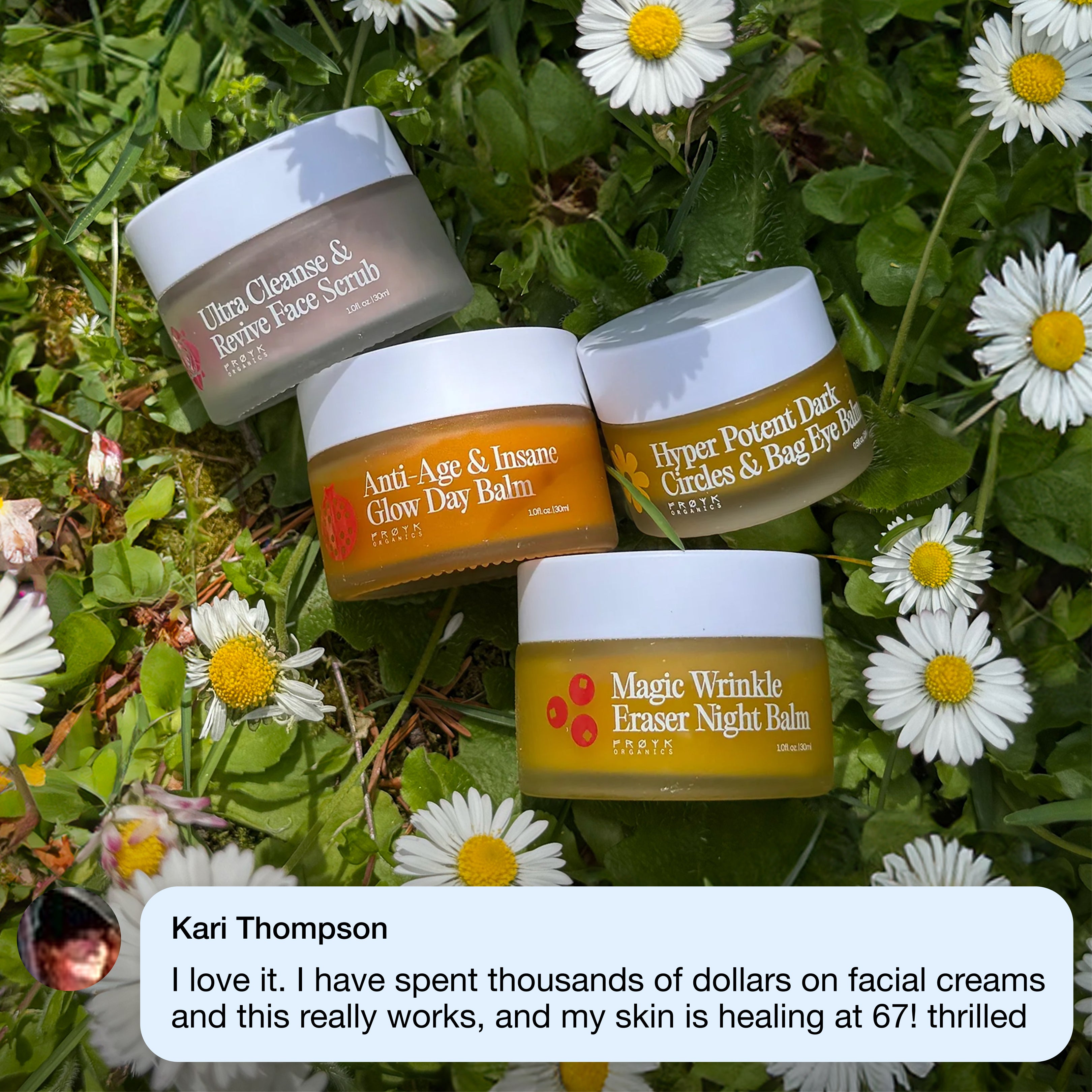
Plantas árticas silvestres y cera de abeja orgánica. Cero agua, cero fragancia sintética. Cuatro bálsamos concentrados que calman y nutren la piel sensible y reactiva, respaldados por una garantía de devolución de dinero de 60 días.
Compra el Sistema HoyEsto no es la opción económica si presupuesto significa el precio de pegatina más bajo. Es la opción económica si presupuesto significa mejor resultado por dólar durante un año, en piel que específicamente ha perdido colágeno y sebo después de la menopausia. Ya tienes lo que necesitas para leer una etiqueta y hacer las matemáticas. Esta es la versión de la rutina donde alguien más ya la ha hecho para ti, usando los mismos ingredientes que comprarías por separado si los obtuvieras tú mismo.


