 Account





I kept seeing arnica everywhere. Massage balms. Homeopathic pellets. Sports rubs. But skincare for mature skin? That caught me off guard. Then I looked at the mechanism - and it made immediate sense.
After 40, a slow, low-grade process researchers call inflammaging changes how skin looks: duller, more tired, slower to bounce back. That is where cold-pressed arnica oil benefits come in. Arnica has been used in European balms for generations to calm the look of stressed, tired skin.
Most people confuse homeopathic arnica (diluted to almost nothing) with topical arnica oil (concentrated plant compounds in an oil base). They are not the same thing. By the time you finish this article, you’ll know which cold-pressed arnica oil benefits matter most for your skin, how to choose a product that actually works, and exactly where arnica fits in your evening routine.
What Does Arnica Oil Actually Do for Mature Skin?
Arnica oil helps calm the look of puffiness, redness and tired skin. On mature skin, its value is calm: skin looks less dull and stressed after 40.
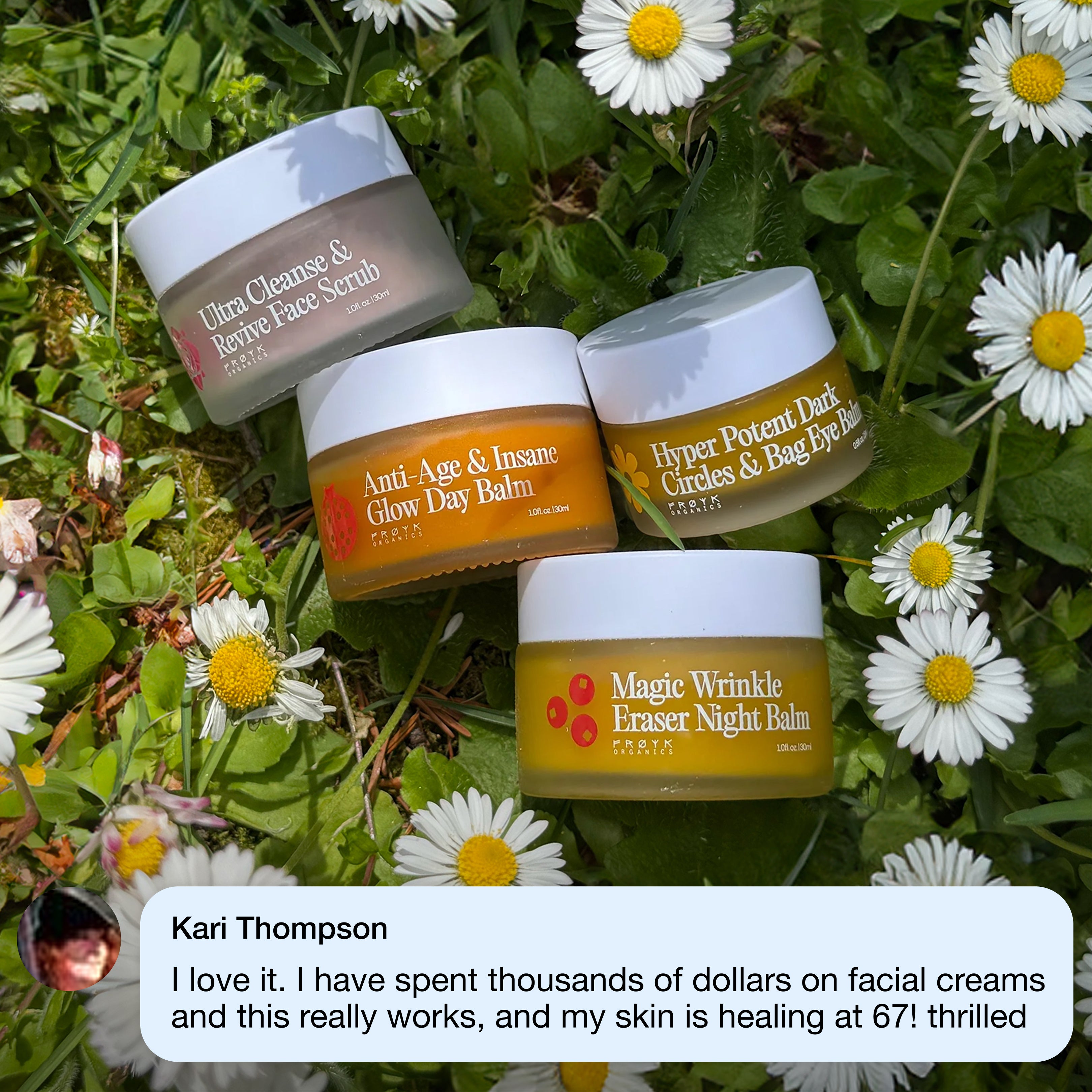
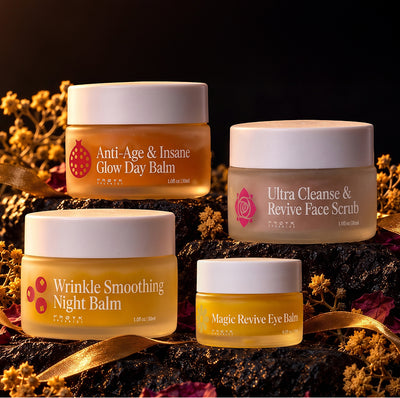
It works best infused into a rich, waterless balm and massaged into unbroken skin at night, which is how Frøya uses Arctic arnica in its night balm. If your skin is broken or very irritated, wait until it heals before using arnica.
What Is Arnica Oil (And Why the Homeopathic Version Doesn’t Count)
Homeopathic arnica is diluted so many times that the final product may contain no detectable arnica molecules at all. A systematic review of placebo-controlled trials found that homeopathic arnica worked no better than placebo. As Dr. Candice Price, DC, explains for the Cleveland Clinic, the dilution can leave so little of the plant that it may not even be detectable.
So what’s the real thing?
Arnica montana is an alpine flowering plant in the Asteraceae family (same family as sunflowers and daisies). Its active compounds include sesquiterpene lactones, primarily helenalin and dihydrohelenalin, along with flavonoids like quercetin and luteolin.
Arnica essential oil is a separate product category - a concentrated CO2 extract or absolute of the flower’s volatile compounds (true steam-distilled arnica essential oil is commercially rare). It is formulated for body applications like sports massage, diluted at 2 to 3% in a carrier. For a facial skincare product, cold-pressed arnica oil is what you’re looking for: it delivers the actives at the right concentration and texture for daily facial use.
A 2006 lab study found that compounds from arnica can pass through human skin samples, which is why the form matters: cold-pressed arnica oil benefits come from the real plant compounds, not a homeopathic dilution.
Inflammaging: The Hidden Reason Your Skin Changed After 40
You probably noticed it before anyone named it. Your skin started recovering slower. A night of bad sleep showed up on your face for days instead of hours. Puffiness lingered.
Redness stayed. Everything looked duller, more tired, and no amount of sleep fixed it. That’s inflammaging: chronic, low-grade inflammation that accelerates after 40, particularly during perimenopause.
The process is cumulative. You don’t notice it week by week, but over months the changes become visible: skin looks thinner, less firm and slower to bounce back.
This is where arnica oil benefits become relevant to aging skin. Lab research on arnica’s helenalin has studied how it acts on inflammatory signaling in cells. On your skin, what you see is calm: in a rich night balm, arnica helps tired, stressed-looking skin look calmer and more even.
5 Arnica Oil Benefits That Matter Most After 40
Not every arnica benefit you’ll read about online is relevant to mature skin. Some target sports injuries. Others rely on homeopathic preparations that contain almost nothing. These five are what arnica is used for in skincare for mature skin, and what to check for in anti aging products that list arnica.
1. Calms the Look of Stressed Skin After 40
This is the foundational benefit. Arnica’s compounds have been studied for their calming effect: a 2024 lab study on arnica looked at them in human and animal cells. For mature skin, that shows up as skin that looks less stressed and more even, night after night.
2. Eases the Look of Under-Eye Puffiness and Dark Circles
After 40, morning puffiness takes longer to settle. Arnica helps the under-eye area look less puffy, brighter and less tired, which is why it is in the Magic Revive Eye Balm.
One Reddit user said her under-eyes looked brighter after a month of use. That is anecdotal, not clinical.
3. Helps Skin Look Smoother and More Resilient
Used every night in a rich balm, arnica helps skin look smoother and feel more comfortable. Post-blemish marks look softer, and overall texture looks more even.
4. Soothes Reactive, Sensitized Skin
Mature skin has a thinner barrier. Products that worked fine at 35 might cause stinging or redness at 50. The skin’s inflammatory response triggers more easily and calms more slowly as the lipid barrier loses density with age.
Arnica helps reactive, sensitized skin look and feel calmer, without stripping it. This is gentle modulation, not suppression. Your skin still responds to real threats. It just stops overreacting to minor ones.
5. Evens Skin Tone and Calms the Look of Redness
That dull, tired look that doesn’t improve with sleep? Arnica helps calm the look of redness, so your natural skin tone looks more even. Customers report the change is subtle but visible within two to four weeks, though results vary.
How to Choose an Arnica Oil Product for Your Face
Real arnica, not a dilution. Look for arnica flower extract or arnica oil on the ingredient list. Products marketed as homeopathic contain so little arnica that it may not be detectable.
A named base oil. The base oil carries every botanical in the formula. Look for named plant oils such as safflower, sunflower, jojoba or sweet almond near the top of the list.
No water or fillers. Water-based gels and lotions dilute the botanicals and need more preservatives to stay stable. A waterless balm keeps arnica in a concentrated base of oils and beeswax.
Keep the lid closed and store the jar away from heat and direct sun. To get the full range of arnica oil benefits, product quality is non-negotiable.
What to avoid: products marketed primarily as homeopathic, added synthetic fragrance, and labels that don’t name the base oil.
Where Arnica Oil Fits in Your Evening Skincare Routine
Arnica oil belongs in your evening routine, and the simplest way to use it is already blended into a balm. Rinse your face with water, warm a small fingertip amount of the Wrinkle Smoothing Night Balm between your fingers, and press it into your face and neck.
Starting protocol: Patch test on your inner forearm first, and start with three nights per week. Press gently into your skin, without dragging or rubbing. After two weeks with no irritation, increase to nightly use if your skin responds well.
For the eye area, use your ring finger and tap the Magic Revive Eye Balm along the orbital bone, away from the lash line.
Safety Notes: Who Should Skip Arnica Oil
Never apply to broken skin, open wounds, or surgical sites. Helenalin on compromised skin causes irritation and delays healing rather than supporting it. This includes fresh cuts, active eczema lesions, and post-procedure skin. Wait until the wound has fully closed before applying.
Asteraceae allergy. If you react to ragweed, daisies, marigolds, sunflowers, or chrysanthemums, you may develop contact dermatitis from arnica. The Asteraceae family shares cross-reactive proteins, so sensitivity to one member often extends to others. Patch test on your inner forearm for 24 hours before facial use. If you have a confirmed allergy to this plant family, skip arnica entirely.
Blood-thinning medications. Arnica can interact with anticoagulants like warfarin and aspirin. If you take a blood thinner or blood pressure medication, ask your doctor before using arnica. Stop arnica two weeks before any scheduled surgery.
Pregnancy and breastfeeding. Insufficient evidence to confirm safety during either. Avoid until more data is available.
Concentration sensitivity. If you experience persistent redness, itching, or burning after your 24-hour patch test, do not use the product on your face. Switch to a lower-concentration formula or discontinue.