

 Account


Let me guess. You have a shelf of half-empty jars, each one bought on a promise, each one quietly shoved to the back by week three.
I have watched women go through this for years. New product, small hope, slow letdown, repeat. By 50, that shelf gets expensive.
Here is what this guide covers. We will sort out what plant-based skin care actually is, what it does for skin that has changed with age, and how to pick a botanical routine that finally sticks. No hype, just what works and why.
Because the real issue usually is not your skin. It is that the beauty products were never built for the skin you have now. So before you buy one more thing, read this.
Key Takeaways
- Plant-based skincare uses plant oils and botanical extracts, but it is not the same as vegan, since a plant-based product can still contain beeswax.
- "Natural" and "clean" are not regulated words, so the label alone does not tell you if a product is safe or effective.
- After menopause, skin loses collagen and moisture, which is why products that once worked can suddenly stop holding.
- An oil's fatty-acid profile matters most, and linoleic-rich oils like safflower support the skin barrier better than heavier ones.
- A complete, consistent routine built for mature skin beats chasing single products one jar at a time.
What Plant-Based Skincare Actually Means

Plant-based skincare uses ingredients that come from plants, like plant oils and botanical extracts, instead of synthetic or animal ones.
Think safflower oil, rosehip, sea buckthorn, and marigold. These plant-based ingredients carry fatty acids and antioxidants your skin already knows how to use.
The format matters too. Many botanical skincare products are waterless, so the actives are not watered down, and a quick scrub step helps remove impurities before they go on. If you want the deeper reason that concentration helps, this guide on waterless botanical skincare breaks it down.
Plant-Based vs Vegan, Natural, and Organic: What the Labels Really Tell You
These words get used like they mean the same thing. They do not, and the difference changes what you are buying.
Here is the quick version:
- Plant-based: Mostly plant ingredients derived from oils and extracts, but it can still contain beeswax.
- Vegan: No animal derived ingredients at all. Vegan skincare is free from animal derived inputs, which is why vegan beauty products leave out beeswax and honey.
- Cruelty-free: About animal testing, not ingredients. Terms like cruelty free, leaping bunny certified, and tested on animals are not legally defined by the FDA.
- Natural: Not regulated at all, so on cosmetic products it can mean almost anything.
- Organic: Tied to USDA rules, so certified organic means real farm standards. The FDA confirms it does not define "organic" for cosmetics and leaves that to the USDA.
So a product can be plant-based without being vegan skin care. Beeswax is the clearest case. It rules out vegan products, but it also seals botanical oils onto dry skin so they work harder.
For how these terms play out after midlife, see natural organic skincare after 45.
Why Your Skin Changed After 45 (and Why Old Products Stopped Working)

If the same products suddenly stopped delivering, your biology shifted. This is not bad luck, and it is not you doing anything wrong.
As estrogen falls around menopause, your skin makes less collagen and holds less moisture. Collagen is the scaffold that keeps skin firm, and estrogen helps your skin hold water. When both drop, skin gets thinner, drier, and slower to recover.
This is the part most ads skip. Your skin did not stop responding, its needs changed, so the same products now do less.
So the light lotion that once felt like enough now sits on top and fades by noon. Mature skin wants richer, barrier-feeding support, not another fast-absorbing layer.
What Deficiency Causes Dry Skin?
Dry skin is usually a barrier problem, not a vitamin one. When skin loses the fatty acids that lock in water, moisture escapes, and no amount of drinking water fully fixes it.
That is why the fats in plant oils matter so much for anti-aging care, which brings us to the part most labels skip.
What Plant Oils Actually Do for Mature Skin
Not all natural ingredients work the same, and this is where cheap "natural" products fall short. An oil's fatty-acid profile decides whether it feeds your barrier or weakens it.
Research backs this up. A review in the International Journal of Molecular Sciences found that plant oils support the skin barrier differently depending on their makeup.
Linoleic-Rich Oils Support the Barrier
Oils high in linoleic acid, like safflower and sunflower, help preserve and repair the skin barrier. High-oleic oils, like olive oil, can weaken it with continued use.
Lin, Zhong, Santiago, Int J Mol Sci, 2018
Here is why that matters for you. Safflower oil is about 70% linoleic acid, so a routine built on it works with your skin, not against it.
Antioxidant botanicals add another layer. Rosehip and sea buckthorn are rich in fatty acids and antioxidants that help protect skin from everyday stress and pollution, which show up faster on aging skin.
Why "Natural" Doesn't Always Mean Gentle
This is the part the clean-beauty aisle rarely admits. Natural does not automatically mean safe for every face.
Plant extracts and essential oils are active ingredients, and some can irritate sensitive skin. Even aloe vera, known for being soothing, triggers a reaction in some people, which is why how a formula is made matters as much as what is in it.
Natural Does Not Mean Risk-Free
Even plant ingredients can irritate skin that is reactive. If yours is sensitive, it is worth introducing anything new slowly.
The simplest way to start is to use a new product the way it is meant to be used, on the areas you actually want to help, and build up gradually. Dermatologists at the American Academy of Dermatology suggest going slow with anything new, so apply it to your concern areas, give it a few days, and let your skin tell you how it feels before you go all in.
This matters for any botanical product, including a good one. It is also why a thoughtfully formulated routine, built around well-studied oils, gives your skin a steadier, more predictable result than a random jar.
What About Retinol, Hyaluronic Acid, and Other Actives

You have probably been told these actives are must-haves, and they do have real research behind them. The catch is that strong ingredients do not suit every face, especially after 40 when your barrier is thinner.
Here is the honest rundown:
- Retinol: Smooths lines and speeds cell turnover, which is why it is so popular. That same turnover causes flaking, redness, and stinging while skin adjusts, and it raises sun sensitivity.
- Bakuchiol: A plant-derived alternative to retinol that many people find gentler. It still suits some faces better than others, so it is not automatic.
- Hyaluronic acid: A facial serum with it pulls water into the skin for a plump look. In dry air, it can draw moisture outward and leave skin feeling tight without a layer to seal it in.
- Vitamin C: Brightens skin and fights free radicals. A high-strength formula can sting reactive or sensitive skin.
These are well-established ingredients, just on the stronger side, and strong does not suit every skin type. It depends on your skin's tolerance. If your skin keeps reacting, a gentler natural retinol alternative built on botanicals may be the easier fit.
How to Choose Plant-Based Skincare for Your Skin Type
The right routine depends on your skin type and concerns, not the prettiest label. Among skincare brands, the honest ones make this easy to check.
Use these checks before you buy:
- Read the ingredient list, not the front. Look for named plant-derived ingredients near the top.
- Match it to your skin. Dry, mature skin wants barrier-feeding oils like safflower and rosehip.
- Look for real transparency. Clear sourcing and sustainable ingredients beat vague claims.
- Treat it as a full routine. Single other products rarely fix what a complete, consistent routine can.
Jumping between one-off jars is exactly why so many women feel like they have tried everything. A matched routine for natural skincare for mature skin is usually the missing piece.
A Complete Botanical Routine for Mature Skin

Here is the shift that helps most. Stop chasing single jars and give your skin one connected routine built for its real needs.
That is the thinking behind the Complete System for Mature Women's Skin. It is a four-step botanical routine, built on safflower and Arctic plant oils, formulated for a barrier that has changed. You can read the ingredient research on the brand's skincare backed by science page.
A little goes a long way with these balms, so each step takes only a small fingertip amount.
Ultra Cleanse & Revive Face Scrub

Most routines start by stripping the skin. This waterless face scrub does the opposite, using rice, apricot seed, and rose petal powder to lift away dead cells and buildup without soap or water. Clearing that layer is what lets the oils in the next steps actually sink in instead of sitting on top.
Use it 2 to 3 times a week. Mix a pinch with water in a dry palm, massage for a minute, then rinse.
Anti-Age & Insane Glow Day Balm

Mature skin loses oils it once made on its own, so mornings are about replacing them. This botanical day balm leans on safflower, sea buckthorn, argan, and rosehip, a linoleic-rich blend that supports the barrier and leaves a soft glow under makeup. It is your daily layer of protection against dryness and everyday stress.
Smooth a thin layer over clean skin each morning.
Magic Revive Eye Balm

The skin around your eyes is thinner and shows dryness, puffiness, and dark circles first. This under-eye balm pairs safflower with arnica, chamomile, and pomegranate to soften the look of circles and fine lines in that delicate zone. It gives the eye area the targeted moisture a face balm alone can miss.
Pat a small amount around the eyes, morning or night.
Wrinkle Smoothing Night Balm

Your skin does its repair work overnight, so this step is richer by design. This botanical night balm uses safflower, rosehip, marigold, and cranberry seed oil to feed moisture and support that overnight renewal. You wake up to skin that feels replenished rather than tight.
Press a thin layer over your face before bed.
The four steps are already blended for you, so there is nothing to mix or measure yourself. For the rest of you, a matching body care step like a body oil or body lotion keeps the same habit going from face to body.
You Haven't Failed, Your Routine Just Wasn't Built for This

Let me say the thing you probably needed to hear ten jars ago. You are not the problem.
Most of them were never built for skin that has been through menopause. Your skin did not quit on you, its needs changed, and the shelf never caught up.
Here is what I have seen work. When the formula finally matches what mature skin actually lost, the drama settles down. Less tightness by noon, less flaking, skin that just feels like yours again.
You do not have to take my word for it. The women in these photos felt exactly the way you do right now, tired and skeptical, before they switched. Take a look at their real customer results and decide for yourself.
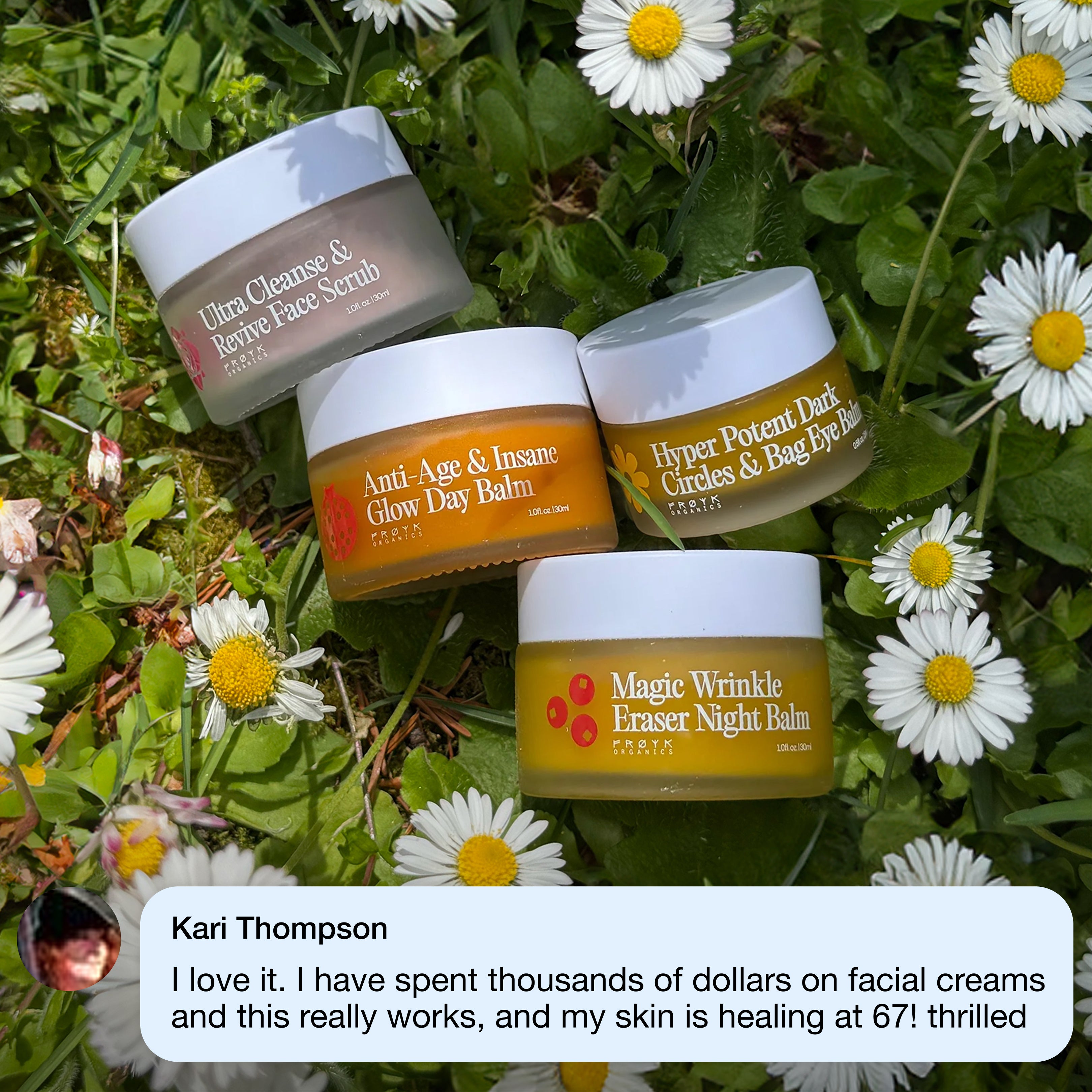
Four waterless botanical steps built on safflower and Arctic plant oils to support firmness, hydration, and glow, backed by a 60-day money-back guarantee.
Shop the System TodayThis article is for general education only and is not medical advice. Results vary from person to person, and no product can replace care from a qualified professional. If you have a skin condition or a known allergy, check with your dermatologist before trying new products.
Häufig gestellte Fragen
Is plant-based skincare good?+
Is plant-based skincare the same as vegan or cruelty-free?+
Is plant-based skincare good for sensitive skin?+
Does plant-based skincare work on mature or aging skin?+
How do I choose a plant-based routine that actually works?+


