

 Account



Die meisten Menschen hören „Rosmarinöl“ und denken sofort an Haarwachstum. Verständlich. Aber die Forschung dazu, was Rosmarin für die Haut leistet, ist spannender als die Haar-Geschichte, und die meisten Skincare-Marken haben das noch gar nicht auf dem Schirm. Die Wissenschaft dahinter ist konkret, aktuell und für reife Haut unmittelbar relevant.
Rosmarin enthält drei Wirkstoffe, die genau dort ansetzen, wo alternde Haut Unterstützung braucht: Rosmarinsäure (untersucht bei UV-bedingter Hautalterung über den NRF2-GSH-Signalweg), Carnosolsäure (ein potenter Radikalfänger, der in Stabilitätstests Vitamin E übertrifft) und Ursolsäure (ein Collagen-Modulator, der gleichzeitig in zwei Richtungen wirkt). Anders als Zitrusöle ist Rosmarin nicht phototoxisch und gehört deshalb ohne Bedenken in Ihre Morgenroutine.
Das sind keine theoretischen Vorteile, die nur im Labor gelten. Jeder dieser Wirkstoffe ist wissenschaftlich belegt, und zusammen adressieren sie genau jene Anliegen, die sich nach dem 40. Lebensjahr verstärken: oxidative Schäden, dünner werdendes Collagen, chronische, niedriggradige Entzündungen und eine eingeschränkte Mikrozirkulation. Hier sind 8 wissenschaftlich belegte Vorteile von Rosmarinöl für die Haut, dazu die genauen Protokolle, Verdünnungsverhältnisse und Trägeröl-Kombinationen für die sichere Anwendung auf reifer Haut. Jede Empfehlung unten enthält konkrete Konzentrationen und Anwendungsmethoden.
1. Es bekämpft freie Radikale besser als die meisten „Antioxidans“-Öle
Jedes Öl auf dem Markt wirbt mit antioxidativer Kraft: Kokosnussöl, Arganöl, Marulaöl. Doch die Vorteile von Rosmarinöl für die Haut beginnen mit einer Spezifität, die diesen Ölen fehlt. Seine Wirkstoffe, Carnosolsäure und Rosmarinsäure, wurden einzeln als Radikalfänger untersucht, die Collagen und Elastin auf zellulärer Ebene vor oxidativem Abbau schützen.
Diese Verbindungen neutralisieren nicht nur bereits entstandenen Schaden. Sie bewahren die Strukturproteine, die Ihre Haut nach dem 40. Lebensjahr aktiv verliert. Die meisten Antioxidans-Öle beseitigen freie Radikale erst im Nachhinein. Die Wirkstoffe von Rosmarin halten Collagen und Elastin intakt, bevor der Abbau überhaupt beginnt. Dieser Unterschied ist entscheidend, denn oxidativer Abbau ist die Hauptursache für Fahlheit, Erschlaffung und ungleichmäßigen Teint bei reifer Haut.
Zum Vergleich: Vitamin-E-Öl, der Goldstandard unter den antioxidativen Trägerölen, neutralisiert Lipidperoxidation, aktiviert aber nicht die körpereigenen Abwehrsysteme der Haut. Oder Vitamin-C-Seren, die bei Licht- und Luftkontakt schnell zerfallen und schon innerhalb von Stunden nach dem Auftragen an Wirksamkeit verlieren. Die Carnosolsäure im Rosmarin bleibt stabil und fängt über längere Zeiträume weiter freie Radikale ab, statt bei Kontakt zu zerfallen.
Fernando et al. (2016, über 122-mal zitiert) zeigten, dass Rosmarinsäure menschliche Keratinozyten deutlich vor UVB-Strahlung schützte. Eine Studie von Gupta et al. aus 2023 bestätigte den konkreten Mechanismus: Rosmarinsäure aktiviert den NRF2-GSH-Signalweg, das körpereigene Abwehrsystem der Haut gegen Oxidation.
Dieser Signalweg kurbelt die Produktion von Glutathion an, dem stärksten Antioxidans, das Ihre Zellen selbst herstellen. Das bedeutet: Rosmarin liefert nicht nur zusätzliche Antioxidantien von außen, er regt die Haut auch dazu an, mehr davon selbst zu produzieren.
Am besten geeignet für: täglichen antioxidativen Schutz unter SPF. Wenn Sie derzeit ein verschreibungspflichtiges Retinoid verwenden, sprechen Sie mit Ihrer Dermatologin, bevor Sie Rosmarin ergänzen, um eine Überstimulation der Haut zu vermeiden.
2. Der Anti-Aging-Wirkstoff, den die meisten Skincare-Marken noch nicht entdeckt haben
Ein Vorteil von Rosmarinöl für die Haut hebt sich derzeit von allem anderen auf dem Markt ab. Ein einzelner Wirkstoff im Rosmarin schafft etwas, das kein Retinol kann: Er baut Collagen dort auf, wo Ihre Haut mehr davon braucht, UND baut es dort ab, wo zu viel davon vorhanden ist. Derselbe Wirkstoff. Zwei Richtungen.
Dieser Wirkstoff ist Ursolsäure. Forschung von He et al. (Biomolecules, 2025) zeigt, dass sie über einen doppelten Mechanismus wirkt: Sie hemmt überschüssige Collagenansammlung über den TGF-beta/Smad-Signalweg und erhöht gleichzeitig den Collagenabbau über MMP-1 via MAPK/AP-1.
Die Forscherpersönlichkeit hinter einem Großteil dieser Arbeit zur Collagen-Modulation ist Taihao Quan von der University of Michigan, dessen Labor umfassend zur Matrixbiologie alternder Haut publiziert hat. Seine Forschung zeigt konkret, wie Ursolsäure den Collagenstoffwechsel je nach Gewebekontext in entgegengesetzte Richtungen lenkt.
Diese doppelte Wirkung bedeutet, dass Ursolsäure dünner werdende Haut fester macht und gleichzeitig raue Textur durch alte Aknenarben oder angesammelte Sonnenschäden glättet. Retinol steigert die Collagenproduktion, Punkt. Es kann bestehende Collagenablagerungen nicht selektiv umgestalten. Wenn Sie sowohl dünner werdende Haut an den Wangen als auch raue, ungleichmäßige Textur durch jahrzehntelange Sonneneinstrahlung haben, adressiert Retinol nur ein Problem. Ursolsäure adressiert beide gleichzeitig.
Eine liposomale Form der Ursolsäure (vermarktet als Merotaine) hat in Hautstudien messbare Zunahmen sowohl von Ceramiden als auch von Collagen gezeigt. Aber Sie brauchen kein Spezialprodukt, um an diesen Wirkstoff zu kommen. Rosmarinöl ist eine der konzentriertesten natürlichen Quellen für Ursolsäure überhaupt und liefert zusätzlich antioxidative und entzündungshemmende Vorteile, die isolierte Ursolsäure-Formulierungen nicht bieten.
Das Fazit: Ursolsäure ist der Wirkstoff, den man in den nächsten fünf Jahren der Skincare-Forschung im Blick haben sollte. Rosmarinöl ist der Weg, wie Sie schon heute davon profitieren können, bevor die Prestige-Marken aufspringen und entsprechend hohe Preise verlangen.
3. Ihre morgendlichen Augenschwellungen haben ein Durchblutungsproblem
Diese stur wiederkehrende morgendliche Schwellung, die kein Concealer kaschieren kann? Das ist ein Durchblutungsproblem, nicht nur Flüssigkeitseinlagerung. Und es ist einer der Vorteile von Rosmarinöl für die Haut, der am schnellsten sichtbare Ergebnisse zeigt.
Kampfer, einer der wichtigsten flüchtigen Wirkstoffe im Rosmarin, bewirkt eine lokale Gefäßerweiterung: Er weitet feinste Blutgefäße nahe der Hautoberfläche, versorgt die Zellen mit mehr Sauerstoff und Nährstoffen und leitet gleichzeitig die Flüssigkeitsansammlung ab, die Schwellungen und dunkle Schatten verursacht. Die verbesserte Mikrozirkulation ist der Grund, warum Rosmarin der Haut jenen „frisch von der Kosmetikbehandlung“-Glow verleiht. Er überdeckt Fahlheit nicht, er behebt sie auf Gefäßebene.
Yon-Ka Paris setzt Rosmarin seit 1954 in ihrem Phyto-Contour-Augenprodukt ein, speziell gegen Krähenfüße und für mehr Festigkeit im Augenbereich. Wenn ein französisches Kosmetikhaus 70 Jahre lang ein Vorzeigeprodukt um einen einzigen Wirkstoff herum aufbaut, spricht diese Erfolgsgeschichte für sich.
So wenden Sie Rosmarin um die Augen an: In Arganöl oder Süßmandelöl auf 0,5 % verdünnen, dann sanft mit dem Ringfinger entlang des Augenhöhlenknochens einklopfen. Verwenden Sie gezielt den Ringfinger, da er von allen Fingern den geringsten Druck ausübt und so das empfindliche periorbitale Gewebe vor Dehnung schützt.
Das warme, leicht kribbelnde Gefühl durch den Kampfer ist normal und zu erwarten. Das ist die aktivierte Durchblutung, keine Reizung. Morgens und abends auftragen für beste Ergebnisse, immer auf gereinigter Haut, vor schwereren Produkten.
Kurzer Vergleich: Koffein-Augencremes ziehen Blutgefäße zusammen und reduzieren Schwellungen vorübergehend durch verminderten Blutfluss. Rosmarin weitet die Gefäße und verbessert die Nährstoffversorgung und den Lymphabfluss über die Zeit. Das eine kaschiert das Problem jeden Morgen nur vorübergehend. Das andere behebt das zugrunde liegende Durchblutungsdefizit.
4. Es beruhigt Rötungen ohne die Nebenwirkungen von Steroiden
Wenn Ihre Haut auf alles reagiert – Wetterwechsel, Wein, Stress, ein neues Produkt –, kennen Sie die Frustration von Rötungen, die nie ganz verschwinden. Wahrscheinlich wurde Ihnen schon zu topischen Steroiden geraten, und sie wirken tatsächlich, aber um einen Preis.
Topische Steroide lassen bereits alternde Haut bei längerer Anwendung noch dünner werden. Nach dem 45. Lebensjahr verliert Ihre Haut durch natürliche Atrophie bereits etwa 1 % ihrer Dicke pro Jahr. Ein Mittel hinzuzufügen, das die Verdünnung der Dermis noch beschleunigt, ist ein Kompromiss, den die meisten Frauen nicht eingehen würden, wenn sie ihn klar verstünden. Genau hier bieten die Vorteile von Rosmarinöl für die Haut eine sinnvolle, barrierefreundliche Alternative.
Rosmarin enthält 1,8-Cineol und Alpha-Pinen, beide belegte entzündungshemmende Wirkstoffe, die entzündungsfördernde Botenstoffe wie TNF-alpha und IL-6 hemmen. Rosmarinsäure ergänzt einen breiteren entzündungshemmenden Mechanismus, indem sie die NF-kB-Aktivierung unterdrückt, den zentralen Schalter für entzündliche Kaskaden im Hautgewebe. Zusammen beruhigen diese Wirkstoffe reaktive Haut, ohne die Barrierefunktion zu beeinträchtigen – entscheidend für reife Haut, die sich keine weitere Barrierestörung leisten kann.
Für empfindliche oder gerötete Haut empfiehlt AG Organica eine vorsichtige Verdünnung von 0,5 bis 1 % in einem Trägeröl mit Calendula- oder Kamillenauszug. Sie beruhigen die gereizte Haut damit mit Wirkstoffen, die sie gut verträgt, anstatt sie mit einem weiteren aggressiven Wirkstoff zu überfordern, der erst eine Eingewöhnungsphase verlangt.
Rosmarin ersetzt keine verschreibungspflichtigen Behandlungen bei schwerer Rosacea oder diagnostizierten entzündlichen Erkrankungen. Aber bei leichten bis mittelschweren Rötungen und im täglichen Umgang mit reaktiver Haut baut es über die Zeit Barrierestärke auf, statt Symptome zu unterdrücken und dabei die Haut darunter zu schwächen.
Am besten geeignet für: leichte bis mittelschwere Rötungen und reaktive Haut. Nicht geeignet, wenn: Sie einen aktiven Rosacea-Schub haben. Warten Sie, bis er abgeklungen ist, und führen Sie es dann mit 0,5 % ein.
5. Klarere Poren, ohne die Haut auszutrocknen
Unreinheiten hören nicht mit 40 auf. Sie werden sogar verwirrender, wenn sie zusammen mit feinen Linien und Trockenheit auftreten, und übliche Anti-Akne-Behandlungen verschlimmern diese Kombination noch.
Salicylsäure und Benzoylperoxid wirken gegen Unreinheiten, trocknen aber beide die Haut stark aus. Bei reifer Haut, die es sich nicht leisten kann, Feuchtigkeit zu verlieren, schaffen austrocknende Behandlungen ein neues Problem, während sie das alte lösen. Zu den Vorteilen von Rosmarinöl für die Haut zählt, dass es die Sebumproduktion reguliert, statt Öl zu entziehen – wichtig, wenn Ihre Barriere während hormoneller Umstellungen ohnehin schon um Feuchtigkeit kämpft.
Die antibakteriellen Wirkstoffe von Rosmarin (vor allem 1,8-Cineol und Kampfer) kontrollieren die an hormonell bedingten Unreinheiten beteiligten P.-acnes-Bakterien, ohne das gesunde Mikrobiom der Haut zu stören. Diese selektive antibakterielle Wirkung erhält die schützenden Bakterien, auf die Ihre Barriere angewiesen ist.
Das macht Rosmarin besonders wirksam bei Verstopfungen in der T-Zone, die während der Perimenopause und darüber hinaus anhalten, wenn hormonelle Schwankungen die Sebumproduktion von Woche zu Woche unberechenbar machen.
Ein einfaches Tonic, das Sie noch heute Abend selbst herstellen können: 5 Tropfen ätherisches Rosmarinöl in 120 ml Rosenwasser, aufbewahrt in einer Glassprühflasche. Vor jeder Anwendung gut schütteln, aus 15 cm Entfernung auf gereinigte Haut aufsprühen und vollständig an der Luft trocknen lassen, bevor Sie Feuchtigkeitspflege auftragen. Es strafft die Poren, klärt verstopfte Haut, und da Rosmarin nicht phototoxisch ist, können Sie es jeden Morgen ohne Sorge um erhöhte Sonnenempfindlichkeit anwenden.
Direkte Empfehlung: Probieren Sie das Rosenwasser-Tonic zwei Wochen lang aus, bevor Sie in stärkere Wirkstoffe investieren. Vielleicht braucht Ihre Haut sie gar nicht.
6. Ein UV-Schutzschild, das mit Ihrer Sonnencreme zusammenarbeitet, nicht gegen sie
Anders als Bergamotte- und Zitronenöl, die die Lichtempfindlichkeit erhöhen und Verbrennungen verursachen können, wirkt Rosmarin genau umgekehrt. Er gilt als nicht phototoxisch und ist damit für die Anwendung am Tag vollkommen sicher. Allein das unterscheidet ihn von den meisten ätherischen Ölen in der Hautpflege, die eine zwingende Einschränkung für die Tagesanwendung mit sich bringen.
Fernando et al. (2016) zeigten, dass Rosmarinsäure menschliche Keratinozyten aktiv vor UVB-Schäden schützt, nachweisbar durch eine messbare Reduktion des UV-bedingten Zelltods. Rosmarinsäure aktiviert den NRF2-GSH-Signalweg Ihrer Haut gegen UV-bedingte Alterung und gibt Ihrer Sonnencreme quasi zelluläre Unterstützung. Dieser Vorteil von Rosmarinöl für die Haut bedeutet, dass Ihre Zellen eigene antioxidative Reserven aufbauen, vor allem Glutathion, um die UV-Strahlung zu neutralisieren, die trotz SPF-Schicht eindringt.
Das ersetzt KEINE Sonnencreme. Nichts tut das. Aber es fügt eine zusätzliche zelluläre Schutzebene hinzu, die Sonnencreme allein nicht bietet.
Ihr SPF blockiert UV-Strahlung an der Oberfläche. Die Wirkstoffe von Rosmarin helfen Ihren Zellen, der durchdringenden Strahlung zu widerstehen. Stellen Sie sich das wie eine innere Verteidigungslinie hinter einer äußeren Mauer vor.
Bei reifer Haut, wo sich kumulierte UV-Schäden Jahr für Jahr summieren und die Reparaturmechanismen langsamer werden, wiegt jede zusätzliche Schutzebene mit 50 mehr als mit 25. Die zelluläre Unterstützung durch Rosmarin wird genau dann wertvoller, wenn Ihre Haut verwundbarer wird.
Das Fazit: Tragen Sie Ihr Rosmarin-Serum morgens auf, dann darüber den SPF. Es ist eines der wenigen ätherischen Öle, die Sie bedenkenlos in eine Tagesroutine einbauen können.
7. Festigkeit, die Sie nach 60 Tagen tatsächlich spüren
Die meisten straffenden Produkte versprechen Ergebnisse „in wenigen Wochen“. Hier ist stattdessen ein ehrlicher Zeitplan, denn die Vorteile von Rosmarinöl für die Haut, die strukturelle Veränderungen betreffen, brauchen Geduld.
Strukturelle Festigkeitsveränderungen brauchen 6 bis 8 Monate regelmäßiger Anwendung, im Einklang mit dem Tempo vollständiger Collagen-Erneuerungszyklen. Sichtbare frühe Veränderungen zeigen sich aber deutlich früher. Verbesserte Textur und ein spürbarer Glow durch die bessere Durchblutung treten typischerweise innerhalb von 4 bis 8 Wochen auf.
Das ist Rosmarin, der an der Oberfläche wirkt, während sich darunter der tiefere Collagen-Umbau aufbaut. Diese frühen Erfolge halten Sie über den längeren strukturellen Zeitraum hinweg motiviert, und es sind echte Verbesserungen, kein Placebo.
Täglicher antioxidativer Schutz, Collagen-Unterstützung und verbesserte Durchblutung summieren sich über die Zeit, sodass sich die Ergebnisse beschleunigen statt zu stagnieren. Das ist das Gegenteil der meisten topischen Produkte, die früh ihren Höhepunkt erreichen und sich dann abflachen, sobald sich die Haut angepasst hat. Im 3. Monat sehen Sie mehr Verbesserung als im 1. Monat. Im 6. Monat mehr als im 3. Der kumulative Effekt belohnt Konsequenz.
Hier ist das Nachtserum-Protokoll: 10 Tropfen ätherisches Rosmarinöl in 30 ml Hagebuttenöl. Hagebutte liefert zusätzlich Pro-Vitamin A für die Zellerneuerung und Vitamin C für mehr Strahlkraft. Zusammen decken sie sowohl antioxidativen Schutz als auch strukturelle Erneuerung ab.
Abends mit kreisenden Bewegungen nach oben entlang Kieferlinie, Wangen und Stirn 60 Sekunden lang einmassieren. Diese Massagetechnik verbessert die Aufnahme und regt zusätzlich die Durchblutung der behandelten Bereiche an. Für reife oder trockene Haut empfiehlt AG Organica Hagebutten- oder Arganöl als Trägeröl in einer Verdünnung von 1 bis 1,5 %.
Direkte Empfehlung: Nehmen Sie sich mindestens 90 Tage Zeit. Fotografieren Sie Ihre Haut monatlich unter identischen Lichtverhältnissen. Beurteilen Sie die Ergebnisse erst nach 3 Monaten, nicht früher.
8. So verwenden Sie Rosmarinöl sicher auf reifer Haut
Der schnellste Weg, Ihre Erfahrung mit Rosmarinöl zu ruinieren, ist, die Verdünnung zu überspringen. Reines Rosmarinöl auf ungeschützter Haut löst eine Reaktion aus, die Sie einen Wirkstoff aufgeben lässt, der Ihnen eigentlich echt helfen könnte. Hier ist das genaue Protokoll für die sichere Anwendung und die Verdünnungsverhältnisse, die reife Haut schützen.
Verdünnen Sie auf 0,5 bis 1 % für reife oder empfindliche Gesichtshaut. Das entspricht 1 Tropfen ätherisches Rosmarinöl auf 2 bis 5 ml Trägeröl. Das entspricht den Sicherheitsrichtlinien von Tisserand und IFRA. Jan Berry, eine anerkannte Formulierungsexpertin für ätherische Öle, bestätigt 0,5 % als sicherste Konzentration für Gesichtscremes.
Schritt für Schritt:
- Zuerst verdünnen. Immer. Ohne Ausnahme.
- Patch-Test. Tragen Sie das verdünnte Öl auf die Innenseite Ihres Ellenbogens auf. Warten Sie 24 Stunden. Keine Rötung oder Reizung bedeutet, Sie können fortfahren.
- Reinigen Sie Ihr Gesicht wie gewohnt.
- Tragen Sie 3 bis 4 Tropfen Ihrer verdünnten Mischung mit kreisenden Bewegungen nach oben auf.
- Über Nacht einwirken lassen. Die Wirkstoffe arbeiten, während sich Ihre Haut regeneriert.
- Morgens abspülen und SPF auftragen. Sanft reinigen, dann Sonnencreme auftragen.
Wenn Sie ein Brennen oder sichtbare Rötungen bemerken, ist Ihre Verdünnung zu stark. Reduzieren Sie die Konzentration und testen Sie erneut.
Trägeröl-Kombinationen nach Hauttyp: Reife oder trockene Haut kombiniert sich am besten mit Hagebutten- oder Arganöl bei 1 bis 1,5 %. Empfindliche oder gerötete Haut profitiert eher von Calendula- oder Kamillenöl bei 0,5 bis 1 %. Ölige oder zu Unreinheiten neigende Haut funktioniert gut mit Jojobaöl bei 1,5 bis 2 %.
Zu den Chemotypen: Rosmarin ct. Verbenon ist milder und wird oft für die Gesichtsanwendung bevorzugt, besonders bei empfindlicher Haut. Rosmarin ct. Cineol, die häufigste Variante, wirkt bei richtiger Verdünnung ebenfalls gut. Lassen Sie sich von der Wahl des Chemotyps nicht vom Start abhalten.
Am besten geeignet für: alle, die heute Abend starten möchten. Nicht geeignet, wenn: Sie schwanger sind, an Epilepsie leiden oder Blutverdünner einnehmen. Sprechen Sie zuerst mit Ihrer Ärztin.
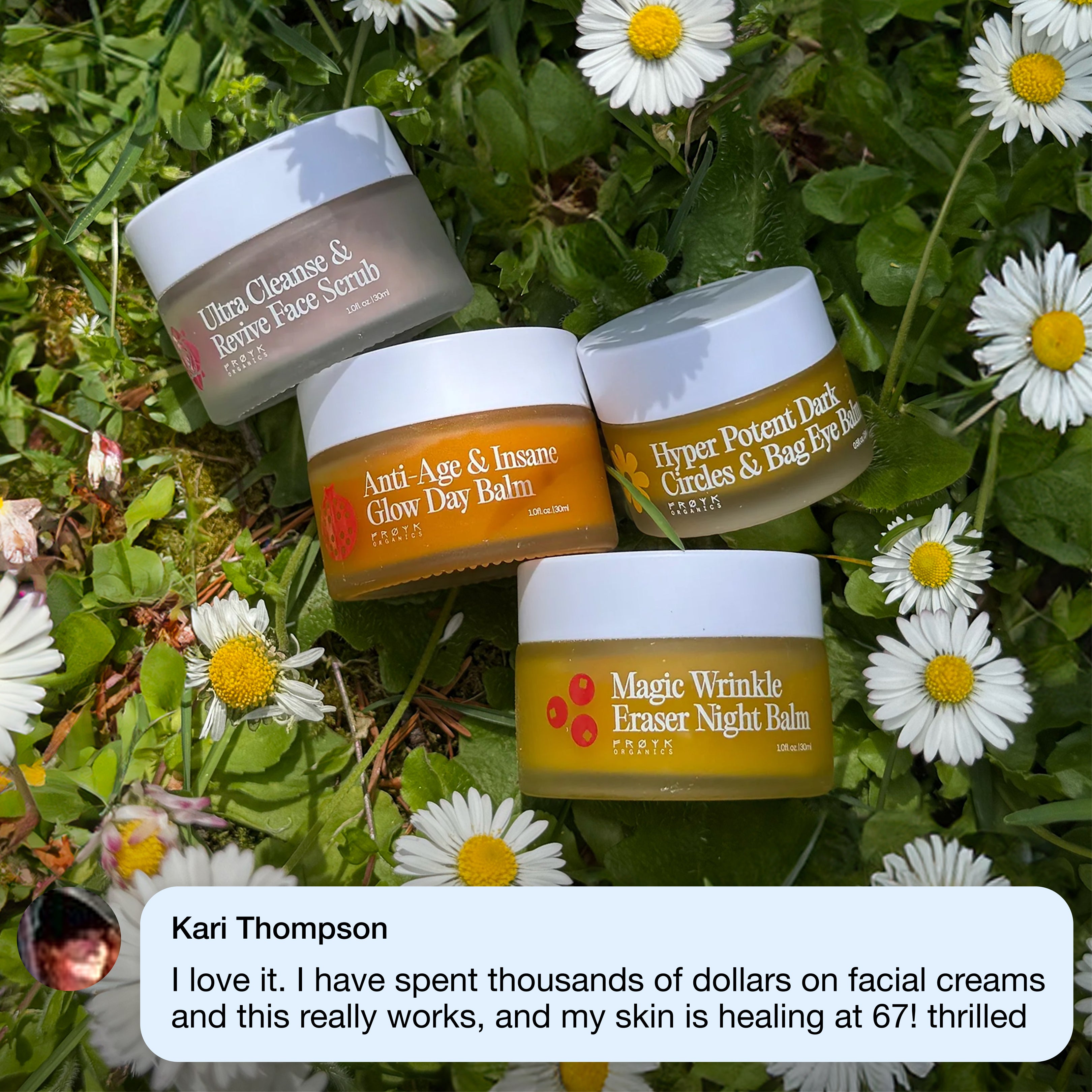
100 % pflanzliche Wirkstoffe. Sanddorn als Basis. Kein Wasser, keine künstlichen Konservierungsstoffe. Bewertet mit 4,66/5 aus über 3.152 Rezensionen. 60-tägige Geld-zurück-Garantie.
Zum System – $119


