

 Account


A couple of years ago, I would have told you butter was bad for you. I avoided egg yolks, cooked everything in canola oil, and genuinely believed red meat was a one-way ticket to heart disease.
That's what I grew up hearing. That's what every magazine, news segment, and well-meaning doctor repeated for decades.
Then I started reading the actual research. Not the headlines — the studies. And what I found made me rethink almost everything I thought I knew about my food, my body, and eventually, my skin.
Why Most Nutrition Advice Is Based on Outdated Science
Here's the uncomfortable truth: a lot of the health rules we blindly follow aren't based on strong evidence. They're based on studies from the 1950s and 60s that have since been challenged or outright debunked. And the food industry had every reason to keep it that way:
Myth #1: "Fat makes you fat." When food manufacturers removed fat from everything, they replaced it with sugar and refined carbohydrates. The result? Obesity rates skyrocketed. We got sicker on "low-fat" diets than we ever were eating whole, natural foods.
Myth #2: "Dietary cholesterol clogs your arteries." Recent medical reviews confirm that the cholesterol you eat has very little impact on your blood cholesterol (your liver already produces most of it). Meanwhile, we've been avoiding eggs, one of the most nutrient-dense foods on the planet.

The Real Foods That Got Unfairly Blamed
Nutrition history is full of scapegoats. These are the ones that have done the most damage:
Myth #3: "Margarine is better than butter." Butter was replaced by a highly processed product loaded with trans fats that turned out to be far worse for your heart.
Myth #4: "All red meat is the same." Red meat got lumped in with ultra-processed deli meats, ignoring that a grass-fed steak and a packaged sausage full of nitrates are biologically different things.
Myth #5: "Salt is your enemy." Real salt — unrefined and mineral-rich — got treated the same as the bleached, chemical sodium chloride in packaged food.
Myth #6: "Hide from the sun." Vitamin D deficiency is now a global epidemic. Moderate sun exposure is vital for your immune system, your mood, and your bones.
Frøya Pro-Tip: Your skin needs Vitamin D to keep its barrier strong, and your body needs healthy fats to absorb that vitamin. In nature, everything is connected!
What Seed Oils and Food Dyes Are Actually Doing
This is where it gets personal for me. For a long time, I believed these last two big lies:
Myth #7: "Vegetable oils are the healthy option." Most seed oils (like canola, soybean, or sunflower) are highly processed and oxidize easily when heated, producing compounds linked to systemic inflammation when consumed in excess.
Myth #8: "If they sell it, it's safe." Artificial food dyes are banned in Europe, but they show up in everything in the US. Once you start reading labels, you realize the unnecessary chemical engineering we consume just to make something look a certain color.
I switched to cooking with butter, olive oil, coconut oil, and tallow. My skin cleared up in a matter of weeks. My digestion improved, and I stopped getting those random afternoon energy crashes. The research on chronic inflammation is hard to ignore.

Real Food Supports Your Hormones and Metabolism
The body doesn't need "health food" — it needs real food. Your hormones need cholesterol and healthy fats to function. Your metabolism runs on protein and nutrient-dense meals, not calorie restriction.
Women's health, in particular, gets overlooked in mainstream nutrition advice (most dietary studies were conducted on men). But our hormonal cycles, pregnancy, and menopause create specific needs that a low-fat approach simply cannot support.
When I stopped fearing food and started nourishing my body, everything shifted. It was a return to what humans have been eating for thousands of years.
Start With What You Put On Your Skin Too
The exact same principle applies to skincare. Just as your body thrives internally on whole ingredients, your skin responds externally to pure formulations.
I started paying as much attention to what I put on my skin as what I put in my body. Products with simple ingredients — Arctic botanicals, beeswax, natural extracts — replaced creams filled with water and unpronounceable chemical ingredients.
If you're rethinking your health, don't stop in the kitchen. Look at what you're applying to your largest organ every day.
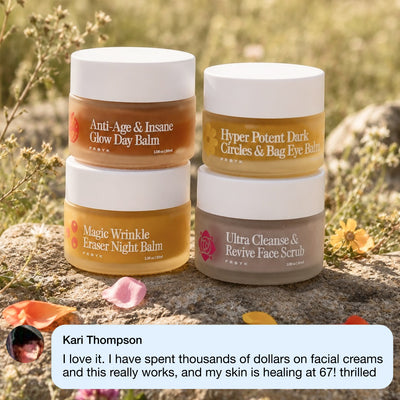
That's why we created a real alternative: The Complete System for Mature Women's Skin. No toxic fillers, no water. Just pure, concentrated nourishment.

Question Everything You Were Taught
I'm not saying throw out all medical advice. I'm saying be curious. Read beyond the headline. Ask why a rule exists and who funded the study behind it.
Real food isn't the enemy. Fear-based nutrition (and beauty) is. And the sooner we collectively figure that out, the healthier and more radiant we'll all be.
Quick questions on nutrition and real skin:
- Why do seed oils cause skin inflammation? Oils like canola or sunflower are highly processed and rich in omega-6. In excess, this imbalance promotes systemic inflammation, which can show up on your skin as redness, breakouts, or premature aging.
- Is butter bad for your cholesterol? Current science has debunked that butter or eggs are the culprits behind high cholesterol. Dietary cholesterol has very little impact on the blood cholesterol of most people; your liver produces the vast majority of it.
- What does "waterless" skincare mean? Most commercial creams are 70% water and synthetic chemicals. Waterless skincare (like The Complete System) uses only active ingredients, pure botanicals, and beeswax, giving your skin 100% concentrated nourishment without unnecessary preservatives.

Better skin & hair in 60 days or money-back guarantee
Use the products for 60 days daily and if you don’t get results, we don’t want your money.
We know our products are the best on the market, but they won’t work for everyone and their mother.


