

 Account


Meer haar in de borstel dan normaal? Je verbeeldt het je niet, en je reageert niet over.
Misschien ziet je scheiding breder uit op foto's. Misschien voelt je paardenstaart dunner aan in je hand. Dan ga je op zoek naar antwoorden en het internet begraaft je onder vijftig oliën, elk beweerend dat het het wonder is.
Hier is de nuchtere waarheid. Hoofdhuidolie kan haargroei ondersteunen door de gezondheid van je hoofdhuid te verbeteren, de doorbloeding te verhogen en breuk tegen te gaan. Wat het niet zal doen is gloednieuwe haarfollikels aanmaken. Als je dat eenmaal snapt, stopt het lawaai en worden de slimme keuzes duidelijk.
Frøya Organics richt zich op het eerlijke gedeelte met een watervrije botanische hoofdhuidolie op basis van rozemarijn en pepermunt – de twee werkzame stoffen met de meeste onderzoeksgegevens van mensen. Deze gids legt uit wat de wetenschap werkelijk zegt, welke oliën de moeite waard zijn, hoe je ze gebruikt en wat je kunt verwachten.
De Belangrijkste Punten
- Hoofdhuidolie ondersteunt haargroei door de gezondheid van je hoofdhuid te verbeteren, de doorbloeding te verhogen en breuk tegen te gaan, maar het creëert geen gloednieuwe follikels.
- Rozemarijnölie heeft het meeste onderzoek bij mensen, gelijk aan een veelgebruikte farmaceutische haarbehandeling voor haartelling over 6 maanden in een onderzoek uit 2015.
- De hoofdhuidmassage is net zo belangrijk als de olie, omdat het verbeteren van de doorbloeding naar de haarwortels de gezondheid van de follikel ondersteunt.
- Lichtere oliën zoals jojoba en argaan passen goed bij fijn haar, terwijl zware oliën zoals ricinusolie ophoping op een droge hoofdhuid kunnen veroorzaken.
- Geef het 3 tot 6 maanden regelmatig gebruik, 1 tot 2 keer per week, omdat echte verandering in dunner wordend haar tijd kost.
Helpt Hoofdhuidolie Echt bij Haargroei?
Ja, maar op een specifieke manier. Hoofdhuidolie ondersteunt de omgeving waarin je haar groeit. Het voedt je hoofdhuid, kalmeert irritatie en beschermt haardieren zodat ze hun volledige lengte bereiken in plaats van af te breken.
Hier is het eerlijke gedeelte. Geen olie bouwt een dode follikel op, en dermatologen zijn het erover eens dat de meeste haarverzorgingsproducten genetisch haarverlies niet alleen kunnen omkeren.
Waarom zien zo veel mensen dan toch voller haar? Omdat na de 40 veel van wat er dunner uitziet eigenlijk breuk is. Wanneer je breuk vermindert en je hoofdhuid gezond houdt, onthul je lengte die al aan het groeien was. Dat is echte, zichtbare verandering, alleen via een ander kanaal dan de advertenties beloven.
Geef het ook tijd. Zachter, minder breekbaar haar kan al in 1 tot 3 weken opvallen. Echte verschuivingen in dunner wordend haar duren meestal 3 tot 6 maanden regelmatig gebruik.
Hoofdhuidolie vs. Haarolie: Wat Is Het Verschil?

Haarolie bedekt het haardier. Hoofdhuidolie behandelt de huid waaruit je haar groeit. De ene laat haar vandaag glanzender uitzien. De ander werkt aan de wortel van het probleem, letterlijk.
Denk aan je hoofdhuid als huid, want dat is het. Een droge, strakke of schilferige droge hoofdhuid is geen goed thuis voor nieuw haar. Een rustige, gevoede biedt elke haarfollikel een betere start.
Daarom gaat een echte hoofdhuidbehandeling op de hoofdhuid, niet alleen op de middenlengte en uiteinden. Wanneer je alleen de lengtes oliët, voeg je het haardier in, maar laat je de eigenlijke groeisone onaangeraakt.
De Wetenschap van Hoe Oliën Haargroei Ondersteunen
Twee dingen doen het grootste deel van het werk hier, en geen ervan is magie. Laten we naar beide kijken.
Betere doorbloeding en de kracht van hoofdhuidmassage
De manier waarop je hoofdhuidolie aanbrengt, is net zo belangrijk als de olie die je kiest. De beweging rekt zachtjes de huid rond elke wortel, en onderzoekers denken dat dit, samen met betere doorbloeding, de gezondheid van de follikel ondersteunt.
In een klein onderzoek uit 2016 naar hoofdhuidmassage leidde slechts 4 minuten per dag tot dikker haar na 24 weken. Het waren 9 mannen met gezonde hoofdhuiden die een apparaat gebruikten, dus het zijn vroege gegevens, geen bewijs voor iedereen. Toch is het mechanisme echt en gemakkelijk thuis na te bootsen.
Breuk verminderen en het haardier beschermen
Oliën rijk aan vetzuren dringen het haardier in en vertragen vochtevaporation, zodat haardieren flexibel blijven in plaats van droog en breukgevoelig. Ze helpen ook de microscopische gaten in de haarcuticula op te vullen, wat de haartextuur glad maakt en glans kan toevoegen.
Dit speelt vooral een rol voor fijn haar en ouder haar, dat sneller vocht verliest en gemakkelijker breekt. Haar dat goed geconditioneerd blijft, buigt onder stress in plaats van te breken, dus je behoudt de lengte die je al hebt. Onthoud alleen dat dit haardieren beschermt, het groeit geen nieuwe aan.
De Beste Oliën voor Haargroei
Niet alle haargroeioliën zijn gelijk. Hier zijn ze, sterkste bewijzen eerst.
Rozemarijnölie, de meest onderzochte optie
Rozemarijnölie heeft de meeste onderzoeksgegevens van mensen van elke botanische stof voor haar. Het is gekoppeld aan betere doorbloeding van de hoofdhuid, en een klinisch onderzoek uit 2015 vond dat het gelijk was aan een veelgebruikte farmaceutische haarbehandeling voor haargroei over 6 maanden, met minder jeuk van de hoofdhuid dan de geneesmiddelhoudende optie.
Het vroege onderzoek richtte zich op patroonhaarverlies, dus het is niet het laatste woord voor elk haartype. Wat meegaat is het mechanisme: rozemarijn ondersteunt de doorbloeding van de hoofdhuid, en gezonde doorbloeding voelt de voordelen van rozemarijnölie voor haar.
Zachter voor je hoofdhuid: In dezelfde 6-maanden proef was jeuk van de hoofdhuid vaker met de geneesmiddelhoudende optie dan met rozemarijnölie. Voor dagelijks gebruik is dat comforterschil onderdeel van waarom plantaardige oliën beroep doen op gevoelige hoofdhuiden. Bron: Panahi et al., SKINmed, 2015
Pepermuntolie voor Hoofdhuidstimulatie
Pepermuntolie is de olie die je voelt werken. Dat koelende tintelen komt van menthol, waarvan wordt gedacht dat het frisse doorbloeding naar de wortels brengt en een trage hoofdhuid wakker maakt. Vroeg onderzoek naar pepermuntolie koppelt het aan sterkere tekenen van haargroei, hoewel het werk tot nu toe voorlopig is.
Het is krachtig, dus het hoort thuis in een lichte oliemenging, verdund in een dragenolie, nooit direct op de huid. Op die manier gebruikt, voegt het een schone, verkwikkende stap toe aan je hoofdhuidbehandeling.
Jojoba en Argaan als Lichte Dragenoliën
Elke essentiële olie heeft een dragenolie nodig, en deze twee zijn ideaal voor fijn haar. Jojoba-olie bootst je natuurlijke hoofdhuidsebum na, dus het absorbeert snel en ziet er niet vet uit.
Argaanolie, soms verkocht als Marokkaanse argaanolie, is rijk aan vitamine E en helpt het haardier glad te maken. Beide verzachten haar, ondersteunen haarkracht en passen in een haarverzorgingsroutine voor geverfd haar.
Hoe zit het met ricinus, olijf en andere oliën?
Deze krijgen veel aandacht, dus hier is de rechttoe-rechtaan lezing van de populaire.
- Ricinusolie: Dik en hydratering, goed voor glans, maar sterk groeidbewijs is dun.
- Olijfolie: Rustgevend en rijk aan antioxidanten, meer een conditioner dan een groeier.
- Tea tree-olie: Vermindert roos veroorzaakt door seborrheïsche dermatitis via antimicrobiële eigenschappen, niet groei.
- Lavendelolie: Toonde vroeg belofte voor haargroei in laboatoria, en het kalmert de hoofdhuid.
- Druivenpittolie: Helpt met frizz en gespleten punten, terwijl salie vaak aan versterkende haarmengels wordt toegevoegd.
De vangst met zwaardere oliën is echt. Te vaak gebruikt, kunnen ze productopeenhoping veroorzaken, een droge hoofdhuid verstoppen en zelfs schilfers voeden. Daarom dienen lichtere mengsels van natuurlijke ingrediënten rijpere haartypen beter.
Hoe Hoofdhuidolie voor Haargroei Gebruiken
Een beetje gaat een lange weg, vooral met krachtige oliën. Hier is een eenvoudige routine die je hoofdhuid respecteert.
- Verwarm de olie lichtjes tussen je handpalmen om de absorptie te verbeteren.
- Voor de meeste oliën is een paar druppels of 1 tot 2 druppels genoeg. Overdrijven laat haar alleen vet.
- Scheiding je haar en breng direct op de hoofdhuid aan, niet op de uiteinden.
- Masseer met je vingertoppen 2 tot 4 minuten.
- Laat het 30 minuten tot 2 uur, of gedurende de nacht om hydratatie te verhogen, en was dan.
- Test elke essentiële olie vooraf op een klein stukje voor volledig gebruik.
Een snelle realiteitscheck: Hoofdhuidolie ondersteunt de omgeving waarin je haar groeit, dus geef het drie tot zes maanden regelmatig gebruik.
De frequentie hangt af van je haar. Streef naar 1 tot 2 keer per week, en behandel het als onderdeel van je wasdag. Dikker of krullend haar kan meer hebben, en masseer altijd in vochtig haar, niet sopnathaar.
Een Botanische Hoofdhuidolie Gebouwd voor Dunner Haar Na 40

Als je eenmaal weet wat werkt, wordt de juiste formule eenvoudig. Je wilt de onderzochte werkzame stoffen, rozemarijn en pepermunt, gedragen in iets lichts dat fijn haar niet omlaag trekt.
Zo is Frøya's Haargroeiserum gebouwd. Het is een watervrije hoofdhuidolie van rozemarijn, pepermunt, jojoba, argaan en vitamine E, 's morgens en 's avonds in de hoofdhuid gemasseerd. In door het merk gerapporteerde resultaten merkten 93% van de gebruikers betere hoofdhuidgezondheid op in 6 weken.
Het slaat hyaluronzuur en synthetische geur over, leunend op arctische planten in plaats daarvan. Omdat het zo geconcentreerd is, is een dun laagje alles wat je nodig hebt.
Hoe het serum gebruiken
Een beetje gaat een lange weg, omdat de formule geconcentreerd is. Hier is een eenvoudige routine die je hoofdhuid respecteert.
- Verwarm een dun vingertopje tussen je handpalmen om absorptie te verbeteren.
- Scheiding je haar en werk het direct in de hoofdhuid, niet de uiteinden.
- Masseer met je vingertoppen 2 tot 4 minuten om doorbloeding te verhogen.
- Breng 's morgens en 's avonds aan, of gebruik het als een pre-wash behandeling 30 minuten voor je shampoo.
- Test eerst op een klein stukje als je een gevoelige of jeukende hoofdhuid hebt.
Een dagelijks dun laagje past bij de meeste hoofdhuiden, terwijl dikker of krullend haar wat meer kan hebben. Masseer altijd in een droge hoofdhuid of vochtig haar, niet sopnathaar.
Hoe het Complete Haarverzorgingssysteem Samenwerkt

Voor vollediger ondersteuning verankert het het Compleet Systeem voor Rijper Haar & Hoofdhuid, een driestandaard routine voor dunner wordt gebonden aan stress, postnatale veranderingen of menopauze.
Elke stap heeft één taak, en samen zet deze haargroeiset je hoofdhuid opnieuw in en ondersteunt gezond haar. Niets om jezelf te mengen of te meten, want het is al voor je gemengd.
|
Stap |
Wat Het Doet |
Hoe Het Helpt |
|
Reinigt opeenhoping zonder uit te drogen |
Bereidt een schone hoofdhuid voor op de behandeling |
|
|
Rozemarijnspray op vochtig haar |
Verfrist de hoofdhuid tussen het wassen |
|
|
Verdikkend Haarserum |
Dagelijkse botanische hoofdhuidolie |
Voedt de wortels 's morgens en 's avonds |
Ze samen gebruiken is eenvoudig:
- Op wasdag reinig je met de shampoo zoals gewoonlijk, en spuit dan het rozemarijnwater op vochtig haar.
- Elke morgen en nacht masseer je een dun laagje serum in je hoofdhuid.
- Geef het 3 tot 6 maanden regelmatig gebruik, omdat haar in trage cycli groeit.
Als je slechts met één stap begint, laat het het serum zijn. Het doet het diepste werk op je hoofdhuid.
Welke Hoofdhuidolie Past Bij Je Haartype en Bezorgdheid
De beste hoofdhuidolie is degene die aansluit op je hoofdhuid, zoals je haarverzorging zou aanpassen. Hier is een snelle gids.
- Dunner wordend haar: rozemarijn en pepermunt om haargroei bij de wortel te ondersteunen.
- Droge hoofdhuid of droog haar: jojoba en argaan om vocht in te sluiten.
- Fijn haar: een niet-vette, lichte olie, spaarsingezet gebruikt.
- Beschadigd haar: vitamine E en vetzuren om haar te versterken.
Als vroeg haarverlies je grootste zorg is, natuurlijke producten voor dunner wordend haar werken op de hoofdhuid, waar dunner worden begint. Een hoofdhuidolie is geen leave-in conditioner, dus match het type op de bezorgdheid en sla de proef-en-fout over.
Welke Resultaten Je Kunt Verwachten en Wanneer
Geduld is de echte werkzame stof. Je haar doorloopt natuurlijke groeicycli, dus verandering toont zich in stadia, niet meteen.
- Weken 1 tot 3: zachter haar, betere haartextuur en een kalmere hoofdhuid.
- Weken 4 tot 6: minder uitval tijdens föhnen, wassen en borstelen.
- Maanden 3 en later: meer babyharen en vollerdere dichtheid.
Regelmatig, zacht gebruik slaat af en toe zwaar gebruik elke keer. Resultaten variëren, en een gezonde hoofdhuid is wat de vooruitgang gaande houdt.
Zie Wat Regelmatig, Natuurlijk Zorg Kan Doen

Je haar werd niet in een nacht dunner, en het zal ook niet in een nacht vollediger worden. Wat het nodig heeft is een rustige hoofdhuid, de juiste botanische stoffen en een klein beetje consistentie.
De voor-en-na-foto's komen van echte klanten die volhielden. Echte hoofdhuiden, echte maanden regelmatig zorg, geen filters die het werk doen.
Als je een eenvoudig beginpunt wilt, tonen de echte haarresultaten van klanten hoe geduld plus de juiste routine eruit ziet. Begin met je hoofdhuid, en geef het tijd.
Disclaimer: Dit artikel is voor algemene informatie en is geen medisch advies. Frøya Organics-producten zijn gemaakt om de gezondheid van hoofdhuid en haar te ondersteunen, niet om een medische aandoening op te sporen of aan te pakken. Als je haarverlies significant aanvoelt of je hoofdhuid je lastig valt, raadpleeg dan een arts of dermatoloog.
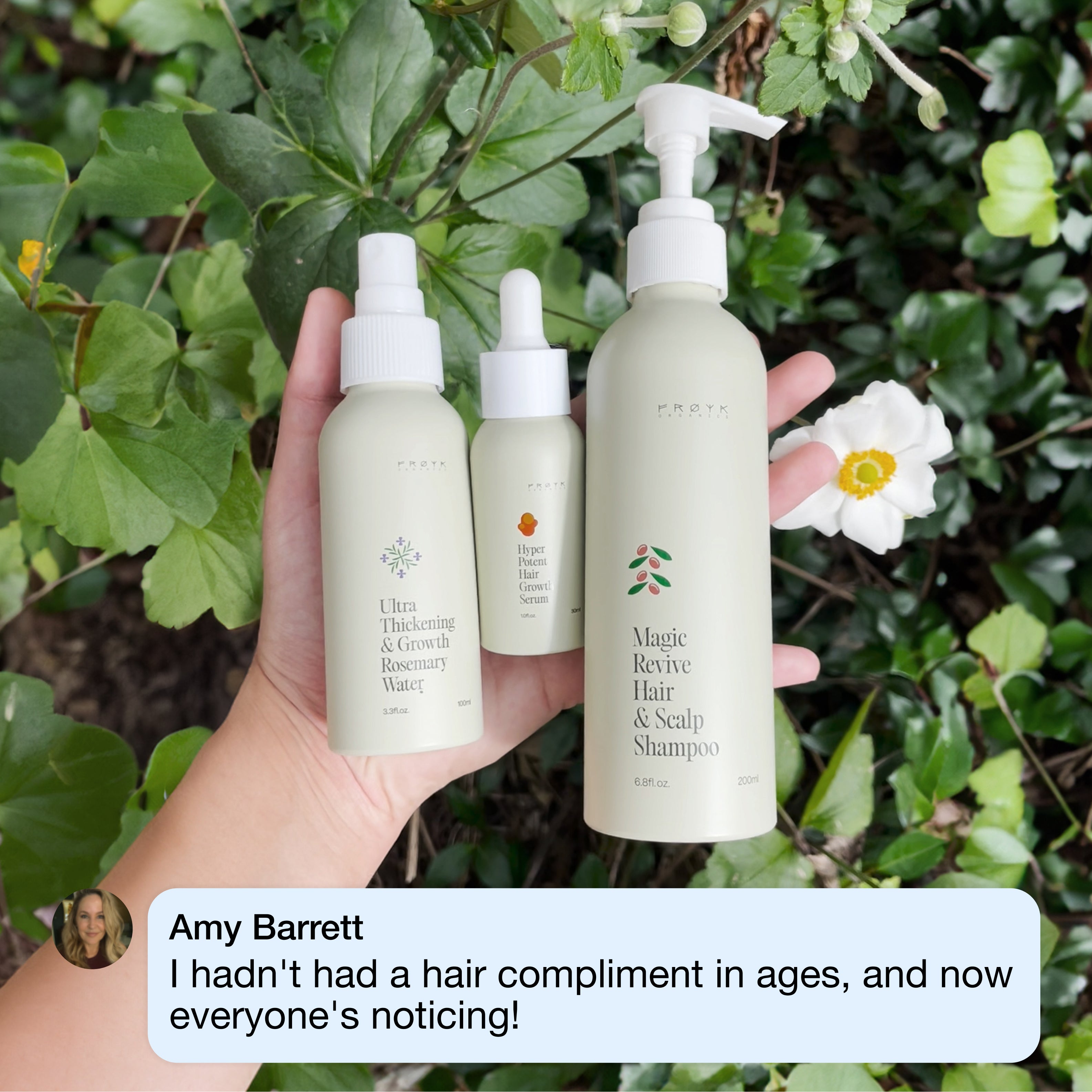
Drie arctische botanische stappen: reinigen, verversen en behandelen. Rozemarijn, pepermunt en voedende oliën ondersteunen voller haar vanaf je hoofdhuid omhoog, ondersteund door een garantie van 60 dagen niet goed, geld terug.
Shop het Systeem VandaagVeelgestelde Vragen
Helpt hoofdhuisolie met haargroei?+
Welke olie is goed voor haargroei?+
Welke oliën mag je niet op de hoofdhuid gebruiken?+
Wat kan ik op mijn hoofdhuid doen om haargroei te stimuleren?+
Wat is het beste natuurlijke serum voor haargroei?+
Bestaat er een haargroeiserum dat echt werkt?+


