

 Account


La mia pelle è secca come quella di una lucertola, e la crema che ho usato per dieci anni improvvisamente pizzica. r/Menopause · pubblicato l'inverno scorso
Ho letto questa esatta frase, con parole leggermente diverse, centinaia di volte. Non è nella tua testa. La crema non è cambiata. Sei cambiata tu.
La crema che funzionava a 38 anni non è mai stata pensata per compensare quel livello di cambiamento biologico.
Questo è un approccio diverso. Dodici modi per idratare naturalmente la pelle secca, basati su oli vegetali che la tua pelle riconosce, regole di stratificazione che quasi nessuno insegna, e alcuni cambiamenti dall'interno che fanno più di un altro tubetto di crema. Parleremo di secca contro disidratata (non sono la stessa cosa), degli ingredienti chiave che meritano i tuoi soldi, e di un protocollo notturno che ripristina una barriera compromessa in circa due settimane.
Comincia con l'unico olio che ti consiglierei se avessi spazio per uno solo.
1. Olio di Olivello Spinoso: l'Omega-7 che Imita il Tuo Sebo
La maggior parte degli articoli sulla skincare naturale non lo dice. Dopo la menopausa, la tua produzione di sebo scende del 40-50%. Il sebo non è grasso. È lo strato lipidico che trattiene l'acqua e tiene fuori le irritazioni.
Quando il sebo diminuisce, quasi nessun olio vegetale può colmare il vuoto, perché quasi nessun olio vegetale contiene acido palmitoleico, l'acido grasso omega-7 che è la corrispondenza botanica più vicina a ciò che la tua pelle produceva naturalmente.
L'olio di olivello spinoso sì. L'olio di questa bacca è una delle poche fonti vegetali di acido palmitoleico in concentrazione significativa, e quell'acido grasso è strutturalmente identico a un componente chiave del sebo umano. Applicalo, e la tua pelle lo riconosce.
Topicamente, l'olio di olivello spinoso è un olio da finitura. Applica 3-4 gocce sulla pelle umida di notte, dopo la tua crema, oppure sovrapponilo a un siero umettante. Il colore è naturalmente arancione, quindi usane meno di quanto pensi ti serva.
Per l'approfondimento completo sul perché questo singolo acido grasso continua a emergere nella ricerca sulla pelle matura, ho scritto un articolo più lungo sull'olivello spinoso e i benefici cutanei dell'omega-7.
Se aggiungi solo un olio alla tua routine dopo i 50 anni, che sia questo.
2. Olio di Semi di Rosa Canina: 45% di Acido Linoleico per la Riparazione delle Ceramidi
La maggior parte degli oli vegetali non può vantare questo risultato. Il motivo per cui la rosa canina può si riduce a una singola molecola.
L'olio di semi di rosa canina è composto per circa il 45-50% da acido linoleico, un acido grasso omega-6 che la tua pelle non si limita ad assorbire, ma converte. L'acido linoleico è il precursore che il tuo corpo usa per costruire la ceramide 1 (EOS), la ceramide a catena lunga che tiene insieme la struttura a mattoni e malta della tua barriera cutanea. Meno ceramide 1, barriera più permeabile, perdita d'acqua più rapida. Più acido linoleico nella dieta e sulla pelle, più materiale grezzo per ricostruirla.
Questo è anche il motivo per cui la rosa canina supera l'olio di cocco per la pelle matura e compromessa. Il cocco contiene l'1-3% di acido linoleico. La rosa canina ne ha quarantacinque volte di più esattamente dell'acido grasso di cui la tua barriera ha bisogno per riparasi. Il marketing ti dice "olio naturale". La chimica ti dice quale fa davvero il lavoro.
Uso la rosa canina come strato intermedio, dopo un umettante e prima di un olio o balsamo più pesante. Tre-cinque gocce sulla pelle umida di notte. Si assorbe in modo netto, non resta in superficie, e si accompagna magnificamente con l'olivello spinoso come passaggio finale.
3. Secca contro Disidratata: Diagnosticare Prima di Trattare
"Secca" e "disidratata" sembrano la stessa cosa. Non lo sono, e trattare l'una con la soluzione dell'altra è il motivo per cui la maggior parte delle lettrici sente che niente funziona.
La pelle secca manca di olio. È un tipo di pelle, spesso genetico, spesso peggiorato dagli sbalzi hormonali. La soluzione sono gli emollienti (rosa canina, jojoba, squalano) e gli occlusivi (burri vegetali, balsami) che ripristinano e sigillano i lipidi.
La pelle disidratata manca di acqua. È una condizione temporanea. Chiunque può averla, incluse le pelli grasse. La soluzione sono gli umettanti (glicerina, acido ialuronico, miele) che attirano acqua negli strati superiori, oltre a bere effettivamente abbastanza acqua.
In menopausa, di solito hai entrambe le condizioni insieme. Un prodotto con una sola categoria di ingredienti non vince mai. Un olio ricco su una pelle disidratata risulta pesante e comunque tesa. Un siero a base acquosa su una pelle secca evapora e ti lascia arida dopo venti minuti.
La maggior parte del marketing delle creme "idratanti" confonde questo aspetto di proposito. Un solo prodotto non può risolvere entrambi i problemi. Se la tua crema sembra svanire in 20 minuti, quello è esattamente il test.
4. L'Ordine di Stratificazione che Funziona Davvero: Umettante, Emolliente, Occlusivo
L'acido ialuronico può disidratare la tua pelle. Ho visto donne insistere con lo stesso siero per mesi mentre il viso diventava sempre più teso, senza mai sapere che il problema non è il prodotto. È l'ordine.
Gli umettanti come l'acido ialuronico e la glicerina sono magneti per l'acqua. Trattengono fino a mille volte il loro peso in acqua. In un ambiente umido, attirano l'umidità dall'aria verso la tua pelle. In una stanza secca, con il riscaldamento acceso o l'aria condizionata in funzione, tirano l'acqua dagli strati più profondi della pelle verso l'alto, dove evapora. Finisci più secca di come hai iniziato.
La soluzione è la sequenza. Tre passaggi, in quest'ordine, ogni notte.
Glicerina o acido ialuronico, applicati entro 60 secondi dalla detersione mentre il viso è ancora leggermente umido. Questo attira l'acqua.
Rosa canina, jojoba o squalano. Qualche goccia premuta sulla pelle. Questo riempie gli spazi tra le cellule cutanee dove la barriera si è assottigliata.
Un burro vegetale, un balsamo o uno strato finale di squalano. Questo è il coperchio del vasetto. Sigilla tutto ciò che sta sotto in modo che non possa svanire durante la notte.
Salta il terzo passaggio nell'aria secca dell'inverno, e il primo passaggio lavorerà silenziosamente contro di te. L'American Academy of Dermatology consiglia di applicare la crema sulla pelle umida entro 60 secondi dal lavaggio esattamente per questo motivo.
Pelle umida, poi da leggero a pesante. Questa singola regola supererà un prodotto da $200 applicato male.
5. Olio di Jojoba: L'Estere di Cera che la Tua Pelle Riconosce
Il jojoba non è tecnicamente un olio. È un estere di cera liquido, e questa distinzione è tutto il punto.
La superficie della tua pelle produce i propri esteri di cera come parte del sebo. La struttura molecolare del jojoba è quasi identica uno a uno. Quando lo applichi, la tua pelle non lo legge come un lipide estraneo posato sopra. Lo legge come qualcosa di se stessa. Ecco perché si assorbe in modo netto, non intasa i pori, e raramente provoca la reazione pizzicante che oli più "oleosi" possono scatenare su una barriera assottigliata.
L'American Academy of Dermatology elenca il jojoba tra gli ingredienti raccomandati per la pelle secca, ed è una delle poche opzioni di origine vegetale sicure per pelli predisposte a rosacea, eczema e reattività. Se l'olivello spinoso ti sembra troppo ricco o la rosa canina pizzica durante una riacutizzazione, il jojoba è quello a cui ricorro per primo.
Il jojoba è infinitamente versatile. Qualche goccia mescolata alla tua crema nel palmo della mano allunga una crema più pesante e ne migliora la spalmabilità. Una o due gocce premute sugli zigomi a metà giornata rivitalizzano una pelle diventata opaca e tesa. Fa anche da olio detergente pulito per sciogliere protezione solare e make-up alla fine della giornata.
Ricorri al jojoba quando la tua pelle è reattiva, quando l'aria è secca ma non vuoi un occlusivo pesante, o semplicemente quando vuoi un solo flacone che svolga più compiti senza scontrarsi con la tua pelle.
6. Squalano: L'Emolliente che Riempie le Crepe
La tua pelle produce già squalene. A partire dai 30 anni, la produzione comincia a diminuire. Con la menopausa, cala drasticamente, e gli spazi intercellulari che riempiva sono parte del motivo per cui la tua barriera risulta più permeabile e la tua pelle più ruvida.
Lo squalano (con la A) è la versione stabile e idrogenata dello squalene (con la E). Oggi è quasi sempre di origine vegetale, di solito da olive o canna da zucchero, e si inserisce esattamente negli spazi tra i corneociti (le cellule piatte della pelle esterna) che l'età ha svuotato. Ecco perché funziona per così tanti tipi di pelle contemporaneamente: non comedogenico per la pelle mista, calmante per la rosacea, sufficientemente delicato per le riacutizzazioni dell'eczema, e utile per la pelle matura secca come strato occlusivo finale.
Lo squalano è uno degli oli più eleganti da applicare. È quasi impalpabile, non lascia alcuna pellicola grassa, e si assorbe in meno di un minuto. Puoi indossarlo sotto la protezione solare al mattino o sovrapporlo a un balsamo più pesante di notte.
Lo tengo in due punti della mia routine: come olio da finitura dopo la crema, specialmente in inverno, e miscelato in parti uguali con la rosa canina quando voglio i benefici dell'acido linoleico con una sensazione più leggera.
Qualche goccia di notte, dopo la tua crema, è sufficiente.
7. Mangia per l'Idratazione: Omega-3 e Omega-7 dall'Interno
Nessun prodotto topico può sostituire un acido grasso che il tuo corpo non riceve mai. La tua barriera cutanea si costruisce da ciò che arriva attraverso il flusso sanguigno tanto quanto da ciò che applichi di notte.
Gli acidi grassi omega-3, quelli presenti in salmone, sardine, sgombro, noci, semi di lino e chia, riducono l'inflammazione sistemica e nutrono lo strato lipidico che tiene insieme la tua barriera. La maggior parte delle donne sui cinquant'anni funziona con una frazione di ciò di cui la loro pelle ha bisogno.
L'omega-7 proveniente dalle bacche di olivello spinoso emerge nella ricerca clinica con risultati misurabili. Lo studio di 12 settimane a 1.000 mg al giorno ha ridotto la perdita transepidermica d'acqua e migliorato l'elasticità cutanea. La stessa integrazione è stata studiata per la secchezza oculare e la secchezza vaginale, entrambe le quali tendono nella stessa direzione durante la menopausa. Quando risolvi l'approvvigionamento lipidico sottostante, i sintomi in tessuti diversi spesso migliorano insieme.
Contano anche le fonti alimentari di acido linoleico. Semi di girasole, noci, cuori di canapa e una piccola manciata quotidiana di semi di zucca forniscono alla tua pelle il materiale grezzo di cui ha bisogno per sintetizzare la ceramide 1, la stessa molecola che l'olio di rosa canina supporta topicamente.
La linea di base dell'idratazione è più semplice di quanto internet del benessere faccia credere. Due-due litri e mezzo d'acqua al giorno è un obiettivo equo. Alcol e caffeina in eccesso aumentano entrambi la perdita d'acqua attraverso la pelle, il che spiega in parte perché un bicchiere di vino la sera prima tenda a mostrarsi sotto gli occhi la mattina dopo.
8. Il Protocollo Notturno: 5 Passaggi per Ripristinare una Barriera Compromessa
Quando tutto pizzica e niente funziona, la risposta non è un altro prodotto. È un reset che richiede circa una settimana per iniziare e circa due settimane per completarsi.
Interrompi tutti gli attivi. Sospendi vitamina C, retinolo, AHA, BHA, acidi esfolianti e scrub. Su una barriera già compromessa, sono come versare acido su una ferita. Applica un semplice occlusivo a ingrediente unico due volte al giorno. Lo squalano puro funziona, oppure un sottile strato di pasta di ossido di zinco sulle zone che si squamano o sono arrossate.
Resta delicata. Reintroduce un umettante (la glicerina è la scelta più tranquilla) sulla pelle umida, poi un emolliente (rosa canina o squalano), poi il tuo occlusivo. Il detergente resta minimo: una formula non spumeggiante e senza profumo, solo di notte.
Reintroduce un attivo. La vitamina C al mattino è di solito il reingresso più delicato. Aspetta una settimana intera prima di aggiungere qualsiasi altra cosa. Se qualcosa pizzica, ritiralo.
Ricostruisci. Ora puoi stratificare intenzionalmente ingredienti che supportano la barriera: ceramidi, acidi grassi vegetali, niacinamide se tollerata. La pelle perde più acqua di notte che di giorno, e a questo stadio il ricambio cellulare si rallenta di circa dieci giorni per decennio. Il protocollo funziona ancora entro due settimane, se glielo permetti.
9. Perché l'Olio di Cocco Non è la Risposta (E Cosa Usare Invece)
Il consiglio di skincare naturale più comune su internet è anche uno dei peggiori per la pelle in menopausa: strofinare olio di cocco sulla pelle.
L'olio di cocco contiene circa il 45-50% di acido laurico, con solo l'1-3% di acido linoleico. L'acido laurico è antimicrobico, il che è genuinamente utile in un sapone. Non fa quasi nulla per una barriera assottigliata e depauperata di ceramidi, perché la tua pelle non può convertirlo nei lipidi strutturali di cui ha effettivamente bisogno. L'altro componente principale dell'olio di cocco è l'acido oleico, che in alte concentrazioni può allentare gli strati lipidici di una barriera già compromessa e peggiorare la secchezza, non migliorarla.
C'è anche una questione pratica. L'olio di cocco è comedogenico per pelli miste e predisposte all'acne. Molte donne sui cinquant'anni hanno ancora sfoghi hormonali lungo la mandibola, e l'olio di cocco può giocare contro di loro.
- Olio di cartamo ∼75% acido linoleico
- Olio di vinaccioli ∼70% acido linoleico
- Olio di girasole ∼65% acido linoleico
- Olio di semi di rosa canina ∼45% acido linoleico (più precursori naturali dell'acido retinoico)
- Olio di jojoba ∼5–10% acido linoleico, bilanciato dalla sua struttura di estere di cera
Qualsiasi di questi supererà il cocco per la pelle matura secca, e la rosa canina resta la mia prima scelta per la combinazione di supporto alla barriera e risultati clinici.
10. Salta il Detergente del Mattino (Sì, Sul Serio)
Il modo più rapido in assoluto per migliorare la pelle secca sui cinquant'anni costa zero euro: smetti di lavarti il viso al mattino.
Mentre dormi, la tua barriera produce e ridistribuisce i lipidi. All'alba, la tua pelle ha svolto diverse ore di lavoro di riparazione che non vuoi far scorrere via nello scarico. Un detergente a base di tensioattivi, anche uno delicato, rimuove quei lipidi prima che il tuo siero e la protezione solare abbiano la possibilità di agire sopra di essi.
La dermatologa Dott.ssa Aleksandra Brown sostiene questo punto da anni. Per pelle secca, matura o reattiva, la sola acqua tiepida basta al mattino. Se la sera prima hai indossato una protezione solare pesante o un attivo forte, è un caso diverso, ma la maggior parte delle routine notturne non ha bisogno di essere detersa due volte.
Riserva il tuo vero detergente per la sera, quando la protezione solare, il make-up, il sudore e l'inquinamento della giornata devono effettivamente essere rimossi. Usa un detergente a bassa spumosità o a base oleosa, e segui con l'ordine di stratificazione sopra descritto.
11. Docce Tiepide e la Regola dei 60 Secondi
Le docce calde sono fantastiche. Ma dissolvono anche lo strato lipidico protettivo della tua pelle, incluse le ceramidi e il sebo che stai cercando di preservare. L'acqua sopra circa 40°C destabilizza la barriera, e una doccia di dieci minuti spoglia notevolmente più di una di quattro minuti.
Il compromesso sulla temperatura è reale. La regola dei 60 secondi è come recuperare la maggior parte della perdita senza rinunciare del tutto alla doccia.
Entro 60 secondi dall'uscita, mentre la tua pelle è ancora umida, applica la tua crema o il tuo olio corpo. La pelle umida trattiene l'acqua che hai appena assorbito; la pelle asciutta ne ha già lasciata evaporare la maggior parte. Tamponare con l'asciugamano, non strofinare, e lasciare la pelle intenzionalmente leggermente umida. L'American Academy of Dermatology consiglia esattamente questo da anni, ed è una delle poche linee guida che non costa nulla e funziona immediatamente.
Per il corpo, qualche pompetta di squalano o una crema ricca a base di burro vegetale applicata su gambe e braccia umide supera quasi qualsiasi lozione applicata sulla pelle completamente asciutta venti minuti dopo. Per il viso, vale la stessa regola dopo la detersione.
12. Usa un Umidificatore (e Leggi le Etichette)
La tua camera da letto a febbraio è più secca del Sahara. Un umidificatore da $40 può superare una crema da $200 in quell'ambiente, perché nessun prodotto topico può vincere contro un'aria che sta attivamente sottraendo umidità alla tua pelle.
L'umidità interna nelle case riscaldate o climatizzate scende regolarmente al 20-30%. La fascia confortevole per la pelle è il 40-60%. Un piccolo umidificatore nella tua camera da letto, in funzione durante la notte mentre la tua barriera è al massimo della sua permeabilità, dà a ogni prodotto che hai applicato una possibilità concreta di fare il suo lavoro.
Mentre controlli il tuo ambiente, controlla anche le tue etichette.
- Attenzione all'alcol denaturato e all'alcol SD in alto nella lista degli ingredienti. Evaporano rapidamente e portano via l'acqua con sé.
- Attenzione ai solfati (SLS, SLES) nei detergenti. Spogliano la barriera che stai cercando di ricostruire.
- Attenzione agli oli essenziali ad alta percentuale su pelle lesionata. Possono pizzicare e sensibilizzare anche quando il resto della formula è pulito.
Correggi prima l'ambiente. Il prodotto conta meno quando l'aria intorno a te non sta lottando contro di te.
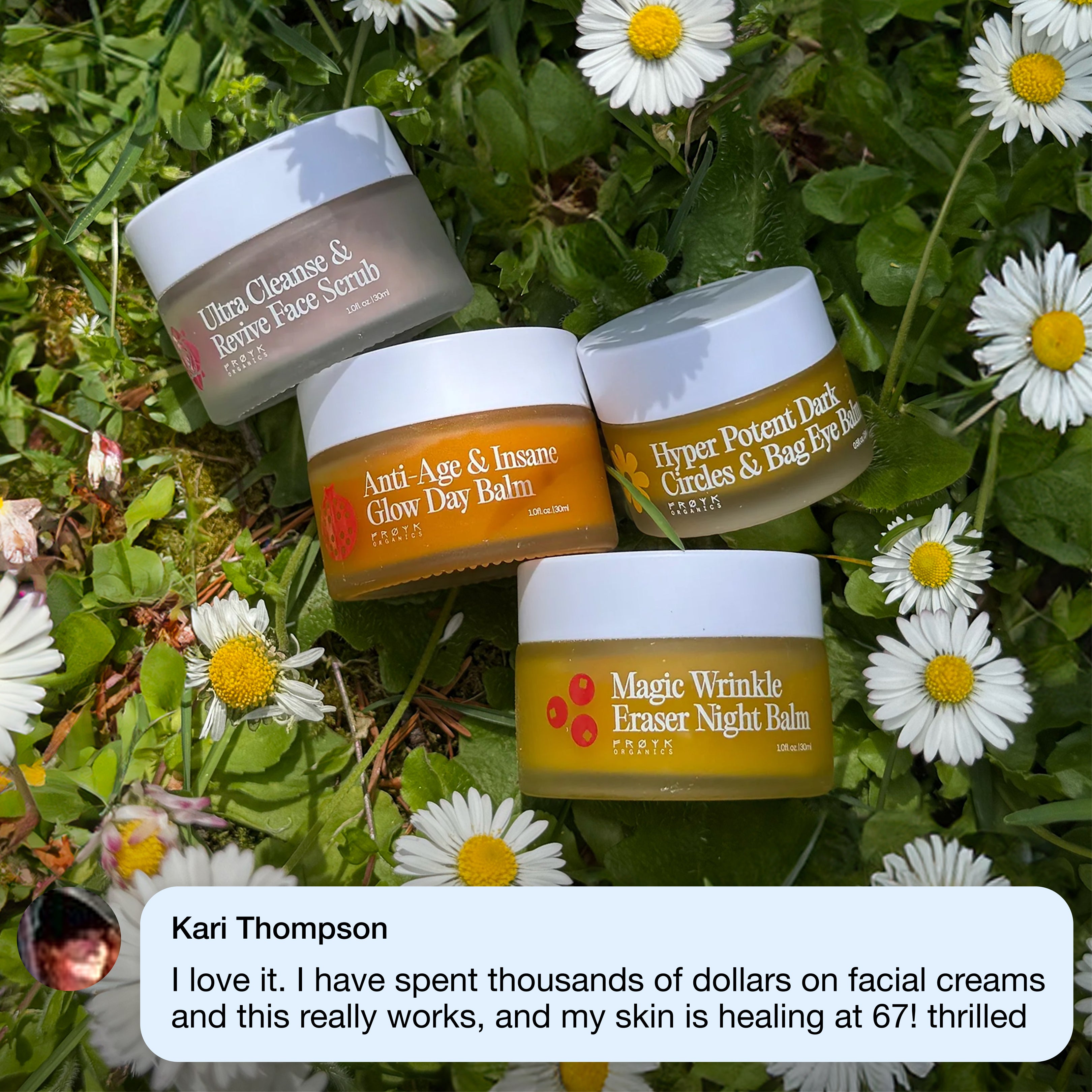
Il sistema completo Frøya per la pelle secca: rosa canina, olivello spinoso, jojoba e squalano spremuti a freddo, formulati per le donne sui cinquanta e oltre. Nessuna fragranza sintetica. Nessun filler a base d'acqua. Tutto ciò che questo articolo tratta, in un'unica routine.
Scopri il Sistema per la Pelle Secca


