

 Account


La tua pelle non ti dice la verità sui danni solari nello stesso giorno. Aspetta. È la parte che la maggior parte delle persone sbaglia nella skincare estiva. Torni a casa dopo lunghe giornate all'aperto con un po' di arrossamento, ti senti bene al mattino e pensi di avercela fatta. Poi arriva mercoledì con le spalle tese e desquamazione sul petto.
Ecco la risposta breve: la perdita di idratazione causata dall'esposizione al sole raggiunge il picco intorno al quarto giorno, non al primo. La tua pelle ha bisogno di raffreddamento nelle prime 48 ore e di riparazione lipidica la settimana successiva, e questi due compiti richiedono prodotti diversi.
Qui sotto troverai il motivo del ritardo, perché colpisce più duramente dopo i 45 anni, quali ingredienti calmano l'arrossamento e quali lo peggiorano, e come creare una routine adatta a una pelle che guarisce più lentamente.
Punti chiave
- I danni solari alla barriera cutanea compaiono da due a quattro giorni dopo l'esposizione, non immediatamente.
- La riparazione della barriera dopo i 50 anni richiede circa 1,5 volte più tempo rispetto ai 30 anni.
- I prodotti doposole leniscono e idratano, ma non possono invertire i danni solari. La prevenzione inizia con un'esposizione al sole più breve, all'ombra e con indumenti protettivi.
- I gel rinfrescanti sono adatti ai primi due giorni, mentre i balsami ricchi di lipidi sono adatti da giorno due a sette.
- Acidi, retinoidi e fragranze pesanti appartengono all'elenco delle cose da evitare mentre la pelle si recupera.
Perché la Pelle Diventa Tesa e Cartacea Giorni Dopo l'Esposizione al Sole
L'esposizione al sole danneggia la tua barriera cutanea con ritardo. È per questo che puoi sembrare in forma sabato sera e stare male a metà settimana.
I raggi UV fanno due cose contemporaneamente. Gli UVB colpiscono i strati superiori della pelle, mentre gli UVA penetrano più in profondità e creano stress ossidativo. Entrambi rendono la tua barriera più porosa di prima.
I ricercatori lo tracciavano come perdita d'acqua transepidermica, ovvero la velocità con cui l'umidità esce dalla superficie della pelle. In studi controllati, questa perdita non aumenta subito. Aumenta e raggiunge il picco intorno al quarto giorno.
Il ritardo spiegato: la tua barriera funziona come un muro di cellule cutanee tenute insieme da lipidi. I raggi UV danneggiano prima questi lipidi, e il muro inizia a perdere solo dopo che la malta si è sufficientemente deteriorata. È per questo che la secchezza e la desquamazione arrivano giorni dopo che l'arrossamento scompare.
Quindi la tensione di mercoledì non è danno nuovo. È il danno di sabato che finalmente emerge.
Perché l'Esposizione al Sole Colpisce Più Duramente la Pelle Matura Dopo i 45 Anni
La tua pelle non è più fragile al sole dopo i 45 anni. È più lenta a recuperare dopo, ed è in questo divario che vive il problema.
La Riparazione della Barriera Rallenta Dopo i 50 Anni
La funzione di base della barriera nella pelle matura è simile a quella della pelle giovane. La differenza emerge solo una volta danneggiata.
La ricerca pubblicata in Aging ha scoperto che il recupero della barriera è ritardato nella pelle invecchiata anche quando la barriera di partenza sembra comparabile. Gli autori descrivono una "finestra" epidermica che rimane aperta più a lungo, lasciando entrare gli irritanti mentre la riparazione rimane indietro.
Il motivo sta nei lipidi che tengono insieme le cellule della tua pelle.
La caduta degli estrogeni aggrava la situazione, poiché gli studi la collegano a livelli di ceramidi più bassi specificamente nelle donne. I cambiamenti della pelle in menopausa che vale la pena conoscere vanno ben oltre la secchezza.
Farmaci Che Rendono la Pelle Più Sensibile al Sole
Questo punto viene costantemente trascurato. Un sondaggio su 356 adulti di età pari o superiore a 65 anni ha rilevato che più di un quinto dei farmaci che assumevano poteva scatenare reazioni di fotosensibilità.
Farmaci comuni per la pressione sanguigna, statine e persino metformina erano tra i risultati. La causa principale, però, era il ketoprofene, un antinfiammatorio analgesico che rappresentava circa il 61% di ogni reazione registrata.
Se ti abbronzi più velocemente di una volta con la stessa quantità di sole, vale la pena parlarne con il tuo medico o farmacista. Non interrompere o cambiare mai un farmaco da solo, ma affidati maggiormente all'ombra, ai tempi e al coprirsi.
Cosa Fa la Cura Doposole e Cosa Non Può Fare

I prodotti doposole calmano il disagio e ripristinano l'idratazione. Non invertono i danni solari e non manterranno l'abbronzatura. Questo punto viene spesso confuso.
La cura doposole è esattamente questo: cura per la tua pelle dopo l'esposizione. Può lenire, idratare e supportare la barriera cutanea, ma non previene un'ustione o annulla gli effetti di troppo sole.
Frøya Organics ha una visione moderata dell'esposizione al sole: stai spesso all'aperto, mantieni le sessioni brevi e usa ombra e indumenti per evitare di bruciarti. Se trascorri un periodo prolungato all'aperto e desideri protezione aggiuntiva, scegli una protezione solare a base minerale con ingredienti naturali.
L'obiettivo non è evitare il sole. È non bruciarsi.
Le Due Fasi della Cura Doposole Che la Maggior Parte delle Persone Salta
La maggior parte delle persone tratta la cura doposole come un unico passaggio. In realtà sono due, e ognuno richiede qualcosa di diverso.
Le Prime 48 Ore: Raffredda la Pelle e Calma l'Arrossamento
Esci dal sole per primo, idealmente al chiuso. Tutto il resto viene dopo.
L'American Academy of Dermatology consiglia bagni o docce frequenti e freschi, quindi asciugare tamponando e idratare mentre la pelle è ancora umida.
Per il primo o secondo giorno:
- Fai una doccia fredda, poi asciugati tamponando piuttosto che strofinando
- Applica su pelle umida, il che aiuta tutto ad assorbire correttamente
- Scegli una texture leggera di gel-crema che sia rinfrescante piuttosto che pesante
- Usa una salvietta umida e fresca sulle zone più calde
- Bevi più acqua del solito, poiché un'ustione attira liquidi verso la pelle e lontano dal resto del corpo
- Riapplica ogni volta che la tua pelle si sente tesa o scomoda
- Considera l'aspirina o l'ibuprofene se c'è gonfiore
I prodotti in questa fase spesso hanno un aroma mentolato, e quell'effetto rinfrescante è per lo più una sensazione piuttosto che una riparazione. Aiuta comunque il sonno, il che conta.
Se la tua pelle forma bolle, lascia stare le bolle. Le bolle significano un'ustione di secondo grado, e quelle bolle ti stanno proteggendo dall'infezione mentre la pelle sottostante guarisce. Mantienile pulite e coperte, e salta completamente balsami e attivi finché non si siano chiuse.
Da Giorno 2 in Poi: Ricostruisci la Barriera Cutanea
Una volta che il calore è sparito, il compito cambia completamente. Ora stai sostituendo i lipidi, e un gel leggero che si assorbe rapidamente non è più sufficiente.
L'errore dei principianti è fermarsi qui. La maggior parte delle persone raffredda l'ustione, si sente meglio lunedì e non affronta mai la perdita di idratazione che raggiunge il picco giovedì.
Questa è la finestra che riduce di più la desquamazione. Gli stessi passaggi che riparano una barriera cutanea danneggiata in inverno si applicano ora.
Strati sottili, spesso, per un'intera settimana.
Ingredienti Doposole Che Calmano l'Arrossamento e Ripristinano l'Idratazione
Gli ingredienti idratanti aiutano a prevenire la desquamazione. I botanici lenitivi attenuano l'arrossamento. La maggior parte dei prodotti gestisce uno e dimentica l'altro.
Aloe Vera e Cosa Mostra Realmente la Ricerca
L'aloe vera lenisce l'infiammazione e idrata la pelle scottata dal sole, e quel sollievo immediato è reale. Le prove di guarigione sono più sottili di quanto la sua reputazione suggerisca.
Una revisione sistematica dell'aloe per ferite da ustione ha trovato solo una manciata di piccoli studi di bassa qualità e ha esortato alla cautela. Una revisione separata ha riferito che l'aloe topico non offre alcuna protezione dalle scottature solari.
Usa l'aloe per il comfort all'inizio. Non aspettarti che ricostruisca nulla, perché non sostituisce i lipidi che la tua barriera ha perso.
Cosa Effettivamente Rimette l'Idratazione nella Pelle
Raccogli qualsiasi prodotto doposole e vedrai gli stessi tre tipi di ingredienti che fanno il lavoro. Sapere quale è quale ti dice se una formula manterrà l'idratazione o avrà un bell'aspetto solo per un'ora.
- Gli umettanti come la glicerina attirano acqua nella pelle disidratata
- Gli occlusivi e gli ingredienti della barriera come il burro di karité sigillano quell'idratazione
- I botanici lenitivi calmano l'arrossamento sulla superficie
Gli umettanti da soli possono lasciare la pelle più secca una volta che l'acqua evapora, è per questo che il passaggio di sigillatura è importante sulla pelle matura.
Oli Botanici e Vitamina E
Gli oli naturali sostituiscono i grassi tra le cellule della tua pelle piuttosto che solo bagnare la superficie. È la parte che i gel a base d'acqua non possono fare, ed è quello di cui la tua barriera è carente dopo l'esposizione al sole.
Questi sono quelli che fanno il lavoro pesante:
- La camomilla contiene bisabololo, dimostrato nei test clinici di ridurre l'arrossamento indotto dai raggi UV. È il vincitore silenzioso dell'intera categoria
- L'olio di semi di borrana è una delle fonti vegetali più ricche di acido gamma-linolenico, un omega-6 che la tua pelle usa per ricostruire i lipidi della barriera
- Gli oli di cartamo e rosa canina sono ricchi di acido linoleico, l'acido grasso più strettamente collegato alla riparazione della barriera
- La jojoba assomiglia strettamente al tuo sebo naturale, quindi si assesta bene su una pelle che ha perso i suoi oli
- L'olivello spinoso contiene acido palmitooleico, trovato naturalmente nel sebo umano, e gli studi cellulari lo collegano a meno rottura di collagene correlata ai raggi UV
- La calendula è stata studiata per calmare la pelle irritata e infiammata, con risultati misurati in uno studio su oltre 250 donne
- La vitamina E (tocoferolo) è un antiossidante che stabilizza la barriera lipidica mentre si ricostruisce
L'olio essenziale di camomilla blu ha un curriculum più lungo sulla pelle irritata di quanto la maggior parte dei questo realized.
Vedrai anche olio di cocco, burro di cacao, olio di avocado, burro di karité e tè verde in tutta la categoria. Aggiungono idratazione in vari gradi, sebbene i burri più pesanti possano sembrare soffocanti su pelle che è ancora calda.
Uno da saltare: gli oli di agrumi spremuti come il bergamotto e il lime possono aumentare la sensibilità al sole, quindi controlla l'etichetta prima di mettere qualcosa di profumato agli agrumi su una pelle esposta al sole.
Cosa Evitare su Pelle Dopo l'Esposizione al Sole
La pelle stressata dal sole non è il momento per gli attivi. Tutto qui sotto vale la pena fare una pausa per una settimana.
- Retinolo e retinoidi. Accelerano il turnover su una pelle che sta già desquamandosi e aumentano la sensibilità ai raggi UV mentre li usi.
- Acido glicolico e salicilico. Gli esfolianti chimici spogliano una barriera che è già sottile, il che pizzica e trascina la desquamazione.
- Gli scrub fisici. L'esfoliazione manuale tira via le cellule che non sono pronte a partire.
- La fragranza pesante. Non importa quanto bene profuma un prodotto, la fragranza aggiunta è un irritante comune su una barriera compromessa. Senza fragranza è la scelta più sicura qui.
- Gli spray a base di alcol. Hanno una sensazione rinfrescante per un minuto, poi ti seccano ancora di più.
Nessuno di questi è un prodotto scadente. Un grande prodotto nel giorno sbagliato ti mette comunque indietro.
Come Scegliere la Cura Doposole per Pelle Sensibile e Matura
Ignora il fronte della bottiglia e leggi l'elenco degli ingredienti dietro. Cerca:
- Ricco di lipidi piuttosto che pesante di acqua. La maggior parte delle lozioni è principalmente acqua, che evapora e si porta via l'idratazione.
- Botanici lenitivi che calmano l'arrossamento invece di stordirlo.
- Niente oli di buccia di agrumi, che possono aumentare la sensibilità al sole.
- Niente acidi, retinoidi o alcoli essiccanti.
- Fai prima un patch test, soprattutto se hai reagito a prodotti in precedenza.
Una formula che si assorbe velocemente è bella, ma la velocità di assorbimento non dice nulla sulla riparazione. Se vuoi una lista breve costruita attorno alla riparazione della barriera per pelle sensibile, è il filtro da applicare.
Perché un Balsamo Artico Senza Acqua è Adatto alla Pelle Matura Stressata dal Sole
Un balsamo senza acqua si adatta alla fase due, quando la pelle ha bisogno di lipidi piuttosto che di più acqua sulla superficie. Applicato su pelle umida come consiglia l'AAD, sigilla l'idratazione già presente.
I balsami Frøya Organics sono realizzati con piante artiche selvatiche e cera d'api biologica, senza acqua e senza filler. Due si adattano a questa finestra.
Balsamo Giorno Rivitalizzante & Illuminante

Questo viene dopo il recupero, quando il tuo viso sembra opaco piuttosto che dolorante. È un passo mattutino, non un balsamo di riparazione.
L'olivello spinoso apporta acido palmitooleico, lo stesso acido grasso trovato nel tuo sebo, collegato negli studi cellulari a meno rottura di collagene indotta dai raggi UV. La calendula è stata studiata per calmare la pelle irritata in uno studio su oltre 250 donne. Lo squalane e la rosa canina la mantengono abbastanza leggera da stare sotto il trucco.
Come usarlo: sciacqua il viso con acqua al primo mattino, quindi applica uno strato sottile del Balsamo Giorno Rivitalizzante & Illuminante su pelle pulita. Una volta al mattino è sufficiente.
Vale la pena saperlo: l'incenso e l'eucalipto possono pizzicare su pelle delicata. Aspetta fino al terzo giorno e salta se il tuo viso si sente ancora crudo. Una punta del dito copre molto con entrambi, quindi non sembrano untuosi alla giusta quantità. Se la tua pelle sembra arancione, hai usato troppo
Balsamo SOS per Pelle Secca e Pruriginosa

Questo è quello costruito per la settimana successiva. È fatto per pelle secca, pruriginosa e irritata, che è quello che un'ustione solare lascia dietro una volta che l'arrossamento scompare.
La camomilla appare due volte nell'elenco degli ingredienti, e questo è il bisabololo che allevia l'arrossamento. Gli oli di borrana, rosa canina, jojoba e cartamo sostituiscono i lipidi della barriera che i raggi UV hanno spogliato, con la vitamina E che stabilizza le cose mentre si ricostruiscono.
È anche l'unico balsamo Frøya autorizzato per viso e corpo, il che importa quando l'ustione è sulle tue spalle.
Come usarlo: il Balsamo SOS per Pelle Secca e Pruriginosa funziona da giorno due, una volta che la tua pelle non si sente più calda. Una quantità di punta del dito su pelle umida, due o tre volte al giorno incluso prima di andare a letto.
Vale la pena saperlo: contiene lanolina e olio di mandorle dolci, quindi fai un patch test prima se hai reagito a uno di questi.
Cosa Ricordare la Prossima Volta Che Ti Esponi Troppo al Sole

La tua pelle sembra peggio il terzo o quarto giorno, non la notte che torni a casa. Quindi la cura che importa di più accade dopo che hai smesso di pensarci.
Ecco come va la settimana:
- Una volta che il calore se n'è andato, il Balsamo SOS per Pelle Secca e Pruriginosa merita il suo posto. Una quantità di punta del dito su pelle umida, due o tre volte al giorno, viso e corpo
- Per il tuo viso al mattino, il Balsamo Giorno Rivitalizzante & Illuminante su pelle pulita, una volta che la tua pelle si è completamente assestata
- Per tutta la settimana, salta acidi, retinoidi, scrub e fragranza aggiunta finché le cose non si sentono normali
Dai più tempo di quello che pensi di aver bisogno. Un'ustione che si è risolta in tre giorni a 30 anni può richiedere gran parte della settimana ora, e smettere presto è il motivo per cui la pelle rimane squamosa.
Il resto è pazienza. Non vedrai la riparazione della barriera che accade, ma la settimana in cui smetti di notare la tua pelle è la settimana in cui ha funzionato.
Frøya Organics supporta i suoi balsami con una garanzia di 60 giorni perché i risultati su pelle matura si costruiscono in settimane, non giorni. La pagina dei veri risultati sulla pelle dei clienti raccoglie foto prima e dopo da donne nei loro cinquanta, sessanta e settant'anni, tutte auto-segnalate.
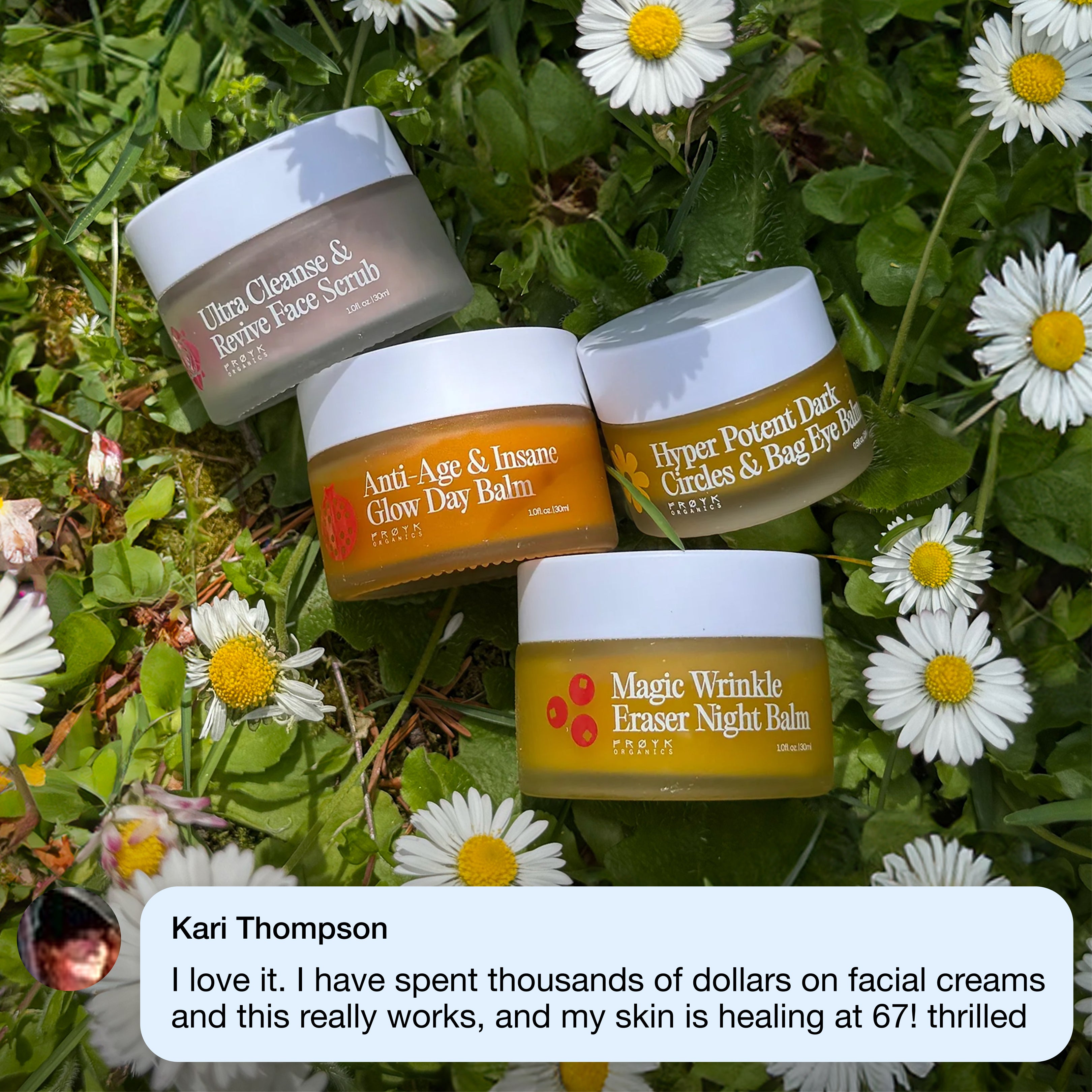
Piante artiche selvatiche e cera d'api biologica. Zero acqua, zero fragranza sintetica. Quattro balsami in una routine che nutre i lipidi della barriera da cui dipende un bagliore duraturo, supportato da una garanzia di restituzione del denaro di 60 giorni.
Acquista il Sistema OggiDomande Frequenti
Qual è la migliore lozione doposole?+
Qual è il migliore tipo di doposole?+
Qual è la migliore lozione da applicare su una scottatura?+
Cosa consigliano i dermatologi per una scottatura?+
Cosa funziona meglio del Doposole?+
Qual è il miglior modo per prendersi cura della pelle dopo il sole?+


