

 Compte


For most of my life, my skin could take a punch. I washed it with whatever was on sale, skipped moisturizer half the time, and it never complained.
Then somewhere in my late forties, that stopped. A cream I had used for years started to sting. My cheeks flushed at nothing, my skin itched at night, and products that were once fine suddenly felt like sandpaper.
If that sounds familiar, you are in good company, and you are not imagining it. Sensitive skin after menopause is real, common, and caused by a genuine shift in your skin. It is not you being fussy or doing something wrong.
Here is the short version: when your hormones change, your skin's protective barrier gets weaker, so it reacts to things it used to shrug off. Let's walk through what is actually going on, and the gentle care that calms it back down.
Key Takeaways
- Sensitive skin after menopause is caused by falling estrogen, which weakens your skin's protective barrier.
- A weaker barrier lets moisture out and irritants in, so skin stings, itches, and reacts more.
- These hormonal changes also bring dryness, thinner skin, less firmness, and sometimes redness or breakouts.
- Gentle, barrier-first care beats harsh actives for reactive skin.
- A rich, waterless balm helps replace the lipids your skin stops making.
What Sensitive Skin After Menopause Really Means
Sensitive skin after menopause is new or increased reactivity. Think stinging, redness, itching, or irritation, even if your skin stayed calm for most of your life.
It shows up as skin that reacts to products, weather, or fabrics that never used to bother you. The cause is mostly hormonal, not something you did or some step you skipped.
Rising skin sensitivity often starts as tightness after washing or a flush that lingers too long. This is a real shift in your skin health that comes with aging skin, not your skin being broken. It is just missing the support it used to make on its own.
Why Menopause Makes Your Skin More Sensitive

Lower estrogen is the main reason your skin becomes more sensitive during menopause. Estrogen helps your skin make the oils and lipids that keep its barrier strong, so when it falls, that barrier weakens.
A weaker epidermal barrier function lets moisture escape and lets irritants in. That is why your skin suddenly reacts to soaps, fragrance, and products it used to tolerate.
Research backs this up. A 2022 study in Scientific Reports found that after menopause, skin makes fewer skin-barrier lipids, and the ones left are shorter, so the barrier holds water less well.
The science, in one line: Post-menopausal skin produces fewer and shorter-chain ceramides, which raises water loss and leaves skin “more susceptible to irritants, allergens, and microorganisms.”
Estrogen, Collagen, and a Weaker Barrier
Estrogen does more than hold moisture. It supports collagen production, the protein that keeps skin firm, and it helps the body make hyaluronic acid for skin hydration.
When estrogen drops, skin collagen drops fast, and skin loses skin elasticity and firmness. Thinner, more fragile skin reacts more easily.
A stat worth knowing: Skin can lose up to 30% of its collagen in the first five years of menopause, then about 2% a year after that.
Source: American Academy of Dermatology
Why Your Skin Reacts to Products It Used to Love
As estrogen falls, your skin makes less oil and its pH shifts. Both changes raise skin sensitivity and reactivity.
The American Academy of Dermatology notes that around age 50, skin becomes more easily irritated and more prone to rashes. Postmenopausal skin conditions can include rosacea, eczema, and allergic contact dermatitis.
So that “my skin hates everything now” feeling is a real barrier change, not you being dramatic.
Common Skin Changes to Expect After Menopause
Sensitivity rarely travels alone. Here are the menopausal skin changes that often show up together, all tied to the same hormonal shift.
Dry, Itchy, and Reactive Skin
Less oil means dryness, and dry skin itches. Part of this is the loss of the water-binding sugars your skin used to hold onto, so skin moisture drops and that tight, papery feeling sets in.
Here is the part nobody warns you about. The itch often gets worse at night, right when you are trying to sleep. If that is you, our guide on menopause itchy skin relief walks through what actually helps.
Thinner Skin, Fine Lines, and Less Firmness
With collagen falling, you get thinning skin, more fine lines, and a bit of sagging skin. Your skin also renews itself more slowly now, so dead skin cells linger on the surface and dull your glow.
This is normal skin aging, just sped up by hormones. It is not a sign you did anything wrong or let yourself go.
Redness, Rosacea, and Breakout Flares
Here is a cruel twist. Some women get menopausal acne and redness in their 50s, decades after the teenage version. Hot flashes can make flushing worse, and if you already have rosacea, it can flare more often.
The fix is not the harsh acne products from your twenties, since those usually make reactive skin worse. A gentle balm with no synthetic fragrance can help calm redness-prone skin without stripping it.
Hair and Nail Changes
Lower sex hormones can mean thinning hair on your head and a few new hairs on your chin or lip. Some women notice female pattern hair loss showing up as a widening part.
Nails can get more brittle too, splitting or peeling more easily. It is a frustrating part of the shift, and worth raising with your doctor if your hair thins fast.
When Do These Menopause Skin Changes Start?
They often start earlier than you expect. Most changes begin in perimenopause, the transition before your periods stop.
Here is the rough timeline:
- Perimenopause: Usually starts in your mid-40s and lasts about four years, with estrogen rising and falling.
- Menopause: Officially one year after your last period, on average around age 51.
So if your skin shifted in your 40s, that is right on schedule. Premature menopause or medical treatment can bring these changes sooner. For a fuller picture, read our notes on skincare after 50.
How to Care for Sensitive Skin After Menopause

Here is the mindset shift that matters most. Because your skin is more reactive now, the goal is to repair the barrier first, not attack your skin with strong actives.
Many popular ingredients promise results but cost reactive skin a lot:
- Retinoids can cause redness, peeling, and stinging on fragile skin.
- Acids like AHAs can over-exfoliate and worsen dryness.
- Fragrance and high-alcohol formulas often trigger flares.
These actives are not evil. They just ask too much of skin that is already struggling to hold itself together. If you ever add them back, go slow and reintroduce one at a time.
A simpler skin care routine works better for most women:
- Wash with a gentle cleanser. Skin should never feel tight after.
- Seal moisture in with a rich balm right after cleansing.
- Use lukewarm water, not hot, and pat skin dry.
- Support skin from within with water and healthy fats.
- Keep sun exposure sensible, and let your dermatologist guide sunscreen for longer time outdoors.
To go deeper, here is how to repair the skin barrier naturally.
A gentle reminder: Potent, waterless balms go a long way. Use only a small fingertip amount, and patch test first if your skin is very reactive.
What About Hormone Replacement Therapy?
Some women ask about hormone replacement therapy for their skin. It is worth understanding, though it is a medical decision for you and your doctor, not a skincare step.
Research shows topical estrogen and HRT can improve skin thickness and elasticity in some women, since they raise hormone levels the skin responds to. Still, HRT is prescribed for menopause symptoms overall, not for skin alone.
For day-to-day comfort, gentle barrier care is something you can start right now, with no prescription.
Why a Natural Waterless Balm Works for Menopausal Skin
Your barrier lost lipids. A waterless balm replaces what is missing, while a water-heavy cream mostly sits on top and evaporates.
That is the simple logic. Frøya Organics balms are packed with botanical oils and organic beeswax that seal moisture in and support the barrier, with nothing to irritate reactive skin. Explore the full range of mature skin care products to find your fit.
Here is how the core picks help sensitive, menopausal skin.
Dry and Itchy Balm for Face and Body

Reach for this one on the days your skin feels tight, itchy, and like it hates everything you put on it. The balm for dry itchy skin is made to soothe that irritation and support the skin barrier in 7 days, which is exactly what reactive menopausal skin is missing.
Chamomile calms the reaction, while thistle and beeswax seal moisture in so your skin can finally settle down. It works on your face and anywhere on your body that feels dry or raw.
A little goes a very long way here, so do not go heavy. Apply a thin layer to clean skin two to three times a day. If your skin looks a little orange, that is your sign you used too much.
The Complete System for Mature Women's Skin

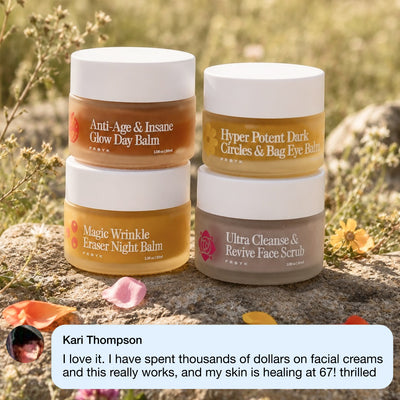
If you would rather not piece a routine together yourself, the Complete Skincare for Mature Skin gives you the whole thing in four gentle steps. It is built for mature, sensitive skin, so every step supports the barrier instead of stripping it.
This is the set most women reach for when their skin starts reacting to everything. Here is what is inside and what each step does for sensitive, menopausal skin.
| Step | Product | What it does for sensitive mature skin |
|---|---|---|
| Cleanse | Ultra Cleanse & Revive Face Scrub | A gentle waterless cleanse that lifts buildup without stripping your barrier |
| Day | Anti-Age & Insane Glow Day Balm | Light daytime nourishment with sea buckthorn to soften and protect |
| Eyes | Hyper Potent Dark Circles & Bag Eye Balm | Calms and cushions the thin, fragile skin around your eyes |
| Night | Magic Wrinkle Eraser Night Balm | Rich overnight repair with rosehip while your skin rests |
The whole routine leans on botanical oils and beeswax, not harsh actives, so it suits skin that has started reacting to everything. Follow the four steps morning and night, and remember a little of each balm is plenty.
How Long Until Your Skin Feels Better?
Be patient with your skin, because barrier repair is not an overnight thing. It usually takes a few weeks of steady, gentle care before the big changes show up.
That said, most women feel the small wins fast. Less itch and more comfort often come within the first week or two, while the deeper changes in texture and resilience build over four to eight weeks.
Consistency is the whole game here. Stopping the moment your skin calms down is the top reason the sensitivity creeps back.
Calmer, Comfortable Skin Starts With Your Barrier

Here is what I want you to walk away knowing. Sensitive skin after menopause is not the end of good skin, and it is not something you broke. It is your skin asking for gentler, smarter support instead of more harsh products piled on top.
I know how discouraging it feels when things that always worked suddenly turn on you. But this part really is fixable. Go gentle, protect that barrier, stay consistent, and your skin can feel calm, comfortable, and like yours again.
You do not have to take my word for it either. You can see the real before and after results from women who were exactly where you are now and stuck with a gentle, barrier-first routine. Your skin is still worth caring for. It just asks for a softer touch these days.
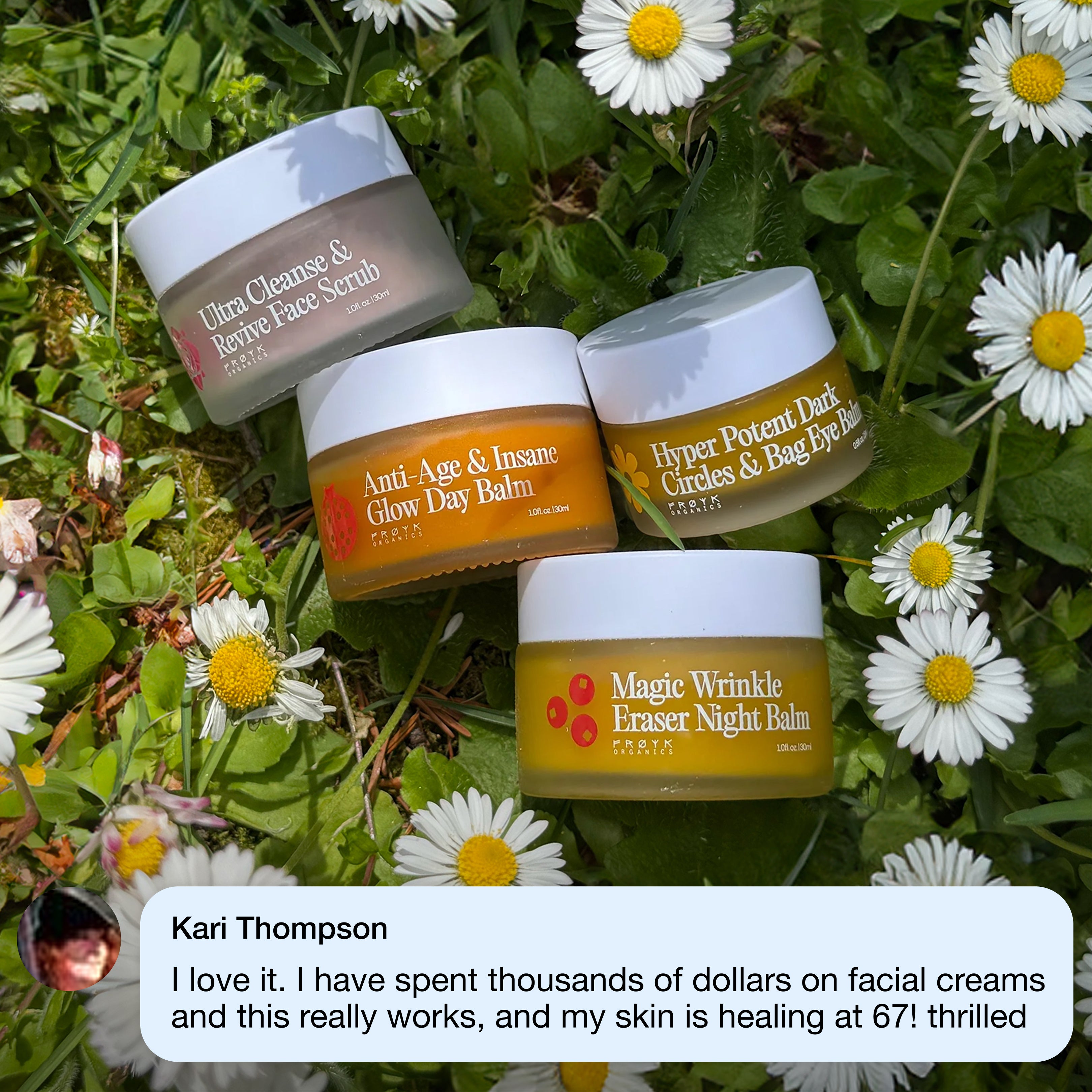
Four waterless botanical steps in one set: day balm, night balm, eye balm, and cleansing scrub, made in Norway from wild Arctic botanicals and organic beeswax, backed by a 60-day money-back guarantee.
Shop the System TodayThis article is for educational purposes only and is not medical advice. It is not meant to diagnose, treat, or cure any condition. If you have ongoing skin concerns, or questions about hormone therapy, please speak with a qualified healthcare professional or dermatologist.
Questions Fréquemment Posées
Why is my skin sensitive to touch all of a sudden?+
What are the effects of low estrogen levels after menopause?+
What does a low estrogen face look like?+
What is the best cream for itchy skin during menopause?+
What do dermatologists recommend for menopausal skin?+
What is the best skincare for post-menopause skin?+


