

 Compte


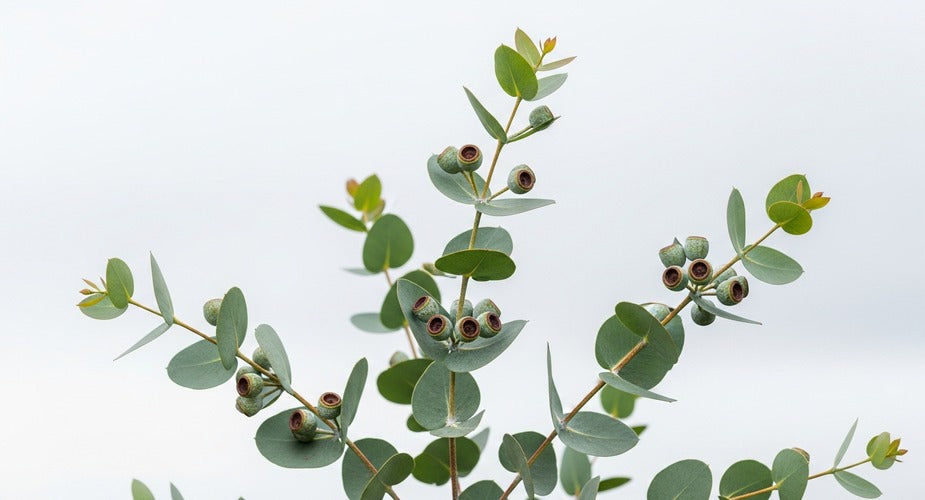
Un essai clinique en double aveugle mené en 2012 par Kao Corporation (IJCS, PubMed 21696405) a démontré que l'extrait d'eucalyptus augmentait les niveaux de céramides dans la couche cornée. Cette seule phrase change toute la conversation.
La plupart des articles classent l'eucalyptus dans la catégorie « huile d'entretien » ou « traitement anti-imperfections » et passent à côté de l'histoire la plus importante après 45 ans : celle de la réparation de la barrière cutanée. Ce guide explore les mécanismes réels derrière les bienfaits de l'huile d'eucalyptus pour la peau, l'espèce à privilégier sur le visage (radiata, et non globulus), les taux de dilution qui garantissent votre sécurité, les huiles végétales à associer pour que le mélange fonctionne, et comment reconnaître un flacon réellement pur en boutique.
À la fin de cet article, vous en saurez plus sur cette huile que la plupart des formulateurs.
L'histoire des céramides : pourquoi l'eucalyptus compte pour les peaux matures
Après la ménopause, les niveaux de céramides dans la couche cornée chutent jusqu'à 40 %, et votre barrière cutanée commence à laisser fuir l'eau plus vite qu'elle ne peut la retenir. C'est précisément là que l'eucalyptus accomplit son travail silencieux.
L'étude clinique en double aveugle de Kao Corporation (IJCS 2012, PubMed 21696405) a montré que l'extrait d'eucalyptus appliqué localement augmentait les niveaux de céramides dans la couche cornée humaine, améliorait la capacité de rétention d'eau, et renforçait de manière mesurable la fonction barrière sur 8 semaines d'utilisation biquotidienne. Le composé actif est le macrocarpal A, qui stimule l'expression de l'ARNm de cinq enzymes de synthèse des céramides. En clair, il incite votre peau à fabriquer davantage son propre « mortier » plutôt que d'attendre qu'un pot vienne le compléter.
C'est la partie dont presque personne ne parle.
Il y a plus. Une étude de 2022 indexée sous PMC8950756 a examiné l'Eucalyptus globulus sur des fibroblastes cutanés humains et a constaté une réduction de 19 à 20 % des cellules sénescentes (les cellules « zombies »), une baisse de 41,16 % de la MMP-1 (l'enzyme qui dégrade le collagène), une baisse de 69,29 % de la MMP-9, une stimulation de l'expression du collagène de type 1, et une inhibition de 90,69 % de la tyrosinase (l'enzyme responsable des taches brunes).
Traduite sur votre peau, cette combinaison signifie une peau plus ferme, moins de ridules « peau de crêpe », une meilleure rétention d'hydratation, et une progression plus lente de ces taches brunes tenaces au milieu des joues.
Ce n'est pas un traitement localisé. C'est un allié de la barrière cutanée et du teint.
Une chronologie réaliste compte ici. La stimulation des céramides nécessite 6 à 8 semaines d'exposition topique régulière avant que la PTE (perte transépidermique en eau, le marqueur clinique de la barrière) ne montre une baisse significative. La plupart des femmes abandonnent un produit à la troisième semaine parce qu'elles espèrent un éclat façon sérum en quelques jours. L'eucalyptus joue une partie plus longue, plus proche du rétinol que de l'acide hyaluronique dans la manière dont il délivre ses résultats. L'essai Kao a enregistré ses plus fortes hausses de céramides entre les semaines 6 et 12, et non lors du premier mois.
Une barrière plus solide prépare aussi la pièce suivante du puzzle, car les dommages à la barrière et l'inflammation chronique ne sont presque qu'une seule et même conversation, exprimée dans deux vocabulaires différents.
Calmer l'inflammaging : le mécanisme anti-inflammatoire du 1,8-cinéole
Vous traitez peut-être quatre « problèmes » différents qui n'en sont en réalité qu'un seul. Rougeurs tenaces, teint terne, cicatrisation lente, réactivité soudaine à des produits que vous utilisiez depuis des années. Le terme générique est l'inflammaging.
L'inflammaging est une inflammation chronique de bas grade qui accélère le vieillissement visible depuis l'intérieur de la peau vers l'extérieur. Elle est plus discrète qu'une poussée mais plus persistante, et c'est la première cause pour laquelle la peau mature perd son élasticité plus vite que ne le prédit l'âge chronologique.
Voici le mécanisme qui compte. L'huile d'eucalyptus est riche en 1,8-cinéole (aussi appelé eucalyptol), présent à hauteur de 60 à 85 % de l'huile essentielle finie selon l'espèce. Selon une recherche indexée sous PMC10301542, le 1,8-cinéole inhibe le NF-kB (un interrupteur maître de l'inflammation) en stimulant l'IkB-alpha, qui se lie au NF-kB et le maintient dans le cytoplasme. Lorsque le NF-kB ne peut pas être transloqué vers le noyau, les cytokines inflammatoires en aval chutent avec lui : le TNF-alpha, l'IL-1 bêta, et l'IL-6. La même voie inhibe l'activité de la COX-2 dans la peau, un autre moteur clé des rougeurs et de l'inflammation.
En clair, quand le NF-kB se tait, la peau arrête de « crier ».
Qu'est-ce que cela donne dans le miroir ? Moins de rose diffus sur les joues. Moins de jours de réactivité. Des matins plus calmes. Un teint qui paraît reposé même lorsque vous ne l'êtes pas. La plupart des utilisatrices constatent une diminution visible des rougeurs après 4 à 6 semaines d'utilisation quotidienne à une dilution de 0,5 %.
Une remarque pratique. L'eucalyptus se combine bien avec des huiles végétales douces comme l'huile de rose musquée et le jojoba. Il ne se superpose pas proprement à un rétinoïde puissant, à un AHA à 10 %, ou juste après une séance de microneedling, car la barrière est déjà sollicitée et un signal inflammatoire supplémentaire est la dernière chose souhaitable. Utilisez l'eucalyptus les soirs de repos, ou gardez-le dans votre routine du matin pendant que le rétinol agit la nuit.
Un dernier mécanisme mérite d'être mentionné. Le 1,8-cinéole capte aussi les espèces réactives de l'oxygène et augmente les niveaux de glutathion dans les cellules cutanées, ajoutant une couche antioxydante à l'inhibition du NF-kB. L'inflammation et l'oxydation sont les deux mains de la même horloge du vieillissement, et l'eucalyptus agit sur les deux à la même dose.
Une barrière plus calme est une barrière qui paraît plus jeune. Cette phrase résume toute la thèse.
Eucalyptus globulus vs eucalyptus radiata : le choix d'espèce que personne n'explique
La plupart des femmes qui ont essayé l'eucalyptus sur leur visage ont utilisé la mauvaise espèce et se sont blâmées lorsque cela a picoté trop fort.
Deux espèces dominent le marché. L'Eucalyptus globulus (le « gommier bleu » que l'on retrouve dans les baumes pour la poitrine et les inhalations de vapeur) contient environ 72,3 % de 1,8-cinéole, certains lots atteignant 85 %. L'Eucalyptus radiata (parfois vendu sous le nom « à feuilles étroites » ou « menthe poivrée noire ») contient 60 à 70 % de cinéole, avec une proportion plus élevée d'alpha-terpinéol, une molécule aromatique plus douce et mieux tolérée par la peau.
Un taux de cinéole plus élevé semble être un avantage. Sur les produits respiratoires, c'est le cas. Sur la peau plus fine et plus sèche d'un visage de 55 ans, c'est souvent trop stimulant et peut sensibiliser une barrière déjà insuffisamment réparée.
Pour un usage facial sur peau mature, choisissez l'Eucalyptus radiata. Réservez l'Eucalyptus globulus à la diffusion, aux baumes pour la poitrine, aux bains de pieds, et aux formules pour le corps, là où la peau est plus épaisse et où l'objectif est un effet aromatique puissant.
Ce n'est pas un avis marginal. La Joan Morais Cosmetics School, qui forme des formulateurs indépendants de cosmétiques, recommande explicitement le radiata pour les formulations faciales plutôt que le globulus, pour la même raison : son profil plus doux tolère une application sans rinçage. Robert Tisserand fait la même recommandation dans ses données de sécurité sur les huiles essentielles, citant un risque plus faible de sensibilisation cutanée avec le radiata. Les guides français d'aromathérapie privilégient aussi le radiata pour les baumes pectoraux destinés aux enfants, car il apporte les bienfaits respiratoires du cinéole sans le même risque pour les voies respiratoires.
Une troisième espèce, l'Eucalyptus smithii, apparaît parfois dans les gammes d'aromathérapie haut de gamme et est encore plus douce que le radiata, bien qu'elle soit plus difficile à trouver et généralement deux fois plus chère. Si vous la trouvez, c'est un choix valable pour les peaux extrêmement réactives.
Il existe un indice de qualité caché dans cette discussion. Si le flacon indique simplement « Huile d'eucalyptus » sans nom botanique latin, sans espèce, juste le nom commun, vous ne savez absolument pas laquelle vous tenez entre les mains. C'est un signal d'alarme, et nous y reviendrons dans la liste de vérification d'achat ci-dessous.
La bonne espèce n'est que la moitié de la question de sécurité. La dilution est l'autre moitié.
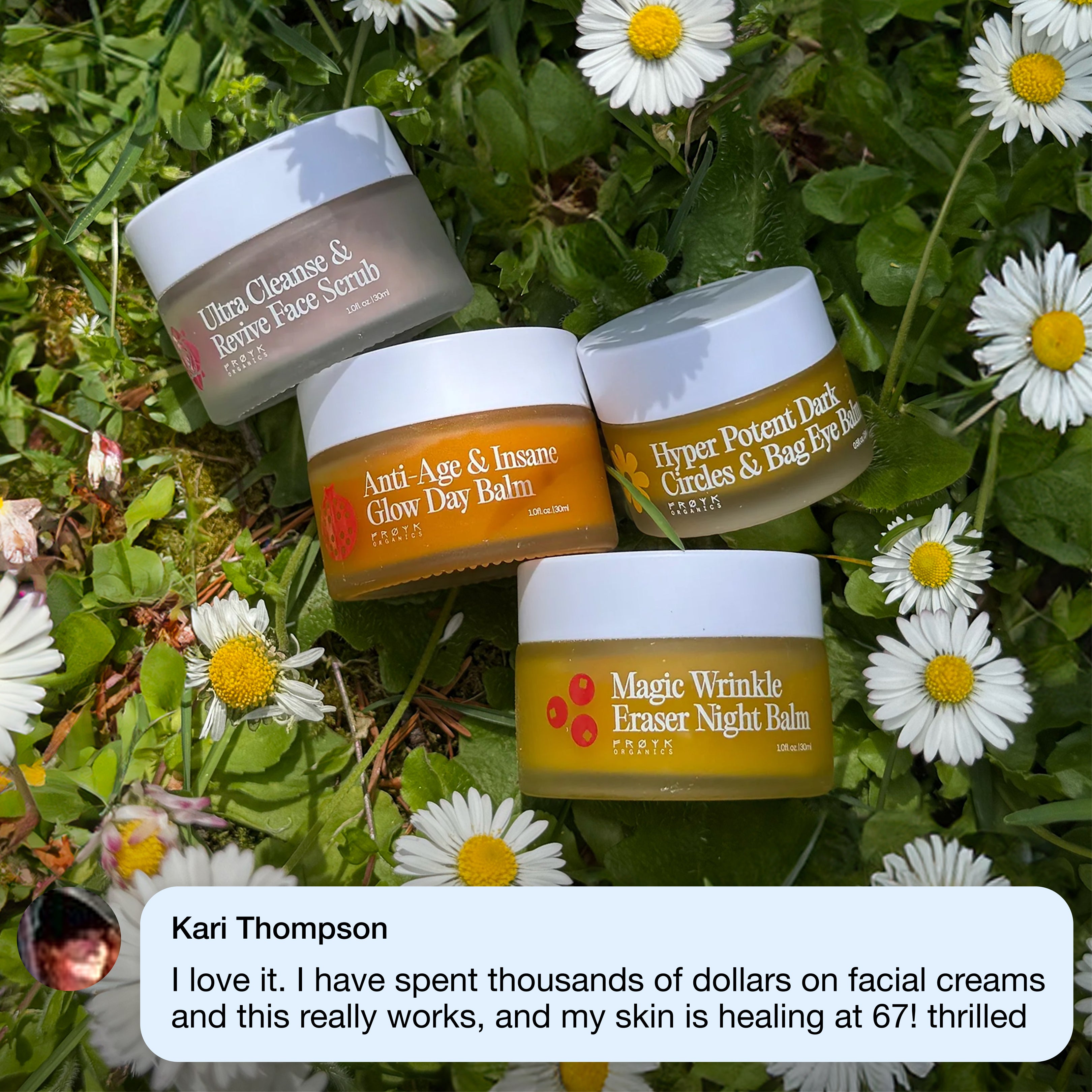
100 % d'actifs botaniques. L'argousier comme base. Zéro eau, zéro conservateur synthétique. Noté 4,66/5 sur plus de 3 152 avis. Garantie de remboursement de 60 jours.
Découvrir le système - $119Comment utiliser l'huile d'eucalyptus sur votre visage en toute sécurité
Vous pouvez appliquer de l'eucalyptus sur votre visage ce soir et vous sentir en confiance si vous respectez trois chiffres : l'espèce, la dilution, et le nombre de gouttes par application.
La dilution d'abord, car c'est là que la plupart des gens se trompent. Le Tisserand Institute, la référence du secteur en matière de sécurité des huiles essentielles, recommande pour les produits faciaux sans rinçage une dilution de 0,5 à 1,2 % pour un usage général et de 0,2 à 1 % pour les peaux sensibles ou dont la barrière est fragilisée. La Joan Morais Cosmetics School, destinée aux formulateurs de peaux matures, resserre encore cette fourchette à 0,05-0,5 % pour les produits faciaux sans rinçage et jusqu'à 1 % pour les nettoyants et masques rincés.
Le calcul concret. À 0,5 %, cela équivaut à 4 à 5 gouttes d'Eucalyptus radiata pour 30 ml (1 oz) d'huile végétale. À 0,25 %, réduisez de moitié, soit 2 gouttes. Commencez à 0,25 % pendant les deux premières semaines, puis augmentez si votre peau reste calme. Vous pourrez toujours augmenter plus tard. Vous ne pourrez pas apaiser une barrière irritée du jour au lendemain.
L'application est un rituel en quatre étapes, pas un étalage généreux. Nettoyez. Vaporisez ou humidifiez légèrement la peau. Réchauffez 3 à 4 gouttes de votre mélange fini entre vos paumes. Appliquez en pressant (sans frotter) sur le visage, le cou, et derrière les oreilles. Si votre peau se sent encore assoiffée, terminez avec une crème occlusive.
Des mises en garde à afficher sur le miroir de la salle de bain. Ne jamais appliquer l'huile d'eucalyptus pure sur la peau. Évitez la zone des yeux et le contour des lèvres. Effectuez un test cutané sur l'avant-bras pendant 24 heures avant une application complète sur le visage. Évitez l'eucalyptus pendant le premier trimestre de grossesse, et discutez-en avec votre sage-femme par la suite. Gardez tous les flacons d'huiles essentielles hors de portée des enfants de moins de 10 ans, car le 1,8-cinéole peut être dangereux pour les petites voies respiratoires.
Si votre peau picote pendant plus de 30 secondes, retirez-la avec une huile végétale pure (et non de l'eau, qui répandrait davantage l'huile essentielle) et réduisez de moitié la dilution lors de la prochaine application.
La question suivante se pose presque d'elle-même. Dans quoi le mélanger concrètement ?
Les meilleures huiles végétales à associer à l'eucalyptus pour peau mature
L'huile végétale n'est pas un simple contenant. Sur peau mature, elle représente la moitié de la formule.
La meilleure association quotidienne pour les femmes de 45 ans et plus est 70 % d'huile de jojoba et 30 % d'huile de rose musquée. Ce mélange offre un fini sec et net, avec une action réelle sur la barrière cutanée et le teint.
Voici pourquoi ces deux huiles en particulier. Le jojoba est techniquement un ester de cire liquide, presque identique en structure au sébum que votre peau produit déjà. Il s'absorbe sans obstruer les pores, convient à tous les types de peau, y compris les peaux grasses et sujettes aux imperfections, et prolonge la durée de conservation des huiles plus délicates avec lesquelles il est mélangé (le jojoba se conserve lui-même 2 à 3 ans non ouvert). L'huile de rose musquée apporte de la vitamine C naturelle ainsi que des précurseurs d'acide trans-rétinoïque issus de la vitamine A, ce qui améliore discrètement le teint et le grain de peau sur 8 à 12 semaines d'utilisation régulière.
Toutes les femmes ne tolèrent pas la rose musquée. Si elle vous semble trop active ou si votre peau est très sèche, remplacez les 30 % par de l'huile d'argan, plus riche en vitamine E et en acide oléique et plus douce sur les teints réactifs. Pour les peaux extrêmement sensibles ou sujettes à la rosacée, le squalane (dérivé de l'olive ou de la canne à sucre) est l'huile végétale la plus neutre disponible.
Ce qu'il faut éviter. L'huile de coco vierge est comédogène pour de nombreuses femmes de plus de 45 ans et obstruera les pores autour de la mâchoire et de la lisière du cuir chevelu en une semaine d'utilisation quotidienne. Les bases lourdes à l'huile minérale occluent sans nourrir la peau. L'huile de pépins de raisin s'oxyde rapidement et ne tient pas dans un mélange sans rinçage au-delà de 6 mois.
Même l'association d'huiles végétales la plus réfléchie échoue si le flacon d'eucalyptus qui l'accompagne est frelaté. Ce qui nous mène à l'étagère de la boutique.
Comment acheter une huile essentielle d'eucalyptus pure : liste de vérification qualité
Une belle étiquette et un prix à trente dollars ne garantissent pas une huile pure. Des flacons frelatés se retrouvent aussi bien dans les magasins bio que dans les pharmacies haut de gamme.
Un flacon fiable répond à ces critères. L'étiquette indique le nom botanique latin (Eucalyptus radiata pour un usage facial, Eucalyptus globulus pour le corps et la diffusion). Un pays d'origine apparaît quelque part, généralement l'Australie ou l'Afrique du Sud. La marque publie des rapports GC/MS (chromatographie en phase gazeuse/spectrométrie de masse) par lot, ou au minimum un numéro de lot que vous pouvez vérifier par e-mail. Le flacon est en verre ambré ou bleu cobalt, jamais transparent, jamais en plastique. La méthode d'extraction est précisée comme étant une distillation à la vapeur des feuilles.
Les signaux d'alarme sont tout aussi faciles à repérer. Un flacon indiquant seulement « Huile d'eucalyptus » sans espèce précisée. Aucun pays d'origine. Aucun numéro de lot. Un prix suspicieusement bas (moins de 8 $ pour 10 ml signale généralement une dilution avec de l'huile de coco fractionnée ou une autre huile moins chère contenant du cinéole). Un résidu gras ou légèrement sucré sur le verre lorsque vous inclinez le flacon.
Le stockage prolonge ou ruine le flacon que vous avez acheté. Gardez l'eucalyptus soigneusement fermé, à l'abri de la lumière directe du soleil, idéalement dans un tiroir entre 15 et 20 degrés Celsius (60–70°F). La durée de conservation est d'environ 1 à 2 ans après ouverture. Vous remarquerez que le parfum devient plus âpre et plus proche du camphre passé ce délai.
Une fois que vous savez quoi vérifier, vous arrêtez de jouer aux devinettes en boutique. Vous commencez à acheter avec la même assurance qu'une formulatrice.


