

 Compte


La crème hydratante qui fonctionnait à merveille à 35 ans a cessé d'agir vers 48 ans. Vous n'avez pourtant rien changé à votre routine. C'est votre peau qui a changé de chimie.
Personne ne vous a expliqué pourquoi. Ce changement inexpliqué vous a poussée à chercher des sérums, des crèmes et des ingrédients qui n'ont jamais vraiment tenu leurs promesses.
Voici ce qui s'est passé : une enzyme de votre foie, la delta-6-désaturase, a commencé à ralentir. Cette enzyme convertit l'acide linoléique alimentaire en acide gamma-linolénique (GLA), un acide gras essentiel que votre peau ne peut pas fabriquer elle-même. Sans assez de GLA, votre barrière cutanée s'amincit, se dessèche et devient réactive.
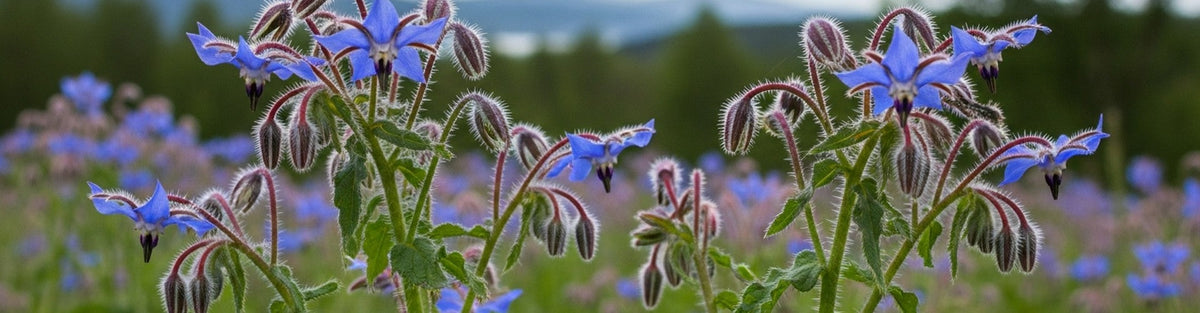
L'huile de bourrache est dérivée des graines de la plante Borago officinalis, également connue sous le nom de bourrache officinale. Elle contient 18 à 26 % de GLA, la concentration la plus élevée parmi toutes les plantes sur terre. À titre de comparaison, l'huile d'onagre n'en apporte que 7 à 10 %.
Cela fait de l'huile de bourrache pour la peau une réponse directe au problème que votre corps a développé après 45 ans. Ce n'est pas un ingrédient à la mode, pas un argument marketing, mais une correspondance biochimique exacte avec ce que votre corps a cessé de produire efficacement.
Voici six bienfaits de l'huile de bourrache pour la peau qui vont bien au-delà de ce que dit l'étiquette, et pourquoi ils comptent particulièrement après 45 ans.
1. Elle remplace un acide gras que votre corps cesse de produire
Votre peau n'a jamais été capable de fabriquer du GLA. Ni à 25 ans, ni à 55 ans. Elle a toujours dépendu de votre foie pour convertir l'acide linoléique alimentaire en GLA grâce à la delta-6-désaturase, et après 45 ans cette enzyme ralentit considérablement.
Le vieillissement est l'un des principaux facteurs connus pour atténuer l'activité de la delta-6-désaturase, mais ce n'est pas le seul. Le diabète, le stress chronique, une forte consommation d'alcool et une alimentation déséquilibrée altèrent tous la même enzyme, et ces conditions deviennent plus fréquentes après 45 ans. Le résultat : votre peau se retrouve privée de GLA même lorsque votre alimentation est raisonnable.
C'est pourquoi les crèmes hydratantes de surface ne suffisent plus. Elles apportent de l'eau et des agents occlusifs, mais elles ne remplacent pas l'acide gras oméga-6 structurel dont votre barrière a réellement besoin. Cet acide gras manquant est l'une des principales causes de la sécheresse, de la desquamation et de la réactivité que vous avez commencé à remarquer à la fin de la quarantaine.
Si votre peau est devenue plus réactive au fil du temps, les baumes réparateurs Frøya Organics peuvent combler le manque de lipides directement.
Comme l'explique la dermatologue Dr Cynthia Bailey : « L'enzyme hépatique qui crée le GLA à partir de l'acide linoléique est lente et très vulnérable à des conditions telles que le vieillissement. » Lorsque cette enzyme faiblit, vous devez apporter du GLA directement. L'application topique d'huile de bourrache est recommandée pour reconstituer les faibles niveaux de GLA dans la peau sèche.
Comment l'huile de bourrache se compare aux autres sources de GLA
L'huile de graines de bourrache apporte deux à trois fois la concentration présente dans l'huile d'onagre, et considérablement plus que le cassis ou l'huile de graine de chanvre. Goutte pour goutte, rien ne s'en approche pour la santé de la peau.
Une fois que vous comprenez le mécanisme du GLA, tous les autres bienfaits de l'huile de bourrache prennent sens. Ils découlent tous de cet unique acide gras et de son effet sur votre santé globale.
2. Elle a reconstruit la barrière cutanée chez des personnes de plus de 65 ans
Dans une étude clinique publiée dans Archives of Gerontology and Geriatrics, 29 personnes âgées en bonne santé, d'âge moyen 68,6 ans, ont pris de l'huile de bourrache quotidiennement pendant deux mois. La dose apportait 360 à 720 mg de GLA par jour, le même acide gras que votre peau manque après 45 ans.
La mesure principale est la perte d'eau transépidermique, ou TEWL : la quantité d'eau qui s'échappe de votre peau dans l'air. Une barrière saine retient l'eau. Une barrière endommagée la laisse fuir, ce qui fait que votre peau sèche et se raidit.
Une baisse de 10,8 % de la perte d'eau signifie que la barrière s'est refermée et a commencé à retenir l'humidité comme le ferait une peau plus jeune. Les autres résultats ont suivi le même schéma. Chaque personne qui signalait des démangeaisons au départ n'en signalait plus à la fin.
Les plaintes de peau sèche ont chuté de plus de moitié, et les niveaux de GLA dans leurs membranes cellulaires ont augmenté de 70 %, reconstitutant l'acide gras que leur peau manquait.
Brosche et Platt ont lié cela au ralentissement de l'enzyme de la première section. Votre corps cesse de produire assez de GLA après 45 ans, et l'huile de bourrache le fournit directement, sans conversion nécessaire. Cette reconstitution était le mécanisme derrière la barrière plus forte.
Pour une vision complète de la façon dont la couche lipidique de votre peau se dégrade et comment la restaurer, ce guide sur la façon de réparer une barrière cutanée endommagée couvre l'approche plus large.
Une deuxième étude l'a confirmé chez les femmes en bonne santé
De Spirt et ses collègues (2009) ont donné à 45 femmes en bonne santé environ 2 grammes d'huile de bourrache quotidiennement pendant 12 semaines. La perte d'eau transépidermique a chuté d'environ 10 %, correspondant à l'amélioration de la barrière observée dans l'étude chez les personnes âgées. La rugosité de la peau et la desquamation ont toutes deux diminué de façon significative, et ces gains n'ont pas été observés dans le groupe placebo.
L'étude était randomisée, contrôlée par placebo, et publiée dans le British Journal of Nutrition.
Deux études indépendantes, toutes deux montrant des effets positifs mesurables sur la fonction barrière cutanée chez les femmes adultes et les personnes âgées. Des résultats mesurés, publiés dans des revues à comité de lecture, chez des personnes réelles dont la peau ressemble bien davantage à la vôtre que la femme de 22 ans dans la plupart des publicités cosmétiques.
Il est important de noter que l'huile de bourrache doit être considérée comme un complément plutôt qu'un remplacement aux médicaments contre l'eczéma. Si vous avez reçu un diagnostic de dermatite atopique ou d'un autre trouble cutané chronique, la supplémentation en GLA fonctionne aux côtés de votre traitement actuel, pas à sa place. Parlez à votre professionnel de santé avant d'apporter des modifications à un plan de traitement existant.
3. Elle calme l'inflammation sans en déclencher davantage
Si votre peau a développé un nouveau type de sensibilité à la fin de la quarantaine, des rougeurs qui n'existaient pas avant, des réactions à des produits que vous utilisiez depuis des années, une rougeur qui apparaît sans raison apparente, vous n'imaginez rien. Le déclin de la production de GLA alimente un cycle d'inflammation chronique de bas grade qui rend la peau irritée progressivement plus réactive.
La plupart des produits de soin de la peau anti-inflammatoires suppriment les symptômes à la surface. L'huile de bourrache fonctionne différemment, et plus en profondeur, grâce à ses propriétés anti-inflammatoires.
Comment fonctionne la voie anti-inflammatoire du GLA
Le GLA de l'huile de bourrache se convertit en DGLA (acide dihomo-gamma-linolénique) dans votre corps. Le DGLA se convertit ensuite en prostaglandine E1 (PGE1) et en 15-HETrE, tous deux des composés anti-inflammatoires puissants. La distinction essentielle est que la supplémentation en GLA élève sélectivement la PGE1 sans augmenter la pro-inflammatoire PGE2.
Fan et Chapkin ont confirmé cette voie dans une étude de 1998 publiée dans le Journal of Nutrition. Cette sélectivité compte. L'huile d'onagre peut augmenter les prostaglandines de façon plus générale, aggravant potentiellement l'inflammation chez certaines femmes.
Ce que cela signifie pour l'acné et la rosacée
Dans une étude en double aveugle portant sur 31 patients atteints de rosacée, l'ajout de 320 mg par jour de GLA au traitement standard a produit un taux de réussite significativement plus élevé que le traitement standard seul. Le GLA supprime également le leucotriène B4, un composé pro-inflammatoire lié aux rougeurs et aux irritations.
L'huile de bourrache possède aussi des propriétés antibactériennes qui peuvent aider à gérer les éruptions d'acné. Elle aide à équilibrer la production naturelle de sébum sans obstruer les pores, ce qui la rend pertinente pour les problèmes cutanés au-delà de la seule rosacée.
Pour les rougeurs et les éruptions qui s'aggravent après 35 ans, un baume ciblé comme le Baume de Jour pour Peau à Imperfections apporte du GLA aux côtés de plantes apaisantes comme le calendula et la lavande.
Votre peau n'a pas besoin d'une brume apaisante supplémentaire. Elle a besoin de la matière première pour produire elle-même ses composés anti-inflammatoires.
4. Elle soutient le collagène et lutte contre les dommages UV de l'intérieur
La plupart des gens considèrent l'huile de bourrache comme une simple crème hydratante. Un examen de 2026 publié dans Biological Diversity raconte une histoire plus complète.
En examinant des études en laboratoire et chez l'humain, les chercheurs ont découvert que les bienfaits de l'huile de bourrache proviennent de trois composés travaillant ensemble : le GLA, l'acide rosmarinique et le kaempférol. Le GLA répare la barrière. L'acide rosmarinique favorise la synthèse du collagène et protège contre les dommages des UV-B, tandis que le kaempférol bloque la MMP-1 et l'élastase, les deux enzymes qui décomposent le collagène et l'élastine à mesure que vous vieillissez.
Cette combinaison compte après 45 ans. Votre collagène a déjà commencé à décliner, et des années d'exposition au soleil accélèrent la perte. Un ingrédient qui protège le collagène existant, aide à construire du nouveau collagène et se défend contre les UV fait bien plus qu'une crème hydratante ajoutant de l'eau de surface.
L'huile de bourrache soutient aussi la régénération de la peau. Le GLA stimule le renouvellement cellulaire, aidant la nouvelle peau à se former plus rapidement et de façon plus uniforme, ce qui explique pourquoi la même huile est étudiée pour la cicatrisation.
C'est ce qui sépare la bourrache des huiles porteuses plus simples comme le simple jojoba ou l'argan. Son GLA atteint 18 à 26 %, soutenu par l'acide linoléique favorable à la barrière et la vitamine E antioxydante. Ces composés travaillent ensemble pour soutenir un teint plus uniforme et une peau rayonnante au fil du temps.
5. Elle surpasse l'huile d'onagre pour un usage topique
Si vous avez utilisé l'huile d'onagre sur votre visage, vous recevez moins de la moitié du GLA que vous pourriez obtenir.
Les chiffres sont simples. L'huile de bourrache contient 18 à 26 % de GLA. L'huile d'onagre contient 7 à 10 %, ce qui donne à la bourrache deux à trois fois plus de GLA par goutte.
L'onagre avait une meilleure image de marque. La bourrache a de meilleurs chiffres.
Pour être honnête sur l'ensemble du tableau : lorsqu'elle est prise par voie orale en complément, le GLA de l'huile d'onagre se situe à la position sn-3 sur sa structure moléculaire, tandis que celui de l'huile de bourrache se situe à la position sn-2. Cela peut signifier une absorption légèrement meilleure pour l'onagre sous forme de complément. La concentration plus élevée de la bourrache compense souvent cet écart, et pour une application topique, la distinction de position sn compte moins car le GLA est alors livré directement à la peau.
Autres différences à connaître
L'huile d'onagre peut être œstrogénique, ce qui pose problème pour les femmes présentant des conditions sensibles aux hormones. La bourrache n'est pas œstrogénique. L'onagre peut augmenter les prostaglandines de façon générale, aggravant potentiellement l'inflammation, tandis que la bourrache élève sélectivement la PGE1 anti-inflammatoire.
Lorsqu'elle est appliquée localement, l'huile de bourrache est considérée comme une huile sèche et s'absorbe facilement dans la peau. Cette texture légère signifie qu'elle s'applique bien sans laisser de résidu gras, et quelques gouttes vont plus loin que vous ne l'auriez cru.
Vous pouvez utiliser les deux huiles si vous le souhaitez. Certaines femmes appliquent la bourrache localement pour un soutien direct de la barrière et prennent l'onagre par voie orale pour des bienfaits hormonaux plus larges. Si vous devez choisir une seule huile pour votre visage, la bourrache apporte davantage de ce qui compte par goutte, et c'est une question de concentration plutôt que d'opinion.
6. Comment l'utiliser sans gaspiller votre argent
L'huile de bourrache est puissante, mais elle est aussi fragile. Achetez-la mal ou conservez-la mal, et vous appliquerez sur votre visage une huile rance et inflammatoire en pensant faire quelque chose de bien.
Ce qu'il faut rechercher à l'achat
Cinq marqueurs distinguent une huile de bourrache stable et utilisable d'une huile qui s'oxyde avant que vous ne la finissiez :
- Pression à froid, jamais d'extraction par solvant
- Certification biologique d'un organisme reconnu
- Flacon en verre ambré foncé, pas en plastique transparent
- Un pourcentage de GLA indiqué sur l'emballage
- Une date de fraîcheur ou un symbole PAO (période après ouverture)
Un test de sensibilité est recommandé avant une application large. Appliquez une petite quantité à l'intérieur de votre poignet, attendez 24 heures, et vérifiez les rougeurs ou irritations avant d'utiliser sur votre visage. Cette étape compte pour tous les types de peau, mais particulièrement si votre peau est déjà réactive ou sensibilisée.
Comment l'appliquer
L'application est simple une fois que vous avez une huile fraîche et bien sourcée :
- Mélangez trois à quatre gouttes à votre crème hydratante pour le visage, ou appliquez après les sérums à base d'eau et avant votre crème finale
- Vous pouvez aussi mélanger l'huile de bourrache avec l'huile de jojoba pour un simple mélange facial
- Appliquez de préférence le soir, car le plus long temps de contact permet une meilleure intégration lipidique dans votre barrière cutanée
- Massez-la doucement et attendez qu'elle soit complètement absorbée avant d'ajouter quelque chose par-dessus
Si vous avez la peau sensible, ne l'appliquez pas pure. Dr Bailey recommande spécifiquement de mélanger l'huile de bourrache avec d'autres huiles pour les peaux sensibles. La combiner avec d'autres émollients botaniques dans un baume peut tamponner la concentration tout en livrant le GLA où il compte.
La régularité compte plus que la quantité. Les études cliniques ayant montré une véritable amélioration de la barrière cutanée ont utilisé huit à douze semaines d'utilisation quotidienne. Ce n'est pas une solution du jour au lendemain. C'est une reconstruction lente et cumulative de la structure lipidique de votre peau.
Conservation (non négociable)
Conservez-la dans un endroit frais et sombre, loin de la lumière directe du soleil. Pas sur l'étagère de la salle de bain. Utilisez-la dans les six mois suivant l'ouverture, et réfrigérez-la si vous l'utilisez lentement.
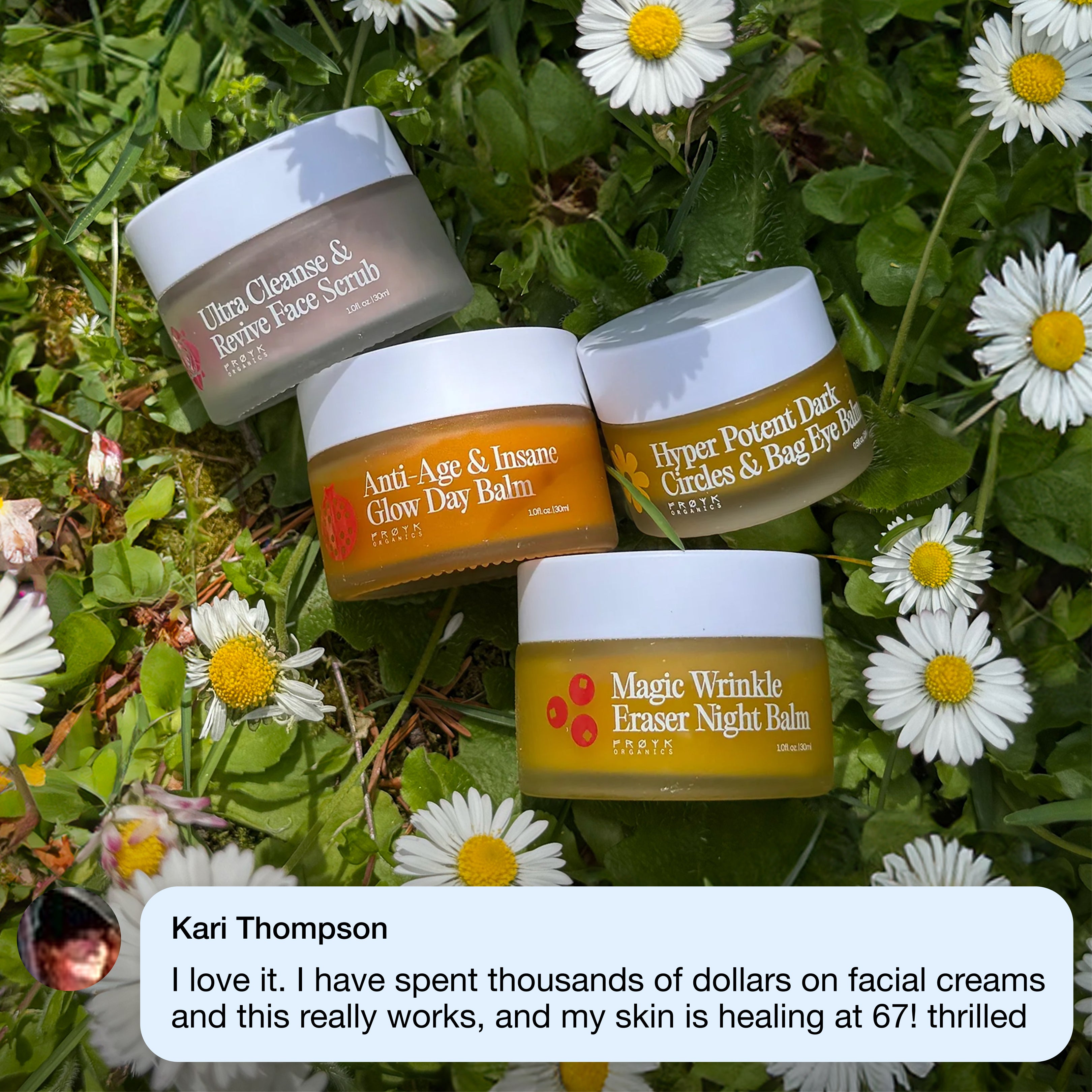
Plantes arctiques sauvages scellées sous cire d'abeille biologique. Zéro eau, zéro parfum synthétique. Quatre baumes qui scellent l'humidité dans la peau mature du matin au soir, avec garantie de remboursement de 60 jours.
Découvrir le Système - $119Frequently Asked Questions
Puis-je utiliser de l'huile de bourrache sur mon visage ?+
Quoi de mieux : l'huile d'onagre ou l'huile de bourrache ?+
L'huile de bourrache aide-t-elle à réduire les rides ?+
Quels ingrédients s'associent bien à l'huile de bourrache ?+
L'huile de bourrache peut-elle aider contre l'eczéma après 45 ans ?+


