

 Cuenta




Right now, trillions of living microbes are sitting on your face. That sounds like something to scrub off. It is the opposite.
The skin microbiome is the community of bacteria, fungi and other microbes living on your skin, and it helps keep the barrier strong, calm and comfortable. Here is the part most people only learn the hard way. It does not stay the same your whole life, and it shifts as you get older. That shift is a big reason mature skin starts to feel drier, thinner and quick to sting at products that used to be fine.
If reaching for stronger cleansers and more actives sounds familiar, that is the usual response. On mature skin, though, it is often the thing making it worse.
The good news is that supporting your skin microbiome is simpler, and cheaper, than the shelf of products suggests. It mostly comes down to being kinder to your skin, not harder on it. Here is what actually changes with age, and what helps.
Key Takeaways
- The skin microbiome is the community of bacteria and other skin microbes on the skin surface, and it helps protect the skin barrier.
- As skin ages, less oil and a changing surface shift the mix of skin bacteria, which can leave skin more sensitive.
- Over-washing and harsh products strip the skin lipids your microbes feed on, so a lighter touch helps.
- Frøya Organics supports the skin microbiome with waterless, botanical balms built around organic beeswax and nourishing oils that look after the skin barrier.
What Is the Microbiome of the Skin?
The skin microbiome is the community of trillions of microorganisms on your skin surface, from bacteria to fungi and viruses. Healthy skin is not sterile. It depends on these skin microbes, and they are part of what keeps it working the way it should.
Most of them are bacteria, grouped into four main families: Actinobacteria, Firmicutes, Proteobacteria and Bacteroidetes. Alongside those bacterial species sit smaller numbers of fungal species, so your skin microflora is a real mix of residents.
They earn their place, too. A balanced skin microbiome helps regulate the immune system, and the friendly commensal bacteria take up space and nutrients so less welcome microorganisms have a harder time settling into healthy skin. Some commensal microbes even make antimicrobial peptides, natural compounds that keep troublemakers in check.
Your skin microbiota and your skin barrier work as a team. The microbiome supports skin barrier function by helping the barrier hold moisture and keep irritants out. Keeping the skin surface slightly acidic, at its natural pH, supports the growth of these good microbes, which is one reason the human skin microbiome matters so much for comfort.
Where Skin Bacteria Live on the Human Skin
Your skin bacteria are not spread evenly, because different parts of your skin are different places to live. Oily areas, damp folds and dry patches each suit a different crowd, so the skin microbial communities on your face are not the ones on your arms.
Oily spots like the face, near the hair follicles, hold fewer types, mostly Cutibacterium. Damp folds carry more Staphylococcus and Corynebacterium, including the helpful Staphylococcus epidermidis. Dry areas hold the widest range.
A loss of microbial diversity is linked to a weaker, more reactive barrier. Keeping that variety is part of the skin microbiome’s role in healthy skin. Source: IEEE Pulse, EMBS
Here is the point that matters for your routine. This spread is normal, and it is part of how healthy human skin protects itself. These bacterial communities are not something to scrub away, which is why our skin barrier support for sensitive skin feeds the surface instead of stripping it.
How the Skin Microbiome Changes With Age

The skin microbiome changes with age because the skin itself changes, which shifts the conditions your skin microbes live in. After menopause, skin makes less oil, its surface pH rises, and the lipid mix shifts, so the surface those microbes call home is not the same as it was at 30.
Researchers have noticed something interesting. Microbial diversity tends to rise with age, and that extra variety has been linked to visible signs of aging like crow’s feet.
Skin microbiome diversity increases with age, and researchers have linked that rise to facial signs of aging. Source: Dermatology Times
None of this means your microbes are the villain. The shifts in skin bacteria look more like a sign of a changing surface than the cause of aging itself. In fact, skin microbial composition can predict age better than the gut or mouth, so the skin is setting the terms here, not the other way round.
As skin makes less oil and its surface changes, it often turns more sensitive, so a cleanser or active that felt fine at 35 can sting at 55. That is a normal part of how the skin microbiome and the barrier change together.
What Disrupts Your Skin Microbiome?
Most of what throws off your skin microbiome comes down to stripping the skin or stressing it. Your skin microbes live on your natural oils, so anything that strips those oils, or disturbs the barrier, tips the balance. That tipping point is where skin barrier disruption and skin inflammation start.
The usual suspects fall into a few groups:
- How you wash: Over-washing, hot water and harsh foaming cleansers strip the oils your microbes feed on.
- What you put on: Strong actives used too often leave the barrier raw.
- Lifestyle: Stress, poor sleep, pollution and strong sun all mark the mix.
- Where you live: Skin microbiota varies between urban and rural settings, and high humidity raises bacterial quantities on the surface.
Some of that you cannot control, like your climate or your job. Which is why the part you can control, how you cleanse and feed your skin, matters most.
Signs Your Skin Microbiome Is Out of Balance
When your skin microbiome falls out of balance, your skin usually tells you before any test could. The word for that imbalance is dysbiosis. On mature skin it tends to show up as comfort problems first, not a diagnosis.
Common signs to watch for:
- New dryness or tightness
- Stinging from products that used to feel fine
- Redness that lingers
- Rough or flaky patches
- More frequent flare-ups
None of these prove dysbiosis on their own, but together they are a nudge that your barrier and its microbes need support, not more scrubbing.
How Can I Improve My Skin Microbiome?
You improve your skin microbiome mostly by protecting it, not by scrubbing or stripping it. The goal is to keep your natural oils and support the skin barrier, so your skin cells and microbes have a steady surface to work with.
A few habits carry most of the weight.
| Habit | Why it helps mature skin |
|---|---|
| Wash less, skip harsh cleansers | Over-washing strips the oils your microbes feed on |
| Keep the barrier fed | Oils and beeswax help skin hold moisture |
| Go easy on strong actives | Mature skin reacts more, so lighter is kinder |
| Mind sleep and stress | Both can unbalance the microbiome over time |
Some routines lean on strong actives, which are well established but sit on the stronger side, and strong does not suit every mature skin. If your skin keeps reacting, a botanical skincare routine made for gentle, daily use may be an easier fit, and our guide to a barrier-first skincare routine walks through it step by step.
How the Frøya Set Supports Your Skin Microbiome
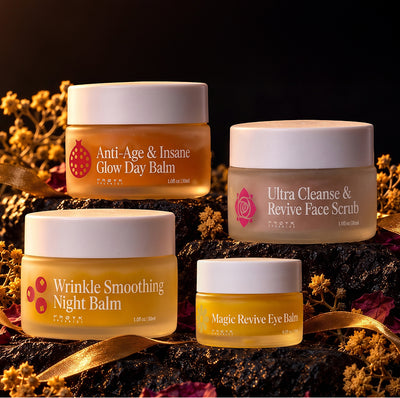
Frøya Organics is built around supporting the surface your microbes live on, with a waterless, botanical routine that feeds the barrier instead of stripping it. The Complete System for Mature Women’s Skin is a four-step set made for exactly the shifts mature skin goes through. Each step does one job, and together they keep the barrier fed.
Ultra Cleanse & Revive Face Scrub

The waterless face scrub is the cleanse step, a rice and rose powder you mix with water in your hand. It lifts dead skin cells and grime while leaving your natural oils in place, so it cleans without the foaming cleansers that strip the surface your microbes feed on.
Use it in the morning or evening, two or three times a week, massaged on with wet hands and rinsed off.
Anti-Age & Insane Glow Day Balm

The anti-aging day balm is the morning step, a layer of botanical oils and organic beeswax for daytime skin to settle under. Built on sea buckthorn, pomegranate and squalane, it helps the barrier hold moisture through the day and supports comfortable, even-looking skin.
Warm a small fingertip amount between your hands and press it onto clean skin each morning.
Wrinkle Smoothing Night Balm

The botanical night balm is the evening step, worn overnight when skin naturally renews itself. Rosehip, marigold and arnica are botanicals long used in skincare, and they nourish skin while you sleep, so you wake to softer, more comfortable skin.
Smooth a thin layer over the face at night as the last step of your routine.
Magic Revive Eye Balm

The under-eye balm is the eye step, made for the thin, delicate skin where dryness shows first. Arctic arnica and squalane soften the look of puffiness and fine lines in one light layer.
Pat a small amount around the eye area with a light touch, morning or night, or both.
What Skin Disorders Are Linked to the Microbiome?
Dysbiosis is linked to several common skin conditions, because the microbiome, the cutaneous immune system and the barrier all influence each other. When the balance of skin microorganisms tips the wrong way, skin gets drier and more reactive. It does not explain every skin disease, but it plays a part in a few you will recognize.
Acne is one. It is tied to an imbalance involving Cutibacterium acnes. Atopic dermatitis, a form of eczema, is another, often with a drop in diversity and more aureus colonization, as Staphylococcus aureus rises during flares. It is one of the more common skin conditions in both children and adults.
Two more sit on the list. Seborrheic dermatitis is linked to Malassezia overgrowth, and psoriasis, another condition many people live with, shows its own shifts. Across all of these chronic inflammatory skin conditions, a settled balance seems to matter most.
The microbiome has a quieter helpful side too. On normal skin, these microbes take part in the innate immune response and in immune tolerance, and they are part of how skin stays resilient. For anything painful or persistent, a doctor or dermatologist is still the right call.
The Takeaway for Mature Skin
Looking after your skin microbiome is less about doing more and more about doing it kindly. Keep your natural oils, skip the harsh cleansers and strong actives, and give the barrier what it needs to hold moisture. On mature skin, that quiet, consistent care does more than any ten-step routine ever will.
Women over 50 who made the switch keep telling us the same thing, that calmer, more comfortable skin followed once they stopped stripping it. On Trustpilot, Frøya Organics holds a 4.7 out of 5 from more than 11,000 reviews.
If you want the whole routine in one place, the mature skincare products are built around this barrier-first approach, cleanse, day, night and eyes, all working to support the surface your microbiome lives on. See the before and afters below, then start with the step your skin needs most.
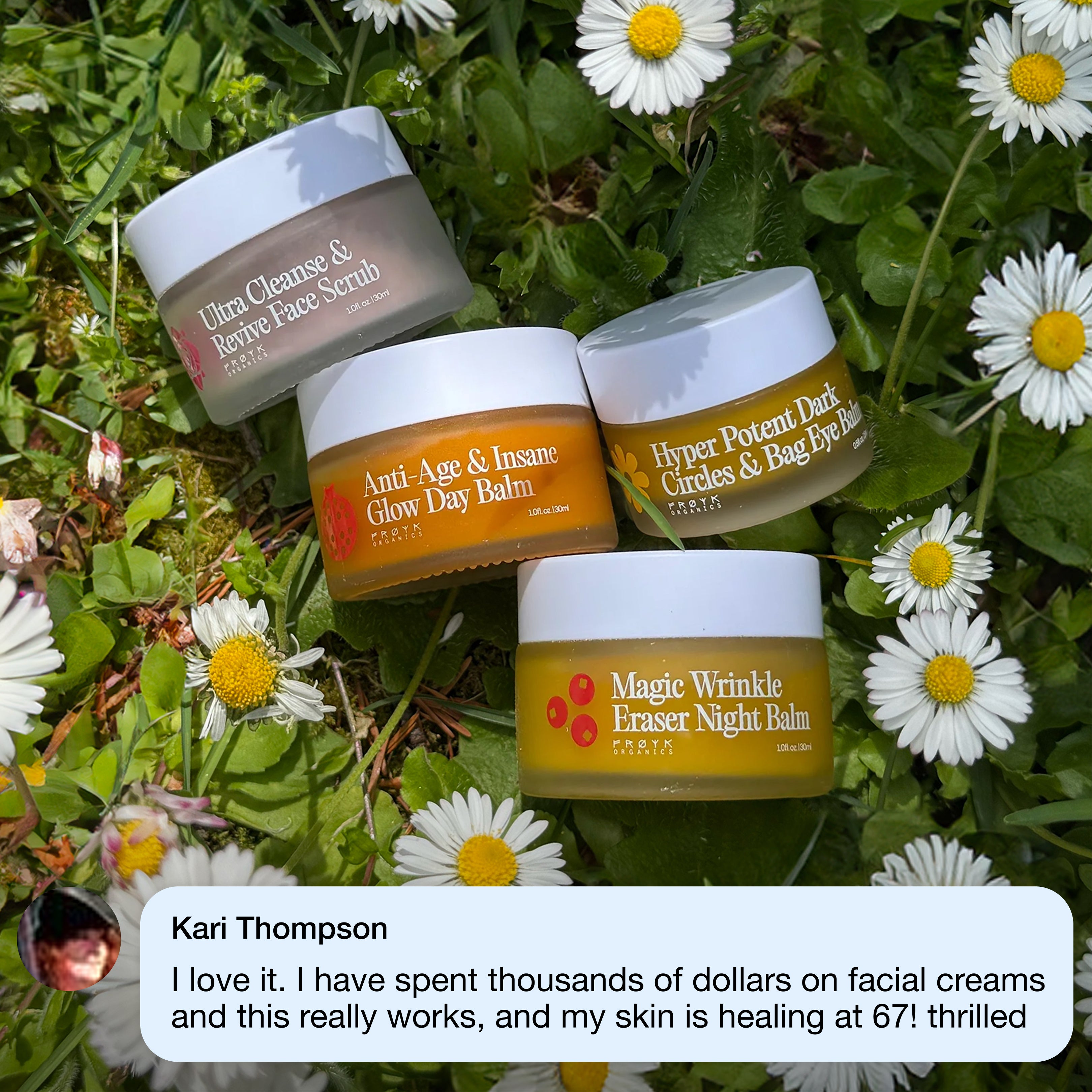
A four-step waterless routine of three Arctic balms and a scrub, built on organic beeswax and nourishing botanical oils. It cleans without stripping and feeds the surface your microbes live on, backed by a 60-day money-back guarantee.
Shop the System TodayDisclaimer: This article is for general education and is not medical advice. Frøya Organics products support the skin and its barrier; they are not intended to diagnose or address any medical condition. For a persistent skin concern, speak with a doctor or dermatologist.
Preguntas Frecuentes
How can I improve my skin microbiome?+
How do you reset your skin microbiome?+
What are the signs of poor gut health on skin?+
How can you test your skin microbiome?+


