

 Account


Diese Rötung auf Ihren Wangen, die uneingeladen auftaucht und lange nach dem Erröten anderer anhält? Eine gute Rosazea-Creme ist das Mittel, um sie zu beruhigen.
Eine Rosazea-Creme ist eine topische Formel, die Rötungen reduziert, Irritationen lindert und empfindliche, reaktive Haut unterstützt. Rosazea betrifft weltweit etwa 5 % der Erwachsenen und zeigt sich häufig auf reifer Haut, die mit dem Alter reaktiver wird. Es gibt keine Heilung, aber die richtige Creme hält es im Alltag ruhig und komfortabel.
Hier kommt der Teil, den die meisten Menschen übersehen. Die besten Ergebnisse entstehen oft durch sanfte, barrierestützende Pflege, nicht durch die stärksten Wirkstoffe im Regal. Das ist die Überlegung hinter einem botanischen Balsam, der Ringelblume und Bio-Bienenwachs nutzt, um Rötungen an der Quelle zu beruhigen, statt sie mit aggressiven Inhaltsstoffen zu erzwingen.
In diesem Ratgeber erfahren Sie, was Rosazea wirklich ist, was einen Schub auslöst, was Dermatologen verschreiben, und wie ein sanfter natürlicher Ansatz in Ihre Routine passt.
Wichtigste Erkenntnisse
- Rosazea ist eine langfristige Hauterkrankung – das Ziel ist Beruhigung und Kontrolle, nicht Heilung.
- Gesichtsrötungen sind das häufigste Zeichen, oft mit Erröten, Knötchen und sichtbaren Blutgefäßen.
- Eine schwache Hautbarriere fördert Rosazea – Barrierestützung ist zentral für ruhige Haut.
- Verschreibungspflichtige Cremes wirken, bringen aber oft häufige Nebenwirkungen wie Trockenheit und Reizung mit sich.
- Eine sanfte, botanische Rosazea-Creme beruhigt Rötungen auf den meisten Hauttypen ohne aggressive Wirkstoffe.
Was ist Rosazea?

Rosazea ist eine langfristige Hauterkrankung, die Rötungen in der Gesichtsmitte verursacht, vor allem auf Wangen, Nase und Kinn. Sie kommt in Schüben, in denen Ihre Haut röter, wärmer und empfindlicher als gewöhnlich wird.
Es gibt vier Haupttypen, und Sie können mehr als einen haben. Nach Cleveland Clinics Ratgeber zu Rosazea reichen diese von anhaltenden Gesichtsrötungen mit sichtbaren Blutgefäßen über akneähnliche Knötchen bis zu im Laufe der Zeit verdickter Haut und Augenreizung.
Sie betrifft meistens Frauen und beginnt normalerweise nach dem 30. Lebensjahr, weshalb sie so oft mit reifer Haut überlappt. Bei brauner und schwarzer Haut kann die Rötung schwerer zu erkennen sein – achten Sie auch auf Schwellungen, ein Brennen im Gesicht und trockene Haut. Unabhängig von Ihrem Typ ist ein sanfter Balsam wie der Tagesbalsam für zu Unreinheiten neigende Haut gebaut, um die Rötungen zu beruhigen, die sie teilen.
Rosazea-Symptome, die Sie kennen könnten
Rötung ist das häufigste Rosazea-Symptom, aber sie kommt selten allein. Eine gute Rosazea-Behandlung beginnt damit, Ihre eigenen Hauptsymptome zu kennen.
So sieht und fühlt sich Rosazea oft an:
- Anhaltende Gesichtsrötung, die wie ein Sonnenbrand aussieht, der nicht verschwindet
- Erröten, das schnell kommt und mit der Zeit anhaltend werden kann
- Akneähnliche Ausbrüche und sichtbare Blutgefäße über die Gesichtsmitte verteilt
- Brennen, Jucken oder Spannungsgefühl im Gesicht
- Trockene Haut und raue Textur in den betroffenen Bereichen
Weitere Symptome können Augenreizung und vergrößerte Poren sein. Wenn Ihre Haut auf Dinge reagiert, bei denen sie das früher nicht tat, ist diese verminderte Toleranz beachtenswert.
Was löst einen Rosazea-Schub aus
Ein Rosazea-Schub tritt auf, wenn etwas Ihre Haut reizt oder die winzigen Blutgefäße in Ihrem Gesicht erweitert. Ihre eigenen Auslöser zu kennen ist eine der nützlichsten Dinge, die Sie tun können.
Die häufigen sind gut dokumentiert. Cleveland Clinic zählt diese zu den üblichen Verdächtigen:
- UV-Licht und Sonneneinstrahlung – einer der häufigsten Auslöser
- Heiße und kalte Temperaturen, plus kalter Wind
- Alkohol, scharfe Speisen und heiße Getränke
- Stress und starke Emotionen
Die Symptome verschlimmern sich oft durch Sonneneinstrahlung und Stress zusammen. Sie müssen sich nicht drinnen verstecken, Sie möchten nur Verbrennungen vermeiden und die Auslöser kontrollieren, die Sie beeinflussen können.
Warum Ihre Hautbarriere so wichtig ist

Rosazea ist eng mit einer geschwächten Hautbarriere verbunden, weshalb Barrierestützung sie beruhigt. Wenn Ihre Barriere beschädigt ist, verliert sie schneller Wasser und lässt Reizstoffe leichter eindringen.
Eine 2024er Übersicht über Rosazea und die Hautbarriere, veröffentlicht in der Zeitschrift Pharmaceuticals, legt dies klar dar. Die Forscher nennen Barrierestörung ein Merkmal von Rosazea, gekennzeichnet durch erhöhten Wasserverlust durch die Haut, niedrigere Hydration und einen erhöhten Haut-pH-Wert. Einfach gesagt: Rosazea-Haut hat Schwierigkeiten, Feuchtigkeit zu speichern und Reizstoffe fernzuhalten, was den Kreislauf der Rötung am Laufen hält.
Dieselbe Übersicht macht auch den praktischen Punkt. Ihre Autoren sagen, dass barrierenreparierende Pflege Teil der Rosazea-Behandlung sein sollte, da eine stärkere Barriere sowohl Entzündungen beruhigt als auch reduziert, wie viele reizende Partikel eindringen können.
Deshalb ist eine gute Feuchtigkeitscreme hier so wichtig. Barrierenreparatur-Feuchtigkeitscremes sind ein Kernbestandteil der täglichen Rosazea-Pflege, und Studien zeigen, dass sie Komfort und die Ergebnisse aus der Behandlung verbessern können. Ein reichhaltiger, botanischer Balsam versiegelt Feuchtigkeit und beruhigt die Oberfläche und gibt Ihrer Barriere die stille Unterstützung, die sie braucht.
Wenn Sie das vollständigere Bild haben möchten, erklärt dieser Ratgeber über das natürliche Reparieren einer beschädigten Hautbarriere es im Detail.
Was Dermatologen für Rosazea verschreiben
Dermatologen behandeln Rosazea mit verschreibungspflichtigen Cremes, Gelen und manchmal Tabletten, je nach Ihren Symptomen. Die beste Behandlung hängt davon ab, ob Ihr Hauptproblem Rötung, Erröten oder Knötchen sind.
Hier ist die Kurzversion, aus Mayo Clinics Rosazea-Behandlungsratgeber:
- Brimonidin und Oxymetazolin reduzieren Gesichtsrötungen durch Verengung von Blutgefäßen, mit Ergebnissen innerhalb von 12 Stunden nach der Anwendung.
- Azelainsäure und Metronidazol sind topische Medikamente, die Knötchen und Rötungen beruhigen, mit Ergebnissen über 2 bis 6 Wochen.
- Ivermectin hat entzündungshemmende und antiparasitäre Eigenschaften für entzündliche Knötchen.
- Orale Antibiotika wie Doxycyclin werden bei ernsthafter Rosazea mit Knötchen und Pickeln verwendet.
- Bei schwerer Rosazea, die auf andere Optionen nicht anspricht, kann ein Dermatologe stärkere orale Medikamente verschreiben.
- Laserbehandlung kann Erröten reduzieren und sichtbare Blutgefäße verkleinern.
Diese können bei mäßiger Rosazea gut wirken, also lohnt sich ein Besuch bei einem Dermatologen, wenn Ihre Symptome hartnäckig sind. Trotzdem heilt keine Creme Rosazea, und die Symptome kehren oft zurück, wenn Sie aufhören. Viele dieser Wirkstoffe bringen auch Trockenheit, Stechen oder schlimmere Rötungen anfangs mit sich, was auf bereits empfindlicher Haut hart ist – und hier kommt sanfte tägliche Pflege ins Spiel.
Ein sanfter natürlicher Ansatz zur Beruhigung von Rötungen
Sanfte, reizarme tägliche Pflege ist etwas, bei dem sich alle Quellen einig sind, denn rezeptfreie Produkte unterstützen die Hautgesundheit, auch wenn sie Rosazea nicht heilen. Dies ist die Schicht, die Sie zu Hause täglich kontrollieren.
Sanftheit gewinnt hier: Bei Rosazea schlägt sanfter stärker. Aggressive Wirkstoffe können schnelle Ergebnisse erzwingen, lösen aber oft die Rötung und das Stechen aus, denen Sie entkommen möchten, während beruhigende Botanicals die Haut ohne Kampf besänftigen.
Starke Wirkstoffe können Ergebnisse vorantreiben, aber sie haben ihren Preis auf reaktiver Haut. Retinoide und Säuren können bereits reaktive Haut reizen und entzünden, also geben viele Menschen stillschweigend auf sie auf.
Botanicals nehmen einen sanfteren Weg. Ringelblume und Kamille sind beruhigende Inhaltsstoffe mit echtem entzündungshemmenden Beleg, und eine Übersicht über Kamillen entzündungshemmende Wirkung vermerkt, dass ihre Verbindungen unter die Hautoberfläche in tiefere Schichten eindringen, was ihnen ermöglicht, Entzündungen topisch zu beruhigen. Sie werden andere beruhigende Pflanzen wie Aloe und Centella asiatica über die Kategorie sehen, aber das Ziel ist immer gleich – weniger Reizung für reaktive Haut.
Wenn Sie die vollständige Routine haben möchten, führt unser Ratgeber zur natürlichen Rosazea-Behandlung Sie durch, was wirklich Rötungen beruhigt.
Frøyas Bio-Rosazea-Balsam für rötungsanfällige Haut

Der Rosazea- & Rötungs-Balsam ist gebaut, um Rötungen zu beruhigen und Ihre Hautbarriere zu unterstützen. Er setzt auf Arktische Pflanzen und Bio-Bienenwachs statt aggressiver Wirkstoffe, weshalb er zu reaktiver Haut passt.
Was ihn unterscheidet, ist die saubere Formulierung. Es gibt keine künstliche Duftstoffe, keinen Alkohol und keine Säuren, und er ist nicht komedogen, also wirkt er auf fettige, trockene, Mischhaut und empfindliche Hauttypen.
So funktionieren die Botanicals bei rötungsanfälliger Haut. Ringelblume und Tagetes beruhigen das Aussehen von Rötungen, Bienenwachs unterstützt die Barriere und versiegelt Feuchtigkeit, und die beruhigende Kraft von Ringelblumen-Extrakt für die Haut bleibt zentral zur Formel. Statt Ergebnisse mit starken Wirkstoffen zu erzwingen, beruhigt und unterstützt der Balsam, also hat Ihre Haut weniger, wogegen sie reagiert.
In Frøyas eigenen kundenberichteten Ergebnissen sahen 79 % weniger Akne, Rötung und Rosazea. Eine kleine Menge mit Fingerspitze in der Nacht ist alles, was Sie auf sauberer, trockener Haut brauchen.
Wie die Komplette Apotheke zusammen funktioniert

Die Komplette Apotheke für Gesicht & Körper ist das Set für Rötungen, die neben Ekzemen, Psoriasis oder trockenen Stellen auftauchen. Sie umfasst Gesicht und Körper in einer Box, wobei jeder Balsam seine eigene Aufgabe erfüllt.
Jeder Balsam zielt auf ein anderes Anliegen ab, also behandeln sie zusammen mehr als ein Problem ohne Mischen oder Schichten:
|
Balsam |
Was er macht |
Am besten für |
|
Beruhigt Gesichtsrötungen und Ausbrüche mit Ringelblume und Bienenwachs |
Rötungen, Erröten und Knötchen im Gesicht |
|
|
Lindert trockene, juckende Stellen mit Kamille und Distel |
Ekzem, Psoriasis und trockene Haut auf Gesicht und Körper |
|
|
Beruhigt schmerzende Stellen mit Beinwell und Arnika |
Schmerzende Gelenke und Muskeln |
Wenn Rötung Ihr einziges Anliegen ist, ist der einzelne Balsam alles, was Sie brauchen. Das Set ist für Haut da, die mit mehr als einer Sache gleichzeitig umgehen muss.
Eine natürliche Hautpflegeroutine für Rosazea aufbauen
Eine einfache, konsistente Routine beruhigt Rosazea besser als ein Regal voller anderer Produkte. Bei Frøya ist der Balsam ein eigenständiger Schritt, bereits gemischt, also gibt es nichts zum Selbermischen oder Messen.
Halten Sie Ihren täglichen Rhythmus einfach:
- Verwenden Sie eine sanfte, nicht reizende Reinigung und tupfen Sie Ihre Haut trocken.
- Tragen Sie eine dünne Schicht des Balsams abends auf sauberer, trockener Haut auf.
- Warten Sie, bis Ihre Haut trocken ist, bevor Sie etwas auftragen, damit es weniger steht.
- Bleiben Sie konsistent, da sich ruhigere Haut über Wochen aufbaut, nicht Tage.
Wenn Sie Make-up tragen, lassen Sie den Balsam erst einziehen. Keine Schichten, keine zehn Schritte, kein Ratespiel, welches Produkt mit dem nächsten kollidiert.
Was mit rosazea-anfälliger Haut zu vermeiden ist
Bei Rosazea entstehen die schnellsten Gewinne oft aus dem Entfernen von Reizstoffen, nicht aus dem Hinzufügen weiterer Produkte. Ein paar häufige Inhaltsstoffe neigen dazu, Schübe auszulösen.
Achten Sie auf diese bei reaktiver Haut:
- Alkohol hoch auf der Zutatenliste, der trocken und stechen kann
- Künstliche Duftstoffe, eine häufige Reizungsursache
- Menthol, Kampfer und Kühlmittel, die sich nett anfühlen, aber Rötungen hervorrufen
- Aggressive Säuren und Peelings, die eine bereits fragile Barriere abbauen
Die Wahl von sanfteren Produkten ohne künstliche Duftstoffe nimmt Ihrer Haut Druck ab. Um zu bestimmen, was Ihre Haut verträgt, führen Sie einen Fleck-Test mit allem Neuen zuerst an Ihrem Kiefer durch.
Sonne, Lebensstil und Verhinderung von Schüben
Die Verwaltung Ihrer Auslöser ist der zuverlässigste Weg, um Schübe fernzuhalten, und der Sonnenschutz steht ganz oben auf der Liste. Sonne und Lebensstil-Gewohnheiten sind dort, wo die meiste Kontrolle lebt.
Ein paar Gewohnheiten machen einen echten Unterschied:
- Begrenzen Sie lange Zeit in starker Sonne und nutzen Sie Schatten und einen Hut
- Bei längerer Zeit draußen hilft ein Mineral-Sonnenschutz mit Titanoxid oder Zinkoxid, Verbrennungen zu vermeiden
- Dermatologen bemerken oft, dass Mineral-Sonnenschutzmittel zu empfindlicher, rosazea-anfälliger Haut gut passen
- Bedecken Sie Ihr Gesicht bei kaltem, windigem Wetter und beobachten Sie, wie Alkohol, scharfes Essen und Stress Sie beeinflussen
Sie brauchen kein starres Regelwerk. Kleine, stetige Anpassungen halten Ihre Haut ruhiger als jedes einzelne Produkt kann.
Echter, anhaltender Komfort für rosazea-anfällige Haut

Ruhige Haut handelt nicht von einem Wunder-Tiegel. Es geht um eine sanfte Routine, die Sie tatsächlich beibehalten können, auf Haut, die endlich aufhört, auf alles zu reagieren, was Sie auftragen.
Das ist das, wofür eine botanische Rosazea-Creme gebaut ist. Sie wirkt darauf, Erröten und Rötungen zu reduzieren, unterstützt die Barriere, die Rosazea abnutzt, und macht das ohne das Stechen starker Wirkstoffe.
Sie können das in den Vorher-und-Nachher-Fotos oben spielen sehen, von Frauen mit rötungsanfälliger Haut, die eine einfache Routine eingehalten haben. Vorher-und-Nachher-Kundenergebnisse sagen mehr als ein Versprechen, das wir machen könnten. Geben Sie Ihrer Haut stetige, sanfte Pflege, und lassen Sie sie Ihnen zeigen, wie Ruhe aussieht.
Haftungsausschluss: Dieser Artikel ist nur zu Informationszwecken bestimmt und ist keine medizinische Beratung. Rosazea ist ein medizinischer Zustand, daher sprechen Sie bitte mit einem Arzt oder Dermatologen über Diagnose und Behandlung, die zu Ihrer Haut passen. Frøya Organics Produkte sind botanische Hautpflegebalsame, keine Medikamente, und sind nicht dazu bestimmt, einen Zustand zu behandeln oder zu heilen.
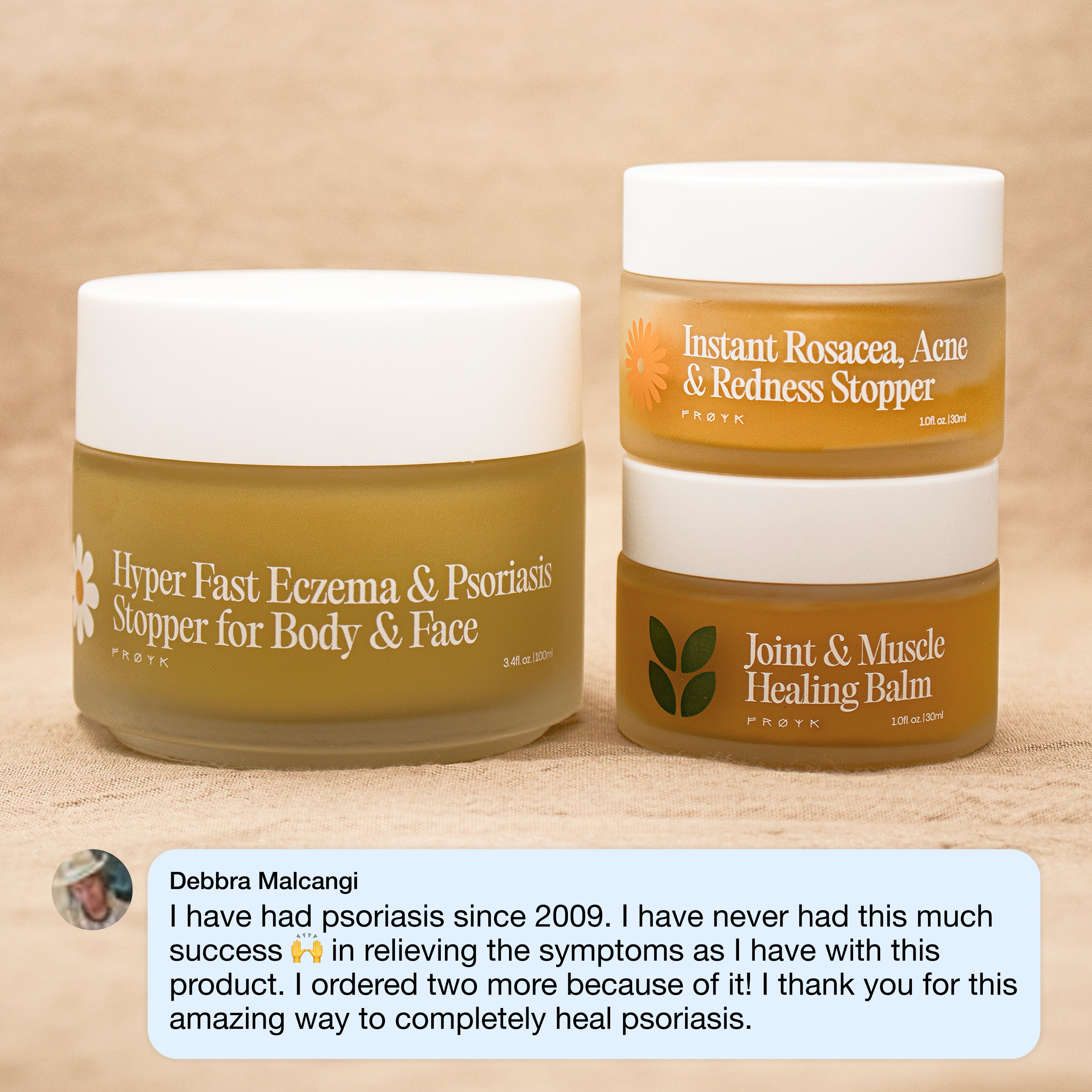
Drei wasserfreie Balsame für Rosazea, Ekzeme und Gelenkschmerzen. Arktische Wildpflanzen und Bio-Bienenwachs beruhigen, versiegeln und unterstützen reaktive Haut, gestützt auf eine 60-Tage-Geld-zurück-Garantie.
Jetzt das System kaufenHäufig gestellte Fragen
Was ist der größte Auslöser von Rosazea?+
Was hilft bei Rosazea sofort?+
Was lindert Rosazea schnell?+
Was sollte man bei Rosazea-Haut meiden?+
Welche Creme oder welcher Balsam lindert Rosazea am besten?+
Ist ein wasserfreier Rosazea-Balsam besser für empfindliche Haut?+


